

Spanish
Official VisaVerge Logo Official VisaVerge Logo
  • Home
  • Airlines
  • H1B
  • Immigration
    • Knowledge
    • Questions
    • Documentation
  • News
  • Visa
    • Canada
    • F1Visa
    • Passport
    • Green Card
    • H1B
    • OPT
    • PERM
    • Travel
    • Travel Requirements
    • Visa Requirements
  • USCIS
  • Questions
    • Australia Immigration
    • Green Card
    • H1B
    • Immigration
    • Passport
    • PERM
    • UK Immigration
    • USCIS
    • Legal
    • India
    • NRI
  • Guides
    • Taxes
    • Legal
  • Tools
    • H-1B Maxout Calculator Online
    • REAL ID Requirements Checker tool
    • ROTH IRA Calculator Online
    • TSA Acceptable ID Checker Online Tool
    • H-1B Registration Checklist
    • Schengen Short-Stay Visa Calculator
    • H-1B Cost Calculator Online
    • USA Merit Based Points Calculator – Proposed
    • Canada Express Entry Points Calculator
    • New Zealand’s Skilled Migrant Points Calculator
    • Resources Hub
    • Visa Photo Requirements Checker Online
    • I-94 Expiration Calculator Online
    • CSPA Age-Out Calculator Online
    • OPT Timeline Calculator Online
    • B1/B2 Tourist Visa Stay Calculator online
  • Schengen
VisaVergeVisaVerge
Search
Follow US
  • Home
  • Airlines
  • H1B
  • Immigration
  • News
  • Visa
  • USCIS
  • Questions
  • Guides
  • Tools
  • Schengen
© 2025 VisaVerge Network. All Rights Reserved.
Documentation

California Workplace Know Your Rights Act Senate Bill 294 Requires Notice

The Workplace Know Your Rights Act (SB 294) introduces mandatory rights education and emergency contact protocols for California workplaces. Effective January 2026, employers must provide annual stand-alone notices regarding labor and immigration rights. Specific deadlines in early 2026 trigger significant per-employee penalties for non-compliance, necessitating immediate HR planning, template adoption, and secure recordkeeping systems to ensure organizational adherence to the new state mandates.

Last updated: January 23, 2026 3:18 pm
SHARE
Key Takeaways
→California’s SB 294 mandates a stand-alone annual rights notice and emergency contact designation for all employees.
→Employers must issue the first annual notice by February 1, 2026 to ensure compliance with state law.
→Failure to comply triggers civil penalties of $500 per employee for each violation of these notice requirements.

California employers must implement a stand-alone annual rights notice and a separate emergency contact designation process for employees, with concrete deadlines and penalties that rise if compliance falters.

Overview and legislative context
California Workplace Know Your Rights Act Senate Bill 294 Requires Notice

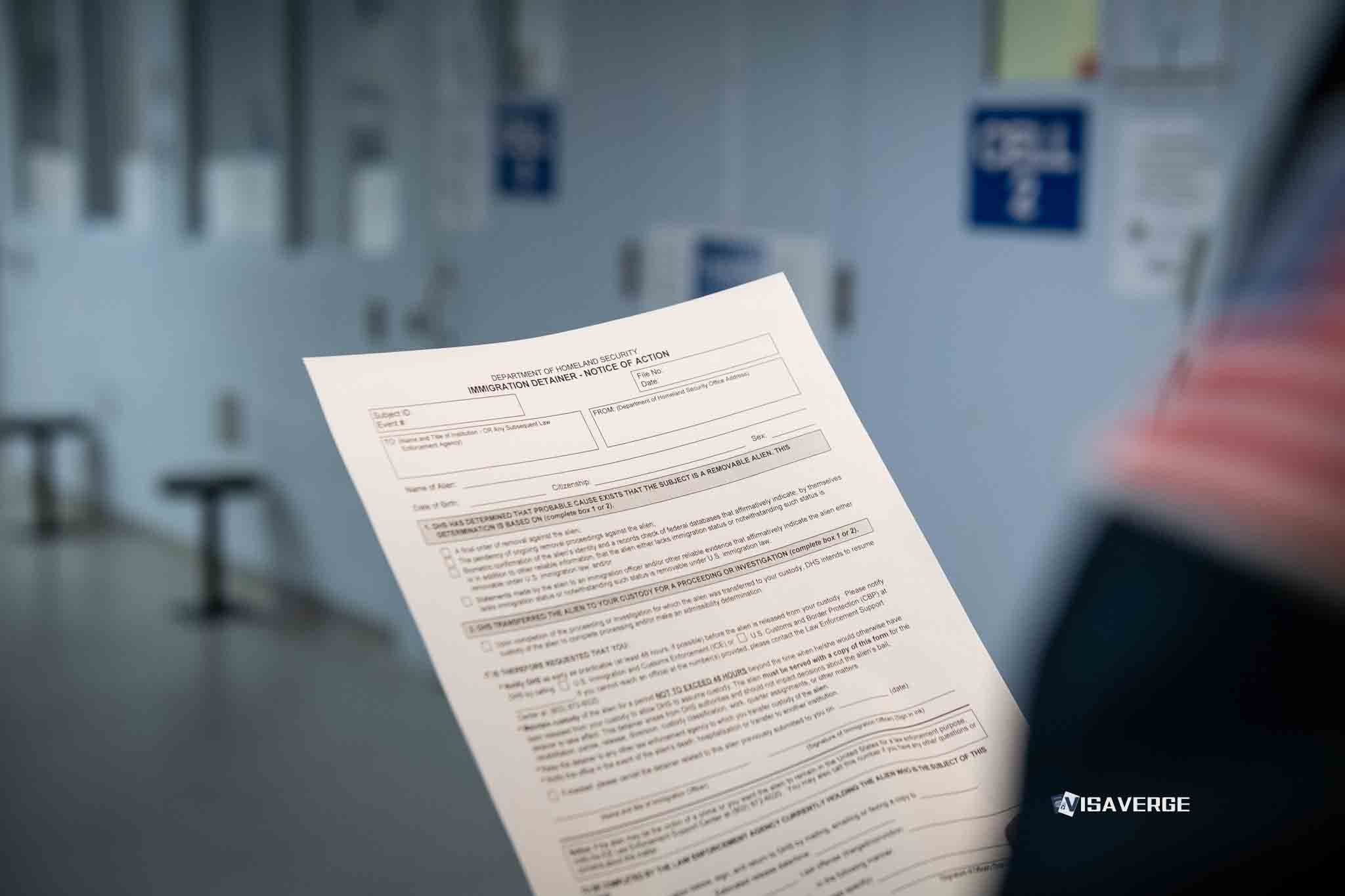
California’s Workplace Know Your Rights Act, Senate Bill 294, shifts “Know Your Rights” education into the workplace itself. Instead of relying on outside groups or last-minute handouts, the law requires employers to deliver a stand-alone written notice to workers and to offer a way for employees to name an emergency contact for certain workplace enforcement events.

California lawmakers framed SB 294 around timing and consistency. The goal is standardized rights education that reaches workers before high-stress situations, including immigration-related inspections or enforcement activity at a jobsite.

That matters because worksite events can move fast, and employees may not know what questions they can decline to answer or what documents they can refuse to sign. Coverage is broad in concept: California employers must plan for both current employees and new hires.

The duties attach to the employer’s onboarding and annual compliance cycles, not to a worker’s immigration status. SB 294 was enacted on October 12, 2025. It came amid a more enforcement-forward federal posture described in public statements by the Department of Homeland Security (DHS) and U.S. Citizenship and Immigration Services (USCIS).

SB 294 compliance timeline at a glance
Milestone Date Status
Enacted October 12, 2025 Pending
Effective date January 1, 2026 Current
First annual employee notice due February 1, 2026 Pending
Emergency contact designation process required by March 30, 2026 Pending

Those federal statements do not create SB 294 duties. They help explain why California pushed rights information upstream.

Effective dates and key deadlines

→ Analyst Note
Treat the notice like a compliance document: use a standalone PDF, translate where your workforce needs it, and get signed acknowledgments (paper or electronic). Store acknowledgments with hire packets so you can prove timely delivery during audits or investigations.

Separate “enactment” from “operative compliance.” SB 294 was signed on October 12, 2025, and it became effective on January 1, 2026. That effective date is the starting gun for building systems, training staff, and choosing a notice version that matches California Department of Industrial Relations (DIR) guidance.

Employers must provide the first annual notice to workers by February 1, 2026. After that, the notice becomes a repeating cycle for current employees and is also part of onboarding for new hires.

The emergency contact designation requirement has its own deadline: March 30, 2026. Treat that as a separate project with its own privacy controls and documentation.

Planning backward usually helps. Start with a notice template decision, then decide how you will deliver it, then set a recordkeeping method. Finish by training the people who will actually carry it out.

→ Recommended Action
Set recurring compliance tasks now: one calendar event for the annual notice cycle and another for periodic emergency-contact refreshes (e.g., every 6–12 months). Keep a distribution log (date, method, employee list) so you can demonstrate compliance if challenged.
Penalty exposure can scale quickly if notices aren’t documented
  • Civil penalty: $500 per employee per violation
  • Emergency contact violations: total penalties capped at $10,000 per employee
→ Warning
Penalty amounts can compound across employees and violations.

Notice contents and requirements

SB 294 requires a stand-alone written notice. That wording matters. In many workplaces, policies live inside an employee handbook or get mixed into onboarding packets. SB 294 calls for a separate written notice, delivered to current employees annually and to new hires upon employment.

The notice must cover specific subject areas. Employers should ensure the stand-alone notice plainly and directly explains each required topic.

→ Note
When you download the DIR notice template, save a PDF copy and screenshot the webpage date/version you used. If the template updates later, you’ll still be able to show what guidance you relied on for a specific distribution cycle.
  • Workers’ compensation rights. Employees need a plain explanation of medical care and disability benefits for workplace injuries. Confusion here can lead to delayed reporting or fear-based silence after an incident.
  • Immigration inspection rights, including the 72-hour notice concept. The notice must address rights connected to immigration-related inspections, including that employees have protections tied to a 72-hour notice in certain inspection contexts. In real terms, this is meant to reduce surprise and panic.
  • Constitutional protections under the 4th and 5th Amendments. SB 294 requires education about core rights that can come up during questioning or searches at work. Many employees have never heard these explained in a workplace setting.
  • Anti-retaliation protections. The notice must tell workers they have protections if they assert workplace rights. Retaliation claims often turn on timing and documentation, so employers should ensure supervisors know what they cannot do or say.
  • Union rights. The notice must include the right to organize or engage in concerted activities. That applies across industries and is not limited to unionized workplaces.

Emergency contact mandate

By March 30, 2026, employers must allow employees to designate a contact person to be notified if the employee is arrested or detained at work. That requirement changes what many employers treat as a routine HR file item.

SB 294 employer rollout: fast implementation checklist
  • 01Assign an owner (HR/compliance) and set an annual distribution cadence
  • 02Adopt the DIR notice template (or compliant equivalent) and confirm required content areas are covered
  • 03Build notice delivery into onboarding and annual acknowledgments; keep a distribution log
  • 04Train managers on inspection-related communications and anti-retaliation expectations
  • 05Create a confidential process for employees to designate/update an emergency contact
  • 06Retain records (template version, employee acknowledgments, contact designation forms) in a centralized repository
→ Action

Use this checklist to standardize rollout steps across onboarding, annual distributions, manager training, and record retention.

Build the process so an employee can submit and update a contact without friction. A contact from five years ago may be useless during an emergency. Make updates possible without requiring a sensitive explanation.

Confidentiality is central. Emergency contact details should have limited access and a clear internal rule: who can view it, who can use it, and when. Many employers already collect emergency contacts for injuries or disasters.

SB 294 adds a specific enforcement-related purpose, so employers may want a distinct workflow and tighter access controls than a general HR profile.

Penalties and enforcement

SB 294 uses civil penalties that can scale quickly because they apply per employee per violation. For employers, that means inconsistent delivery is risky. Missing a whole group is worse.

Emergency contact-related violations also carry a per-employee cap. A “cap” means the total civil penalties tied to that category cannot exceed a ceiling for each affected employee, even if multiple failures occurred within that category. The cap does not erase the penalty exposure; it limits it.

Document retention can matter in many cases. Keep dated copies of the exact stand-alone written notice you issued, plus proof of delivery and the employee population covered. For the emergency contact piece, retain the process rules and the employee’s designation record, with controlled access.

Enforcement may occur through administrative channels or complaints. Treat that possibility as a reason to standardize how HR and managers act, especially during stressful events.

Warning

⚠️ Failing to provide the stand-alone notice or to update emergency contacts can trigger civil penalties; document and standardize processes now.

For planning purposes, note these penalty figures described in SB 294 guidance and related materials: the stand-alone written notice, emergency contact designation process, and recordkeeping shortfalls are treated as violations that can be assessed at $500 per employee per violation in many instances.

Emergency-contact-specific penalties include an example ceiling described as a $10,000 per-employee cap for total emergency-contact penalties affecting a single employee. That cap limits total exposure for that category but does not eliminate per-violation assessment risk.

Impact on employers and employees

Employees are likely to see SB 294 as earlier, clearer rights information. Instead of learning key rules during a crisis, workers get a standardized explanation in writing. That can reduce confusion during inspections and may lower the risk of impulsive decisions made under pressure.

Employers face a different reality. SB 294 turns rights education into an operational duty. HR teams must add a stand-alone written notice to onboarding and create an annual delivery cycle for current employees. Supervisors will need training too, because employees often ask managers first.

Operational risk often shows up in three places:

  • Inconsistent notice delivery. One site follows the rule, another forgets. Penalties can then multiply by location and headcount.
  • Failure to keep emergency contacts current. A one-time collection is not the same as an update-ready system.
  • Retaliation concerns. When workers assert rights, managers may react poorly. Training and clear escalation paths can reduce that risk.

Official government sources and statements

California Department of Industrial Relations (DIR) is the primary state implementation source for SB 294 notice guidance and any model language updates. Use DIR materials as your anchor, then document the version you adopted and the date you put it into circulation.

Federal context is background, not a compliance checklist. DHS and USCIS statements about enforcement posture can affect workplace planning, staffing, and training priorities. They do not add SB 294 requirements by themselves.

For federal agency reference points, rely on official USCIS postings rather than summaries that circulate on social media. The USCIS newsroom is available at USCIS.

Implementation checklist: what to do before the first notice cycle

Treat the February 1, 2026 annual notice deadline as a project deadline, not a reminder. Build a process that repeats cleanly each year and works for new hires every week.

Start with ownership. Decide who approves the notice text, who distributes it, and who stores proof. Next, map delivery methods for your workforce, including remote workers and employees without regular email access.

Manager training should be short and direct. Focus on where to route questions, how to avoid retaliation risk, and what to do if an inspection occurs. Keep scripts simple.

Emergency contact designation needs a separate workflow. Limit access, set update prompts, and document when employees were offered the option to designate or revise a contact.

Note

✅ Actionable compliance steps for HR and legal teams: approve template, implement onboarding workflow, set annual reminder cycles, and establish confidential emergency contact processes.

This article discusses California SB 294 and related federal enforcement context. It provides general information and should not be construed as legal advice. For tailored guidance, consult qualified counsel.

Learn Today
Stand-alone Notice
A separate, independent document that is not buried within an employee handbook or general onboarding packet.
Operative Compliance
The date when a law’s requirements must be actively followed, distinct from the date it was signed into law.
Anti-retaliation
Legal protections that prevent employers from punishing employees for exercising their labor or constitutional rights.
Civil Penalty
A financial fine imposed by government agencies for violations of laws or regulations.
VisaVerge.com
Share This Article
Facebook Pinterest Whatsapp Whatsapp Reddit Email Copy Link Print
What do you think?
Happy0
Sad0
Angry0
Embarrass0
Surprise0
Visa Verge
ByVisa Verge
Senior Editor
Follow:
VisaVerge.com is a premier online destination dedicated to providing the latest and most comprehensive news on immigration, visas, and global travel. Our platform is designed for individuals navigating the complexities of international travel and immigration processes. With a team of experienced journalists and industry experts, we deliver in-depth reporting, breaking news, and informative guides. Whether it's updates on visa policies, insights into travel trends, or tips for successful immigration, VisaVerge.com is committed to offering reliable, timely, and accurate information to our global audience. Our mission is to empower readers with knowledge, making international travel and relocation smoother and more accessible.
Subscribe
Login
Notify of
guest

guest

0 Comments
Inline Feedbacks
View all comments
H-1B Workforce Analysis Widget | VisaVerge
Data Analysis
U.S. Workforce Breakdown
0.44%
of U.S. jobs are H-1B

They're Taking Our Jobs?

Federal data reveals H-1B workers hold less than half a percent of American jobs. See the full breakdown.

164M Jobs 730K H-1B 91% Citizens
Read Analysis
ICE Training Explained: ERO’s 8-Week Program and HSI’s 6-Month Curriculum
Immigration

ICE Training Explained: ERO’s 8-Week Program and HSI’s 6-Month Curriculum

US Suspends Visa Processing for 75 Countries Beginning January 21, 2026
News

US Suspends Visa Processing for 75 Countries Beginning January 21, 2026

ICE Arrest Tactics Differ Sharply Between Red and Blue States, Data Shows
Immigration

ICE Arrest Tactics Differ Sharply Between Red and Blue States, Data Shows

Spirit Airlines Halts Bookings Beyond April 2026 Amid Chapter 11 Bankruptcy
Airlines

Spirit Airlines Halts Bookings Beyond April 2026 Amid Chapter 11 Bankruptcy

Big India Returns, Bigger Tax Shock: Why Nris Are Losing Money on Investments
India

Big India Returns, Bigger Tax Shock: Why Nris Are Losing Money on Investments

Top 10 States with Highest ICE Arrests in 2025 (per 100k)
News

Top 10 States with Highest ICE Arrests in 2025 (per 100k)

Virginia 2026 state income tax brackets and standard deduction updates
Taxes

Virginia 2026 state income tax brackets and standard deduction updates

A Comprehensive Analysis of ICE Arrest Data from Deportation Data Project
Immigration

A Comprehensive Analysis of ICE Arrest Data from Deportation Data Project

Year-End Financial Planning Widgets | VisaVerge
Tax Strategy Tool
Backdoor Roth IRA Calculator

High Earner? Use the Backdoor Strategy

Income too high for direct Roth contributions? Calculate your backdoor Roth IRA conversion and maximize tax-free retirement growth.

Contribute before Dec 31 for 2025 tax year
Calculate Now
Retirement Planning
Roth IRA Calculator

Plan Your Tax-Free Retirement

See how your Roth IRA contributions can grow tax-free over time and estimate your retirement savings.

  • 2025 contribution limits: $7,000 ($8,000 if 50+)
  • Tax-free qualified withdrawals
  • No required minimum distributions
Estimate Growth
For Immigrants & Expats
Global 401(k) Calculator

Compare US & International Retirement Systems

Working in the US on a visa? Compare your 401(k) savings with retirement systems in your home country.

India UK Canada Australia Germany +More
Compare Systems

You Might Also Like

Advocates Help Immigrants Understand Their Rights Amid ICE Actions
Job Search

Advocates Help Immigrants Understand Their Rights Amid ICE Actions

By Visa Verge
District of Arizona charges over 10,000 individuals in immigration case 2025
Immigration

District of Arizona charges over 10,000 individuals in immigration case 2025

By Robert Pyne
Family Reports Allentown Grandfather in Guatemala After ICE Arrest, Country Denies Records
Immigration

Family Reports Allentown Grandfather in Guatemala After ICE Arrest, Country Denies Records

By Oliver Mercer
Roth IRA Qualified Distributions: Five-Year Rule and Exceptions
Knowledge

Roth IRA Qualified Distributions: Five-Year Rule and Exceptions

By Sai Sankar
Show More
Official VisaVerge Logo Official VisaVerge Logo
Facebook Twitter Youtube Rss Instagram Android

About US


At VisaVerge, we understand that the journey of immigration and travel is more than just a process; it’s a deeply personal experience that shapes futures and fulfills dreams. Our mission is to demystify the intricacies of immigration laws, visa procedures, and travel information, making them accessible and understandable for everyone.

Trending
  • Canada
  • F1Visa
  • Guides
  • Legal
  • NRI
  • Questions
  • Situations
  • USCIS
Useful Links
  • History
  • USA 2026 Federal Holidays
  • UK Bank Holidays 2026
  • LinkInBio
  • My Saves
  • Resources Hub
  • Contact USCIS
web-app-manifest-512x512 web-app-manifest-512x512

2026 © VisaVerge. All Rights Reserved.

2026 All Rights Reserved by Marne Media LLP
  • About US
  • Community Guidelines
  • Contact US
  • Cookie Policy
  • Disclaimer
  • Ethics Statement
  • Privacy Policy
  • Terms and Conditions
wpDiscuz
Welcome Back!

Sign in to your account

Username or Email Address
Password

Lost your password?