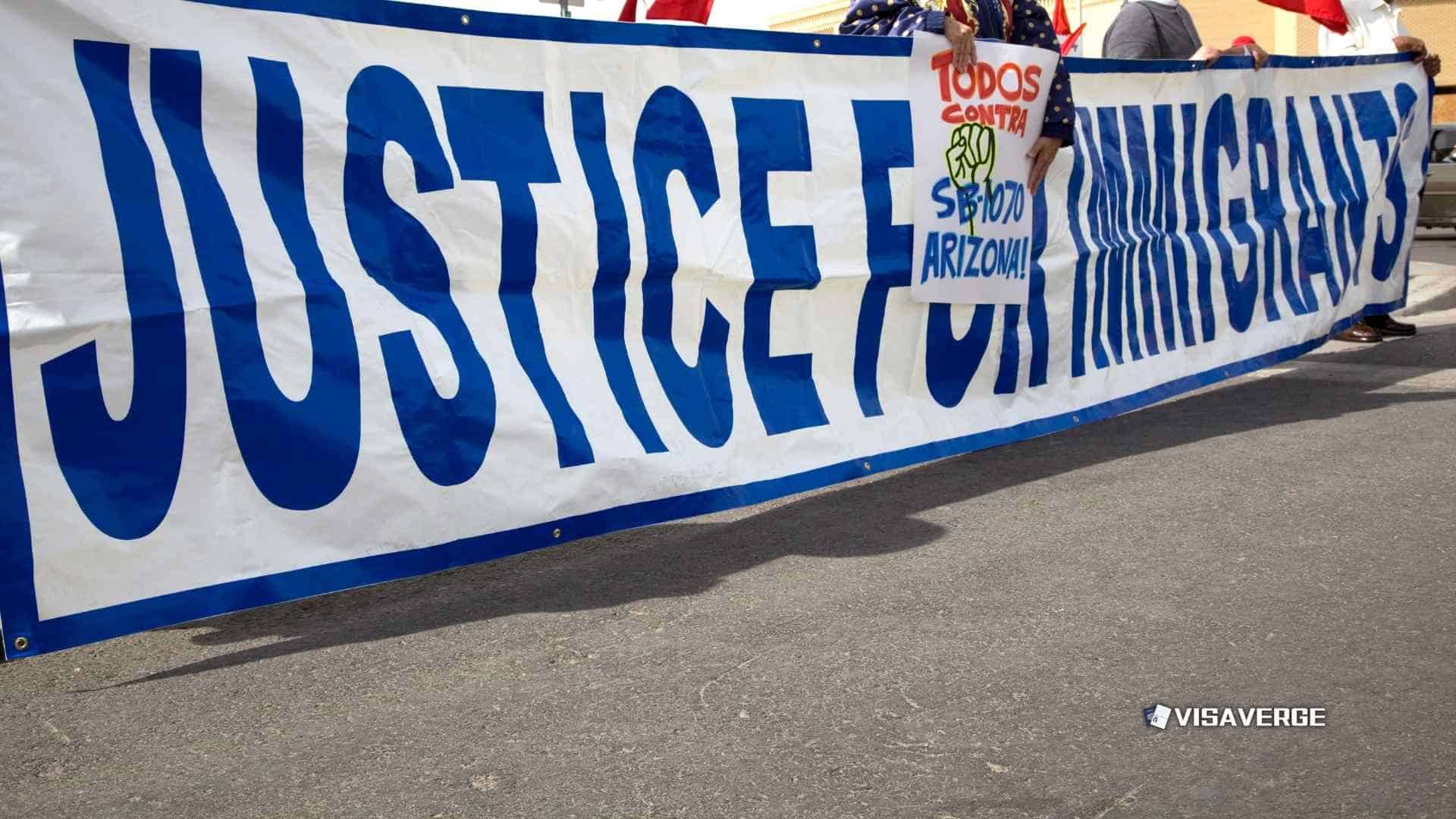
- CDPH faces backlash after ordering 4,000 employees to prove citizenship using federal verification systems.
- Existing staff must use E-Verify+ and SAVE systems despite having completed Form I-9 at hire.
- Unions and employees raise privacy and discrimination concerns regarding data sharing and potential job loss.
About 4,000 California Department of Public Health (CDPH) employees report being directed to “prove” U.S. citizenship through a federal verification system, a demand that has triggered confusion, privacy fears, and union pushback.
This guide explains a core workplace right implicated by the directive: the right of employees—citizens and noncitizens alike—to receive fair notice and an opportunity to address verification issues before adverse action is taken, and to be free from unlawful discrimination during employment eligibility checks.
Those protections come from federal law governing Form I‑9 verification, the anti-discrimination rules enforced by the Department of Justice’s Immigrant and Employee Rights Section (IER), and due process principles that shape public employment practices.
At stake is not only documentation. It is also job security, data handling, and the risk that a bureaucratic “mismatch” is treated like proof of wrongdoing. Importantly, standard employment eligibility verification is different from a sweeping, agency-wide demand to re-check existing workers or to prove U.S. citizenship as a condition of continued employment.
1) Overview: what CDPH is asking, who is affected, and why it matters
CDPH employees say they received instructions requiring them to complete a citizenship verification process using federal verification systems. Public reporting places the affected workforce at roughly 4,000 employees. The directive appears aimed at current employees, not just new hires.
Why this matters: most employees already completed Form I‑9 at hire. A new, broad request can feel like “re-verification,” even if the agency frames it as “records remediation” or an audit response. That distinction matters, because federal I‑9 rules generally limit when an employer may re-verify work authorization.
Employers also must avoid practices that single out certain groups for extra checks. Employees have reported several recurring concerns that reflect both practical and legal risks.
- Confusion about what is required (citizenship proof vs. work authorization proof)
- Fear of data sharing with federal databases
- Privacy and security questions about who can access documents and how long they are retained
- Anxiety about errors that may put jobs at risk even for U.S. citizens and lawful permanent residents (LPRs)
Unions have objected to what they characterize as forced re-verification of an already-vetted workforce. They have also pressed for written policies and bargaining over changes affecting working conditions.
A key legal takeaway: federal employment law does not generally require an employee to be a U.S. citizen to hold most jobs. The typical requirement is that the worker is authorized to work in the United States. Some roles may have a citizenship requirement by statute, regulation, or contract term, and that needs to be identified precisely.
2) Federal actions and official statements driving the change
Two federal verification systems are central to the current controversy: SAVE and E‑Verify+. They serve different legal functions and are used in different official contexts.
SAVE: benefits and entitlement verification, not a workplace “citizenship test”
SAVE stands for Systematic Alien Verification for Entitlements. It is operated by DHS through USCIS and is typically used by government agencies to verify immigration status for public benefits, licenses, and other entitlements, and sometimes for other eligibility determinations.
SAVE is not itself a finding of unlawful status. It is a verification workflow that relies on underlying government records. DHS has announced a modernization of SAVE intended to speed and standardize verification, which can increase institutional reliance on automated checks and the stakes of record accuracy.
E‑Verify+ and the I‑9 workflow
Traditional E‑Verify compares Form I‑9 information against DHS and Social Security Administration (SSA) databases after an employee is hired. E‑Verify+ is described by USCIS as a modernized approach that integrates electronic verification more directly with the I‑9 process.
Even with improved interfaces, the legal limits remain important: verification systems can return mismatches, a mismatch is not the same as fraud, and an employer must follow required steps before taking adverse action.
- Verification systems can return mismatches.
- A mismatch is not the same as fraud.
- An employer must follow required steps before taking adverse action.
Under standard E‑Verify rules, a mismatch may appear as a “tentative nonconfirmation” (TNC). The worker must receive notice and a chance to contest within the system’s timelines. Public employers should also consider additional procedural protections that may apply under state employment rules and collective bargaining agreements.
A database mismatch is not proof you are undocumented, not proof you lied, and not proof you are ineligible to work. Treat it as an administrative flag that must be resolved through the prescribed process.
3) Key facts and deadlines for CDPH employees (and how to exercise your rights)
What CDPH employees may be asked to do
Reports indicate CDPH is instructing existing employees to complete an electronic verification process through E‑Verify+. CDPH has cited internal audit findings involving incomplete eligibility records and has pointed to potential risks to a CDC contract tied to the National Death Index.
In practice, employees may see a workflow like this:
- Notice received. From CDPH (email, HR portal, or supervisor).
- Instructions and a portal. To input or confirm identity and I‑9-related data.
- Document review. You may be asked to present documents again.
- System checks. Against DHS/SSA records.
- Mismatch resolution. If a discrepancy appears.
- Final confirmation. Once records align.
The legal baseline: I‑9 and anti-discrimination rules
Employment eligibility verification is governed primarily by INA § 274A and its implementing regulations at 8 C.F.R. § 274a. Those rules require employers to verify identity and employment authorization using Form I‑9 for employees hired after November 6, 1986.
At the same time, the INA’s anti-discrimination provisions, INA § 274B, restrict employers from requesting more or different documents than required, rejecting valid documents that reasonably appear genuine, or treating workers differently because of citizenship status or national origin (within the statute’s scope).
What “complete verification” may mean
When an employer says “complete verification,” it may mean the agency wants its internal file to show an I‑9 that is properly completed, stored, and, if applicable, linked to an electronic verification result. Employees should ask what “complete” means in writing, because it may affect what they must submit and how quickly.
What to do if you receive a mismatch (TNC-like situation)
- Ask for the written notice explaining the mismatch and your options.
- Follow the contest process if available. Do not ignore deadlines.
- Keep copies of what you submit and screenshots of confirmations.
- Do not assume you did something wrong. Typos, name changes, or SSA record issues are common causes.
If you are a U.S. citizen, a mismatch can still occur. Common issues include inconsistent name formatting, recent updates to SSA records, or data-entry errors.
Employees have reported a CDPH completion deadline of April 10, 2026. If you cannot meet it due to a mismatch or missing records, request an extension in writing and keep proof of your request.
4) California context: why this feels significant, and where state workplace rules intersect
A California state agency leaning heavily on federal verification tools is notable in a state that often promotes worker protections and limits unnecessary entanglement with immigration enforcement. That tension is part of what employees are reacting to.
Re-checking long-term employees is unusual
Many workers reasonably assume that once their I‑9 was accepted at hire, they are “set.” Broad, retroactive re-checks raise questions such as why re-verification is needed now, whether the agency is correcting paperwork or reassessing eligibility, and what data will be transmitted to federal systems.
Public employees may have additional procedural protections through civil service rules, memoranda of understanding, and grievance procedures. Those are not the same as immigration-law rights, but they can matter in practice.
SB 294 (Workplace Know Your Rights Act) and notice culture
As described in public reporting, SB 294 takes effect in early 2026 and requires California employers to provide annual written notice regarding constitutional rights during immigration inspections. Even though an employer-run verification workflow is not an “immigration raid,” the law’s notice framework may shape what employees expect: clear written information, not informal instructions.
AB 1627 proposal
AB 1627 has been described as a proposed measure that would restrict certain state employment involving former ICE agents. “Proposed” means it is not necessarily in effect and may change during the legislative process. Employees should not assume it alters their current verification obligations.
“Minimum necessary” submission
Employees should ask what documents are strictly required for the process and whether alternatives are accepted. Over-collection of personal documents increases identity theft risk and can raise discrimination concerns if applied unevenly.
Be cautious about providing extra documents not requested by the official instructions. Over-documenting can create privacy risk and may complicate your file if information conflicts.
5) Real-world impact and the role of unions and internal remedies
Workers describe three practical impacts: privacy concerns, workplace morale, and fear of error. These concerns inform what employees seek from employers and unions when verification processes are implemented.
Privacy and data-retention questions to ask
- What system is being used (SAVE, E‑Verify+, or both)?
- What data is submitted and stored?
- Who can access the data (HR, supervisors, third-party vendors)?
- How long are records retained, and where?
- What happens if an employee refuses to use a personal device or personal email?
These are not merely technical questions. They shape the risk of misuse and the employee’s ability to correct errors.
Union and grievance options
If you are represented, contact your union representative early. Unions may be able to demand written policies, bargain over implementation and timelines, negotiate privacy safeguards, and assist with grievances if discipline is threatened.
Even without a union, employees can use HR escalation channels and request written clarification. Keep communications professional and in writing.
6) Official sources and how to verify what is happening
Because “federal verification system” can mean different things, confirm the program descriptions from primary sources. Check official program pages and announcements to understand how the systems operate and what procedural protections are available.
Suggested primary sources and verification channels include agency program pages, CDPH communications, and California labor guidance. Verify authenticity of internal notices by checking sender addresses and HR portals.
- USCIS E‑Verify portal: Program overviews, employer guidance, and FAQs are available through the USCIS E‑Verify website.
- DHS/USCIS SAVE information and announcements: Check DHS announcements and program materials through DHS and USCIS-linked SAVE resources.
- CDPH communications: Confirm whether any public-facing statements, FAQs, or press materials exist through CDPH. For internal notices, verify authenticity by checking official sender addresses, HR portals, and supervisor confirmation.
- California Labor Commissioner guidance: California workplace notice resources and enforcement guidance are commonly posted through the DIR/DLSE site.
If you believe verification is being handled in a discriminatory way—such as being asked for specific documents because of accent, name, or perceived immigration status—consider consulting counsel promptly. Federal rules under INA § 274B may apply, and timing can matter.
Where to get legal help
AILA Lawyer Referral: https://www.aila.org/find-a-lawyer
⚖️ Legal Disclaimer: This article provides general information about immigration law and is not legal advice. Immigration cases are highly fact-specific, and laws vary by jurisdiction. Consult a qualified immigration attorney for advice about your specific situation.