- EASA issued a high-risk conflict zone bulletin for the Persian Gulf and Middle East.
- Flights may face reroutes, cancellations, and swaps due to military activity risks.
- Passengers should expect longer travel times and fragile connections through major global hubs.
(MIDDLE EAST AND PERSIAN GULF) — EASA just issued a high-risk Conflict Zone Information Bulletin that can trigger last-minute reroutes and cancellations across the Persian Gulf, even if your ticket doesn’t “touch” the region. If you’re flying Europe–Asia, Europe–Africa, or anything that normally connects over Dubai or Doha, plan for longer flights, tighter connections, and more aircraft swaps starting now.
This is a “review” of what travelers are actually experiencing when airlines comply with the new guidance: what changes onboard, what holds up well, and what tends to fall apart when schedules get rewritten overnight.
1) Overview of the EASA Conflict Zone Information Bulletin (CZIB)
A Conflict Zone Information Bulletin (CZIB) is EASA’s way of flagging elevated risk to civil aviation in a specific area. It’s not a law by itself. It is also not a political statement. But in the real world, it carries serious weight with:
- airline safety and dispatch teams
- insurers and lessors
- regulators and air navigation authorities
- corporate travel risk departments
In plain language, EASA is advising operators to avoid affected Middle East and Persian Gulf airspace at all flight levels and altitudes due to a high-risk environment tied to military activity.
What that means for you as a passenger
- This is not a visa rule or an entry ban.
- It is an operational safety advisory that can reshape routes.
- It can affect you on “transit-only” flights, including overflights.
- It can also hit you indirectly through crew positioning and aircraft rotations.
EASA bulletins are time-limited and reviewed. In fast-moving conflicts, validity windows can be short because risk can change by the hour, not by the season.
2) Triggering events behind the advisory
The immediate driver here is escalation on February 28, 2026, with reported U.S. and Israeli strikes inside Iran and an announced Iranian intent to retaliate.
For airline operations, this kind of escalation changes the safety math quickly. The biggest civil aviation risks tend to be:
- missile and drone activity that doesn’t respect civil flight paths
- air defense posture shifts, including misidentification risk
- GNSS interference (GPS jamming or spoofing), which can complicate navigation
- rapidly changing restricted areas, sometimes faster than schedules can react
Airlines often suspend flights preemptively for reasons that are not passenger-facing but very real:
- crew duty-of-care and hotel security
- insurance and risk acceptance thresholds
- regulatory guidance and internal “no-go” matrices
- airport continuity concerns, including sudden closures
When you see an airline cancel “as a precaution,” it often means dispatch cannot build a route they’re willing to operate safely and consistently for days ahead.
3) Current airspace closures and restrictions (and what they mean in practice)
What’s messy for travelers is that restrictions are not all the same. Right now, you’re seeing several different operational states at once:
- full airspace closures (the hard stop)
- temporary or partial closures around major airports
- routing restrictions, where overflight is limited or specific corridors are blocked
Countries and airports affected include the UAE (with Dubai Airports citing partial and temporary closure steps), Qatar, Kuwait, Israel, Iran, plus restrictions in Iraq, Oman, and Bahrain. Jordan has warned of possible schedule changes depending on airspace access.
Why a single closure can disrupt “unrelated” trips
Even if you’re not flying to the restricted country, airlines must file flight plans that satisfy:
- overflight permissions
- air traffic flow constraints
- alternate airport requirements
- fuel and crew-duty legality
If one piece breaks, the whole itinerary can collapse.
What you’ll commonly see as a passenger
- same-day cancellations, sometimes with minimal notice
- longer routings, including polar or south-of-conflict detours
- aircraft swaps to add range, change crew-rest capability, or carry extra fuel
- missed connections as banks of arrivals/departures stop lining up
If you’re transiting the region, assume your connection is fragile. Build more buffer than usual. If your layover is under 90 minutes, start looking for backup routings now.
4) Major airline suspensions and route impacts (and the real onboard “review”)
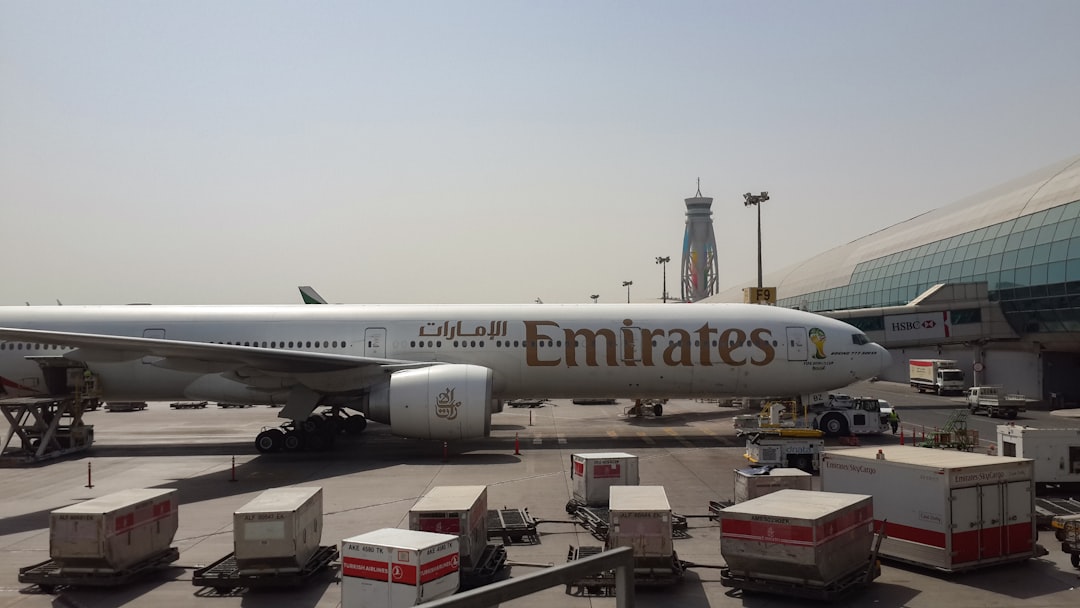
We’ve already seen major carriers suspend or cancel services, including Turkish Airlines, Lufthansa, and British Airways. British Airways has canceled flights to Tel Aviv and Bahrain until March 3, and scrapped service to Amman.
Here’s how “until X date” reads in practice: it’s a planning marker, not a promise. Schedules may return earlier, extend later, or restart with reduced frequency.
Typical suspension patterns you’ll notice
- pulling service to specific cities first
- pausing overflights even when destination flights continue
- consolidating flights into fewer departures with fuller cabins
- operating rescue or repositioning flights to move aircraft and crews
Route impacts that change the passenger experience
This is where the “review” becomes tangible. When airlines reroute around risk, the onboard experience usually changes in four ways.
1) Seat and comfort: more swaps, fewer favorites
You might book one aircraft and get another. Airlines often upgauge or change types to manage range and duty-time.
What that means for comfort:
- Long-haul economy seats are commonly 31–33 inches of pitch and 17–18 inches of width on many widebodies.
- Premium economy often sits around 37–40 inches of pitch and 18.5–19.5 inches of width.
- Business class can swing from “angled” or older staggered seats to true lie-flats, depending on the substitute aircraft.
If you chose a flight for a specific product, re-check your seat map after every schedule change. Your seat assignment can vanish when the aircraft changes.
2) Food and service: catering gets stressed first
When routings change and airports restrict operations, catering and provisioning can get uneven.
- fewer special meals loaded
- shorter menus in premium cabins
- “best effort” substitutions, especially on late-notice extra sections
Crew service is usually professional, but it can feel compressed. Longer flight time does not always mean more service. It can mean the same service spread thinner.
3) Entertainment and connectivity: power matters more than movies
With longer airborne time, IFE and charging become more than a nice-to-have.
What to look for before you fly:
- seat power type: AC outlet vs USB-A/USB-C
- whether power is at every seat or shared
- Wi-Fi availability on your specific tail number, not just the route
A reroute is when you learn whether your airline’s onboard power is reliable. Pack a charged power bank either way.
4) Amenities: the hidden downgrade risk
Amenity kits, blankets, and even headphones can vary by aircraft and by how rushed the operation is.
If you’re connecting to a partner airline due to rebooking, your soft product may change dramatically. That matters on overnight flights when sleep is the whole point.
Competitive context: Gulf hubs vs alternatives
When Dubai and Doha are disrupted, airlines tend to shift flows through:
- Istanbul, when available
- European hubs like Frankfurt, London, or Paris for re-routes
- South Asia connections, depending on where you’re headed
No option is perfect. European hubs can mean more EU-style passenger protections on paper, but also tighter gates and crowded rebooking desks. Istanbul can be efficient, but it can also create longer elapsed travel for some Asia routings.
Quick comparison: what usually changes when reroutes happen
| Factor | Typical nonstop or normal hub routing | Common conflict-zone reroute outcome |
|---|---|---|
| Block time | Planned, optimized routing | Often longer by 1–3+ hours, depending on detour |
| Connection reliability | Built around arrival/departure banks | Higher misconnect risk due to late arrivals |
| Aircraft | More consistent by schedule | Higher swap probability |
| Cabin experience | Predictable seat and catering | More variability, especially in economy |
5) Why this matters for global aviation (and your rights, miles, and wallet)
The Middle East is a core bridge for Europe–Asia–Africa travel. Airports like Dubai, Doha, and Abu Dhabi are built for long-haul transfers. When that bridge is disrupted, knock-on effects show up everywhere.
Systemwide impacts you feel as a traveler
- longer flight times increase fuel burn and can force payload limits
- crew duty-time limits can trigger cancellations that look “random”
- aircraft rotations break, leading to rolling delays for days
- full flights become fuller, making last-seat rebooking harder
- belly cargo capacity tightens, which can affect freight and sometimes schedules
Passenger rights and compensation: real expectations
Rules depend heavily on ticketing carrier, origin, and disruption cause. In conflict-driven disruptions, airlines often classify events as outside their control. That can limit cash compensation, even when rebooking and duty-of-care still apply.
You’ll usually see a split between:
- rebooking/refund entitlements, which are broadly available
- cash compensation, which can be more limited in extraordinary situations
- care obligations (meals/hotels), which vary by jurisdiction and facts
Miles and points implications (this is where frequent flyers can win or lose)
Disruptions can be painful, but there are a few angles to watch:
- If you’re rebooked onto a partner, verify whether you’ll earn miles and elite credit as ticketed or as flown.
- If you’re chasing status, a reroute can add distance but not always add credit. Revenue programs may still award by spend.
- Award tickets can be reprotected in ways cash tickets are not, especially if saver space is gone. Call quickly.
- If your itinerary gets rerouted away from your chosen hub, lounge access rules may change. Elite benefits can also vary by operating carrier.
6) EASA’s specific guidance for air operators (and what you’ll notice onboard)
EASA’s core instruction here is simple: do not operate in the affected airspace at any altitude. For dispatchers, that’s effectively a “no-go” box on the map.
Airlines complying with that guidance must also closely monitor NOTAMs and aeronautical publications. They also coordinate with authorities and update risk assessments as conditions change.
What compliance looks like from 12A
You may see:
- last-minute diversions to different alternates
- technical fuel stops added to stay within limits
- altered flight paths that change turbulence patterns and flight duration
- cancellations close to departure when risk information updates quickly
This is why you can be checked in and still get canceled. The decision window can be late.
7) CZIB validity and ongoing monitoring
This CZIB was issued February 28, 2026, and was initially valid until Monday, March 2, 2026, with review planned.
Treat “valid until” as the next decision point, not the finish line. A bulletin can be extended, replaced, narrowed, or lifted depending on threat conditions.
How to plan when the end date is a moving target
- Favor tickets with flexibility for changes or refunds.
- Avoid ultra-tight connections through affected hubs.
- Re-check your aircraft type and seat assignment after each schedule update.
- Track your operating carrier’s advisories, not just the airport’s status.
⚠️ Heads Up: If you’re scheduled through the region in the next 72 hours, assume at least one schedule change. Pick seats and download offline entertainment now.
Who should book this?
If you have a choice, this is the week to prioritize resilience over perfection.
Book (or keep) your itinerary if:
- you can route through non-affected hubs with longer connection times
- you have elite status that helps with priority rebooking and standby options
- you’re on a flexible fare, or your airline is offering no-fee changes
Avoid booking through the Persian Gulf right now if:
- you have a must-make event and no buffer day
- your connection is short and the next flight is the next day
- you picked a flight for a specific aircraft or premium cabin product
If you’re traveling between now and March 2, 2026, lock in a backup routing today and keep screenshots of your original schedule and fare rules before the next round of updates hits.