- ICE detention reached a record 68,990 individuals on January 7, 2026, amid intensified airport screenings.
- Non-criminal immigration violators represent 92% of the recent growth in the U.S. detention population.
- CBP officers have increased electronic device inspections and secondary screenings for visa and green card holders.
U.S. Customs and Border Protection officers have intensified airport questioning and inspections in early 2026, pushing more travelers into secondary screenings as Immigration and Customs Enforcement detention reached a record 68,990 on January 7, 2026.

The increase has raised pressure on lawful permanent residents, visa holders and other travelers arriving at U.S. airports, where officers can inspect documents, examine electronic devices and flag past arrests or paperwork discrepancies for deeper review. CBP Airport Detentions now sit at the front end of a system that can move people from an airport interview room into ICE custody.
Detention numbers rose 11,296 from September 21, 2025, to January 7, 2026. Of that growth, 92% came from immigrants without criminal convictions, classified as “other immigration violators.”
A Broader Enforcement Shift
The trend reflects a broader enforcement shift after post-2025 executive actions expanded CBP and ICE authority. Those changes enabled what officials and advocates describe as “catch and revoke” tactics, with visa cancellations or green card challenges carried out at the point of entry for suspected violations, including older ones.
Nearly half, or 48%, of all detainees lack criminal histories. That has sharpened concern that minor issues such as old arrests, unresolved charges or document inconsistencies can trigger prolonged holds.
A January 14, 2026, American Immigration Council report described the detention system as “bigger, harsher, and less accountable than ever,” linking the rise in custody to reduced oversight in expanded facilities. Fears have also grown after the first ICE detention death of 2026 was reported shortly after January 7, following a record number of in-custody fatalities in December 2025.
Enforcement also varies sharply by airport. Some travelers described lighter screening in Miami and tougher treatment in Newark, with outcomes often depending on officer discretion.
Who Faces the Highest Risk
Green card holders face the highest risk when older misdemeanor records or arrests without convictions appear in federal databases during reentry checks. A shoplifting case from decades earlier, or a paperwork error on travel documents, can lead to revocation proceedings or several days in ICE detention while officers review admissibility.
Visa holders, including students, workers and tourists, also face rising scrutiny if officers see mismatched documents or suspect the wrong travel purpose. A traveler arriving on a B-1/B-2 visa may draw further questioning if officers believe the person intends to work rather than visit.
Pending charges have become a sharper point of focus. In Connecticut, apprehensions tied to pending charges rose 600% from 2024 to 2025.
Business travelers and tourists can also be caught by abrupt rule changes. Unannounced visa measures have left some passengers held overnight after airlines failed to update travel requirements before departure.
Nationals from countries under heavier enforcement have reported longer screenings as officers review travel history, social media and geopolitical concerns. Ecuadorians, Guatemalans and Mexicans were among those facing prolonged scrutiny, with Connecticut alone recording 184 apprehensions of Ecuadorians through October 2025.
What Happens at the Airport
At airports and preclearance sites, CBP serves as what the enforcement system calls the “front door.” What starts as a passport inspection can quickly become a detailed interview about travel history, employment, family ties, prior immigration filings and any past contact with police.
Officers can demand passports, visas, I-94 records, green cards and employment letters, and they often compare the documents line by line. Even a misspelled employer name can trigger a fraud inquiry.
Electronics add another layer of risk. CBP officers can inspect phones, laptops and tablets under border search authority, and travelers who refuse to provide passwords risk device seizure or denial of entry.
Digital reviews in FY2026 have flagged social media activity and older online posts as possible threats. Students and other visa holders have faced detention after those searches uncovered material officers viewed as problematic.
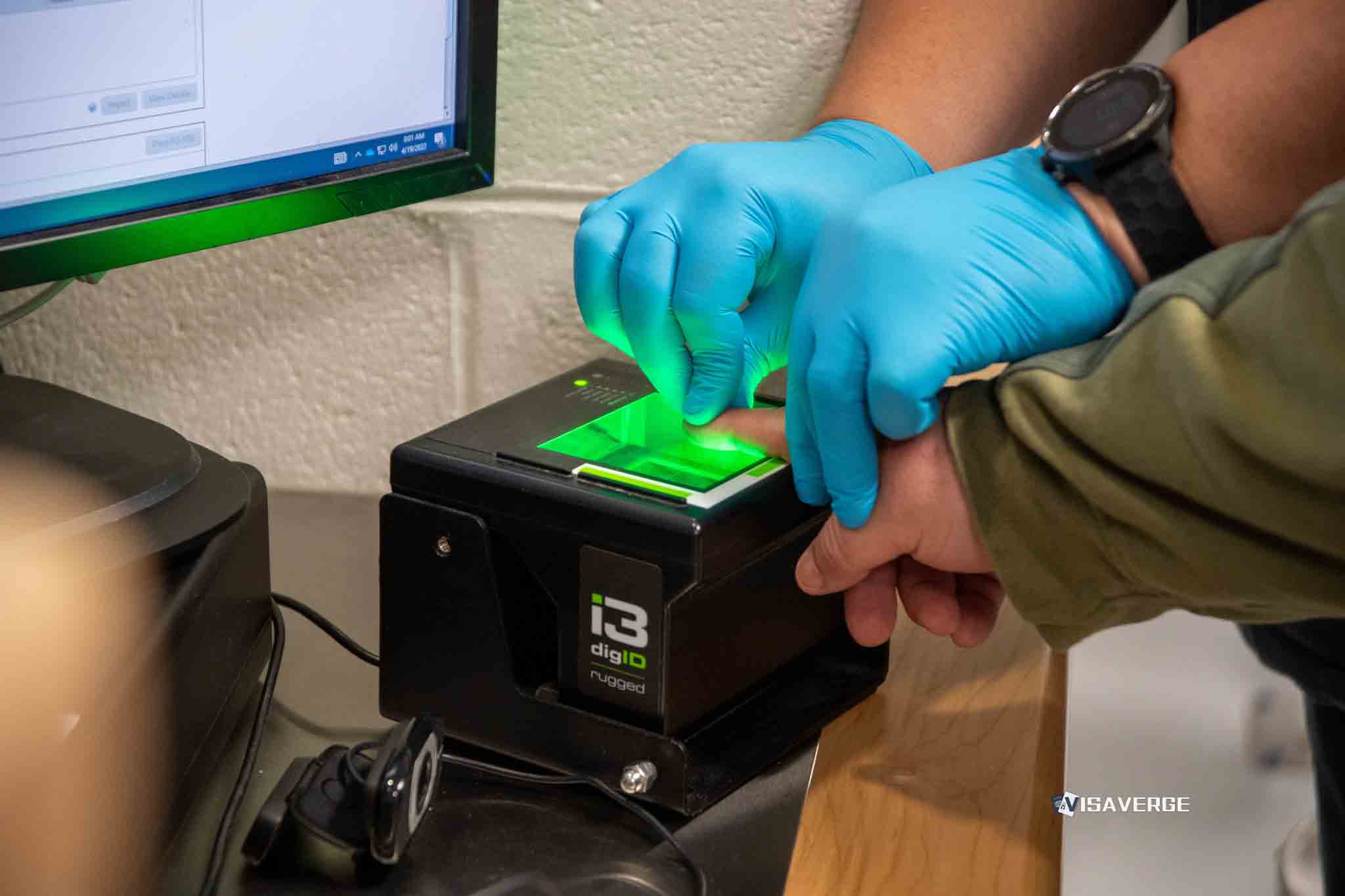
Biometric checks deepen the process. Fingerprints, photographs and database searches can reveal arrests, overstays or associations that might not appear on paper documents.
For U.S. citizens, that usually means delay. For lawful permanent residents and visa holders, it can mean parole into the country, an airport hold or transfer to ICE custody while the government reviews status.
Secondary inspections often last 1-4 hours, but longer holds can follow when officers escalate a case. Once that happens, the encounter may stop looking like a travel delay and start looking like detention.
The Detention System Behind the Counter
ICE held people in 212 facilities when the detention population reached 68,990 in January 2026. Those numbers do not include short-term CBP holds at airports and border facilities.
The makeup of that growth has drawn attention. Only 8% of FY2026 ICE growth involved people with criminal convictions, while 72% of the January 2026 increase reflected a surge in non-criminal cases moving through the airport-to-ICE pipeline.
Community arrests away from jails have climbed as well. In Connecticut, the monthly average rose from 21 in 2024 to 63 in 2025 through October, and 49% of those arrests occurred in Hartford near immigration courts.
At the same time, ICE has expanded electronic monitoring. GPS ankle monitor use reached record levels in early 2026 as the agency relied more heavily on tracking technology in place of smartphone-based check-in systems.
National removals, which had dropped after 2020, have started to rebound in selected areas. In New England, Massachusetts led those increases, with Connecticut second.
That wider backdrop shapes what happens in an airport inspection room. Travelers who might once have expected a routine reentry now face a system that can turn an administrative discrepancy into detention.
Rights and Limits at the Port of Entry
Lawful permanent residents have some protections, but not immunity. Returning residents can still face questioning over admissibility, past conduct and travel history, and some now avoid non-essential trips abroad because of reentry fears.
Visa holders face even narrower margins for error. A discrepancy between a stated purpose of travel and the officer’s understanding of the visa category can be enough to trigger cancellation or denied entry.
Rights at the port of entry remain limited but not absent. Travelers can decline to answer questions beyond name and citizenship and can ask for counsel, though officers may not provide a lawyer immediately.
A traveler can say, “I want to speak to a lawyer.” That request does not end questioning, but it marks a clear assertion of legal rights.
Citizens cannot be denied entry for refusing to unlock devices, though they can face delays and seizure of electronics. Lawful permanent residents and visa holders face harder choices because refusal can affect whether officers allow them into the country.
Travelers can also ask for interpretation, medication and consular contact. Those requests can matter when screenings stretch for hours and confusion compounds the risk of signing forms without understanding them.
Preparing for Scrutiny
Lawyers advise travelers with older arrests, prior overstays or past immigration violations to review records before departure. That preparation has become more urgent as old issues, including ones resolved years earlier, now reappear during airport inspections.
Document consistency matters. Passports, visas, employer letters and travel histories need to match exactly, because officers treat small discrepancies as possible signs of fraud or misrepresentation.
Many travelers have also changed how they carry data. Some reduce sensitive material on devices or rely on cloud backups, knowing that a phone or laptop may be searched or seized.
If officers send a traveler to secondary, careful note-taking can help later. Names, badge numbers and the timing of each stage can become important if the person later files a complaint or challenges what happened.
Signing papers without legal advice carries its own dangers. A rushed signature can turn a stressful airport interview into a formal abandonment of status or a removal decision.
Consequences Beyond the Airport
For those transferred to ICE, alternatives to detention remain part of the system. Early in 2026, 180,658 people were under Alternatives to Detention monitoring, creating a possible path to release for some non-criminal cases.
Families, employers and schools feel the fallout quickly. A detained worker can miss shifts or lose a job, a student can miss the start of a term, and business trips can collapse after a single airport inspection.
The burden falls unevenly. Travelers with prior arrests, nationals from countries under heavier enforcement and people whose documents draw even minor questions carry more of the risk.
Critics argue the data undercut public safety claims because so much of the growth comes from non-criminal cases. With 92% of the rise tied to immigrants without criminal convictions, the expansion has reshaped detention into a system aimed far beyond people convicted of crimes.
High-profile abuse allegations, including forced undressing and multi-week holds, have already prompted lawsuits. Accountability has lagged even as enforcement powers have widened.
Global tensions add another layer of unpredictability. Sudden visa restrictions and retaliatory screening practices can ripple into U.S.-bound travel with little warning, leaving passengers and airlines scrambling to keep up.
That instability has made airport entry rules more fluid than many travelers expect. A person who cleared inspection smoothly one month may meet a much harder line on the next trip.
For now, the numbers tell the story of a system operating at a new level of intensity. With ICE detention at 68,990, secondary screenings lasting hours and non-criminal cases driving most of the growth, the stakes at the inspection counter have climbed for green card holders, visa holders and tourists alike.
In that environment, the airport no longer serves only as a place of arrival. For some travelers in 2026, it has become the first stop in a detention system that reaches far beyond the gate.