- U.S. visa wait times in India diverge significantly by city and category as of January 2026.
- New vetting procedures have reduced daily interview capacity by nearly 50% across most consular hubs.
- India remains exempted from the pause on immigrant visa processing affecting seventy-five other nations.
(MUMBAI) — Indian applicants checked U.S. visa interview calendars on Friday as official data showed sharply different wait times by city, with visitor visas still heavily backlogged even as student and work categories moved faster in some hubs.
Figures from the U.S. Department of State’s Global Visa Wait Time data, published in the January 14–16, 2026 window, show “next available” interview slots can diverge from “average” waits because of high demand and new vetting procedures.
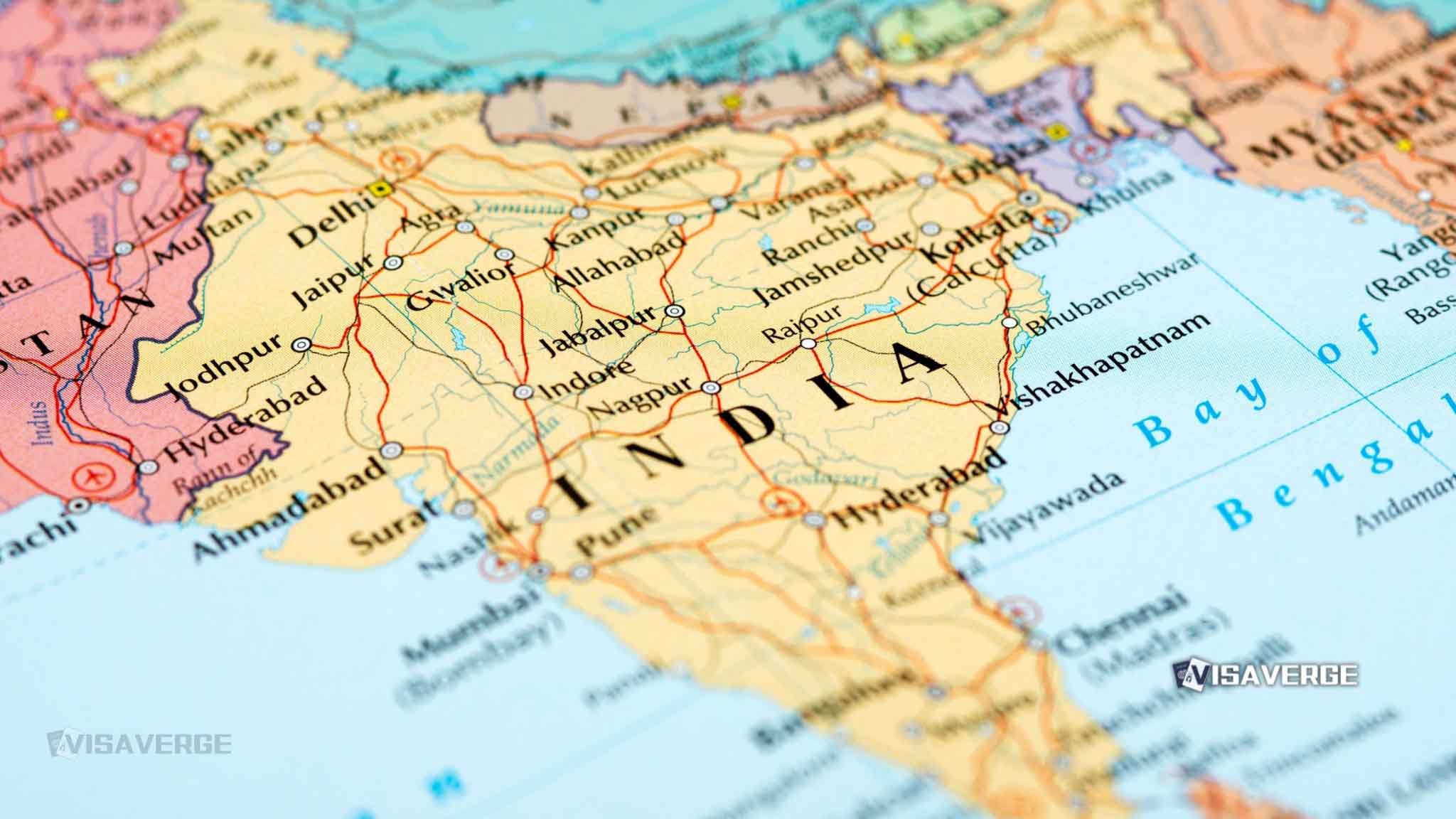
Wait times by city
New Delhi showed some of the longest visitor-visa lines at ~8–10 months for B1/B2 appointments, while student visas were listed at ~1 month and work visas at ~1 month.
Mumbai’s visitor-visa wait was listed at ~7–9.5 months, with student visas at ~3 months and work visas at ~1 month.
- Chennai: visitor visas ~2.5–3 months, student visas ~2 months, work visas ~1 month.
- Hyderabad: visitor visas ~4–5 months, student visas ~2 months, work visas ~2.5 months.
- Kolkata: visitor visas ~4–5 months, student visas ~2 months, work visas ~2.5 months.
One notable shift was in Chennai, where wait times reduced from 8.5 months in late 2025 to roughly 3 months by January 2026, even as other large centers continued to show persistent backlogs for B1/B2 applicants.
Official messaging and quotes
Official U.S. statements in late December and mid-January framed the longer lines as tied to tighter screening, with messaging that prioritized vetting over speed as wait times became a frequent complaint among travelers and employers.
On New Year’s Eve, Dec 31, 2025, the U.S. Embassy in India posted a warning on X amid H-1B backlogs: “Violating U.S. immigration law has consequences. [The administration is] committed to ending illegal immigration and protecting U.S. borders and citizens.”
“While in the past the emphasis may have been on processing cases quickly and reducing wait times, our embassies and consulates around the world, including in India, are now prioritizing thoroughly vetting each visa case above all else.”
The statement above was attributed to a Department of State spokesperson describing the impact of new screening rules on Dec 20, 2025.
Immigrant visa pause and exemptions
The emphasis on vetting has landed as the State Department also prepared a pause on immigrant visa processing for dozens of countries later in January, a step U.S. officials linked to reassessing procedures.
State Department Spokesperson Tommy Pigott, speaking on Jan 14, 2026 about the pause, said:
“Immigrant visa processing from these 75 countries will be paused while the State Department reassess immigration processing procedures to prevent the entry of foreign nationals who would take welfare and public benefits.”
The pause on immigrant visas for 75 countries is described in the official timeline as taking effect on Jan 21, 2026, with India exempted.
India’s exemption means processing for green card and fiancé visas for Indians will continue under existing rules even as the broader shift toward scrutiny affects consular throughput.
Policy changes affecting processing
Several policy changes in late 2025 and early 2026 were cited as contributing to slower processing across categories, including for work-related U.S. visa applicants.
- Expanded Social Media Screening (dated Dec 15, 2025) extended mandatory online presence reviews to H-1B and H-4 applicants, adding an average of 30 additional minutes per case and cutting daily interview capacity by nearly 50%.
- Presidential Proclamation 10998 (dated Jan 1, 2026) suspended entry for nationals of 39 countries; India is not on the list but the changes were linked to heightened scrutiny and “administrative processing” delays (221g holds) for Indian applicants that can last up to six weeks.
- Rescheduling Rule (dated Jan 1, 2025): applicants may reschedule only once; further attempts require payment of a new visa fee.
The immigrant visa freeze taking effect on Jan 21, 2026 was presented as separate from case-by-case delays; India was described as exempted from the 75-country list while remaining subject to the general vetting slowdown.
Practical effects for applicants and employers
In recent weeks, appointment disruptions hit employment-based travelers most directly. Thousands of H-1B and H-4 appointments scheduled for December 2025 were abruptly canceled and pushed to February and March 2026, particularly in Chennai and Hyderabad.
The knock-on effects have reached corporate staffing decisions as firms try to avoid project delays. Major Indian IT firms reported redeploying up to 12% of affected staff to near-shore centers in Mexico or Canada to work around the U.S. visa bottleneck.
For visitor visas, applicants seeking renewals through interview waivers have also had to adjust. B1/B2 interview waiver appointments under the “Dropbox” system have been consolidated in New Delhi as of March 2024.
While documents can still be dropped off at any center, processing is centralized in New Delhi, which has led to longer return times for passports, according to the guidance summarized alongside the wait time data.
The difference between visitor-visa backlogs and shorter lines in some student and work categories has become a planning issue as families and companies pick where to apply and whether to wait for local availability to improve.
In New Delhi, the gap was pronounced, with visitor visas listed at ~8–10 months compared with ~1 month for student visas and ~1 month for work visas. Mumbai showed a similar pattern.
Chennai’s improvement stood out, with visitor visas at ~2.5–3 months and work visas at ~1 month. Hyderabad and Kolkata remained longer for B1/B2 at ~4–5 months, while their work categories were listed at ~2.5 months.
U.S. officials have described the newer screening measures as a throughput constraint rather than a temporary spike, with consular officers spending additional time per applicant and interview capacity reduced.
That link between security checks and processing speed has become central to how applicants interpret the Global Visa Wait Time figures, with priority presented as “thoroughly vetting each visa case above all else.”
The same enforcement-focused messaging reappeared in the embassy’s Dec 31, 2025 post: “Violating U.S. immigration law has consequences. [The administration is] committed to ending illegal immigration and protecting U.S. borders and citizens.”
With the Jan 21, 2026 immigrant visa pause applying to 75 countries but not India, the direct effect on Indian immigrant-visa applicants was described as limited to the broader slowdown rather than a formal suspension.
“Immigrant visa processing from these 75 countries will be paused while the State Department reassess immigration processing procedures to prevent the entry of foreign nationals who would take welfare and public benefits.”
For applicants trying to act on the shifting timelines, U.S. government portals remain the official reference points for appointment availability and policy updates.
- The U.S. Embassy & Consulates in India publishes updates at in.usembassy.gov.
- The State Department posts wait times on its Global Visa Wait Times page.
- Applicants scheduling interviews use the U.S. Visa Scheduling Portal.
- Official inquiries can be sent to [email protected].
The result, as of Jan 16, 2026, is a U.S. visa system in India where the city a person applies in can materially change how long they wait, and where policies that add 30 minutes of screening per case and cut capacity by nearly 50% continue to shape those timelines.