- 01USCIS has indefinitely suspended all immigration requests for Afghan nationals following security concerns in late 2025.
- 02Over 20,000 Afghan allies remain stranded in Pakistan, facing immediate threats of arrest and deportation.
- 03New restrictive policies and presidential entry bans have created a total administrative bottleneck for asylum seekers.
(PAKISTAN) — U.S. citizenship and immigration services has suspended “processing of all immigration requests relating to Afghan nationals,” leaving afghan asylum seekers in Pakistan facing a U.S. pipeline paralysis as Pakistani authorities press an aggressive deportation campaign.
the indefinite uscis processing suspension, announced November 27, 2025, covers “asylum, special immigrant visas (SIVs), family reunification, and work permit renewals,” according to the USCIS notice.
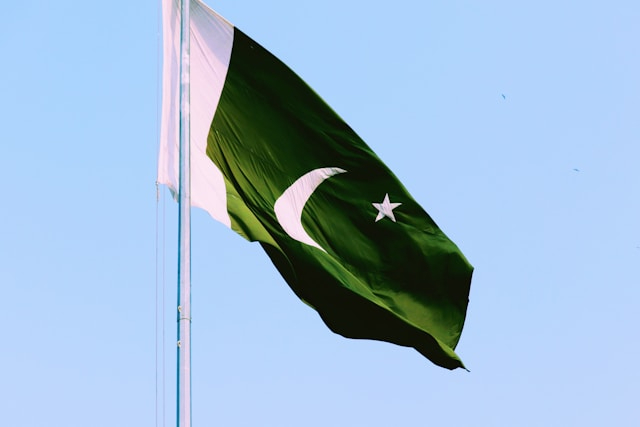
USCIS processing suspension
USCIS tied the move to “a security incident in late 2025” and said it was reviewing vetting. “Effective immediately, processing of all immigration requests relating to Afghan nationals is stopped indefinitely pending further review of security and vetting protocols,” the USCIS notice said.
USCIS Director Joseph Edlow criticized U.S. policy under Former President Biden in a statement that accompanied the suspension. “My primary responsibility is to ensure that every alien is vetted and screened to the maximum degree possible. Yesterday’s horrific events make it abundantly clear the Biden administration spent the last four years dismantling basic vetting and screening standards,” Edlow said.
Related U.S. policy actions
Two days after the USCIS announcement, the U.S. State Department paused visa issuance for people traveling on Afghan passports. “The Department of State has IMMEDIATELY paused visa issuance for individuals traveling on Afghan passports. The Department is taking all necessary steps to protect US national security and public safety,” the State Department said in a post on X dated November 29, 2025.
A presidential entry restriction then added another choke point even for applicants who might otherwise progress. Presidential Proclamation 10998, titled “Restricting and Limiting the Entry of Foreign Nationals to Protect the Security of the United States,” took effect January 1, 2026, and designated Afghanistan as a “high-risk” country, imposing “a full suspension on entry for most non-immigrant and immigrant categories,” the information says.
The sequence matters for Afghan applicants stuck in Pakistan because separate parts of the pipeline are controlled by different U.S. agencies. USCIS handles many immigration benefit requests, while the State Department controls visa issuance and consular processing, and the proclamation affects entry to the United States.
Pakistan enforcement and deportations
At the same time, Pakistan is enforcing its “Illegal Foreigners Repatriation Plan,” and over 1.1 million Afghans have already been deported as of early 2026, the information says.
Pakistan’s enforcement environment has made the third-country processing model more precarious. The information says Pakistan’s Ministry of Interior has signaled it will not grant a uniform extension for transit visas for those awaiting Western resettlement.
A deadline for many categories, including Afghan Citizen Card holders, expired in mid-2025, leaving them described as “illegal” and subject to arrest, the information says. That exposure can rise suddenly when paperwork lapses, even for people who say they are waiting on U.S.-linked processing.
Practical effects of the combined measures
In practical terms, a “processing freeze” means cases stop moving even when people are waiting for the next administrative step. That can translate into delays, an inability to schedule interviews or issue visas, and extended uncertainty while applicants remain in a third country.
For families in limbo, an “indefinite suspension” makes planning difficult because it provides no endpoint to anchor decisions about housing, schooling, medical care, or whether to remain in Pakistan. Even when one step is completed, the next step can still be blocked by another agency action.
The result is a bottleneck with multiple points of failure: USCIS is not processing Afghan-related requests, the State Department has paused visa issuance for Afghan passport holders, and the presidential proclamation suspends entry for most categories. Each layer can affect the next step for applicants trying to move from Pakistan to the United States.
Who is affected
The group includes asylum seekers, students, Priority 1 (P-1) and Priority 2 (P-2) referral applicants, SIV-related populations, and their families. An estimated 20,000 to 25,000 Afghans are currently in Pakistan awaiting U.S. resettlement through P-1, P-2, or SIV programs, according to the information.
Many relied on third-country processing because it offered a workable route to interviews and paperwork outside Afghanistan. That third-country approach can require applicants to maintain legal status in the host country while waiting for decisions elsewhere.
The stakes are heightened because many of those stranded in Pakistan are described as U.S. wartime allies, including interpreters, human rights activists, and former government employees. The information says they were instructed by the U.S. government to travel to a third country such as Pakistan to complete visa processing.
Human impact and protection concerns
For Afghans who traveled to Pakistan to complete U.S.-linked cases, the two pressures compound quickly: the U.S. process stalls while legal status and daily safety in Pakistan become harder to maintain. The information describes students confronting sudden uncertainty after the U.S. freeze.
Afghan students at schools in Islamabad reported extreme psychological distress, and news of the U.S. visa freeze caused scenes of “students quiet or crying in class,” the information says. With processing paused and entry restricted, their “path to higher education and safety was severed,” it adds.
Families living under enforcement pressure described raids and the fear of checkpoints. Refugees described “day and night” police raids in Islamabad and Rawalpindi, the information says. Some Afghans in Pakistan have sold all their belongings in Afghanistan and are now destitute, the information says.
Living without stable status can also limit the ability to work or access healthcare, according to the information. Protection fears sit alongside the logistical barriers: individuals in the P-1 and P-2 categories expressed that deportation to Afghanistan is a “death sentence,” the information says, because they are easily identified by the Taliban for previous cooperation with international forces.
Policy changes inside the United States
Developments inside the United States have also reshaped expectations for some Afghans who hoped for protections after arrival. The Department of Homeland Security terminated Temporary Protected Status for Afghanistan in May 2025, the information says.
TPS is a U.S.-based protection and does not shield Afghans living in Pakistan, but the termination removed a pathway some might have sought after reaching the United States. The end of TPS also “signal[ed] a broader policy shift,” the information says.
Advocacy, documentation, and practical steps
For advocacy groups and applicants, the U.S. association of many stranded Afghans also shapes the way their cases are framed and documented. The information describes groups that often include interpreters, former government employees, human rights defenders, at-risk minorities, and others with U.S. ties.
Applicants and supporters often focus on preserving records that demonstrate eligibility, prior affiliation, and the basis for fear, while tracking official updates. The information emphasizes that outcomes remain uncertain, and the most practical steps involve readiness and verified information rather than assumptions about timelines.
With policies shifting across agencies, verification becomes a core challenge for people who are already under stress and facing enforcement risk in Pakistan. The information points to official U.S. government pages as reference points for updates.
USCIS posts notices on its newsroom page at USCIS Newsroom. The State Department publishes visa-related updates at Department of State Visa News, while DHS updates appear at DHS Fact Sheets.
The information also warns, in effect, against relying on screenshots without links or documents that cannot be matched to official pages. For applicants trying to make decisions in Pakistan under pressure, aligning dates and language across agency postings can be one way to confirm what is in force and what has changed.
Summary: immediate reality for asylum seekers
For Afghan asylum seekers waiting in Pakistan, the immediate reality remains a mix of administrative standstill and heightened exposure to detention or deportation. The information captures that fear in the simplest terms: people describe “day and night” raids, and some call removal to Afghanistan a “death sentence.”
The U.S. has frozen all Afghan-related immigration processing due to security reviews. This leaves thousands of refugees in Pakistan at risk of deportation. Multiple agencies, including the State Department and USCIS, have paused visa issuance and benefit requests. Afghan allies, including interpreters and activists, now face a ‘pipeline paralysis,’ trapped between a stalled U.S. system and Pakistan’s ‘Illegal Foreigners Repatriation Plan’ that targets those without valid status.