- A partial DHS shutdown began February 14, 2026, while ICE and CBP remain funded.
- Operations continue via a $75 billion funding stream from the One Big Beautiful Bill Act.
- Democrats demand stricter enforcement oversight including body cameras and warrant standards to end the standoff.
The United States entered a partial government shutdown focused on immigration enforcement, with ICE and CBP sustained by alternative funding while DHS as a whole pauses certain operations. The lapse began February 14, 2026 at 12:01 a.m., after the White House and congressional Democrats failed to reach a funding agreement tied to immigration enforcement oversight.
Unlike broader shutdowns, this funding break targets DHS while other federal departments remain funded. Many DHS functions continue under “essential” designations, yet thousands of employees are furloughed and many more are working without pay. Immigrants, employers, and families may still see disruptions, even as enforcement activity remains active.
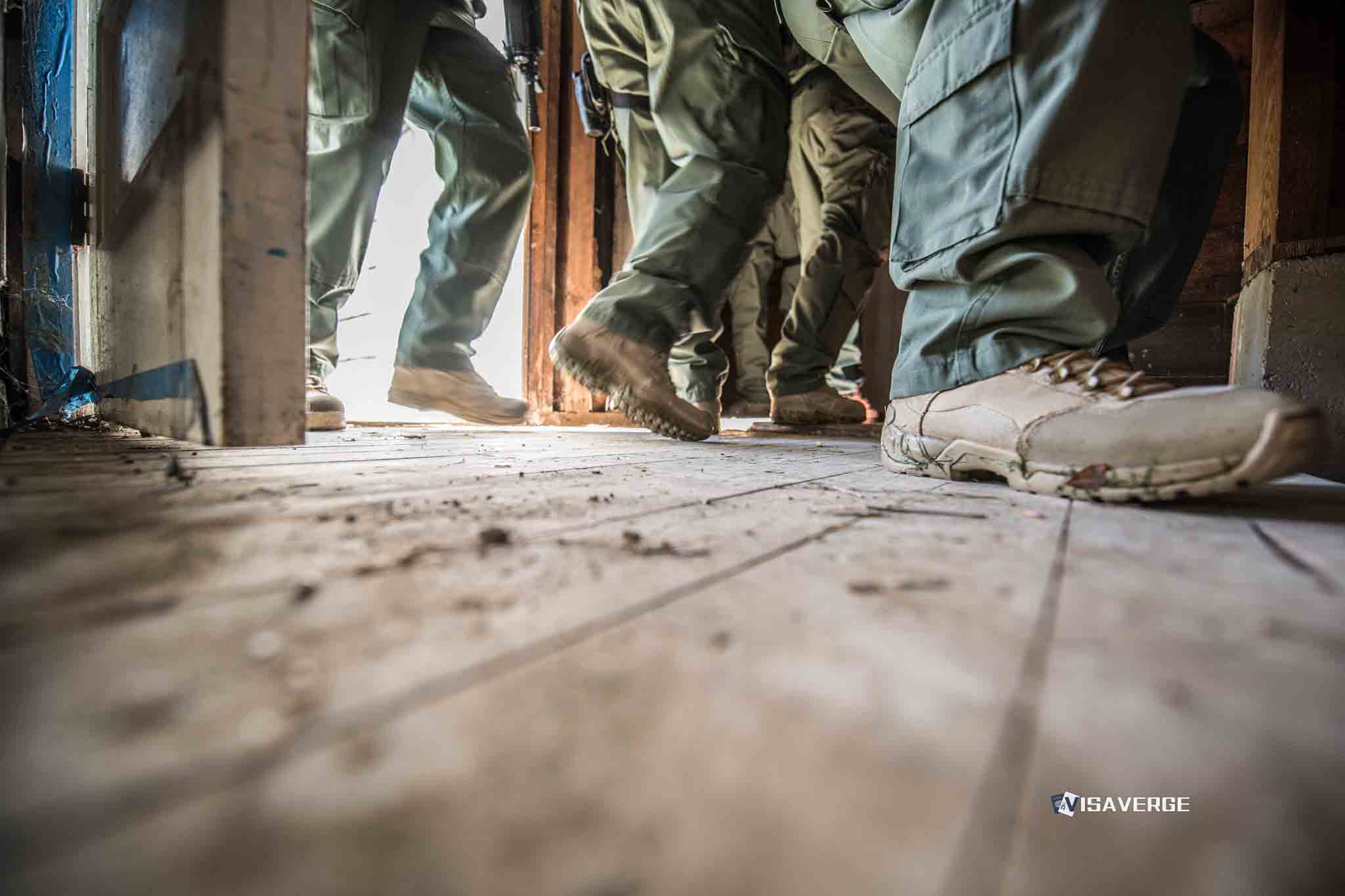
Agency operations during a shutdown typically split into two tracks: public-safety or legally required work that continues, and administrative or support work that may pause or slow. For immigrants, that can mean active field enforcement alongside delayed answers, slower scheduling, and reduced capacity for non-enforcement support.
White House messaging made clear that immigration enforcement continuity was a central point in the standoff. “The administration is not going to accept concessions that meaningfully affect its ability to carry out its immigration enforcement agenda,” a White House senior official said February 14, 2026.
Dedicated funding streams are a key reason immigration enforcement can keep running during a DHS shutdown. ICE and CBP are drawing on a $75 billion stream from the One Big Beautiful Bill Act, allowing mass deportation operations to continue even while other DHS components face funding gaps.
That insulation changes how to read official “continuity” statements. Enforcement can remain fully staffed in priority areas, while support units, procurement, contracting, and routine communications may slow. Day-to-day impacts can show up in backlogs, longer hold times, and delayed coordination with outside stakeholders.
Continuity for ICE and CBP also means arrests, detention bookings, and removals can proceed at pace. At a House Homeland Security Committee hearing on February 11, 2026, Todd Lyons, acting head of ICE, said, “The president tasked us with mass deportations, and we are fulfilling that mandate.”
Lyons told lawmakers ICE carried out more than 475,000 removals and nearly 379,000 arrests in the first year of the administration’s second term. Those figures frame the operational baseline during the shutdown, with the central question shifting to oversight and legal constraints rather than capacity alone.
Even with funding for enforcement, shutdown conditions can add friction. Staffing constraints can slow records responses, transfer coordination, and some administrative support. USCIS-adjacent processes that rely on DHS infrastructure may also feel secondary effects, such as appointment rescheduling or delays tied to shared systems and facilities.
| Aspect | Status/Action | Impacted Group | Notes |
|---|---|---|---|
| DHS operations | Partial shutdown starting February 14, 2026 at 12:01 a.m. | DHS employees; public-facing services | About 92% working without pay; roughly 23,000 furloughed |
| ICE enforcement | Operating with insulated funds | People at risk of arrest or detention | Supported by $75 billion stream from the One Big Beautiful Bill Act |
| CBP enforcement | Operating with insulated funds | Border and interior enforcement targets | Field activity can continue despite DHS-wide funding lapse |
| Detention and transfers | Expansion planning continues | Detainees; families; counsel | Larger facilities can mean more transfers and harder access to counsel |
| USCIS-adjacent impacts | Possible delays from DHS infrastructure strain | Petitioners, applicants, attorneys, employers | Some support functions may slow even if fee-funded work continues |
| State Department immigrant visa issuances | Paused for certain nationals as of February 2, 2026 | Families abroad; sponsoring relatives | Downstream effects may include delayed reunification and travel planning changes |
Plans released February 12, 2026 outlined a major detention and processing buildout that could reshape how quickly people move through custody. Documents described spending tied to acquiring and retrofitting warehouses into large-scale detention centers, while USCIS and DHS projected a $38.3 billion effort tied to the expansion.
Officials described 16 regional processing centers and eight primary locations capable of holding 7,000 to 10,000 people each. Processing centers typically handle intake, screening, medical checks, identification steps, and transfer logistics. Big numbers can translate into faster throughput, but they also raise questions about conditions, staffing, and access to counsel.
Large-scale facilities can affect the practical ability to contact family and lawyers. Transfers between locations may happen quickly, sometimes across state lines. For detained individuals, that can complicate case preparation and court scheduling.
Legal process touchpoints often start early in custody. Many detainees may receive a notice to appear, followed by custody determinations that can include bond decisions in many cases. Where applicable, credible fear screenings and remote hearings by phone or video can become decisive, especially when dockets are crowded.
The shutdown itself is rooted in a political dispute over enforcement oversight conditions attached to DHS funding. Senate Minority Leader Chuck Schumer said February 13, 2026, “Without legislation, what [Border Czar] Tom Homan says today could be reversed tomorrow on a whim from Donald Trump.”
Democrats tied their position to a “10-point framework” after the deaths of U.S. citizens Renee Good and Alex Pretti during enforcement actions in Minneapolis. The demands include bans on agent masks, mandatory body cameras, stricter warrant standards for home entry, and limits on roving patrols in metropolitan areas.
Each item would change on-the-ground encounters in distinct ways. A mask ban and body-camera mandate could increase identification and documentation during stops and arrests. Warrant standards would affect when officers could enter homes, while roving patrol limits could narrow broad, mobile enforcement operations in cities like San Francisco and Minneapolis.
President Trump cast the standoff as a safety issue. “We’re talking, but we have to protect law enforcement,” he said February 13, 2026. Some changes could be made through agency guidance, while others may require legislation, leaving implementation uncertain until rules are issued and enforced.
For individuals and communities, the combination of shutdown conditions and enforcement continuity can feel contradictory. About 92% of the DHS workforce is working without pay, while roughly 23,000 employees are furloughed. That split may reduce responsiveness for hotlines, routine communications, and administrative follow-through.
Local surges can also shift risk quickly. DHS reported more than 4,000 arrests in Minnesota alone as of February 4, 2026, tied to ongoing operations described as Operation Metro Surge. Such concentrated activity can disrupt workplaces and households, including mixed-status families.
State Department visa policy has added pressure on families abroad. On February 2, 2026, the State Department paused immigrant visa issuances for nationals of several dozen countries deemed “high risk” for public benefit reliance. Even when a petitioner’s paperwork is complete, pauses can delay family reunification and complicate travel planning.
DHS has also promoted “self-deportation incentives” through the CBP Home app, pairing enforcement warnings with benefits for voluntary departure. Kristi Noem, DHS Secretary, said January 21, 2026, “Illegal aliens should take advantage of this gift and self-deport because if they don’t, we will find them, we will arrest them, and they will never return.”
The program offers a $2,600 stipend and a free flight for people who depart voluntarily. Decisions to leave can carry legal risk, including future admissibility problems, bars, or effects on pending applications in some cases. People weighing departure typically benefit from individualized legal advice before taking action.
✅ Readers with pending immigrant visa or enforcement-related appointments should monitor official channels and consider seeking legal counsel for individualized guidance
Official information can shift quickly during a shutdown, so readers should rely on primary government channels. DHS press releases, the USCIS newsroom, State Department visa updates, and White House statements are the main places where operational changes are posted.
Verification also matters because shutdown periods can invite scams. Check domains carefully, and use official case tools such as USCIS Case Status (eGov) and myUSCIS to review case status and notices. Be cautious of unsolicited calls demanding payment or threatening immediate arrest based on “missed appointments.”
⚠️ Official updates can change rapidly during shutdowns; verify via DHS press releases, USCIS newsroom, and State Department visa updates before acting
For those affected by detention or enforcement activity, the core practical issue is continuity: ICE and CBP remain funded through the One Big Beautiful Bill Act’s $75 billion stream while parts of DHS slow or pause. That combination can speed enforcement actions even as public-facing support becomes harder to reach, making official updates and timely legal counsel more critical during the shutdown that began February 14, 2026 at 12:01 a.m.
This article discusses ongoing government actions and policy proposals related to immigration enforcement. Readers should consult official sources for the most current information and legal guidance.
Information in this article is for informational purposes and does not constitute legal advice.