

⚠️ Indictments reflect formal federal charges; many details remain alleged until proven in court
Three indictments illuminate how federal prosecutors frame assaults on officers during targeted immigration enforcement, the procedural status of each case, and the broader policy context driving intensified operations like Operation Metro Surge.
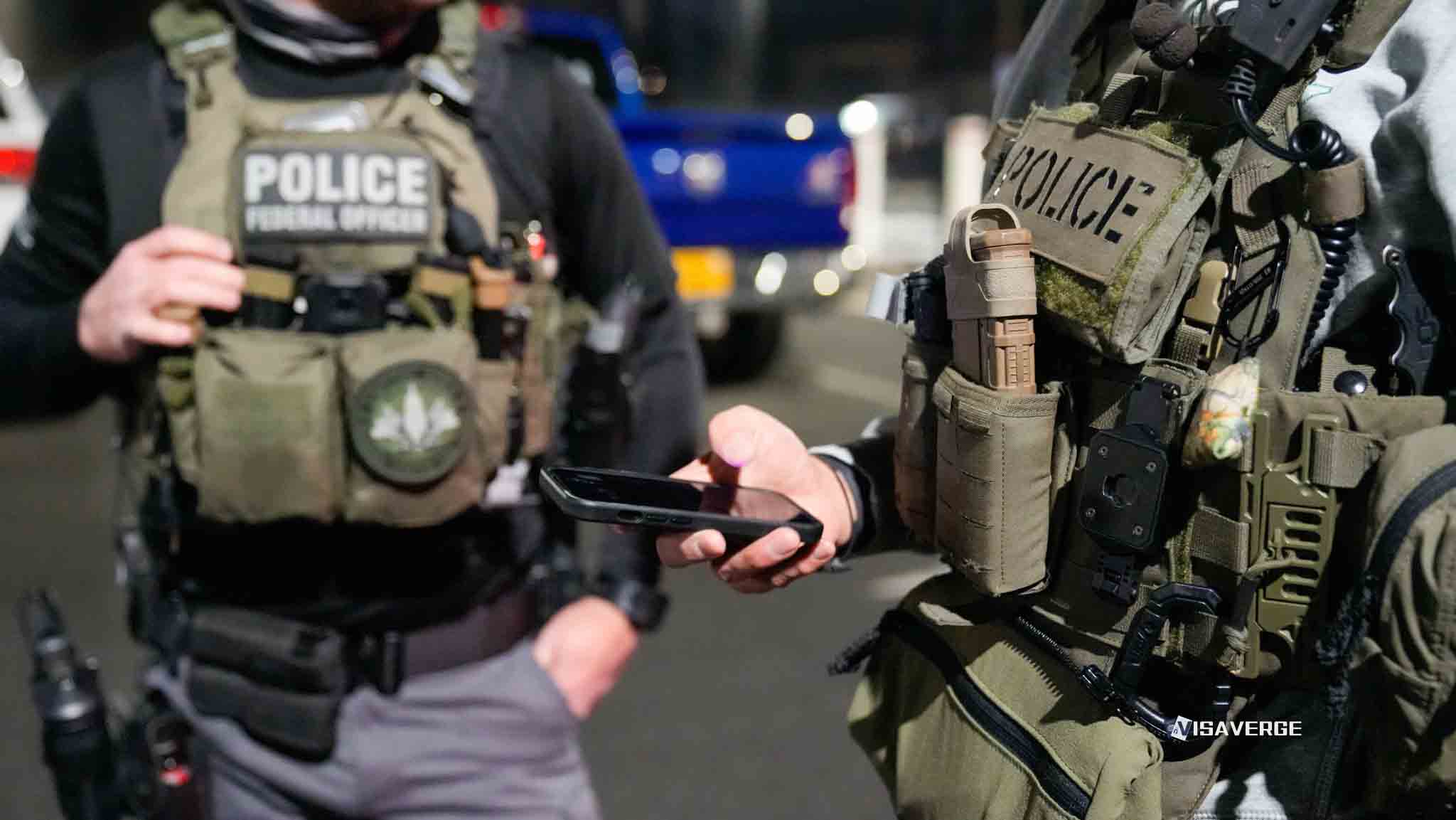
Federal law treats assaults on federal officers as more than a local public-safety issue. Prosecutors often rely on 18 U.S.C. § 111—a statute that can escalate quickly when allegations include bodily injury or use of a deadly weapon, including a vehicle.
The three matters below, spanning Texas, Oregon, and Minnesota, also show how enforcement activity in late 2025 and early 2026 has intersected with community tensions in places like Portland and Minneapolis.
Section 1: Case Study: Jerson Lopez-Sanchez (Texas)
Jerson Lopez-Sanchez is central to a Texas case that prosecutors describe as an assault during an enforcement encounter. The incident date is December 1, 2025, and the case turned into a federal indictment on January 14, 2026.
Court charges, as announced by federal authorities, allege a specific mechanism of injury during a traffic stop in Texas. Investigators say Lopez-Sanchez shifted a Chevrolet Silverado into reverse and struck a federal officer positioned behind the vehicle. That impact allegedly caused injury. Prosecutors also allege he fled the scene.
Charging language matters here. A federal indictment signals that prosecutors have presented evidence to a grand jury and obtained formal charges. It is not a conviction. The difference is practical as well as legal: at the indictment stage, the government’s account is still tested later through motions, hearings, and potentially trial.
The announced charging structure is also specific. Lopez-Sanchez was indicted on three counts of assaulting federal immigration agents. In many federal officer-assault cases, separate counts can track different victims, distinct acts, or different levels of force alleged during one encounter.
Custody status remains a key procedural fact. Authorities stated that, as of January 15, 2026, Lopez-Sanchez was at large. That posture can shape how a case proceeds because initial appearance, detention arguments, and discovery timelines typically begin only after arrest and presentment in federal court.
Public statements often accompany these indictments, but they do not replace court proof. In a DHS statement released January 22, 2026, Tricia McLaughlin (DHS Assistant Secretary) said: “Secretary Noem has been crystal clear: If you threaten or lay a hand on law enforcement, you will be prosecuted to the fullest extent of the law.” Such quotes reflect agency messaging and enforcement priorities. In court, however, the case turns on admissible evidence and the statutory elements prosecutors must prove.
Section 2: Case Study: Luis Nino-Moncada (Oregon)
A separate indictment in Oregon underscores how vehicles can be framed as weapons under federal assault theories. Luis Nino-Moncada was indicted January 13, 2026, following an incident dated January 8, 2026, during a targeted Border Patrol operation in Portland.
The government’s public description alleges that Nino-Moncada used a truck to ram a federal vehicle, placing federal officers in immediate danger. Officials also stated that agents fired at the vehicle, and he was wounded. Those details can affect charging decisions because prosecutors evaluating 18 U.S.C. § 111 often focus on whether force was directed at an officer and whether a “dangerous weapon” theory applies.
The listed charges in announcements were aggravated assault of a federal officer and depredation of federal property. The pairing is common when alleged conduct involves both risk of harm to personnel and damage to government vehicles or equipment.
Attorney General Pamela Bondi issued a statement dated January 12, 2026, saying: “Anyone who crosses the red line of assaulting law enforcement will be met with the full force of this Justice Department. This man. should NEVER have been in our country to begin with, and we will ensure he NEVER walks free in America again.” In criminal practice, that kind of statement signals the government’s posture. It does not resolve the legal questions a judge and jury must decide.
Impact level: High. The case’s impact indicator is driven by factors tied to alleged vehicle use against federal officers and alleged damage to a federal vehicle, as reflected in the tool’s factor list.
Section 3: Case Study: Julio Cesar Sosa-Celis (Minnesota)
An incident in Minnesota illustrates how quickly an enforcement stop can become a federal assault case, even before an indictment is filed. Julio Cesar Sosa-Celis was reported arrested/charged January 15, 2026, after an incident dated January 14, 2026 in Minneapolis.
DHS publicly described the encounter as a targeted traffic stop that turned violent. Officials alleged that Sosa-Celis and two other individuals ambushed an ICE officer and attacked him with a snow shovel and broom handle. The government’s language is forceful, but the procedural point is straightforward: at the “charged” stage, the case often begins with a criminal complaint, followed by booking, an initial appearance, and litigation over detention.
Those early steps can matter as much as the allegations. At initial appearance, a magistrate judge typically addresses identity, the government’s request for detention, and whether release conditions are possible. Prosecutors may argue dangerousness or flight risk. Defense counsel may challenge probable cause or the government’s account. Evidence is still developing.
Targeted stops also differ operationally from random encounters. They are usually planned actions linked to a specific enforcement objective, which can raise community temperature in jurisdictions that have long debated cooperation with federal immigration enforcement. In cities such as Minneapolis, public reaction may harden quickly, especially when federal agencies characterize an event as an ambush and local residents demand more transparency about how and why the stop occurred.
A DHS statement dated January 15, 2026 described the incident as “an attempted murder of federal law enforcement,” adding that an officer “was ambushed and attacked by three individuals who beat him with snow shovels.” That claim is part of the public record of agency messaging. The courtroom process is where prosecutors must support any intent-based theory with admissible proof.
Section 4: Significance and Impact
Operation names and statistics sit behind these charging decisions. DHS has linked heightened officer-safety concerns to intensified efforts such as Operation Metro Surge and other high-intensity enforcement actions referenced during the 2025–2026 cycle.
The government’s message has been consistent: assaults during immigration enforcement will be treated as federal felony conduct, not routine resistance.
Two reported benchmarks help explain the tone. DHS stated that as of June 20, 2025, ICE agents faced a 500% increase in assaults compared to the prior year. By early 2026, DHS messaging cited a 1,300% increase in assaults. Those figures may shape both field posture and charging posture, because agencies often use trend lines to justify enforcement tactics and resource allocation.
The statute at the center of many of these cases, 18 U.S.C. § 111, criminalizes forcibly assaulting, resisting, opposing, impeding, intimidating, or interfering with designated federal officers while they perform official duties. Penalty exposure depends on what the government proves.
Allegations of bodily injury or the use of a deadly weapon can increase sentencing exposure substantially, with some aggravated forms carrying up to 20 years in prison. Readers can review the statute’s text at law.cornell.edu.
Community impact themes also recur across Portland and Minneapolis. Residents often demand clarity about who was targeted and why. Federal agencies often limit what they disclose during active cases. That gap can strain trust.
Public-safety concerns run both ways, too. Officer-safety messaging can intensify when vehicles are alleged to be used as weapons or when tools like shovels are alleged to be used in close-quarters attacks.
| Case Study | Incident Date | Indictment Date | Charges | Current Custody/Status |
|---|---|---|---|---|
| Lopez-Sanchez (Texas) | December 1, 2025 | January 14, 2026 | three counts of assaulting federal immigration agents | At large as of January 15, 2026 |
| Nino-Moncada (Oregon) | January 8, 2026 | January 13, 2026 | Aggravated assault of a federal officer; depredation of federal property | Wounded after agents fired; case proceeds in federal court |
| Sosa-Celis (Minnesota) | January 14, 2026 | N/A (charged stage) | Federal criminal charges announced after alleged shovel/broom-handle attack | Arrested/charged January 15, 2026; detention and initial appearance typically follow |
Section 5: Official Government Sources and Context
DOJ and DHS announcements are often the first public signal that a federal officer-assault case has entered the court system. They can provide baseline facts such as the charge titles, the key dates, and whether a suspect is in custody. U.S. Customs and Border Protection (CBP) also posts operational updates that can help explain why a targeted action occurred, even when court records remain sealed early on.
✅ Verify official docket entries and charging documents when citing case details
Verification is usually a two-step exercise. First, match the press release date to the court event being described, such as an indictment return or a criminal complaint filing. Second, compare quoted language to what appears in the actual charging document, since press statements sometimes compress legal terms into plain language.
Early descriptions can also change as cases move from investigation to litigation. Defense filings may dispute whether an officer was in a lawful duty status, whether force was intentional, or whether a vehicle was used in a way that meets the “dangerous weapon” theory. Courts also resolve what evidence a jury can hear. That is why docket monitoring matters, especially in fast-moving enforcement periods like early 2026.
This article discusses criminal charges and federal enforcement actions. Information is based on official government announcements and charging documents. Outcomes are not determined until courts decide facts at trial or through dispositive motions.
Readers should consult official docket entries for the latest case status.


