- Four Minnesota students were detained by ICE agents during a concentrated regional enforcement operation.
- Incidents occurred in driveways and school routes, sparking widespread fear and significant school attendance drops.
- Legal disputes center on administrative warrants for entry versus judicial warrants signed by judges.
(COLUMBIA HEIGHTS, MINNESOTA) — Four Columbia Heights Public Schools students, including a 5-year-old, were detained by ICE during a Minneapolis-area enforcement surge, prompting fear among families, changes in school routines, and legal challenges to how immigration arrests are carried out near homes and on school routes.
Section 1: Incident overview and scope
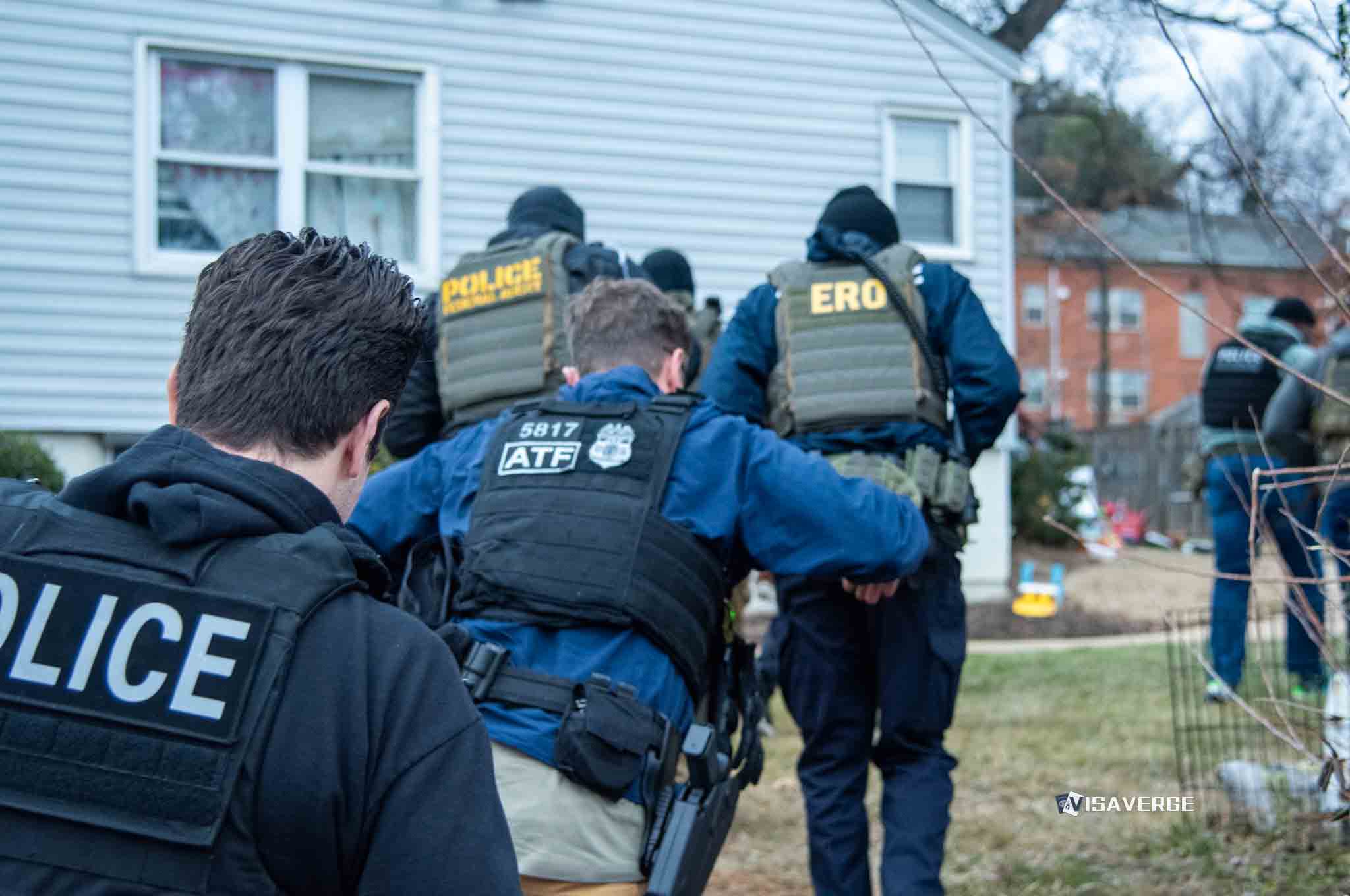
Columbia Heights Public Schools leaders in Minnesota say four students connected to the district were taken into U.S. Immigration and Customs Enforcement (ICE) custody in January. The reported cases involve very young children and teenagers, and the encounters happened in everyday places: a driveway, an apartment building, and while commuting to school.
For families, the immediate issue is practical. A child in custody is no longer in class, parents may miss work, and siblings may not know where they will sleep that night.
For schools, the issue is safety and attendance. When ICE detains students or family members in community settings tied to the school day, families often change routines fast. Some keep children home. Others seek remote learning options.
Department of Homeland Security (DHS) statements confirm at least one of the incidents and describe a “targeted operation” tied to an adult arrest. School officials and advocates dispute parts of what happened on scene, including how officers handled a child and what officers asked the child to do.
Section 2: Individual cases and timeline
January brought four separate reports tied to students. The dates matter because they show a pattern of repeated encounters during a concentrated enforcement period.
One case involves Liam Conejo Ramos, a 5-year-old detained on January 20, 2026, in the driveway (Columbia Heights residence). He was with his father, Adrian Alexander Conejo Arias. DHS said the operation was aimed at the father, and that he fled on foot, “abandoning his child.” DHS added that “for the child’s safety, one of our ICE officers remained with the child.”
Another reported incident on January 20, 2026 involved a 17-year-old high school student. District leadership described the student being removed from a vehicle by masked agents while driving to school. That detail—masked agents and a morning commute—has driven much of the fear among families who travel similar routes.
On January 14, 2026, a 17-year-old female high school student was reportedly detained with her mother after agents entered their apartment. Entry into a residence is often where legal disputes concentrate, because the rules change depending on consent and the type of warrant officers present.
On January 6, 2026, a 10-year-old fourth-grade student was reportedly detained with her mother while walking to elementary school. That kind of encounter can have ripple effects well beyond one family. Word spreads quickly at school pickup lines.
Privacy rules mean schools and immigration agencies may describe the same event differently. A district may confirm a student is missing from class due to detention, while custody records focus on the adult or on the location of detention.
What typically happens after an ICE encounter (high level)
After an initial stop or arrest, ICE may transfer a person to a detention facility, begin custody processing, and decide whether to issue a Notice to Appear (NTA). An NTA is the charging document that starts removal proceedings in immigration court.
Detained people may request a custody review, and in many cases they may seek release on bond, though eligibility depends on facts and legal posture. Families with pending asylum matters can remain in an “asylum processing posture,” meaning their protection claim is still being decided and they may not have a final order.
An interactive timeline and individual case viewer will be available for readers to explore specifics for each incident and route; this section provides the narrative context that leads into that tool.
Section 3: Enforcement tactics and disputed claims
Disputed details center on what officers did at the Columbia Heights driveway encounter and what paperwork they relied on.
School officials alleged officers used a “bait” tactic involving the 5-year-old. The allegation is that, after the father was apprehended, officers directed the child to knock on the front door to see if other people were inside. DHS disputes the framing and says the child was not targeted.
Why does that dispute matter legally? Because actions at a home can raise different questions than actions on a sidewalk. Consent to enter, the scope of what officers asked residents to do, and which document was presented can all affect later legal challenges.
Families also ask what happens to children when a parent is taken. DHS described a process tied to a “safe person.” DHS said, “Parents are asked if they want to be removed with their children, or ICE will place the children with a safe person the parent designates.” “placement with a safe person” usually means the parent identifies a trusted adult who can take custody of the child. It does not necessarily mean the parent is released.
Documentation is a protection for everyone involved. Families and advocates often try to record the date, the agency (ICE or another DHS component), badge numbers if visible, and the exact document shown at the door or during a stop. Small details can later become central facts.
An interactive map of affected routes and jurisdictions will be provided separately; the narrative here summarizes the contexts tied to each reported incident.
Section 4: Operation Metro Surge and broader context
DHS has described the enforcement increase as Operation Metro Surge in the Minneapolis–Saint Paul area. DHS Secretary Kristi Noem said on January 19, 2026 that “in the last 6 weeks” DHS law enforcement arrested “3,000 criminal illegal aliens,” calling it “a huge victory for public safety.” DHS has also framed the surge as targeting serious offenders.
Surge operations can change what daily life looks like in a community. More field teams can mean more arrests at homes, more encounters during traffic stops, and more presence in public places. Even when a school itself is not the site of an arrest, the routes to school can become the setting for enforcement.
Families often ask a basic question: does detention mean deportation is immediate? Not always. Being detained means a person is in custody. Being issued an NTA means the government has started a formal court process. Having a final deportation order means a judge (or another authority, depending on the case) has issued a final decision ordering removal. Those are different stages, with different rights and timelines.
Section 5: Policy and legal framework (administrative warrants, entry, and due process)
A central legal dispute involves what officers may use to justify entry into a residence.
An administrative warrant in immigration enforcement is typically an agency-issued document. It is not signed by a judge. A judicial warrant is signed by a court. That difference can matter most at the front door. In many cases, a judicial warrant can authorize entry into a home under defined terms. Administrative paperwork often does not carry the same authority to enter without consent.
The policy debate has intensified since a memorandum dated May 12, 2025. The memo is described as authorizing ICE agents to seek entry into residences using Form I-205 (Administrative Warrant of Removal) rather than a judge-signed warrant. Critics argue this blurs constitutional lines. Supporters argue it reflects long-standing immigration practice and officer safety needs.
For the family tied to the 5-year-old, Superintendent Zena Stenvik and family attorney Marc Prokosch have said the family has an active asylum case and has not been issued a final deportation order. Procedurally, “no final deportation order yet” often means the case is still pending. The person may be waiting for a court hearing, pursuing asylum, or seeking another form of relief.
Detention decisions can still be made during that period, including custody reviews and bond requests, depending on eligibility. Outcomes can turn on facts. Consent, exact location, and the paperwork shown all matter. So does the individual’s immigration history.
⚠️ Rights-aware guidance for families: seek qualified legal counsel, avoid sharing unverified details about minors, and verify updates through official channels (DHS Newsroom, ICE press releases).
Section 6: Impact on community and education (attendance, safety planning, and support)
Zena Stenvik described the emotional effect on families, saying the “sense of safety in our community and around our schools is shaken.” That fear shows up in attendance. Some parents keep children home after reports of ICE detains incidents near commutes. Others change routes, carpools, or pickup times.
Districts in the Twin Cities have offered remote learning options into February 2026. Remote instruction can help a child keep up academically, but it can also create tradeoffs. Families may face device and internet hurdles, and students can lose access to in-person services like meal programs, counseling, or special education supports.
Legal and political backlash is also part of the story. Minnesota and Illinois have filed lawsuits challenging the legality of “militarized raids” at schools and residences. Lawsuits can take months or longer, and they rarely give immediate comfort to a family dealing with a detention today. Still, they can shape future rules on entry and enforcement practices.
Student wellbeing needs direct attention. Children who witness an arrest may show anxiety, trouble sleeping, or reluctance to attend school. Schools often respond with counseling, trauma-informed check-ins, and coordination with community partners. Parents can ask the district what supports are available and how to request them without drawing attention to a child’s immigration details.
✅ Schools and families should document attendance changes and access remote learning options if safety concerns persist, while monitoring official district communications.
Section 7: Official sources and references (how to verify updates responsibly)
DHS and ICE updates commonly appear through the DHS Newsroom and ICE press releases or field office communications. Court activity may also appear in public filings and dockets when cases are not sealed.
Accuracy is a safety issue. Date-stamp what you read, and cross-check the same claim in more than one official statement when possible. Avoid reposting names or identifying details about minors. Even well-meaning posts can spread quickly and cause harm.
Case-specific decisions—especially when asylum is pending or when a person is detained—should be reviewed with a qualified immigration attorney. For background law, readers can consult the Immigration and Nationality Act via law.cornell.edu, and general immigration benefit information via uscis.gov.
This article discusses ongoing enforcement actions and asylum considerations; information may evolve and should be read in light of official DHS/ICE communications.
Legal guidance provided here is informational and not a substitute for qualified legal counsel.