- Avelo Airlines will end all ICE charter flights and close its Arizona base by January 27, 2026.
- The airline operated 1,945 enforcement flights between May and December 2025, a significant subcontracting role.
- Total ICE Air activity increased by 84 percent in 2025, reaching over 13,000 total flights.
Avelo Airlines is stepping away from ICE charter flying on January 27, 2026, and that matters even if you never touched one of those flights. If you fly Avelo for cheap leisure trips, this affects fleet time, staffing, and schedule reliability. If you prefer not to support airlines tied to enforcement flying, it changes your “vote with your wallet” math too.
Between May to December 2025, Avelo became a major subcontractor in the federal ICE Air system. It also drew unusual scrutiny because it’s a consumer-facing airline that sells public tickets. Most contractors in this space are not household names.
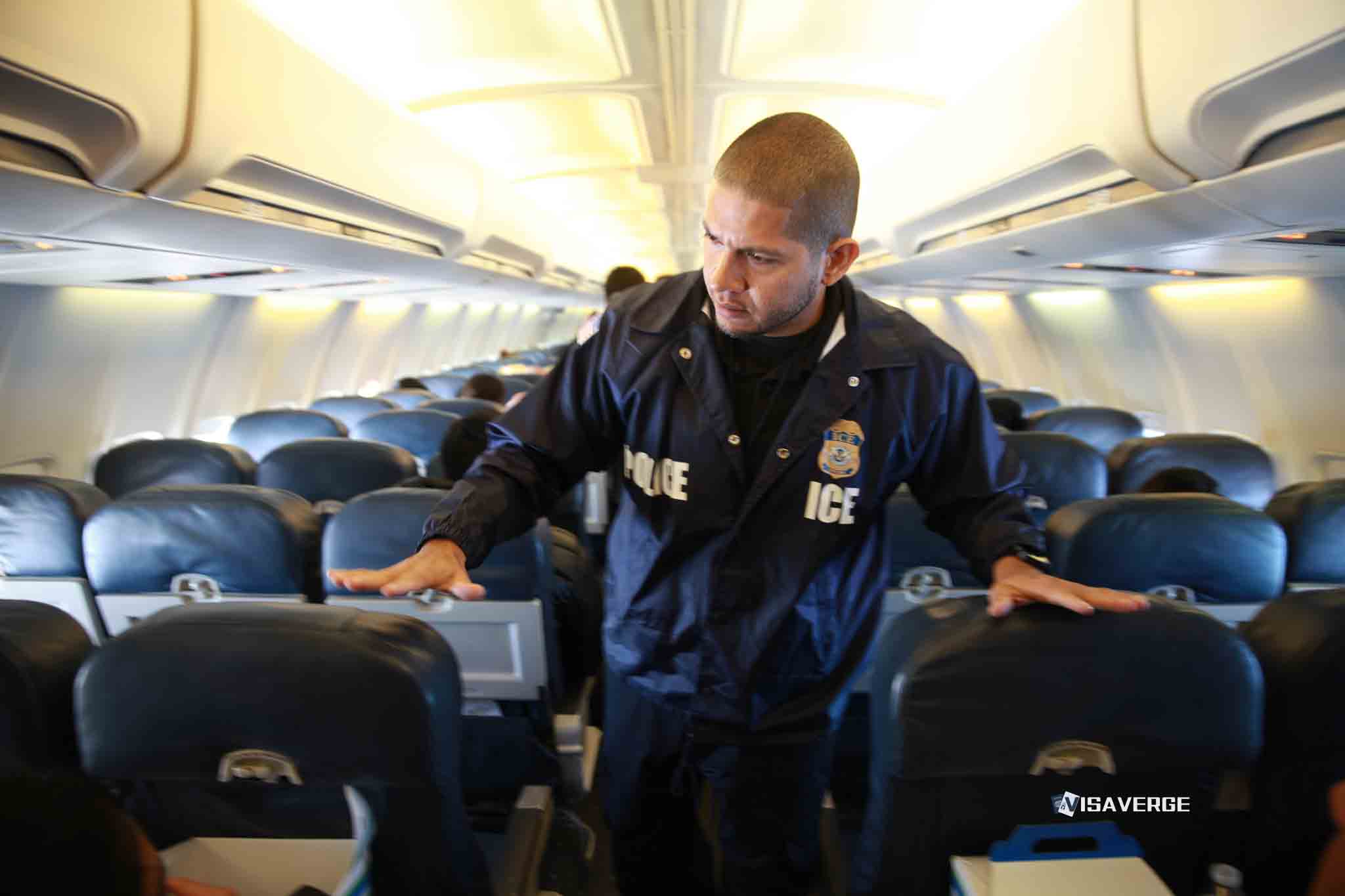
This guide compares two choices travelers actually face now: flying Avelo versus choosing a mainstream alternative for similar routes and prices. Along the way, I’ll explain what ICE enforcement flying is, how the contracting works, and what the growth in 2025 meant on the ground.
Executive snapshot: What Avelo did (May–Dec 2025), and what it means
The measurement window here is May to December 2025 because that’s when Avelo’s dedicated ICE charter base was active at scale. During that period, Avelo operated 1,945 ICE-related flights, or 18% of all immigration enforcement flights tracked in the same window.
At a high level, an ICE enforcement flight can mean two very different things. These are:
- Domestic transfers (“shuffles”) between detention facilities inside the U.S.
- International removals, where people are flown out of the U.S. to another country.
Why airline participation matters isn’t about branding. It’s about capacity and accountability. Moving people by air needs crews, aircraft, maintenance, training, and clear procedures.
When a public airline steps in, it can raise new questions about oversight, safety, and where complaints or records requests should go.
Avelo vs alternatives: side-by-side comparison for travelers
Most readers aren’t “choosing ICE” when they pick an airline. You’re choosing a fare, a schedule, and a baggage policy. Still, this story touches your options, especially if you fly budget routes in the East and West.
Here’s the clean comparison I’d use when booking today.
| Category | Fly Avelo Airlines | Choose an alternative (Southwest, Delta/United/American, or other ULCCs) |
|---|---|---|
| Typical reason people book | Lowest cash fare on a niche nonstop | More frequencies, stronger rebooking, better protection during disruptions |
| Network depth | Limited route map and fewer backup flights | Usually more same-day options and interline rebooking paths |
| Operational risk from this episode | ICE charter base closing may shift aircraft and crews | No direct exposure to Avelo’s charter exit |
| Loyalty and points | Limited points upside versus major carriers | Easier to earn and redeem miles, plus credit card transfer options |
| Elite status value | Minimal compared with major programs | Meaningful perks: upgrades, fee waivers, priority support |
| Comfort baseline | Standard narrowbody economy experience | Wide range, including premium economy and lie-flat options on some networks |
| Ethics and brand concerns | Was a major subcontractor May–Dec 2025; exiting Jan 27, 2026 | Varies by airline; fewer consumer brands tied so visibly to ICE Air operations |
| Best for | Cheap nonstop, personal-item-only travelers | Complex itineraries, families, time-sensitive travel, status chasers |
Overall ICE Air operations and growth in 2025: why the scale changed
The bigger context is that ICE Air activity rose sharply in 2025. Total ICE enforcement flights reached 13,446, an 84% increase over 2024. That kind of jump can happen fast for reasons that have nothing to do with airlines.
- Policy priorities and enforcement direction
- Detention bed capacity, which drives more domestic transfers
- Court outcomes and hearing schedules, which can change detention timelines
- International coordination, including travel documents and country acceptance
When flight volume spikes, the ripple effects aren’t abstract. Families see more sudden moves. Attorneys struggle to locate clients. Detention centers and airports deal with more frequent arrivals and departures, often at odd hours.
And the people being moved face more uncertainty, especially on domestic “shuffle” routes.
Subcontracting and the contract: who actually hires whom
One reason this topic gets confusing is that ICE doesn’t necessarily hire the operating airline directly. The structure described by DHS works like this:
- ICE contracts with a prime vendor
- That vendor then subcontracts flying to operating carriers
In this case, ICE used CSI Aviation as the primary contractor. CSI then subcontracted Avelo to operate flights.
ICE charter contracts often have big top-line numbers. That’s because they’re written as maximum value or “ceiling” contracts. A ceiling is a capacity authorization. It allows the government to issue task orders and modifications. It does not guarantee the airline will actually fly enough to reach the maximum.
Why that structure matters for public accountability:
- Procedures can be split across multiple parties
- Training standards and manuals may be set by one entity and executed by another
- Complaint routing can become unclear
- Oversight depends on what’s in the prime contract and how it’s enforced
DHS put it plainly in a statement reported by CBS News on January 8, 2026: ICE “never contracted directly with Avelo Airlines,” and it “will continue to utilize” its contracted provider.
“Ceiling value” isn’t the same as “money paid.” When you see a huge federal contract number, look for what was actually obligated and when.
The Mesa hub: why a dedicated base and dedicated aircraft matter
Avelo didn’t dabble in this work on the margins. It stood up a dedicated charter operation at Phoenix-Mesa Gateway Airport (AZA). It also dedicated three Boeing 737-800s to those missions.
A designated charter base changes operations in ways travelers feel, even if they never fly from AZA. Those operational shifts include:
- Crew positioning becomes more complex
- Maintenance planning gets tighter when aircraft are locked into special missions
- Schedule recovery can be harder when spare aircraft are limited
- Ground handling and security coordination increase
For local communities, a charter hub can trigger public governance questions. Airports are often run by boards or authorities that hold meetings, approve leases, and set operating rules. When controversial operations expand, the friction tends to show up in public comment periods, permitting debates, and calls for disclosure.
Avelo’s spokesperson said on January 12, 2026 the airline will close the AZA base on January 27 and end participation. The reason cited was financial and operational. The charter work brought short-term benefits. It did not provide consistent, predictable revenue relative to complexity and costs.
Public pressure and state-level proposals: what can actually change
Because Avelo is a consumer airline, protests and boycotts targeted places travelers recognize. Advocacy campaigns focused on airports, public hearings, and the airline’s visible hubs. That’s typical. It’s where reputational pressure can affect bookings.
There was also legislative pressure. In Delaware, lawmakers introduced SB 207, aimed at conditioning state fuel tax exemptions on legal and process requirements. The practical idea in bills like this is not to control federal immigration policy directly. States generally can’t.
Instead, they use leverage points they do control, such as:
- State tax benefits
- Eligibility for certain incentives
- State procurement rules
- Disclosure requirements tied to state-regulated benefits
For travelers, the “so what” is simple. If state-level benefits get tied to participation, airlines may reassess whether the charter revenue is worth the local political and commercial cost.
Impact on individuals: transfers, restraints, and what a larger network signals
A lot of ICE Air flying is not international removal. It’s domestic movement between detention centers, often to manage bed space. Those transfers can disrupt the basics:
- Access to counsel
- Ability to attend hearings without delay
- Family contact and planning
- Continuity of medical care
Restraint practices are also part of the public debate. The ICE Air Operations handbook describes restraints that can include handcuffs, waist chains, and leg irons for adults. Flight attendant unions have raised safety concerns about evacuation risk and mobility in an emergency.
It’s also worth noting the network reach. In 2025, the ICE Air network expanded to 79 countries, including first-time removal flights to several Sub-Saharan African nations. That breadth signals logistical and diplomatic coordination and makes documentation and travel document issuance central.
If you’re a noncitizen traveling for normal reasons, none of this should be confused with ordinary commercial flying. Still, this environment does affect risk tolerance for anyone with a pending case.
If you have a pending immigration matter, book flights with flexible change options. Court dates and check-ins can move with little notice.
Miles, points, and status: the practical travel trade-offs
This is where Avelo versus alternatives gets real for frequent flyers. Avelo can be an excellent cash deal on the right nonstop. But from a points perspective, it’s rarely your best “earn” play.
- You generally won’t build meaningful elite status value on a small route map.
- You also won’t get the same disruption protection you’d get from a major carrier.
- Credit card trip protections can help, but they won’t create a new flight option.
If you’re chasing status or want points you can reuse broadly, major carriers are still the most flexible ecosystem. Even one or two tight trips per year can justify sticking to a program where miles are easier to redeem across larger networks and elite benefits reduce fees and friction.
Competitive context matters here. This is the same trade travelers make when comparing any ULCC-style itinerary to a network carrier. The difference is that Avelo’s recent charter involvement added reputational and political risk. That can spill into customer sentiment and demand swings.
Choose Avelo if… / Choose an alternative if…
Choose Avelo Airlines if:
- You found a true nonstop that saves hours, not just dollars.
- You can travel with a personal item or a light carry-on.
- You have flexibility if a flight time shifts.
- You’re not building airline status this year.
Choose an alternative (Southwest, a Big Three carrier, or another option) if:
- You need multiple daily frequencies for a same-day backup.
- You’re traveling for something time-sensitive, like a USCIS appointment.
- You’re connecting, especially on a tight layover.
- You want meaningful miles earning and redemption options.
- You expect weather or ATC disruption and want the best rebooking odds.
For many families and business travelers, the single biggest factor is not seat comfort. It’s “What happens when something goes wrong?” More flights and more partnerships usually win.
Official sources: how to verify contract and claims without getting misled
If you want to verify key pieces of this story, a few sources matter more than everything else. USAspending.gov is the primary public record for federal contract awards and many modifications. It’s the best starting point when someone cites a large contract figure.
DHS/ICE newsroom statements are useful for confirming what the agency says it’s doing. They rarely give clean, complete operational counts in one place. Third-party contract aggregation sites can help with navigation, but treat them as a map, not the deed.
- Common misreads include mixing up a time window (May–Dec 2025) with a full calendar year.
- Treating a ceiling value as money actually spent.
- Assuming a prime contractor and an operating airline are the same entity.
Avelo’s exit date is not subtle. The airline said it will end participation and close its AZA base on January 27, 2026.
Final considerations for travelers with upcoming bookings
Avelo’s ICE charter chapter is ending, but the travel decision in front of you is still the same: price versus protection, and nonstop convenience versus network depth. If you have Avelo flights booked in the first quarter of 2026, re-check your schedule now, especially if your trip touches Arizona or relies on a single weekly frequency.
If you need maximum rebooking flexibility for a legal or USCIS-related timeline, pay a bit more for an airline that can put you on the next flight the same day.