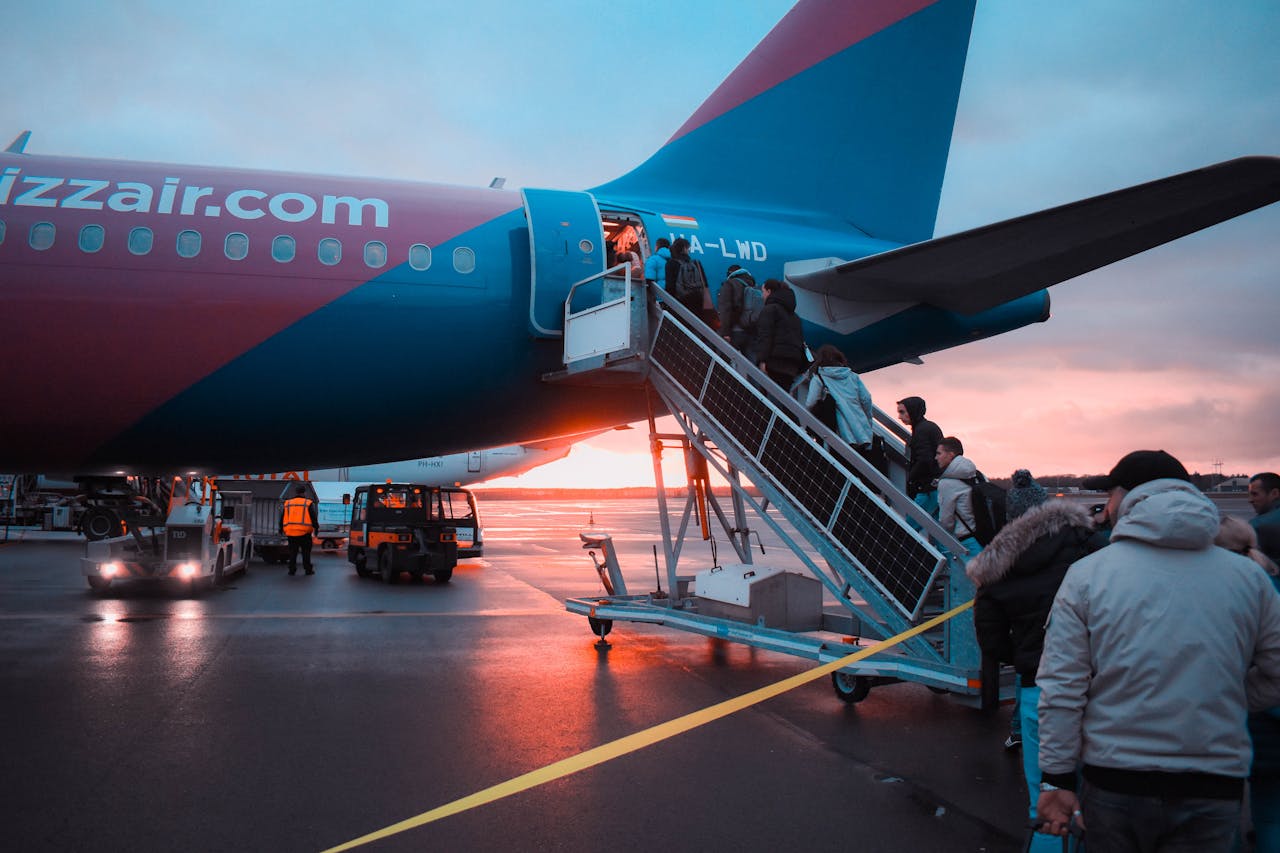
- Middle East airspace closures through March 2026 are forcing major mid-air flight diversions.
- Airlines are rerouting around conflict zones using southern, central, or northern corridors to ensure safety.
- Choosing carriers with strong alliance networks provides the best backup options during regional travel disruptions.
(MIDDLE EAST) — Middle East airspace closures tied to a US-Israel military operation on Feb. 28, 2026 are forcing sudden mid-air diversion decisions, and your best defense is picking an airline and itinerary that can reroute you fast and take care of you afterward.
My quick recommendation: if you must travel across the region in the next few days, book an airline with (1) multiple viable routings, (2) strong rebooking power across partners, and (3) a big operations footprint at your connection point. In practice, that usually means a large European network carrier for Europe–Asia trips, or a Gulf “mega-hub” carrier when Dubai/Doha/Abu Dhabi are fully operational. If you’re risk-averse, avoid tight connections and avoid itineraries that require overflying conflict-adjacent FIRs.
Comparison: Which type of airline is the best bet during Middle East airspace closures?
| Factor | Gulf hub carriers (Emirates / Qatar / Etihad) | European network carriers (Lufthansa / KLM / Air France / BA) | U.S. carriers (United / Delta / American) |
|---|---|---|---|
| Reroute flexibility | Strong on long-haul fleet range, and they can often reshuffle via multiple corridors. | Strong across many city pairs, and can reroute via Europe-based corridors more easily. | Mixed, since fewer routings rely on Middle East overflight, but options can be limited once you’re committed. |
| Connection resilience | Excellent when the hub is running normally, but hub disruptions can cascade fast. | Good, with many alternate connection cities across Europe. | Good for returning you to the U.S. network, weaker for onward travel beyond partner coverage. |
| Likelihood you’ll face a diversion | Higher if your itinerary touches Gulf hubs during rolling closures. | Moderate, since many flights can skirt the region earlier in the trip. | Often lower unless you’re flying to the Gulf, Israel, or onward to South Asia. |
| On-the-ground handling during irregular ops | Very strong at their hubs, but diversion airports vary widely for support and immigration handling. | Strong across major European hubs, and EU-style passenger handling tends to be structured. | Strong in the U.S., but overseas support depends heavily on station size and partners. |
| Miles and elite status earning | Great if you credit to their programs, but partner-credit can be fare-class sensitive. | Often best for earning in alliance ecosystems, especially if you’re chasing status via segments. | Best if you already hold U.S. elite status, since fee waivers and priority reaccommodation matter most. |
| Award rebooking options | Can be excellent if seats exist, but last-minute award space is unpredictable. | Often the best mix of alliance partners and routings to “stitch” a new itinerary. | Can be solid inside the U.S. and across the Atlantic, less flexible deeper into Asia without partners. |
| Best for | Travelers who want one-stop connectivity and a consistent premium product. | Travelers who want multiple backup connection cities and alliance flexibility. | Travelers who value U.S.-based support, protections, and credit-card insurance workflows. |
Competitive context matters here. European network carriers can sometimes “route around” the region earlier by shifting tracks over the Med, Türkiye, or farther north. Gulf carriers often have the best one-stop networks, but they’re also closest to the disruption zone when Middle East airspace closures expand quickly.
1) Context: Mid-air diversions amid Middle East airspace closures
An “airspace closure” is not the same thing as a storm cell you can fly around. It’s an operational restriction tied to a Flight Information Region (FIR), conflict-zone risk, or a government directive.
Airlines may also “avoid” airspace without a formal closure. That can come from updated threat assessments and insurer or regulator guidance.
This week’s trigger is a rapid security escalation. When governments publish restrictions, airlines must decide whether to reroute, return, or divert. Those decisions can change minute by minute.
A mid-air diversion can happen even after takeoff because the risk picture is dynamic. NOTAMs can update, advisories can tighten, and dispatch may see new intelligence while you’re already cruising.
Three terms get mixed up during these events:
- Reroute: You keep going to your destination, but via a different corridor.
- Diversion: You land somewhere else first, then continue later.
- Return-to-origin: You go back to your departure airport, often when alternates aren’t workable.
One more important distinction: a formal “closure” is a hard constraint. Airline “avoidance” is a policy choice, and it can differ by carrier.
2) Immediate onboard actions and pilot protocols
When a closure or restriction hits mid-flight, the cockpit is not improvising. Crews follow a structured chain: air traffic control guidance, airline dispatch instructions, and published contingency procedures.
Pilots and dispatch continuously monitor:
- NOTAM updates and route availability
- Conflict-zone advisories, including bulletins like EASA’s CZIB
- Airline security and operational risk guidance
If normal routings are disrupted, crews may rely on contingency concepts such as TIBA. At a high level, that’s about keeping safe separation when standard ATC routings are constrained.
Operational constraints drive everything in these moments. Fuel planning is built around alternates and holding. If the flight burns extra fuel on a longer track, the “closest” airport may no longer be the safest choice.
Crew duty-time limits also matter. A legal-duty issue can turn a long reroute into a diversion, even if the aircraft can continue.
What you’ll notice as a passenger is usually a lag in details. You may get a short announcement first. More specifics often come after dispatch confirms a plan and ATC clears it.
You might see holding patterns, a new arrival time, or a new arrival airport. You may also notice the aircraft turning back with little warning.
3) Routes and diversion strategies
Airlines generally pick among three corridor concepts during regional disruptions: a southern option, a central option, or a northern option.
The labels are simple, but the decision is not. Dispatch is balancing threat areas, ATC workload, fuel burn, alternates, and airport suitability.
Southern routings can offer more diversion airports and services. They can also bring different risks, including drone and missile threats near conflict-adjacent areas.
Central routings may thread between restricted FIRs. They can work well when specific airways remain open and monitored, but capacity can tighten fast.
Northern routings push flights farther from the conflict zone. The tradeoff is longer block times and fewer “easy” alternates with the right handling and parking.
Diversion airport selection is its own checklist. Airlines look for runway length, slots and curfews, fuel availability, ground handling, parking, security posture, and passenger processing capacity.
The closest airport is not always the best airport. An airport can be geographically close and still be operationally unusable. Parking may be full, or the terminal may not be able to process an unexpected widebody.
Sometimes the aircraft continues to a distant alternate. That can happen if nearer airports are congested, if entry rules are restrictive, or if maintenance and crew logistics are easier at the farther field.
Reroutes also hit your trip beyond the diversion itself. Longer flying time means missed connections. It also means crews and aircraft end up out of position, which can disrupt the next day’s schedule.
4) Case study: Emirates Flight 220 and regional impact
Emirates Flight 220 shows how extreme these events can get. The flight was reported to have been about 14 hours airborne before diverting.
Operationally, a very long airborne period points to a mix of rerouting and possible holding while the airline and ATC sort out safe corridors. It also highlights how quickly a plan can change mid-flight.
The reported scope of constraints was broad. Closures and restrictions were described across 11 countries: Iran, Israel, Lebanon, UAE, Saudi Arabia, Bahrain, Oman, Iraq, Jordan, Kuwait, and Qatar.
That kind of regional sweep creates bottlenecks. Even if some airspace remains open, traffic concentrates into fewer lanes. That increases workload for ATC and raises the odds of ground delays and airborne sequencing.
Time-bounded closures are also hard for travelers. This set of restrictions was described as effective immediately until at least March 2, 2026.
Reopening timing can still be uncertain. Safety assessments, deconfliction, and new advisories can all shift the timeline.
For you, simple. If one major corridor shuts, delays ripple outward. Even flights that never enter the closed FIR can arrive late due to traffic compression.
5) Passenger rights and next steps
After a diversion or major reroute, most travelers want three things: clear updates, a workable replacement itinerary, and help with expenses during the wait.
Communication often improves after landing. In the air, details can be limited for safety and operational reasons. After landing, airlines usually push updates through app notifications, SMS, airport monitors, and gate agents.
Know the difference between a refund and a rebooking. A refund ends the trip and returns your money for unused travel. A rebooking gets you to your destination later, often via a new routing.
During large disruptions, it’s smart to ask for specific alternatives. Good asks are concrete and realistic:
- “Can you protect me on the next flight with seats available, even on a partner?”
- “Can you reroute me through a different connection city today?”
- “If I take a later flight, can you confirm my onward connection is protected too?”
Duty of care is where expectations need to be realistic. Many airlines will provide meals or hotels when you’re stranded overnight, but rules vary by jurisdiction and cause. Some regimes treat conflict-related closures as extraordinary circumstances for compensation.
Even when cash compensation isn’t on the table, you may still be entitled to rebooking or a refund. You may also get assistance depending on local rules and airline policy.
Diversion airports add an extra layer. You may be kept airside, especially if the airport is not prepared for immigration processing. In some cases, you may not be permitted to enter the country.
Documentation helps later. Save boarding passes, delay notifications, receipts, and screenshots of flight status. If you used a premium travel credit card, that paper trail matters for trip-delay claims.
One more reality: there is no “risk-zero” routing. Airlines choose longer paths because they are safer and more controllable.
Miles and points: what diversions mean for earning and rebooking
A diversion rarely changes how many redeemable miles you earn on a paid ticket. Your fare and ticketed itinerary drive that.
Where it does matter is elite status credit and partner tickets. If you’re crediting to a different program, your earning can be fare-class based. That means a discounted economy fare may earn far less than you expect.
During irregular operations, award travelers face a different problem. If the airline cancels a leg, you usually want the airline to rebook you, not refund you. A refund puts you back into scarce last-minute award space.
If you’re chasing elite status this year, protect your qualifying activity. After a reroute, check that your flown segments posted correctly. Keep your boarding passes until they do.
6) Regulatory updates and coordination
Routing decisions are shaped by regulator advisories and airline risk policies. Different authorities can issue different guidance, and airlines may take a more conservative stance than regulators require.
You’ll see advisories and operational decisions come from civil aviation authorities, safety agencies, and airline ops centers. You may also see foreign affairs ministries coordinating around international passenger handling.
For travelers, the best monitoring routine is boring and effective:
- Check your flight status in the airline app before leaving for the airport.
- Re-check it after you arrive, since routings can change multiple times.
- Watch your inbound aircraft, since an earlier disruption can roll into your flight.
If you’re connecting, pad your schedule. Tight connections are the first casualty of long reroutes and gate changes.
Choose X if…, Choose Y if…
Choose a European network carrier if you want the most “plan B” options. Multiple hubs and alliance partners can matter more than a flashy nonstop.
Choose a Gulf hub carrier if your trip is built around a single, well-run connection. It can be the smoothest experience when the hub is stable.
Choose a U.S. carrier if your trip starts or ends in the U.S. and you value domestic reaccommodation options. U.S. elites also tend to get better phone support and fee waivers.
No matter what you pick, book with flexibility. Avoid basic, restrictive fares when the region is unstable.
Airspace restrictions were described as in effect until at least March 2, 2026, so the smartest move is to re-check your routing and connection times before you leave for the airport this weekend.