- A nationwide NOTAM has suspended jet fuel availability for all foreign carriers at nine Cuban international airports.
- Airlines must now use costly operational workarounds like tanker fueling or mid-route technical stops in third countries.
- U.S. Executive Order 14380 imposes steep oil tariffs and immigration pauses, further straining regional logistics and travel.
Section 1: Overview — Cuba’s Jet A-1 suspension and the immediate hit to US Airlines
Cuba-wide aviation operations changed overnight because jet fuel is no longer available to foreign carriers across the country’s international airport network. A NOTAM confirms Jet A-1 is unavailable at all nine international airports in Cuba, starting February 10, 2026, and lasting at least until March 11, 2026. For US Airlines and other foreign airlines, that single constraint can ripple into cancellations, payload limits, and schedule reshuffles within days. Fast.
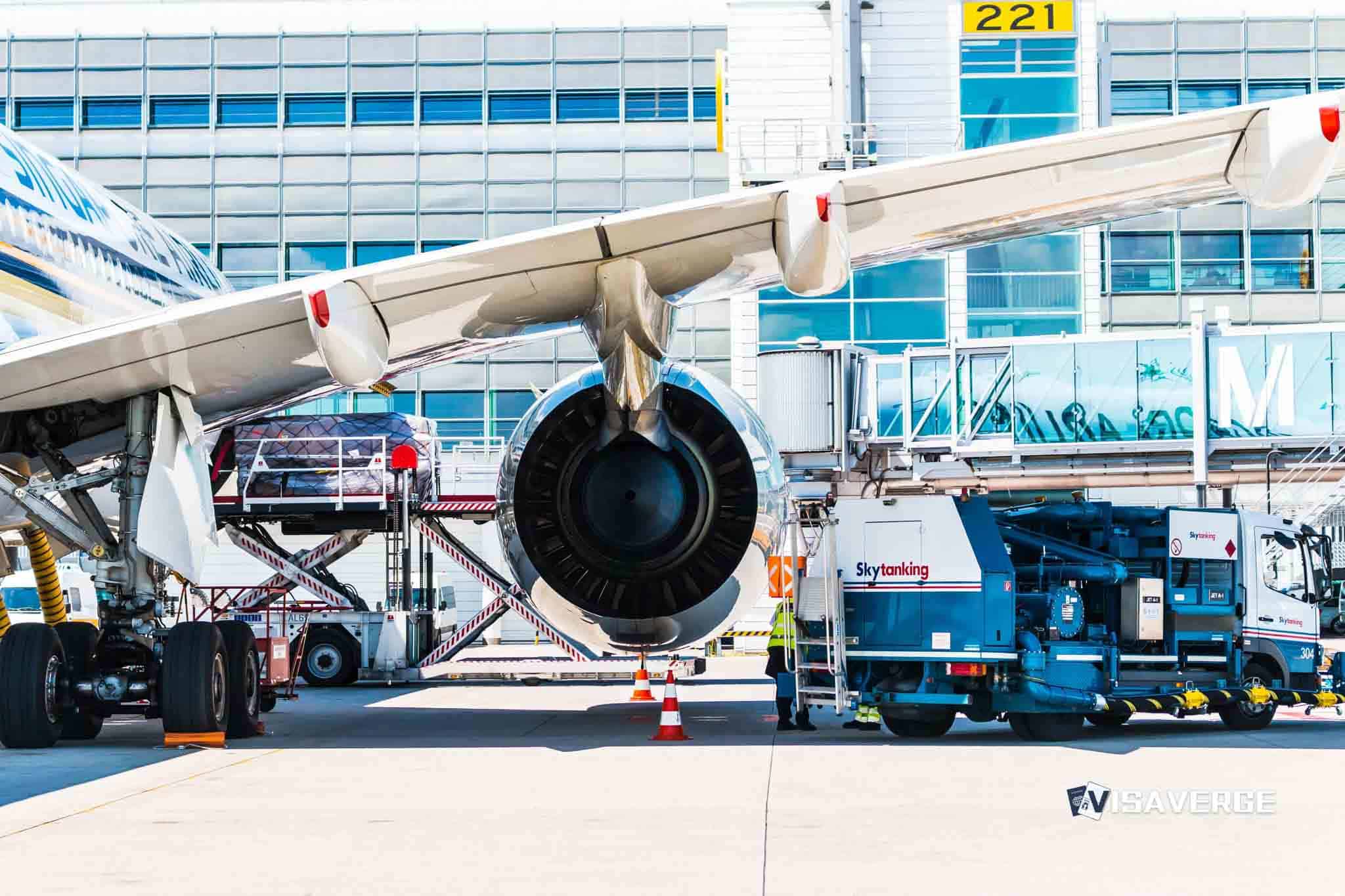
Jet A-1 availability is the basic assumption behind scheduled international flying. Airlines plan fuel uplift (how much they buy at the airport), aircraft weight, passenger and baggage loads, and alternates (backup airports) around reliable refueling. Remove local refueling, and airlines face a simple problem with expensive answers: they still have to carry enough fuel to fly safely and legally.
Two workarounds are now driving most operational decisions:
- Tanker fueling: loading extra fuel before departing for Cuba, so the aircraft can depart Cuba without buying fuel there.
- Technical stops: adding a mid-route refueling stop in places such as Cancun, Nassau, or Punta Cana.
Both options can raise costs and stretch travel time. Both can also reduce how many passengers and bags can be carried on a given flight.
Table 1: Affected airports and the scope of the fuel suspension
| Airport (IATA) | Status | Notes |
|---|---|---|
| HAV – José Martí | Jet A-1 unavailable | Applies to foreign carriers under the NOTAM. |
| VRA – Varadero | Jet A-1 unavailable | Resort traffic can face payload limits and extra stops. |
| CMW – Camagüey | Jet A-1 unavailable | Regional international service faces the same restriction. |
| Other Cuba international airports (6 total) | Jet A-1 unavailable | NOTAM scope covers nine international airports systemwide. |
Section 2: Official statements and policy actions driving the crisis
Policy headlines matter here because they can change fuel supply behavior long before planes depart. On January 29, 2026, President Donald J. Trump signed Executive Order 14380, titled “Addressing Threats To the United States by the Government of Cuba.” The White House fact sheet describes a national emergency and frames Cuba as “an unusual and extraordinary threat.”
Tariff threats can reshape supply chains quickly. If shippers, insurers, or trading partners fear penalties, they may pause deliveries or reroute cargo. In this case, the order authorizes tariffs aimed at countries that “directly or indirectly” provide oil to Cuba. Reporting around the measure includes a $30 tariff figure and also describes the mechanism as a 30% tariff threat tied to oil flows.
A separate track affects immigration timelines. U.S. Department of Homeland Security (DHS) and U.S. Citizenship and Immigration Services (USCIS) policy dated January 1, 2026 pauses the processing of immigration benefit requests for nationals of high-risk countries, including Cuba.
A “pause” typically means:
- Intake can still occur, but cases may not move through normal steps.
- Adjudication slows or stops, including review, approvals, and denials.
- RFEs (Requests for Evidence) may be delayed, and responses may sit longer.
- Interviews and ceremonies can be postponed.
A pause does not automatically mean a blanket denial of every case. It does mean uncertainty and longer waits.
Security conditions on the island also affect travel planning. On February 3, 2026, U.S. Embassy Havana issued a security alert describing an unstable electrical grid and fuel shortages affecting transportation, lighting, and communications. Embassy alerts are not guarantees of harm. They are planning signals.
Section 3: Key facts and policy details (what the NOTAM means operationally)
A NOTAM (Notice to Airmen) is an operational bulletin airlines and dispatchers use for safety and legality. It is the kind of notice that can change a flight plan even if a ticket was sold months ago. Dispatch teams read NOTAMs to confirm runway closures, approach changes, and fuel constraints before authorizing a flight.
In this case, the NOTAM-driven reality is straightforward: Jet A-1 is unavailable to foreign carriers at Cuba’s nine international airports, including HAV – José Martí, VRA – Varadero, and CMW – Camagüey, from February 10, 2026 through at least March 11, 2026.
“Fuel unavailable to foreign carriers” can show up in a few forms:
- Fuel may exist, but uplift is restricted by policy or supplier limits.
- Local demand may get priority during shortages.
- Distribution can fail even when product is on the island, because storage, trucking, and power are stressed.
Fuel disruptions also tend to last longer than travelers expect. Aviation fuel is a logistics chain: shipping, storage, quality checks, and airport delivery. If shipments pause and exporters stop loading, airport supply can tighten fast and recover slowly.
Section 4: Airline impact and operational adaptations passengers will actually feel
American Airlines, WestJet, and Copa Airlines sit near the center of the schedule shock because of how much Cuba flying they do. Across those three, nearly 400 weekly flights are affected by the inability to refuel in Cuba. Add in other carriers, and the knock-on effects spread across connecting itineraries in North America and beyond.
Tanker fueling sounds simple, yet it forces hard tradeoffs. Extra fuel adds weight. Weight affects takeoff performance and range, and it can push an aircraft over allowable limits for a given runway, temperature, or weather condition. When that happens, airlines may:
- cap seats,
- restrict checked baggage,
- offload cargo,
- or swap aircraft types.
Technical stops are the other common workaround. A flight might operate to Cuba normally, then depart Cuba, land briefly in Cancun, Nassau, or Punta Cana to refuel, and continue onward. That can mean:
- longer total travel time,
- higher missed-connection risk,
- more exposure to crew duty-time limits,
- and more last-minute schedule changes.
Airlines also respond to fuel uncertainty by pulling capacity back. On February 9, 2026, Air Canada announced a temporary suspension of its Cuba service. That kind of move is a signal to travelers: even if a route is “on sale,” the operating plan can shift quickly under fuel constraints.
✅ What affected travelers should do now: monitor flight status closely, consider rebooking options early, and expect longer itineraries if refueling stops are added.
Table 2: Operational adaptations by airlines
| Airline | Adaptation | Impact on capacity | Notes |
|---|---|---|---|
| American Airlines | Tanker fueling and selective technical stops | Medium to high | Weight limits can trigger baggage caps on some departures. |
| WestJet | Technical stops or tanker fueling on select rotations | Medium to high | Longer routings can break tight connections. |
| Copa Airlines | Technical stops in nearby hubs | Medium | Network effects can spread to onward connections. |
| Air Canada | Temporary suspension announced February 9, 2026 | N/A | Removes seats entirely until operations resume. |
Section 5: Context, significance, and policy rationale (why aviation gets hit early)
Economic pressure aimed at one country often works through third parties. That is the basic idea behind secondary economic pressure. If a policy threatens tariffs or penalties on countries that supply oil, insurers and shippers can decide the risk is not worth it. Fuel supply tightens even if no one says the word “embargo.”
The timing matters. Executive Order 14380 on January 29, 2026, paired with a 30% tariff threat and the reported $30 tariff figure, created incentives for suppliers to avoid Cuba-linked shipments. Events tied to Venezuela also play into the supply story. The crisis is linked to the January 3, 2026 capture of Venezuelan President Nicolás Maduro, followed by Mexico suspending oil exports to Cuba on February 2, 2026.
Island aviation is also tied to electricity reliability. Fuel needs storage, pumping, quality controls, and ground transport. Grid instability can slow or stop each step. That is why the February 3, 2026 U.S. Embassy Havana alert and the fuel story should be read together.
Outcomes can change quickly if supply routes shift, diplomatic decisions change, or narrow exemptions are issued. Travelers should plan for volatility without assuming any one outcome.
Section 6: Impact on travelers, immigrants, and Cuban citizens
Passengers will feel this first as irregular operations. Expect a mix of cancellations, refueling-stop reroutes, and longer itineraries. Extra time can trigger hotel rebookings, missed tours, and day-of-travel expenses. Service can also be limited on the ground during outage periods, which the embassy alert ties to transportation and communications problems. Some areas have reported outages lasting much of the day, which can complicate basic trip logistics.
Immigration applicants face a different bottleneck. The January 1, 2026 USCIS pause for Cuban nationals can freeze progress across benefit types, including green-card related filings and certain nonimmigrant categories such as H-1B and O-1 when USCIS processing is involved. Practical steps that do not cross into legal advice include:
- keeping copies of filings and delivery confirmations,
- keeping passports valid,
- tracking medical exams and civil document expiration rules,
- and watching for USCIS account updates.
⚠️ Note: the USCIS processing pause for Cuban nationals and the U.S. Embassy Havana alert on grid instability can affect both case timing and safe travel planning. Verify case status and travel safety before arranging entry to or departure from Cuba.
Cuban residents face daily-life constraints that can turn travel into a safety issue. Fuel shortages can limit buses, taxis, and even airport access. Grid instability can affect lighting and communications. Build plans around those constraints, not around best-case assumptions.
Changing entry rules in third countries can also break migration routes. On February 8, 2026, Nicaragua ended visa-free entry for Cubans, closing a common path used to reach the U.S. southern border over land. That matters even for people who are not seeking to migrate, because it can crowd alternate routes and strain regional travel capacity.
Section 7: Official sources and where to verify information
FAA NOTAMs are searchable by airport and date, and they are the cleanest way to confirm operational limits tied to fuel. Use the FAA NOTAM search. Search by HAV, VRA, or CMW, then filter by the effective date window around February 10, 2026 to March 11, 2026. Save a PDF or screenshot for your records.
U.S. government actions are best confirmed through official press releases and policy pages. For immigration processing updates, rely on USCIS newsroom and account tools at USCIS Newsroom, USCIS Case Status (eGov), and myUSCIS.
Embassy alerts are meant to support day-to-day safety decisions. Check U.S. Embassy Havana and read alerts as planning guidance. Focus on what services may be limited, what local conditions can affect movement, and what steps the embassy recommends.
March 11, 2026 is the date to keep on your calendar: it is the earliest stated end of the Jet A-1 suspension, and every itinerary to Cuba should be built around that constraint until it changes.