- South Korea’s 11 airlines have banned in-flight power bank use and charging for all passengers.
- Travelers may still carry power banks in carry-on luggage only with specific safety protocols.
- The nationwide rollout concludes with T’way Air’s implementation starting February 24, 2026.
(SOUTH KOREA) — A nationwide rollout across Korean carriers now prohibits in-cabin in-flight use and charging of power banks, while still allowing passengers to carry power banks in carry-on baggage with strict safety precautions.
1) Overview: South Korea airlines ban in-flight power bank use
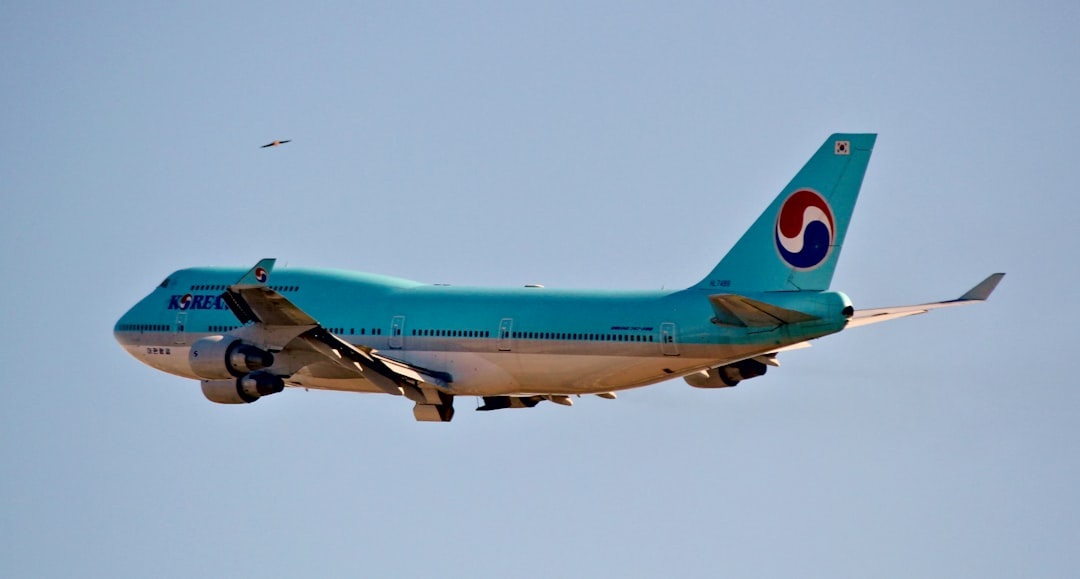
South Korea’s 11 passenger airlines have phased in the same core rule: you may bring a power bank onboard, but you may not use it in the cabin to charge devices (and you should not charge the power bank during the flight, either). The final carrier to adopt the measure is T’way Air, starting February 24, 2026.
For travelers, the change is simple but disruptive. A phone that is fine on the ground can’t be topped up mid-flight from a battery pack. That matters most on long travel days, tight connections, and work-heavy trips. Digital nomads and remote workers often rely on a power bank as a “floating outlet” for laptops, tablets, cameras, and hotspot devices. On Korean carriers, that routine now stops once you are in the air.
Crew instructions will control what happens onboard. Some steps can differ by route or aircraft, so treat the ban as an “airline-by-airline” onboard rule even though it has become nationwide in practice.
⚠️ Important: Onboard policy is governed by the operating carrier and can vary by route or aircraft; always check the specific carrier’s policy before travel
2) Timeline of implementation
The rollout happened in stages, so the date that matters for you depends on who operates each flight segment. A ticket can be sold by one airline and operated by another (a codeshare). When that happens, the operating carrier’s onboard policy typically applies.
If your itinerary has two or three flights in a day, plan for the strictest leg. A power bank that you can carry on every segment may still be unusable in-flight on any segment operated by a Korean carrier that has adopted the restriction—which is now all of them.
Rollout sequence by carrier
| Carrier | Ban Start Date | Status |
|---|---|---|
| Fly Gangwon | September 2025 | Restrictions ongoing since launch |
| Eastar Jet | October 2025 | Began as a three-month pilot, then adopted permanently |
| Jeju Air | December 22, 2025 | Enforced |
| Air Premia | January 1, 2026 | Enforced |
| Aero K Airlines | January 1, 2026 | Enforced |
| Korean Air | January 26, 2026 | Enforced |
| Asiana Airlines | January 26, 2026 | Enforced |
| Jin Air | January 26, 2026 | Enforced |
| Air Busan | January 26, 2026 | Enforced |
| Air Seoul | January 26, 2026 | Enforced |
| T’way Air | February 24, 2026 | Final carrier to adopt |
⚠️ Important: Onboard policy is governed by the operating carrier and can vary by route or aircraft; always check the specific carrier’s policy before travel
3) What is prohibited and what remains allowed
Think of the new rule like a “no battery-pack-as-an-outlet” policy once you’re seated. You can still travel with power banks, but your behavior with them changes.
What you can’t do in the cabin
- Prohibited: Using power banks to charge electronic devices in the cabin (phones, tablets, laptops, cameras, and similar gear).
- Also treated as prohibited onboard behavior: Charging the power bank during the flight.
What you can do
- Allowed: Carrying power banks in carry-on baggage (not checked luggage), with safety precautions focused on preventing short circuits and keeping devices easy to monitor.
Precautions passengers should expect
- Cover terminals with insulating tape.
- Place each power bank in a plastic bag or individual pouch.
- Keep the power bank within immediate reach, such as in a seat-back pocket or on your person.
- Avoid placing power banks in overhead compartments.
Practical compliance helps. Before boarding, have your power bank packed so it can be shown quickly if requested. During the flight, if crew ask you to secure a device or move it to a reachable spot, do it right away. The core idea is simple: if something heats up, it must be seen and handled fast.
At-a-glance guide
| What is Prohibited | What is Allowed | Precautions |
|---|---|---|
| Charging a phone/tablet/laptop with a power bank during the flight | Carrying power banks in carry-on baggage | Tape over terminals; bag/pouch per device; keep within reach |
| Plugging devices into a power bank for in-seat charging | Keeping power banks accessible for monitoring | Do not store in overhead compartments |
| Charging the power bank in-flight | Following crew instructions on storage | Present items promptly if asked |
⚠️ Important: Onboard policy is governed by the operating carrier and can vary by route or aircraft; always check the specific carrier’s policy before travel
4) Reason for the ban
Airlines did not target power banks because they are rare. They targeted them because they are common—and because a battery incident in a cabin can escalate quickly.
The immediate spark for tighter action in South Korea was a major fire at Gimhae International Airport in January 2025, involving a power bank on an Air Busan aircraft preparing for takeoff. The aircraft was completely destroyed. That incident landed in the middle of wider fire scares linked to lithium battery devices worldwide, pushing carriers toward stricter handling.
A power bank is a dense energy source. If it fails and enters thermal runaway—a rapid, self-heating chain reaction—it can produce intense heat, smoke, and fire. In a confined cabin, seconds matter. That is why airlines focus on use in flight and reachable storage. When a device is charging, it can warm up. If something goes wrong, crew need the item visible and close, not buried in a bag overhead.
Expect active enforcement. If a battery feels hot, swells, or smells odd, cabin crew may intervene immediately and may require the item to remain in a place where it can be monitored.
⚠️ Important: Onboard policy is governed by the operating carrier and can vary by route or aircraft; always check the specific carrier’s policy before travel
5) Regional context
South Korea is not acting alone. Similar approaches are spreading across Asia, and that matters for international itineraries where each leg may follow different rules.
Japan is planning similar measures starting April 2026, aimed at prohibiting in-flight power bank use and even charging through seat power outlets. That combination is stricter than many travelers expect, especially those who assume seat power makes onboard charging “automatically allowed.”
In Kazakhstan, Air Astana introduced power bank use and transport restrictions in March 2025. The message across the region is consistent: passengers can often carry power banks, but active use and charging behaviors face tighter control.
For travelers, the safest plan is to prepare for the strictest segment of your trip. If one leg bans in-flight use, treat the whole travel day that way.
⚠️ Important: Onboard policy is governed by the operating carrier and can vary by route or aircraft; always check the specific carrier’s policy before travel
6) Passenger accommodation and charging options
A ban on in-flight power bank charging does not mean you are out of options. It does mean you need a new routine.
Start with what your seat can do. On many full-service flights, wired charging may be available. Korean Air and Asiana Airlines offer wired charging on most aircraft, but availability can still vary by aircraft type and even by seat. On the other end of the spectrum, many low-cost carriers operate planes with limited or no charging ports, so assume you may have to fly “battery only” for the whole segment.
Shift charging to before the door closes. Top up at the airport, at a lounge, or at a gate area. Treat boarding like the last call to reach 100%. For remote workers, that one change can prevent a workday from collapsing mid-journey.
Offline planning becomes the backup. Download maps, boarding passes, and key files. Draft messages and work notes locally. Save reading materials. A flight can still be productive without a live power top-up.
💡 If you rely on devices for work, fully charge before boarding and plan to use wired charging ports where available; carry spare cables/adapters and consider offline work plans
clear: on South Korea’s carriers, power banks are now “carry-on safety items,” not in-seat chargers. If you fly T’way Air on or after February 24, 2026, pack and plan as if you will not be able to recharge from a battery pack once you take your seat.