- SAS flight SK2590 aborted takeoff from a taxiway instead of the runway at Brussels Airport.
- The A320neo safely stopped near the fuel storage area with no reported injuries or damage.
- Belgian authorities are investigating visual and geometric factors that contributed to the rare surface misalignment.
(BRUSSELS AIRPORT, BELGIUM) — SAS had a serious ground-safety scare on Feb. 5, 2026, when a Copenhagen-bound A320neo began a takeoff roll on the wrong surface. If you fly short-haul in Europe, this matters because runway and taxiway mix-ups are rare but high-risk events—and they can turn a routine Schengen hop into an evacuation, a long night of rebooking, and a messy compensation claim.
My quick verdict on the “product” travelers actually experienced that night: SAS’s Airbus cabin is comfortable enough for a 1- to 2-hour sector, but it’s still a no-frills short-haul setup. The standout was the calm, orderly evacuation and passenger handling after the rejected takeoff, not any onboard bells and whistles. If you value reliable disruption support and clear communication, that’s the bar SAS will be judged against here.
1) Incident Overview
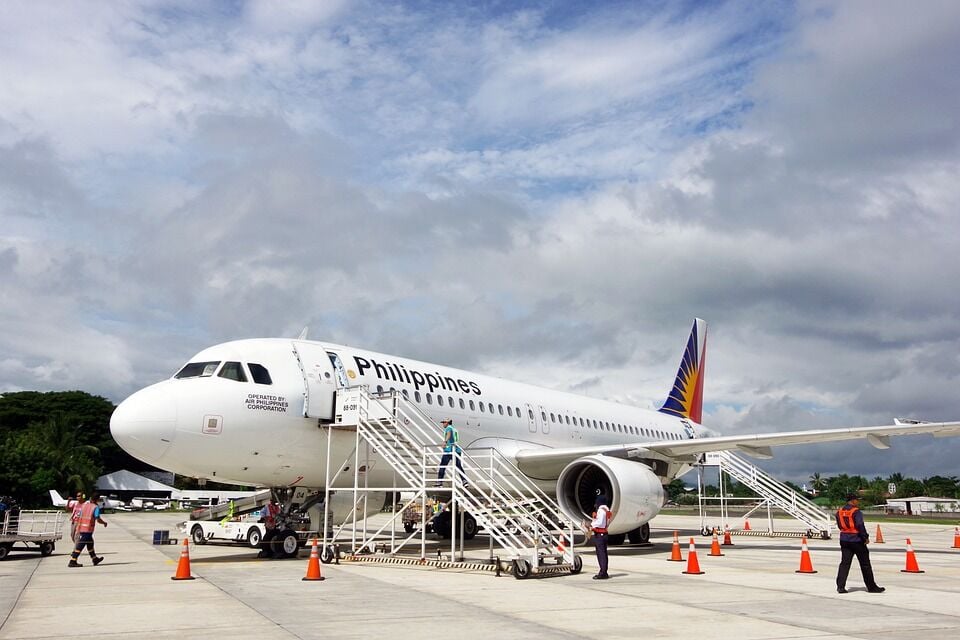
On the evening of Thursday, Feb. 5, 2026, Scandinavian Airlines flight SK2590 from Brussels (BRU) to Copenhagen (CPH) attempted takeoff from taxiway E1 at Brussels Airport (EBBR). The aircraft was an SAS A320Neo (Airbus A320neo) registered SE-ROM.
Instead of departing from the cleared runway, the jet lined up on a parallel taxiway. The crew began accelerating, then rejected the takeoff. The aircraft stopped safely on the paved surface near the fuel storage area.
No injuries were reported. SAS evacuated all 165 passengers, and there were no reports of aircraft damage in the immediate aftermath.
For travelers, the “why you should care” is simple. This is one of aviation’s most closely managed risk areas. When it happens, it also tends to trigger long delays, missed connections, and compensation questions.
2) Timeline and Sequence of Events
SK2590’s pushback occurred around 20:55 local time. The departure was running roughly 25 minutes late at that point. That kind of delay is common at busy hubs in the evening wave, especially in Schengen-heavy banks.
After pushback, the aircraft taxied via several taxi routes toward the departure end. Air traffic control cleared the flight for takeoff from runway 07R. The aircraft instead turned and lined up on taxiway E1, which runs parallel to the runway.
The takeoff roll began in darkness, with reported good visibility and no meaningful weather factor noted in early accounts. The aircraft accelerated to roughly the low hundreds in knots. The crew then initiated a rejected takeoff and brought the aircraft to a stop near an intersection close to the fuel farm area.
Passengers evacuated using airstairs, then boarded buses back to the terminal. SAS rebooked travelers onto later flights, which is typically straightforward on BRU–CPH given multiple daily options and partner routings.
3) Airport Geometry and Taxiway/Runway Configuration
Brussels is not a tiny airfield with one strip of pavement. It’s a complex, multi-taxiway operation where surface guidance matters as much as the departure itself.
Taxiway E1 connects into other taxiway segments, and it offers a limited straight-line distance before the area near fuel storage. In this case, that straight run is often described as roughly 4,000 feet across connected segments. That is not “runway length,” but it can still look deceptively “usable” from a cockpit at night.
Here’s the key passenger-friendly point. A taxiway and a runway can appear similar in certain conditions:
- Approach angles at intersections can visually “aim” you down the wrong pavement.
- Lighting can compress depth perception at night.
- Surface markings can be misread if you’re expecting a runway centerline ahead.
- Parallel surfaces can create a false sense of alignment when you’re turning on.
Modern runway-incursion prevention is built on layers, not a single “gotcha” barrier. Those layers include airport signage and markings, cockpit cross-checks, sterile-cockpit discipline, ATC readbacks, and—at some airports—stop bars or surface movement alerts.
When one layer fails, the others are meant to catch it.
4) Investigation Status and Stakeholders
The investigation is being led by Belgium’s Air Accident Investigation Unit. This is the normal structure for an event at Brussels Airport, regardless of the airline’s home country.
Investigators typically examine:
- Flight Data Recorder (FDR) parameters, including acceleration and braking.
- Cockpit Voice Recorder (CVR) audio, including callouts and cross-checks.
- ATC audio and clearances, plus readbacks.
- Airport lighting, signage, and paint condition.
- Any runway works or temporary configurations that could affect cues.
SAS has said it is cooperating. Swedish accredited representatives are also involved, which is standard when the operator and aircraft registration are Swedish. The case has been referenced as L-6/26, with an update date noted as Feb. 12 in early documentation.
Early updates can change. Preliminary notes are about establishing facts and preserving data. Causal findings come later, after data validation and reconstruction.
For passengers, the parallel thread is compensation and duty of care. Under EU261, the headline thresholds travelers watch are:
- €250 compensation for shorter flights (up to 1,500 km), when arrival delay meets the rule.
- €400 for mid-range distances (between 1,500 and 3,500 km).
- €600 for long-haul distances (over 3,500 km).
- The common compensation trigger is an arrival delay of 3 hours or more, subject to eligibility rules.
BRU–CPH is a short intra-Schengen hop, so it typically sits in the lowest distance band. The exact eligibility still depends on arrival delay and the final cause determination.
5) Contributing Factors Under Review
Causation has not been established, and it’s smart to avoid armchair conclusions. Still, there are predictable categories investigators will examine in a taxiway misalignment event.
Visual and geometry cues
Investigators will look closely at how the intersection geometry “presents” from the cockpit. They’ll review:
- Line markings, including centerlines and edge markings.
- Surface width cues, since runways are usually wider than taxiways.
- Sign placement and whether it’s visible at the decision point.
- Lighting patterns, including runway edge lights versus taxiway lights.
Runway works and temporary changes
Brussels has experienced runway and airfield works in recent periods. When works exist, investigators will verify:
- NOTAM content and how it was briefed.
- Whether temporary markings or barricades changed visual expectations.
- Whether standard taxi routes were modified.
Operational context and time pressure
Evening departures can bring tight sequencing and busy frequencies. That does not “explain” an error, but it does shape workload. Investigators will examine workload and crew coordination without treating “being late” as a cause.
6) Safety Implications and Industry Context
Taxiway and runway misalignments are a known risk area across the industry. The mitigations are repetitive by design, because repetition is what catches rare events.
Here’s what airlines, airports, and ATC lean on:
- Strict readbacks of runway assignments and hold-short instructions.
- Runway verification in the cockpit, often requiring both pilots to confirm signage and heading.
- Sterile cockpit discipline during taxi, lineup, and takeoff.
- Stop bars and red-light systems at runway entries, when installed and used.
- Surface movement monitoring, where airports and controllers have the tools and procedures.
When an event like this happens, investigators may also use simulator reconstructions. They can recreate night lighting, turn angles, and signage visibility. That helps test whether visual cues were misleading, and whether procedures were strong enough to catch it earlier.
For travelers, the “industry context” takeaway is reassuring. These incidents are treated with extreme seriousness. The goal is prevention, not blame-by-headline.
7) Passenger and Crew Outcome (and what SAS short-haul felt like)
The confirmed human outcome was positive. Passengers evacuated, there were no injuries reported, and travelers were transported off the aircraft by airstairs and buses.
This is also where a “review” lens matters, because most passengers judge an airline by the worst day, not the best day.
Cabin: seat comfort and basic ergonomics
SAS’s A320neo cabin is a typical European short-haul setup. Expect a slimline seat, tight-ish legroom, and a cabin that feels modern and bright.
Here’s what you should generally expect on an SAS A320neo, including on aircraft like SE-ROM:
| Feature | What you can expect on SAS A320neo short-haul |
|---|---|
| Economy seat pitch | Around 30 inches |
| Economy seat width | Around 17–18 inches |
| Business class | Typical “Euro business” with a blocked middle seat |
| Power | Often USB power at the seat area on newer-config jets, but don’t count on AC outlets |
| Bag space | Standard A320 bins; boarding order matters for roller bags |
That pitch is competitive for intra-Europe flying. It’s not generous, but it’s workable for BRU–CPH. Compared with some high-density low-cost carriers, SAS usually feels less squeezed.
Food and service
On most SAS intra-Europe flights, catering depends on cabin and fare family. In economy, it’s typically buy-on-board or light service. In the forward cabin, you’ll usually get a meal and drinks.
On an incident night, the onboard “service” becomes safety and communication. What matters is clear instructions, calm pacing, and fast coordination with airport staff. By all reports, the evacuation was orderly and passengers got off without injuries.
Entertainment and Wi-Fi
This is not a seatback-screen airline on short-haul. Think phone-and-headphones travel. If Wi-Fi is offered, it’s usually a paid add-on, and performance can vary. On a one-hour hop, most travelers won’t miss a screen.
Amenities and the things frequent flyers care about
For a Schengen flight, the big “amenity” is speed. You want:
- Fast boarding
- Predictable overhead bin space
- A quiet cabin for emails or a quick nap
- Smooth rebooking when things go sideways
SAS’s bigger value for regulars is often the network and loyalty tie-ins, not onboard glamour.
Miles, points, and status: what disruption means
If you’re crediting to SAS EuroBonus, a disrupted flight can affect:
- Your points earning for the segment, depending on whether you were rebooked onto SAS metal or a partner.
- Your segment counts toward status, if the final itinerary changes.
- Your upgrade eligibility, if you’re moved to a different flight at a different time.
A practical move after a disruption is to keep your boarding pass and rebooking confirmation. If a partner flew you, save the ticket number and final receipt. Retro-claims are easier when your documents are tidy.
Competitive context: SAS vs alternatives from Brussels
BRU–CPH is a route where you may also consider one-stop options via major hubs.
| What matters | SAS (BRU–CPH) | Lufthansa Group via FRA/MUC | KLM via AMS |
|---|---|---|---|
| Nonstop time | Strong advantage | Longer due to connection | Longer due to connection |
| Cabin style | Standard Euro short-haul | Similar | Similar |
| Rebooking options | Good via CPH and partners | Many frequencies | Many frequencies |
| Loyalty play | EuroBonus and partners | Miles & More | Flying Blue |
Nonstop usually wins when everything runs smoothly. During irregular operations, mega-hubs can offer more recovery flights, but also more missed-connection risk.
Who should book this?
Book SAS on BRU–CPH if you want a nonstop Schengen hop with a modern narrowbody, and you value a full-service carrier’s rebooking muscle when plans break.
Choose a competitor connection if you need maximum same-day backup options, or you’re protecting a long-haul connection and want more flight frequencies.
If you were on SK2590 or any similar disruption, keep receipts, screenshots of delay notifications, and your rebooking confirmation. If your arrival delay hit 3+ hours, file for EU261 consideration and use the €250 / €400 / €600 framework to sanity-check what you’re owed.