- NTSB sets a probable-cause meeting for January 27, 2026, to finalize the DCA midair collision investigation.
- Investigators found the Black Hawk helicopter’s altimeter read 80-100 feet lower than its actual flight altitude.
- The FAA permanently closed Route 4 and mandated ADS-B Out for military helicopters in congested airspace.
(WASHINGTON, D.C.) — Nearly one year after the DCA tragedy, the NTSB’s updated look at the investigation frames how regulatory actions, ADS-B mandates, and airspace changes will shape safety practices and near-term air travel around Washington, D.C.
Section 1: Incident Overview and Timeline
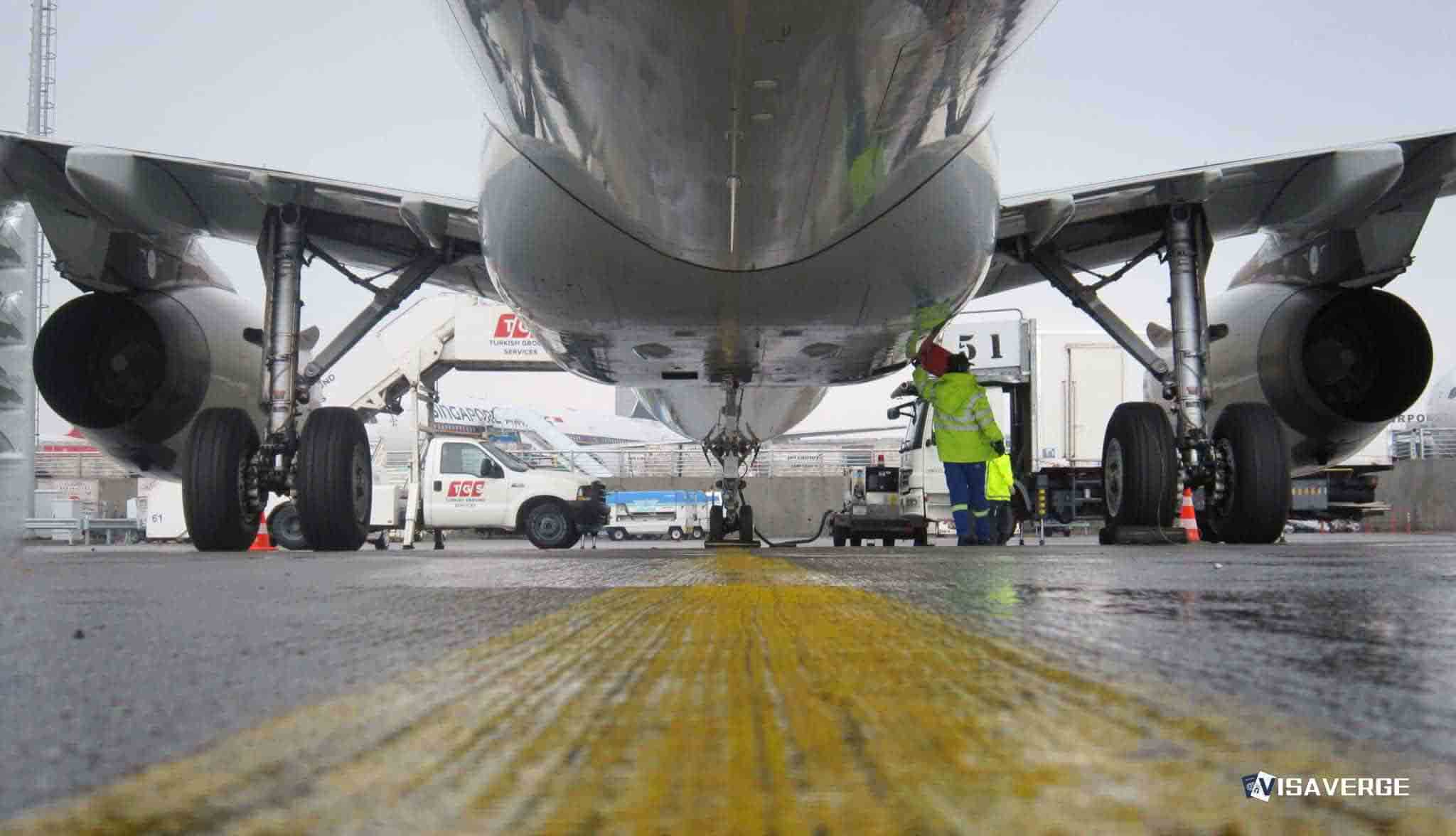
January 2026 marks a new phase in the public’s view of a devastating midair collision near Ronald Reagan Washington National Airport (DCA). The crash involved American Airlines Flight 5342 (PSA Airlines) and a U.S. Army UH-60 Black Hawk helicopter in the Route 4 vicinity along the Potomac River.
Lives were lost. Families and crews are still living with that reality.
NTSB Chair Jennifer Homendy used the January 20, 2026 lab tour to reinforce what the National Transportation Safety Board (NTSB) is trying to do and how it does it. “[The goal is] to find out exactly what happened and to prevent a tragedy from happening again,” she said. That may sound simple. The work is not.
Behind-the-scenes updates matter because they show what investigators test, what questions remain open, and what changes regulators may make before a final cause is declared. They also shape airline and helicopter operations now, not years from now.
That is especially true around DCA, where airspace is dense and routing options are limited.
Section 2: Key Facts and Statistical Highlights
A public NTSB probable-cause meeting is set for January 27, 2026. Think of it as a formal “what happened and why” decision by the NTSB board, based on gathered evidence and analysis. It can drive safety recommendations and regulatory pressure.
It is not a court ruling. It also does not automatically settle fault or dollars in civil claims.
One technical detail has carried major operational weight: altitude accuracy. Investigators found the Black Hawk’s barometric altimeter read 80–100 feet lower than the helicopter’s actual altitude. Barometric altimeters infer height from air pressure, then pilots set a local reference pressure to match conditions. Small errors can matter anywhere; near DCA, they can matter fast.
The collision occurred at 278 feet. The helicopter was required to stay below 200 feet. A difference like that sounds like a single line on a chart; in real flight, it can be the gap between legal separation and shared air.
Legal fallout is also shaping timelines and disclosures. In December 2025, the U.S. Government admitted liability for the accident, citing negligence by air traffic controllers who were managing both aircraft and violated standard procedures.
Separate from that admission, families have filed claims exceeding $250 million against the FAA and the U.S. Army. Aviation disaster litigation often spans years. Discovery can be extensive, and multiple parties may share exposure, from operators to federal agencies.
Section 3: Official Statements and Involvement of Agencies
Different agencies touch the same airspace, but they do different jobs.
The National Transportation Safety Board (NTSB) investigates crashes and issues safety recommendations. It does not regulate airlines or air traffic control. The Federal Aviation Administration (FAA) does. The Department of Transportation (DOT) provides departmental oversight of the FAA and broader transportation policy direction.
DHS involvement comes up when national security operations intersect with civil aviation rules. Customs and Border Protection (CBP), a component of the Department of Homeland Security (DHS), flies missions in the National Capital Region. Those flights can create policy pressure points, because they share airspace with scheduled commercial traffic.
ADS-B is central to that discussion. Automatic Dependent Surveillance–Broadcast is a system that broadcasts an aircraft’s position to air traffic control and other equipped aircraft. “ADS-B Out” refers to the broadcast function. When aircraft broadcast, controllers and other aircraft get a clearer traffic picture. When aircraft do not, separation can depend more heavily on radar, voice instructions, procedures, and assumptions that can break under workload.
A Senate hearing on March 27, 2025 added a key detail. Senator Maria Cantwell highlighted a DHS letter confirming that CBP flights in the National Capital Region were covered by the same “operational security” exceptions that allowed the U.S. Army helicopter to fly without broadcasting its location via ADS-B at the time of the crash.
Public statements early in an investigation usually describe process and known facts. Later, docketed evidence and lab results carry more weight. NTSB Acting Director Mike Budinski described how quickly components may be brought in for technical review: “Very quickly, we will ship stuff back here if we suspect there’s an issue and let the lab team take a look at it.”
Section 4: Context, Significance, and Airspace Issues
DCA is not “just another busy airport.” Its location, restricted airspace nearby, and the mix of commercial jets and rotorcraft compress decisions into short time and space. Helicopter routes, including Route 4 over the Potomac, were designed to manage that mix.
They also create close-proximity interfaces that demand strict altitude control and clear separation standards.
The NTSB has described this event as historically significant in U.S. aviation safety. That label is about consequences and context, not drama. The collision became the deadliest U.S. aviation disaster since 2001, and the first major commercial passenger flight crash in the U.S. since 2009. Those markers pull federal attention toward systemic risk, not just one crew’s actions.
Near-miss data is another systemic signal. Reports tied to DCA airspace pointed to over 15,000 near-miss instances (2021–2024). A near-miss count does not prove a crash was inevitable. Reporting can include duplicates, varying severity, and differences in how events are classified.
Still, a trend that large can flag a hazard chain: dense traffic, mixed flight rules, variable equipage, and air traffic control workload.
When near-miss reporting is not shared or acted upon, the missed opportunity is practical. It means fewer targeted fixes, slower procedure changes, and weaker feedback loops for controllers and operators. In airspace like DCA’s, feedback loops are safety equipment too.
| Item | Detail | Impact on Operations |
|---|---|---|
| Collision aircraft | American Airlines Flight 5342 (PSA Airlines) and a U.S. Army UH-60 Black Hawk | Drives changes to mixed traffic procedures near DCA |
| Human toll | 67 fatalities | Intensifies oversight, audits, and schedule sensitivity around DCA |
| Altitude facts | 278 feet collision altitude; helicopter required below 200 feet; barometric altimeter read 80–100 feet low | Tightens focus on altitude discipline, equipment checks, and route compliance |
| Probable-cause meeting | January 27, 2026 | May trigger further FAA actions, airline training updates, and local procedure revisions |
| Near-miss trend | 15,000 near-miss instances (2021–2024) | Raises pressure for better reporting, action tracking, and airspace redesign |
| Airspace change | Route 4 closure | Forces helicopter re-routing and can reshape traffic flows near DCA |
| Separation procedure | Visual separation eliminated for mixed traffic within five miles of DCA | More controller-driven separation may affect throughput and spacing |
| ADS-B response | FAA required ADS-B Out for military helicopters | Reduces “invisible traffic” risk, may add compliance steps for some missions |
| Litigation scale | Lawsuits exceed $250 million | Extends scrutiny of procedures, training, and federal decision-making |
Section 5: Impact and Policy Changes
Policy changes after a crash can feel abstract. Around DCA, they change what routes aircraft can use and how tightly controllers must space traffic.
One major response is the ROTOR Act, S.2503, passed the Senate in December 2025. The intent is straightforward: standardize ADS-B broadcasting in congested airspaces so that security-related exceptions do not create blind spots. Implementation still has real-world friction, especially for military and federal operations that historically relied on exemptions.
Compliance will depend on rulemaking, enforcement, and mission planning.
FAA Administrator Bryan Bedford tied those changes to urgency in a statement dated August 8, 2025: “There must never be another tragedy like the one on January 29 at Ronald Reagan Washington National Airport (DCA). As we investigate the cause and cooperate fully with the investigation, the FAA will not hesitate to take action if we identify risk. That is why we took immediate action, including requiring ADS-B Out for military helicopters.”
Operationally, the FAA permanently closed Route 4 and eliminated the use of “visual separation” for mixed traffic within five miles of DCA. Visual separation lets controllers clear one aircraft to maintain separation by sight under defined conditions. Removing it near DCA for mixed traffic may mean more conservative spacing and more controller instructions.
That can reduce arrival and departure rate, especially during peak demand. Travelers could see more reroutes, longer taxi times, or missed connections when the schedule has little slack.
Documentation matters when disruption hits time-sensitive plans. Save delay screenshots, rebooking notices, and receipts. For international travelers and immigration applicants, that paper trail can help if flight problems cause missed biometrics, interviews, or other date-locked appointments.
The same goes for school reporting dates and employer start dates tied to work authorization onboarding. Contact the relevant office promptly, and ask for written rescheduling confirmation through official channels such as uscis.gov, egov.uscis.gov, or my.uscis.gov.
✅ Trust official sources for updates on ADS-B requirements, airspace changes, and route modifications around DCA; verify travel plans against FAA notices and airline advisories
Section 6: Official Sources and Access Points
Start with the NTSB investigation dashboard entry for the case, which is listed as DCA25MA108. That dashboard is the hub for major investigative releases, docket materials, and board meeting information as it becomes public.
FAA operational updates and statements are typically posted through the agency’s newsroom and operational channels. Travelers should also check their airline’s site directly for DCA-specific waivers, rebooking policies, and same-day changes during procedural transitions.
Senate oversight records can add context on how exceptions, equipage, and agency coordination are discussed under oath. Look for the Senate Commerce Committee hearing record tied to March 27, 2025, including testimony and submitted letters that address ADS-B exceptions in the National Capital Region.
Watch January 27, 2026 closely, because the NTSB probable-cause meeting can reshape DCA procedures again, and airline schedules will react fast.