Japan to Use Subsidies to Tackle Airport Congestion
Japan is proposing significant subsidies for 2026 to fix airport congestion caused by record tourism. Travelers should choose transit via New Zealand for a smoother, predictable experience or mainland China for better scheduling options. The plan focuses on infrastructure like baggage systems and security checkpoints to improve the arrival experience and reduce flight delays across the country's major travel hubs.
Japan’s MLIT proposes subsidies of $18.9 million to combat airport congestion in Fiscal 2026.
Travelers face a choice between simpler New Zealand transits or flexible China-based routing options.
Upgrades focus on improving passenger flow, baggage systems, and ground operations to reduce delays.
Japan is throwing money at **airport congestion**, and that matters for your next trip because long security lines and baggage backups don’t just ruin the arrival experience. They also ripple into missed connections, late bags, and flight delays. With Japan’s MLIT proposing **¥2,883 million ($18.9 million)** in **subsidies** for Fiscal 2026 airport upgrades, the smart play for travelers is to think harder about *how* you get to Japan, not just which airline you book.
For most long-haul travelers, that comes down to two practical routings when nonstops are pricey or unavailable: **transit via New Zealand (NZ)** or **transit via mainland China**. Both can work well, but they shine in different situations—especially when Japan-bound peak waves are straining terminals.
Japan to Use Subsidies to Tackle Airport Congestion
### Quick recommendation
If you value predictable connections and an easier transit experience, **choose a New Zealand connection**. If your priority is **more schedule choices** and you’re comfortable managing transit variables, **a China connection** can be a strong value play, particularly when you need flexibility on departure times.
| Factor | Connect via New Zealand (NZ) | Connect via China (mainland hubs) |
|—|—|—|
| Schedule breadth | Fewer departure banks, fewer alternates | Often more frequency and routing options |
| Transit experience | Usually calmer, simpler wayfinding | Can be efficient, but more process variability |
| Misconnect risk during Japan disruptions | Lower if you build in buffer time | Can be higher if tight turns and IRROPS cascade |
| Baggage reliability | Strong when on one ticket; fewer handoffs | Can be strong, but more handoffs across systems |
| Miles/points earning | Straightforward if you keep one alliance and fare type | Watch fare buckets and ticket stock; partner crediting varies |
| Redemption strategy | Great for travelers with alliance-focused plans | Can be excellent, but award space and rules vary widely |
| Best for | Families, first-timers, tight schedules | Flexible travelers, deal-hunters, backup options lovers |
## 1) What Japan’s subsidy plan is, and why you should care
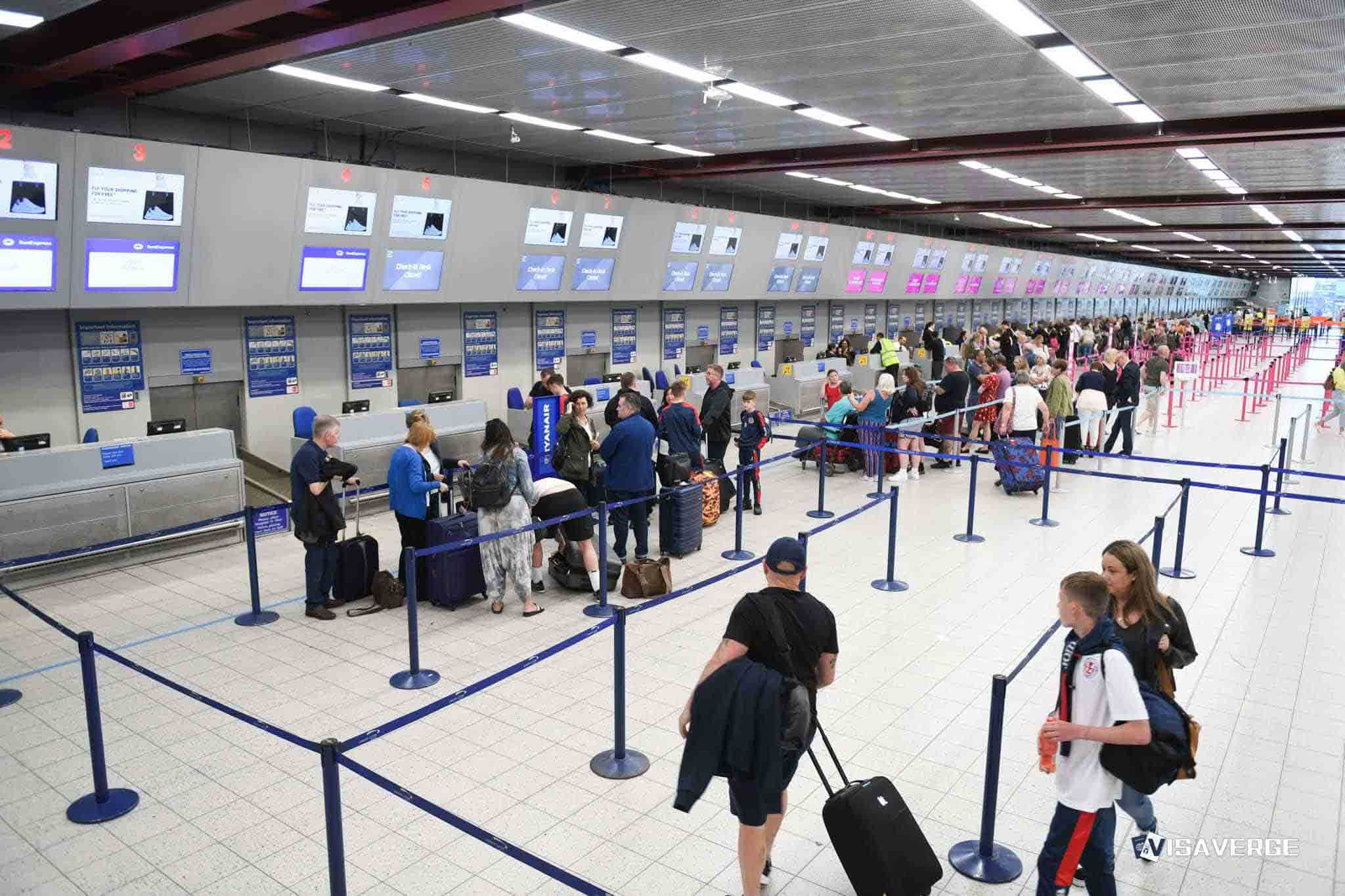
MLIT is proposing a Fiscal 2026 program to **subsidize airport infrastructure improvements** aimed at easing congestion tied to the Japan travel boom. The traveler-facing goal is simple: **shorter queues and waiting times**, especially around **security checkpoints** and other passenger-processing pinch points.
When policymakers say “airport infrastructure improvements,” it’s rarely a single magic fix. It usually means a mix of terminal flow work, landside tweaks, and behind-the-scenes upgrades that raise throughput. Done well, that can reduce the kind of chokepoints that turn a routine arrival into a 90-minute slog.
## 2) Who can get the subsidies, and how the cost-share works in real life
The proposed recipients are **domestic airlines**, **airport terminal operators**, and **local governments that manage airports**. MLIT’s concept is a classic public co-funding model: the subsidy covers **half the costs in principle**, with the recipient covering the other half.
“In principle” is doing a lot of work here. In programs like this, it often signals there may be conditions, caps, eligible-cost definitions, and reporting requirements that decide what’s reimbursable. It also shapes procurement. If an airport is matching funds, it may phase projects or choose quicker wins first.
Coordination also matters. A single project may touch an airport operator, an airline station, ground handlers, and local transit partners. One entity typically has to act as the project owner, even if multiple parties benefit.
## 3) The upgrades that actually move the needle at airports
The most traveler-visible category is **passenger-flow improvements**. Think expanded walkways, better circulation paths, and smarter queuing designs. These fixes reduce “stop-and-go” crowding that slows everyone down.
Then there are the less glamorous but hugely important systems: **baggage conveyors** and landside interfaces. When baggage systems bottleneck, it spills into arrivals halls, clogs circulation, and even strains staffing. Those backups can also delay turnarounds if outbound bags can’t be processed reliably.
Terminal “function enhancements” should be read as operational capacity upgrades, not a cosmetic refresh. Reconfigured screening areas, added processing points, and better separation of flows can raise throughput without building a new terminal.
Examples of improvements the subsidy targets
Expand passenger walkways and circulation space
Add or upgrade baggage conveyor belts
Enhance terminal functions that improve passenger processing
Improve and expand airport bus terminals
Install digital signage for public transport guidance
Support ground operations (e.g., aircraft guidance and baggage handling)
Efficiency upgrades that improve worker conditions (e.g., air-conditioning in baggage-sorting areas)
Landside congestion is also part of the plan. **Bus terminal expansion** and **digital signage** for public transport guidance can reduce curbside confusion. That matters when inbound waves dump hundreds of travelers into the same pickup zones.
Finally, MLIT is also pointing at ground-side reliability. Support for **aircraft guidance** and **baggage handling** connects directly to on-time performance. Even worker-environment changes, like **air-conditioning in sorting areas**, can improve safety and reduce slowdowns during peak heat and peak volume.
## 4) The demand-side pressure: Japan’s record inbound year
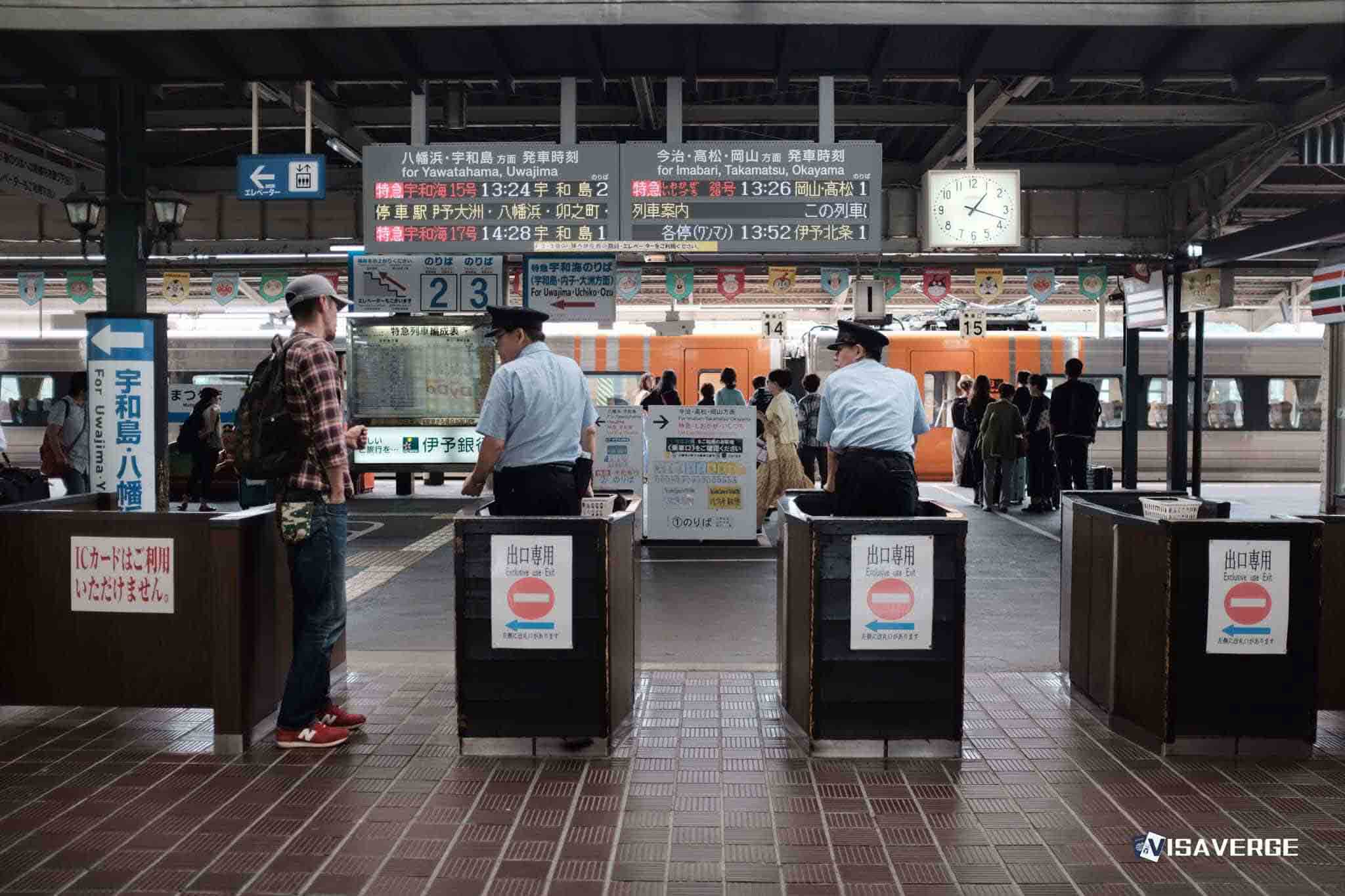
Japan saw **42.68 million foreign visitors in 2025**, the first time it surpassed 40 million. That’s great for tourism, but it also concentrates demand into predictable arrival peaks. Those peaks hammer security lines, curbside space, bus bays, and baggage halls.
For you, congestion isn’t only discomfort. It can create downstream travel risk. A late bag can blow up a same-day domestic connection. A slow security queue can turn a legal connection into a missed flight, especially on tight itineraries.
## 5) What “Fiscal 2026 proposal” means for timing
This is framed as a **Fiscal 2026 budget proposal**, not a fully executed program with published rules. That matters because infrastructure money typically moves in phases: budget approval, detailed guidance, application intake, selection, contracting, delivery, and then commissioning.
Some fixes are fast. Signage, wayfinding, and select equipment upgrades can be delivered quicker than construction-heavy changes. Bigger terminal modifications take longer because they must be built around live operations.
For travelers watching from the outside, the practical point is that congestion relief will likely arrive in increments. You may see small improvements before you see dramatic ones. The details that will matter most—eligible cost definitions and implementation rules—will come from MLIT guidance.
## 6) How access to the subsidies typically works (and what to watch)
MLIT hasn’t laid out a public, step-by-step application process here, so the exact pathway will depend on the final guidance. Still, subsidy programs usually follow a familiar pattern: define an eligible project, build documentation, submit via the designated authority, undergo evaluation, receive an award, implement with compliant procurement, and then report results.
Recipients typically need to show a clear scope, a budget, a procurement plan, timeline, and measurable congestion relief. Expect an emphasis on operational impact and reporting readiness. Projects that cross boundaries—like terminal flow plus bus terminal changes—also require tighter stakeholder alignment.
## So which transit strategy is better right now: New Zealand or China?
Japan’s congestion push doesn’t automatically make one routing “right.” What it does is raise the value of **predictability**. When arrivals are crowded and turnarounds get stressed, an itinerary with fewer stress points often wins.
That’s where **New Zealand connections** tend to shine. You’re usually dealing with a smaller set of moving parts: fewer mega-hub arrival banks, fewer gate-area crushes, and typically clearer wayfinding. If you’re traveling with kids, elderly relatives, skis, or anything that makes disruptions painful, calmer transfers can be worth more than a slightly shorter elapsed time.
China connections, on the other hand, can be great when you want **options**. More schedule density can mean better chances of finding a departure time you like, and sometimes better rebooking possibilities if plans change. The tradeoff is variability. Your transit experience can be smooth, but it can also involve more process friction depending on the hub and day.
## Price and schedule: why China often “wins on choice,” and NZ “wins on simplicity”
It’s tempting to reduce this to “one is cheaper.” In practice, pricing swings by season, demand, and competition. What I see most often is a structural difference in *choice*. China routings frequently offer a wider menu of departure times and one-stop permutations. New Zealand routings can be more limited, but also easier to reason about.
When Japan is strained, limited schedule choice can cut both ways. Fewer flights means fewer same-day backups if something goes sideways. If you connect via NZ, protect yourself with longer connections and earlier departures when possible.
## Miles and points: where travelers accidentally leave value on the table
For frequent flyers, the biggest mistake is assuming miles earning is uniform across partners. It isn’t. Your earning depends on **who issues the ticket**, your **fare class**, and the **program you credit to**.
New Zealand connections can be straightforward if you stick to one alliance strategy and avoid deep-discount fare buckets that earn poorly. China connections can still be rewarding, but you need to double-check partner crediting charts and fare-class accrual rules before you commit. If you’re chasing elite status, those details can decide whether a long-haul trip meaningfully moves your progress or barely counts.
On the redemption side, both strategies can work well. The main question is whether your points are best used for long-haul premium cabins or for expensive peak-season economy. With Japan demand still running hot, peak pricing and limited award space can show up on many carriers, regardless of routing.
## Comfort and onboard product: think aircraft and connection stress, not just seat width
Comfort is a full-trip equation. A slightly better seat won’t matter if you’re sprinting through a chaotic transfer or waiting an hour for bags.
If you’re connecting via NZ, the calmer transfer often makes economy feel less punishing. If you’re connecting via China, a well-timed, daylight connection can still feel easy. A poorly timed one can be draining, especially after a long-haul.
## Reliability: congestion is an airline problem, not only an airport problem
Airport pinch points often translate into airline headaches: late boarding, late departures, and gate holds waiting for stands and ground staff. That’s why MLIT targeting passenger processing and ground operations matters. Better flows and better equipment can lift on-time performance indirectly, even if your airline isn’t the one receiving funds.
Until those improvements are visible, your best hedge is itinerary design. Avoid razor-thin connections into Japan, and plan for “arrival friction” on peak days.
## Choose NZ if…
– You want a simpler transit day and fewer process surprises.
– You’re traveling with family, lots of bags, or tight onward plans in Japan.
– You value predictability more than having ten different departure times.
## Choose China if…
– You want more routing options and are comfortable with variability.
– You’re price-sensitive and willing to trade simplicity for choice.
– You prefer having more alternate flights if you need to change plans.
Japan’s subsidy push is a good sign, but it won’t erase congestion overnight. For trips you’re booking now for 2026, treat Japan arrivals like a peak-demand environment: build buffer time, avoid tight domestic connections after landing, and keep an eye on MLIT’s Fiscal 2026 program rules as they’re finalized—because the airports that move fastest on these upgrades are the ones most likely to feel better first.
Who can apply and how the cost share works (at a glance)
Eligible recipients: domestic airlines
Eligible recipients: airport terminal operators
Eligible recipients: local governments managing airports
→ Funding Structure
Subsidy covers half the project costs in principle (50% cost share)
Note
Build your congestion case with measurable evidence: time-stamped queue lengths, average security wait times by hour, bus/curb dwell time, and missed connection or re-screening counts. A simple baseline makes it easier to justify the project and verify results later.
Analyst Note
Before committing design work, confirm which entity will be the formal applicant (airline, terminal operator, or local government) and align that choice with who controls the site, contracts vendors, and can meet audit/reporting obligations for public funds.
Important Notice
Treat subsidy funding as compliance-heavy: keep vendor quotes, procurement records, change orders, and proof of delivery organized from day one. Missing documentation can delay reimbursement or trigger clawbacks, even if the project outcomes are positive.
Robert Pyne, a Professional Writer at VisaVerge.com, brings a wealth of knowledge and a unique storytelling ability to the team. Specializing in long-form articles and in-depth analyses, Robert's writing offers comprehensive insights into various aspects of immigration and global travel. His work not only informs but also engages readers, providing them with a deeper understanding of the topics that matter most in the world of travel and immigration.