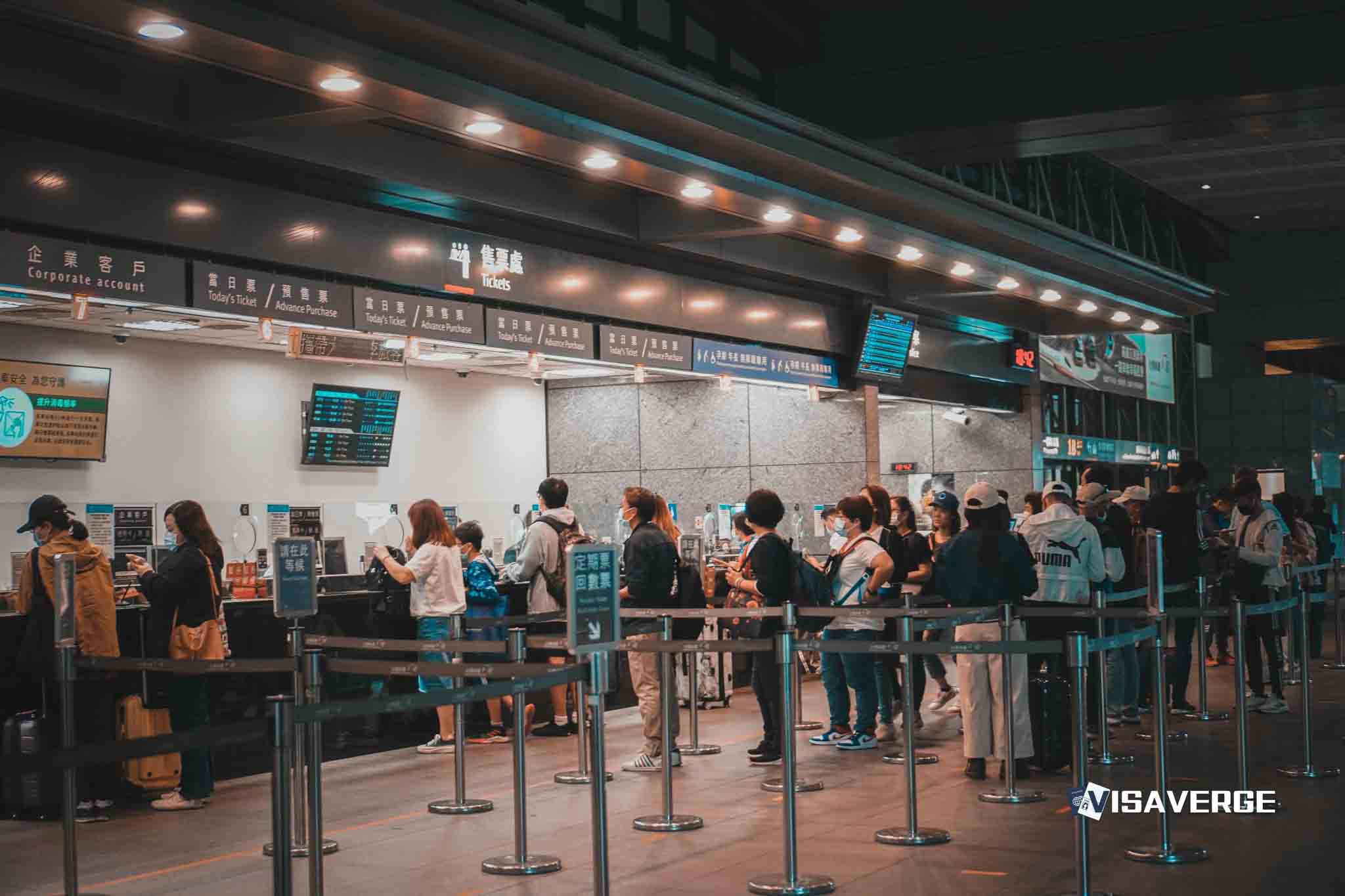
- Over seventy-seven flights were canceled across Hawaii as Hurricane Lala disrupted travel on August sixteenth, twenty twenty-six.
- The D-O-T requires automatic cash refunds when passengers decline replacement itineraries for canceled or significantly delayed flights.
- Refunds must be processed within seven business days for credit cards and twenty calendar days for other payment methods.
More than 77 flights had been canceled across Hawaii by August 16, 2026, as Hurricane Lala disrupted travel. Passengers whose airlines cancel their flights can reject replacement itineraries and pursue a cash refund, even when weather caused the cancellation.
Hilo International Airport and Ellison Onizuka Kona International Airport closed Saturday, August 15. Airlines continued notifying affected travelers and offering alternate flights under storm-related waivers.
Free toolB1/B2 Tourist Visa Stay Calculator online
A waiver is not the same remedy as a refund. It may allow a passenger to change flights under the carrier’s terms, while a canceled flight can create a separate right to money back when the traveler declines rebooking.
The DOT protection applies to flights to, from, or within Hawaii. Airlines cannot force eligible passengers to accept vouchers, miles, or another itinerary instead of the required payment to the original funding source.
The choice comes first. Then the remedy follows.
Federal rules give canceled-flight passengers a choice
The U.S. Department of Transportation’s 2024 Airline Refunds and Other Consumer Protection rule covers 14 CFR Parts 260 and 399. It requires a refund when an airline cancels a flight and the passenger chooses not to travel on the replacement arrangement.
Weather does not remove that right. From the passenger’s standpoint, the airline canceled the service, whether the cause was a hurricane, flooding, or another dangerous condition.
A traveler who still wants to reach Hawaii can accept the carrier’s replacement flight or use the applicable waiver. Someone who no longer wants the trip can decline the new itinerary and receive the fare back through the original payment method.
The rule also reaches paid services that the airline failed to provide. That can include checked bags, seat selection, or Wi-Fi attached to the canceled segment.
| Situation | Passenger decision | Airline obligation or option |
|---|---|---|
| The airline cancels the flight | Accept the replacement itinerary | Continue under the carrier’s rebooking terms |
| The airline cancels the flight | Decline the replacement | Return the fare through the original payment method |
| The passenger paid for unused extras | Seek repayment for the canceled segment | Refund services such as checked bags, seats, or Wi-Fi |
| The airline issues a waiver | Change the trip under that policy | Apply the waiver’s stated conditions |
The refund is supposed to be automatic when a passenger does not accept rebooking. Contacting the carrier still helps document that decision and identify charges for unused extras.
That distinction is practical. A waiver governs continued travel, while the refund rule addresses a canceled service the passenger does not use.
Longer delays can qualify when the passenger declines travel
The federal framework also covers certain significant delays. A domestic itinerary delayed by 3+ hours can qualify when the passenger chooses not to travel.
International flights use a 6+ hour threshold. The traveler must decline to continue under the changed itinerary.
The stated processing period depends on how the ticket was paid. Airlines must process credit-card refunds within 7 business days, while refunds through other payment methods must be handled within 20 calendar days.
The refund obligation concerns the canceled or qualifyingly delayed transportation that the passenger does not take. Carrier waivers can impose separate dates and rebooking conditions.
Hurricane Lala brought closures, wind and intense rainfall
Hurricane Lala reached Category 1 strength on August 15, 2026, with maximum sustained winds of 75 mph. Some areas received rain at a rate of 2 inches per hour.
Hawaii Governor Josh Green, M.D., spoke at the Hawaii State Capitol on August 15 and warned that statewide damage could exceed $1 billion.
“This is an enormous storm. Suffice it to say, it's not just the amount of wind: it's the heavy rainfall, it's the flooding, it's the entirety of this storm which gives us pause.”
Edwin “Ed” H. Sniffen, director of the Hawaii Department of Transportation, described problems affecting airport operations as crews secured facilities against gusts above 40 knots.
“there's been a lot of issues that we've been dealing with, especially on the airport side,”
The closures at Hilo and Kona occurred as cancellations and delays continued across the islands. Major airlines issued storm-related change waivers and sent affected passengers reaccommodation options.
Airline waivers use different dates and conditions
Carrier policies do not replace the federal refund rule after an airline cancels a flight. They provide another path for travelers who still want to fly, subject to each airline’s terms.
| Airline | Covered dates or airports | Published terms |
|---|---|---|
| Hawaiian Airlines | ITO, KOA, LIH, and OGG | Flexible travel policy for flights to and from the listed airports |
| Southwest Airlines | August 14–16, 2026 | Rebooking within a 14-day window, or a full refund if the flight is canceled or significantly delayed |
| Delta Air Lines | August 15–16 | Fare differences waived for travel rebooked on or before August 19, 2026 |
The Hawaiian policy covers the listed airports rather than a single travel date in the material. Southwest’s advisory identifies both a coverage period and a rebooking window.
Delta’s waiver is narrower in timing. It waives fare differences for qualifying travel rebooked by August 19, 2026.
A passenger should compare the carrier’s specific waiver with the actual status of the booking. An advisory alone does not establish that the airline canceled the particular flight.
Preserve the records that show what happened
Start by checking whether the carrier canceled the specific flight or merely issued a weather waiver. The distinction determines whether the passenger is choosing between rebooking terms or declining a canceled service.
- Confirm the status of the booked flight.
- If the airline canceled it and you do not want the replacement, decline that itinerary.
- Tell the carrier that you are choosing the refund through the original payment method.
- Identify unused checked-bag, seat-selection, and Wi-Fi charges tied to the canceled segment.
- Keep the cancellation notice, booking confirmation, and receipts for disruption-related expenses.
The automatic-refund provision means the passenger should not have to submit a request merely to trigger the fare repayment after declining rebooking. A direct message or call can still create a record of the choice and help recover ancillary charges.
Passengers may voluntarily choose a voucher or miles instead. The airline cannot require those alternatives when the passenger qualifies for a refund.
DOT enforcement continues under the 2024 rule
The refund framework came from the 2024 Airline Refunds and Other Consumer Protection rule. The research identifies the measure as a Biden-Harris administration milestone that remained in effect under the Trump administration, even as other broad DOT regulations were rolled back.
Secretary of Transportation Sean P. Duffy has prioritized enforcement of the automatic-refund rule. In an infrastructure-safety statement on August 14, 2026, he said:
“We're working at the Speed of Trump to deliver the world-class air traffic control system America deserves,”
The Transportation Security Administration also changed leadership during the disruption. David P. Cummins was sworn in as the agency’s eighth administrator on August 7, 2026, and pledged to enhance the “Golden Age of Travel.”
Passengers who believe an airline failed to provide a required refund can use the Department of Transportation’s Aviation Complaint, Enforcement, and Reporting System, or ACERS. The system launched in August 2025 and provides a more granular way to report refund failures.
Southwest’s advisory covers August 14–16, 2026. Delta’s qualifying rebooking deadline is August 19, 2026, so affected travelers should check those dates before accepting a replacement itinerary or choosing a carrier-specific change option.