- Storm Gianna is a powerful bomb cyclone causing over 12,000 flight disruptions across the U.S. Southeast and Northeast.
- Major U.S. airlines have issued travel waivers for Jan. 31 to Feb. 1, offering varying flexibility and rebooking windows.
- Travelers should act early to rebook as delays may persist for up to 72 hours due to aircraft repositioning.
(UNITED STATES) — Storm Gianna is hammering air travel this weekend, and the airline you booked can make the difference between a smooth same-day reroute and a two-day scramble. If you’re flying in, out of, or connecting through the Southeast or Northeast through Monday, pick the carrier whose waiver rules and rebooking tools match how you travel.
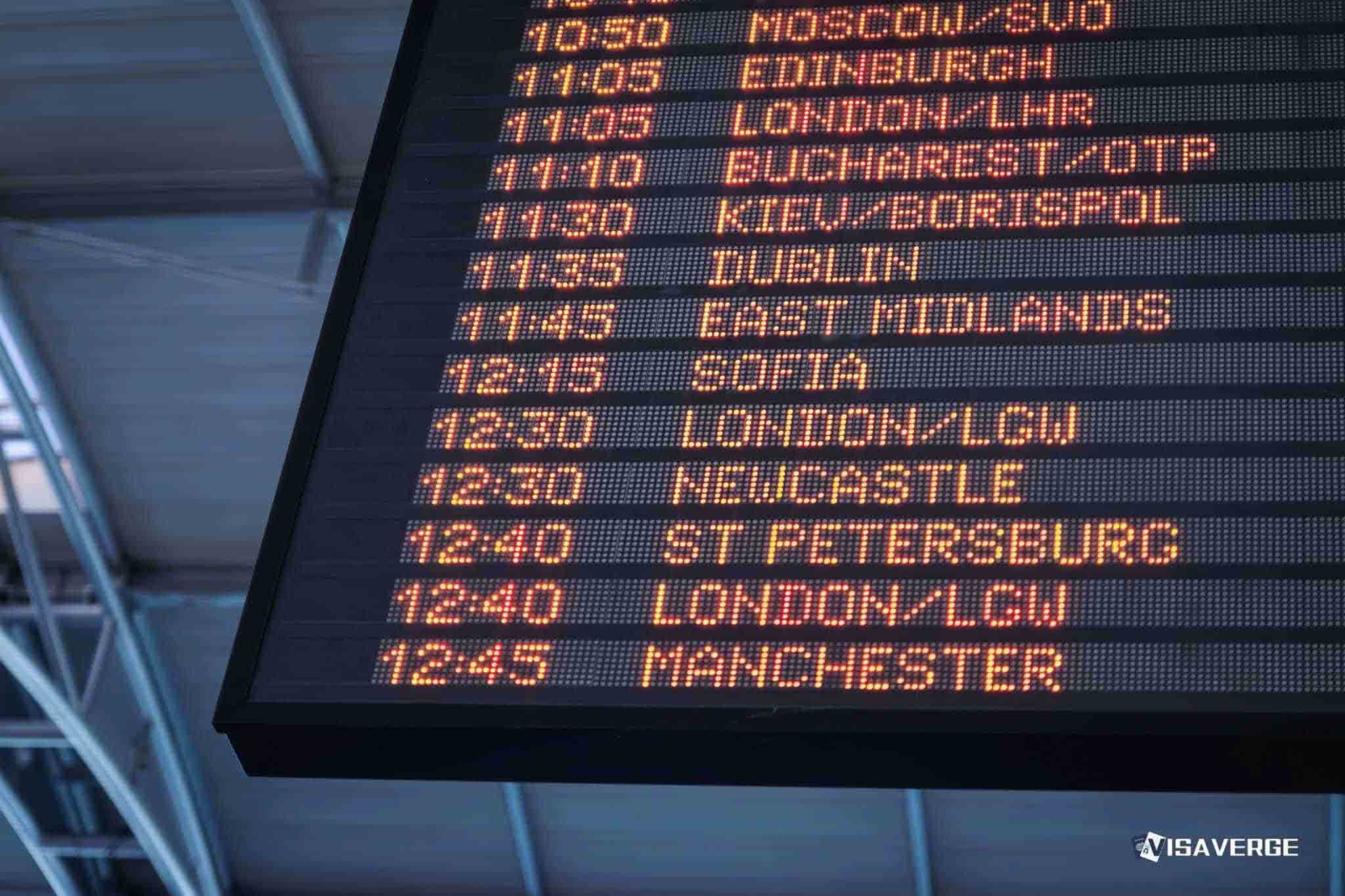
Storm Gianna is a bomb cyclone, and it’s already driving a national wave of flight delays and cancellations. By mid-afternoon Saturday, more than 12,000 disrupted flights were logged across the Friday-to-Monday travel window. Even if your home airport looks fine, your aircraft or crew may be stuck somewhere else.
This guide compares how the big four U.S. airlines are handling Storm Gianna right now—American, Delta, United, and Southwest—with a focus on what matters when weather melts your itinerary: waiver flexibility, rebooking speed, alternate airports, and miles or points fallout.
Storm Gianna, in plain English: why this storm breaks airline schedules
Storm Gianna qualifies as a bomb cyclone because of explosive cyclogenesis. That’s when a storm’s central pressure drops by 24 millibars or more in 24 hours. That rapid intensification fuels stronger winds, heavier precipitation, and sharper temperature gradients.
For flying, that combination is brutal. The major operational impacts include high winds, snow and ice, reduced visibility, and degraded airport surface conditions.
- High winds can exceed aircraft and ground equipment limits, stopping ramp work and slowing deplaning.
- Snow and ice trigger de-icing queues and fluid holdover limits, turning “on time” into “maybe.”
- Low visibility reduces arrival rates and forces longer spacing between aircraft.
- Airport surface conditions can close runways or taxiways, with one closure cascading into hours of delays.
Storm Gianna is also hitting parts of the Southeast that rarely run true winter ops. That matters because staffing, de-icing gear, and plow capacity vary by region.
The result is predictable: widespread disruption that peaks Saturday, then lingers into Sunday and Monday as airlines reposition aircraft and crews. In practice, your best move is to act early, before the rebooking rush hits your route.
Side-by-side: which airline is easiest to deal with during Storm Gianna?
All major carriers issued travel alerts starting Jan. 29, 2026, with broad coverage around Jan. 31–Feb. 1. United’s waiver window is the widest on paper, extending into early February.
The big theme: the “best” airline depends on whether you need routing freedom, date flexibility, or the fastest path to a confirmed seat. Below is a traveler-focused comparison by factor (not a table) so you can match the carrier to your needs.
- Waiver timing: Alerts began around Jan. 29 for American, Delta, United, and Southwest.
- Core affected travel dates: All four list Jan. 31–Feb. 1 as the core window; United explicitly offers broader rebooking into early February.
- Geographic scope: American: nearly 30 airports; Delta: over 20 airports; United: 14 destinations listed; Southwest: 9 airports listed.
- Typical waiver value: American, Delta, and United provide fee-free changes if you meet rules; Southwest has a strong flexibility culture and no change fees.
- Notable constraints: American’s airport list affects eligibility; Delta faces hub pressure in ATL; United typically requires same cabin and same cities; Southwest seat inventory can vanish fast on peak routes.
- Best for: American suits travelers near multiple AA airports; Delta favors ATL flyers and SkyMiles elites; United helps people who can shift into early Feb.; Southwest fits travelers who want simple changes.
Act early and match the carrier to whether you need routing flexibility, date range, or speed to a confirmed seat.
What a travel alert really does (and what it usually does not)
A weather travel alert or waiver is the airline’s permission slip to change your trip without the usual penalties. In most cases, it can cover change fee waivers, a defined rebooking window, some flexibility on alternate airports or connections, and rules on whether you must keep the same origin and destination.
- It often covers: change fee waivers for eligible tickets, a defined rebooking window and eligible travel dates, sometimes flexibility on alternate airports or connections, and rules about keeping origin/destination.
- It usually does not: guarantee a seat on your preferred flight, force the airline to open extra inventory, or automatically refund you if you decide not to fly (that depends on cancelation type and fare rules).
If you’re holding a Basic Economy-style fare, read carefully. Some airlines still allow changes under a weather waiver, but the options may be narrower than a standard economy ticket.
United’s waiver details matter this weekend because they’re both helpful and restrictive. United is allowing fee-free reschedules onto United flights in a window running from Jan. 28 through Feb. 8, but you generally must keep the same cabin and same cities. That’s great for date shifts, but it can limit creative reroutes.
When you’re rebooking, prioritize in this order:
- Confirm your flight is covered by the waiver and eligible dates.
- Grab the first workable seat, even if it’s not perfect.
- Then try to improve it later when schedules stabilize.
- Save screenshots of confirmations and any fee waivers applied.
⚠️ Heads Up: Waivers usually remove change fees, not fare differences. If only expensive seats are left, you may still pay more.
Airline-by-airline: who wins on flexibility, and who wins on speed
American Airlines: broad airport coverage, good for alternate-airport plays
American’s alert spans nearly 30 airports, which can help if your region has multiple AA-served fields. If you can drive an extra hour, you may find better availability.
- Swap between nearby airports in the same metro area.
- Take a nonstop instead of a connection through a stressed hub.
- Travel earlier Saturday morning or later Sunday night to find seats.
Miles and status angle: if you’re chasing AAdvantage status, watch what happens when you reprice. A voluntary change can shift your fare, which can affect award earning tied to spend. Keep your confirmation emails.
Delta Air Lines: strong operations culture, but Atlanta can clog quickly
Delta listed over 20 airports, with particular pressure around Atlanta on Jan. 31. ATL is a machine on normal days; in storm weekends it can become the bottleneck that breaks your plan.
- Best if you already connect through ATL and can move flights early.
- Beneficial if you have elite status and can use same-day options.
- Consider routing around the worst corridors where possible.
Miles and status angle: Delta’s Medallion members should check whether a rebooked itinerary changes fare class. That can affect upgrade priority and seat assignments.
United Airlines: widest rebook window, but routing rules can box you in
United’s waiver is the most generous on dates, allowing fee-free moves into early February, up to Feb. 8. That’s a huge deal if hotels are scarce or if you can work remotely for a day.
The catch is the plain-language constraint: expect same cabin and same cities. If your best save involves switching destination airports, United may not always allow it under the waiver.
- Ideal if you can keep your original endpoints.
- Good if you can travel a few days later instead of the next morning.
- Works if you’re willing to take a less direct itinerary to keep the same cities.
Miles and status angle: moving to a different day can change aircraft and seat maps. If you paid for Economy Plus or have status benefits, verify your seat and any paid extras carried over.
Southwest Airlines: simplest rules, but seats can disappear fast
Southwest only listed nine airports in its alert language, but the airline’s broader policy culture is traveler-friendly. Southwest is often easiest when you need to pivot quickly because change fees aren’t part of the equation.
- Best when you want to change your mind multiple times as conditions shift.
- Good if you’re okay with a different departure time to keep the same day.
- Prefer straightforward credit rules when plans collapse.
Points angle: Rapid Rewards points bookings are typically flexible. The risk is inventory—when storms hit, the cheapest award seats go first.
Why your flight may still be a mess after the storm “moves on”
Storm Gianna is slamming parts of South Carolina, Georgia, and Florida with snow and cold that’s unusual for the region. Add a powerful coastal storm track, and you get a multi-region problem.
- De-icing delays create departure backlogs.
- Runway and taxiway constraints reduce airport throughput.
- Wind limits can pause ground handling or force arrival slowdowns.
- Aircraft positioning breaks when planes don’t end up where tomorrow’s schedule expects them.
- Crew legality becomes a silent killer when crews time out and replacements are out of position.
That’s why disruption can persist 24 to 72 hours after peak conditions. The system has to unwind.
There’s also a real safety angle at the curb. Wind chills were reported as low as 8°F, with risk of frostbite in about 30 minutes. If you’re stuck outside waiting for a shuttle or rideshare, dress like you’re spending time outdoors.
Regional reality check: the Southeast is the epicenter, and the Northeast isn’t a guaranteed escape route
The Southeast “rarity factor” is real. Airports in the Carolinas, Georgia, and Florida can run excellent thunderstorm ops but do not always have the same depth for blizzard-like conditions.
- Don’t assume a smaller Southeast airport will recover faster than a hub.
- Expect longer ground delays once snow equipment becomes the limiting factor.
Meanwhile, the storm’s reach is extending into the Northeast. Newark is among the airports feeling knock-on effects on Feb. 1. If your instinct is to reroute through the NYC area, be careful. The Northeast corridor can be a trap during winter systems, even when the original problem started in the Southeast.
This also comes on the heels of Winter Storm Fern a week earlier, which already strained networks. When airlines get hit back-to-back, recovery slack disappears quickly. That means fewer spare aircraft, fewer spare crews, and fewer easy reaccommodations.
When the flight is only part of the trip: events, hotels, and packages
Storm disruption doesn’t stop at the jet bridge. Regional shutdowns are already canceling major plans, including the Myrtle Beach Polar Plunge in South Carolina (rescheduled for March) and Braves Fest at Truist Park in Atlanta (canceled with a March date to be announced).
If your travel was tied to an event, check three things immediately: the event’s refund or reschedule policy, your hotel’s cancellation deadline, and any prepaid transport terms.
- Event refund or reschedule policies, including ticket transfer rules.
- Your hotel’s cancellation deadline and whether storm exceptions apply.
- Prepaid transport terms, such as shuttles or parking.
Package and third-party bookings need extra care. If you booked air + hotel together, your airline may fix the flight, but the package provider controls the hotel. Save every receipt, rebooking email, and cancellation notice. That documentation matters if you need to dispute charges later.
Choose your airline (or rebooking path) based on how you travel
Choose American if…
- You can switch among nearby airports covered by its broader list.
- You want a big network to hunt for a same-day workaround.
- Your best reroute stays within AA’s domestic footprint.
Choose Delta if…
- Your trip is built around Atlanta and you can move early.
- You value operational consistency when weather is messy.
- You have Medallion status and can benefit from priority handling.
Choose United if…
- You’re willing to push the trip into early February.
- You need the longest rebooking runway, up to Feb. 8.
- You can keep the same endpoints and cabin.
Choose Southwest if…
- You want the least painful change process and simple credits.
- You’re okay with a different departure time to keep the day.
- You expect to adjust plans more than once as the storm evolves.
Staying safe and staying ahead: what to monitor through early February
Extreme cold changes airport strategy. Limit curbside time, keep gloves accessible, and assume longer waits for shuttles and rideshares. If you’re traveling with kids or older relatives, build extra buffer just for getting into the terminal.
Your monitoring checklist for the next several days:
- Airline travel alerts for updated eligible dates and city lists.
- Airport advisories about runway closures, de-icing, and ground stops.
- Your rebooking window and whether your new flight keeps waiver protection.
Pack like delays are guaranteed: a charged battery pack and cables, medications and a day of essentials in your carry-on, snacks and a refillable bottle (once past security), and a backup ground plan if you land at an alternate airport.
📅 Key Date: Most waivers center on Jan. 31–Feb. 1 travel, while United’s window runs as far as Feb. 8. Rebook before your original departure to keep the cleanest options.