

(Oklahoma) Oklahoma is set to lower its top personal income tax rate to 4.5% for tax year 2026, replacing the current 4.75% top rate and collapsing six graduated brackets into three under House Bill 2764. For many immigrants and mixed‑status families who budget around paycheck withholding, the change can show up quickly in take‑home pay and year‑end balances.
House Bill 2764 and the new rate structure
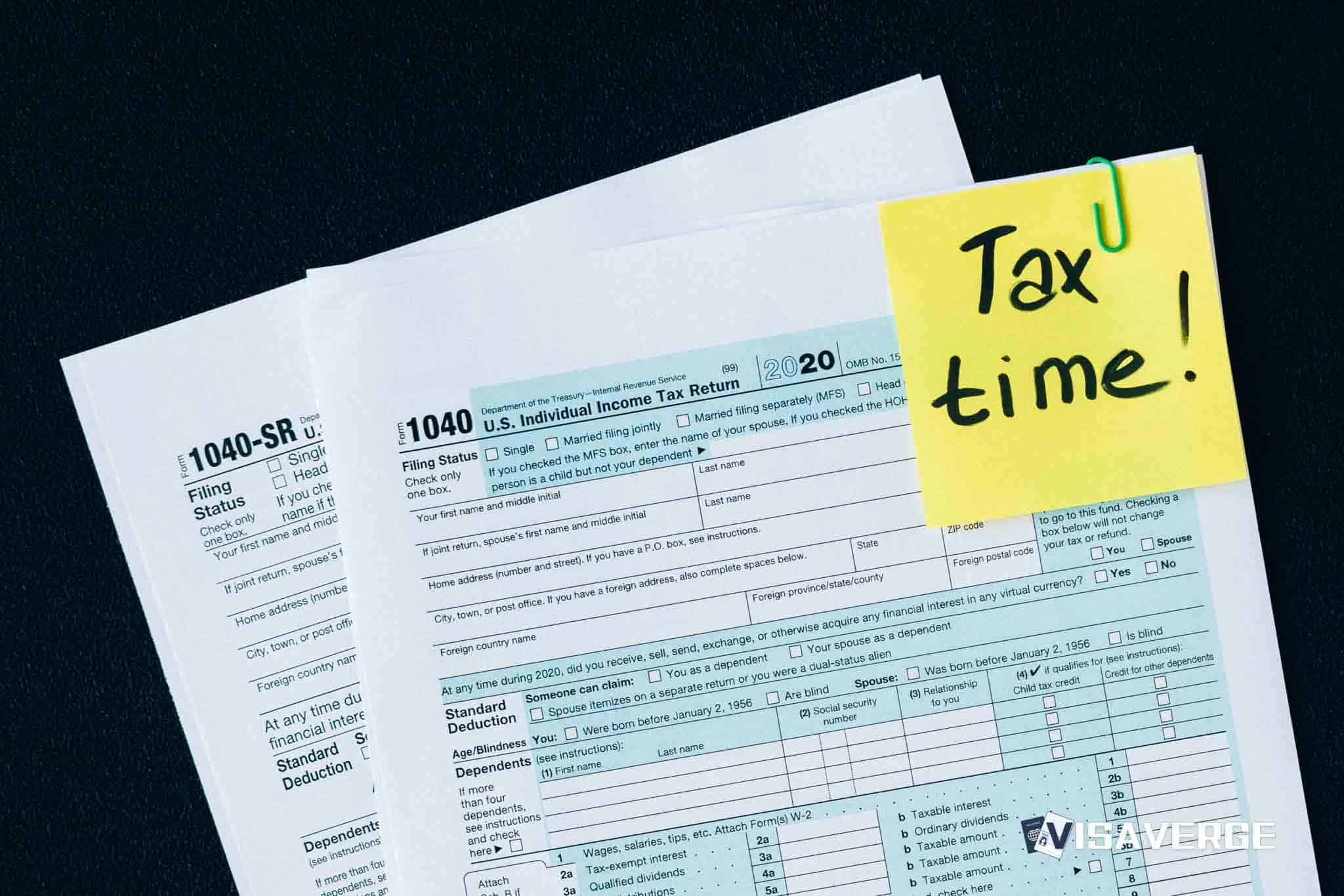
The legislature approved HB 2764 and sent it to Governor Kevin Stitt for approval. State agencies have already prepared 2026 withholding guidance that matches the bill’s three‑rate design.
Legislative summaries emphasize the rate cut and the reduced number of brackets more than they list full annual bracket thresholds for returns. Before 2026, Oklahoma used six brackets with rates from 0.25% to 4.75%, so even modest wage increases could shift part of your income into a higher marginal rate. Under the old schedule, for single filers, income over $7,200 reached the 4.75% top bracket.
Withholding tables: how the three rates work
The Oklahoma Tax Commission’s 2026 withholding tables, used by employers to compute state tax withheld from each check, confirm the three rates: 2.5%, 3.5%, and the new top rate of 4.5%. Rather than listing annual bracket cutoffs, the tables use “percentage of excess” formulas tied to each payroll period.
That matters to foreign workers on H‑1B, L‑1, or TN status, and to international students on OPT, because withholding errors show up as a balance due or a delayed refund.
Examples from the Commission’s 2026 withholding tables
Here are three examples employers often use when setting payroll systems for 2026:
| Filing status & pay frequency | Taxing ranges & formula (examples) |
|---|---|
| Single / Married filing separately — weekly | $0–$104 withholds $0; over $104 withholds $0.84 + 4.5% of wages above $104 |
| Married filing jointly — biweekly | $0–$842 and $842–$938 show $0 withholding; $938–$1,129 uses $2.40 + 3.5% over $938; $1,129+ uses $9.10 + 4.5% over $1,129** |
| Head of household — monthly | Applies 2.5% at lower income, then $7.19 + 3.5% over $2,813, and $27.31 + 4.5% over $3,388 |
Important: the tables are keyed to payroll period amounts, so two workers with the same annual income but different pay frequencies may see different withholding patterns during the year.
What the change means for visa holders and new arrivals
If you work in Oklahoma on a temporary visa, your employer typically withholds state income tax from each paycheck. You settle the final amount when you file your Oklahoma return.
A lower top rate sounds simple, but bracket consolidation affects:
– Who reaches the top rate and how quickly withholding rises during the year.
– New arrivals who start mid‑year, change employers, or adjust hours — small mismatches between actual filing status and payroll status can leave you short at filing time.
Many immigrants also juggle federal filing rules. Some noncitizens are resident aliens for tax purposes under the federal substantial presence test, while others file as nonresident aliens with different rules on deductions and treaty benefits. Either way, you need a taxpayer identification number. If you don’t qualify for a Social Security number, the IRS uses an Individual Taxpayer Identification Number (ITIN), requested on Form W-7.
Employers, payroll compliance, and common withholding errors
Employers will update payroll software to match the new tables, but workers still have a role. Check these items with HR and payroll:
Keep organized records (W‑2s, 1099s, pay stubs, lease records) and track your filing status. These docs help immigration filings and prevent surprises when proving income or eligibility for petitions.
- Confirm your correct filing status on file.
- Verify any exemptions or additional withholding you claimed.
- Watch for common immigrant situations that create errors:
- Selecting “single” on hiring forms while separated from a spouse abroad, then later qualifying to file jointly.
- Moving from F‑1 OPT to H‑1B mid‑year with wage jumps that push more income into the 4.5% bracket.
VisaVerge.com reports that tax surprises are a frequent stress point for new arrivals who are also paying immigration legal fees.
Revenue trigger for future cuts — what to watch
HB 2764 includes a trigger for future rate reductions:
– The law calls for additional 0.25% cuts when state tax collections rise above earlier highs by 1.25% of the estimated cost of the cut, as certified by the State Board of Equalization.
– If revenues later fall short, the reduction cancels.
For immigrants considering whether to put down roots, this matters because long‑term take‑home pay is part of the choice between staying in Oklahoma and moving to a higher‑wage state.
Fiscal impact and effects on state services used by immigrant families
State budget staff estimate the reform will reduce annual revenue by $340.5 million.
- Supporters say lower rates leave more money with workers and help Oklahoma compete for talent.
- Critics warn of pressure on schools, health programs, and local aid if revenue growth slows.
For immigrant households, public services and tax policy intersect in practical ways: language access in schools, community clinics for uninsured children, and job training programs that help new residents move from entry‑level work to licensed careers. A tax cut that feels small on one paycheck can feel larger if it reduces funding for services families rely on over several years.
Timeline, filing steps, and recordkeeping for immigration cases
- The new rates matter first in January 2026 paychecks, because withholding tables drive the immediate change.
- The final tax calculation happens when you file your 2026 Oklahoma return in 2027.
Keep good records because many immigration filings request proof of income and residence. Useful documents include:
– Pay stubs and year‑end forms (W‑2s, 1099s)
– Bank statements
– Lease records
Consistent state withholding helps avoid a sudden bill that could compete with filing fees, medical exams, or travel costs. When preparing Affidavits of Support or proving “ability to pay” in employment cases, tax records often accompany bank statements.
How the three‑bracket design interacts with refunds and treaty claims
Because Oklahoma’s tables apply percentages to “excess” wages, payroll timing matters:
- Workers paid weekly vs. monthly can have different withholding across the year, even with the same annual wages.
- Large bonuses or relocation payments concentrated in one pay period can produce spikes in withholding.
- If too much is withheld, you wait for a refund; if too little is withheld, you may owe when you file.
Nonresident aliens who claim a federal tax treaty benefit sometimes see reduced federal withholding, but Oklahoma withholding still follows the state tables unless the employer adjusts. Keep a simple spreadsheet tracking:
– Gross pay
– Oklahoma tax withheld
– Changes in filing status during the year
That record helps when you change immigration status, move, or prepare for a consular interview that asks for employment history. It also helps spouses decide whether married filing jointly or separately makes sense once both have taxpayer numbers.
What to check now, before 2026 withholding takes effect
Even though the rate cut starts with 2026 wages, planning now reduces stress. Steps to take:
- Read your last Oklahoma return and note the filing status you used.
- Ask payroll which 2026 table it will use for your pay frequency, then compare it to your current withholding.
- If you expect a big pay raise, check whether the top 4.5% rate will apply sooner under the three‑bracket setup.
- Keep copies of W‑2s, 1099s, and lease records, since immigration lawyers often ask for tax proof when preparing family petitions or work extensions.
For employers recruiting abroad, the simpler three‑rate tables may reduce coding errors, but payroll must still match withholding to the worker’s actual situation. The most reliable way to see how Oklahoma will apply the new system is the Tax Commission table your payroll uses, because it shows exactly where 2.5%, 3.5%, and 4.5% start for each pay period in 2026.
Key takeaway: check payroll settings, keep organized records, and confirm filing status now so the 2026 withholding changes don’t create unexpected bills or delays during immigration processes.
Oklahoma’s House Bill 2764 will reduce the top income tax rate to 4.5% by 2026 and simplify the bracket structure. This change impacts payroll withholding immediately, which is crucial for immigrant families and visa holders who rely on consistent tax records for immigration filings. The state aims to remain competitive, though the reform may reduce revenue for public services like schools and clinics.


