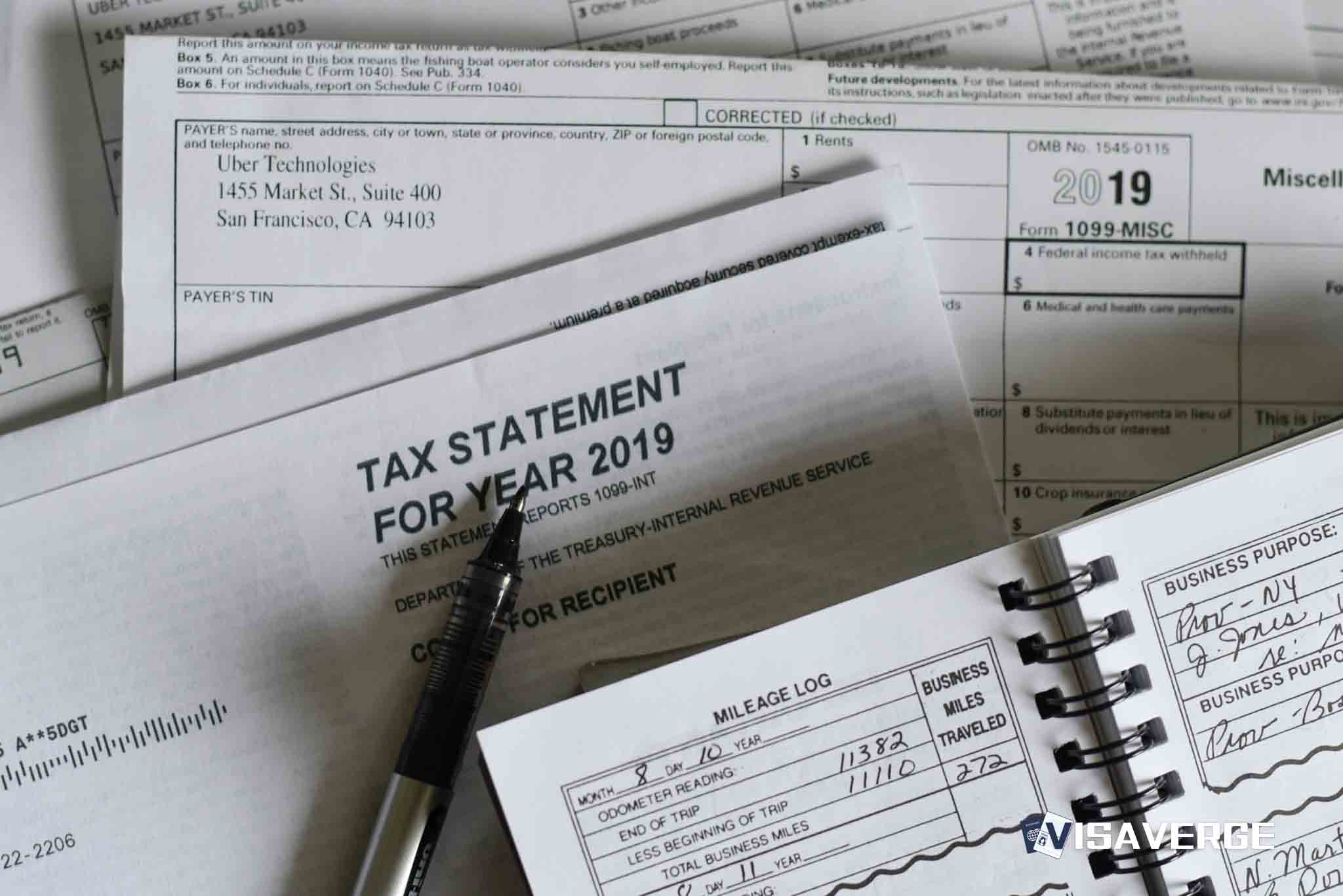
- Visitors on B-1/B-2 visas must file Form 1040-NR if they earn any U.S.-source income in 2026.
- Income is sourced where the work is physically performed, regardless of where the employer is located.
- Exceeding the Substantial Presence Test threshold can trigger worldwide income reporting as a tax resident.
(U.S.) — B-1/B-2 visitors who earned money for services performed in the United States generally must file Form 1040-NR for tax year 2026, filed in 2027, even if a foreign employer paid them outside the U.S.
That rule surprises many visitors. The tax rule is separate from the immigration rule. If you performed services while physically in the United States, that pay is usually U.S.-source income. It can be taxable even when the payer is foreign.

For most B-1/B-2 visitors, tax status starts as nonresident alien status. That usually means only U.S.-source income is taxed. But a long stay can change that result. If you meet the Substantial Presence Test, you may become a U.S. tax resident and must report worldwide income.
Current as of April 1, 2026. This guide covers tax year 2026, with returns generally due in 2027.
Who needs to file
Use this quick check first.
| Situation for tax year 2026 | Federal filing result | Main form |
|---|---|---|
| You earned wages or other pay for services performed in the U.S. while on B-1/B-2 | Yes, file | Form 1040-NR |
| You had U.S. withholding on wages | Yes, file | Form 1040-NR |
| You want to claim a treaty benefit on eligible income | Yes, file | Form 1040-NR |
| You had no U.S.-source income and did not meet resident rules | Usually no income tax return | Form 8843 applies only in limited cases |
| You met the Substantial Presence Test | Yes, file | Form 1040 or possible dual-status return |
The key point is simple. Services performed in the United States produce U.S.-source income. That remains true even if:
- Your employer is outside the U.S.
- Your paycheck came from a foreign payroll
- The work was short-term
- The work may not have been allowed under visa rules
What counts as U.S.-source income on B-1/B-2
For wage and service income, the sourcing rule is based on where the work was performed. If you were physically present in the United States when you performed the services, the income is usually U.S.-source.
Common examples include:
- Consulting work done during a U.S. visit
- Paid performances by entertainers or athletes
- Short-term services for a foreign employer while in the U.S.
- Wages reported on Form W-2
- Nonemployee compensation reported on Form 1099-NEC
This can be confusing, but here is the bottom line: the payer’s location does not control the sourcing rule for personal services.
IRS Publication 519, U.S. Tax Guide for Aliens, is the main authority here. IRS international filing guidance is also available at irs.gov/individuals/international-taxpayers.
Form 1040-NR, Form 8843, FBAR, and Form 8938
If you have taxable U.S.-source earned income as a nonresident, the main return is Form 1040-NR.
You may also hear about Form 8843. This form is often misunderstood. It is not a general filing form for every B-1/B-2 visitor. It is mainly used by:
- Individuals claiming an exempt individual category for the Substantial Presence Test, such as many F-1 or J-1 holders
- Individuals excluding days because of a medical condition that arose in the U.S.
For most routine B-1/B-2 visitors, Form 8843 is not automatically required just to confirm nonresident status. Check Publication 519 before filing it.
Foreign account reporting is separate from the income tax return.
| Filing status / form | Threshold | Filing method |
|---|---|---|
| FBAR (FinCEN Form 114) | More than $10,000 aggregate in foreign accounts at any time during 2026 | Filed electronically with FinCEN, not with the IRS |
| Form 8938, single and living in the U.S. | More than $50,000 on December 31, 2026, or more than $75,000 at any time | Filed with tax return |
| Form 8938, married filing jointly and living in the U.S. | More than $100,000 on December 31, 2026, or more than $150,000 at any time | Filed with tax return |
Many B-1/B-2 visitors will not meet those thresholds. But if you do, review FBAR rules and foreign account forms before filing.
📅 Deadline Alert: For tax year 2026, a nonresident with U.S. wage withholding generally files by April 15, 2027. Other nonresidents usually file by June 15, 2027.
Due dates and extension options for tax year 2026
For tax year 2026, filed in 2027, the federal due dates are usually:
| Tax event | Due date | Extension available |
|---|---|---|
| Form 1040-NR with U.S. wage withholding | April 15, 2027 | Yes, generally to October 15, 2027 |
| Form 1040-NR without wage withholding | June 15, 2027 | Yes, generally to December 15, 2027 in certain cases after a timely request |
| FBAR | April 15, 2027 | Automatic to October 15, 2027 |
| Form 8938 | Same date as your income tax return | Extends with the return |
To request an extension for the return, use Form 4868. An extension gives you more time to file. It does not give you more time to pay. Interest and penalties can start if tax is unpaid by the original due date.
The tax residency risk: Substantial Presence Test
B-1/B-2 days generally count in full for the Substantial Presence Test.
You meet the test if:
- You were in the U.S. at least 31 days in 2026, and
- The weighted total reaches 183 days using:
- All days in 2026
- 1/3 of days in 2025
- 1/6 of days in 2024
If you meet that test, you may become a resident alien for tax purposes. That changes the filing result in a major way. You may need to report:
- U.S. income
- Foreign wages
- Foreign interest and dividends
- Foreign accounts and other foreign assets
In short, you may move from U.S.-source taxation to worldwide income reporting.
If you are close to the threshold, review tax residency and check Publication 519 carefully.
⚠️ Warning: Meeting the Substantial Presence Test can turn a short-term visitor into a U.S. tax resident. That can trigger worldwide income reporting and foreign asset disclosures.
Common B-1/B-2 scenarios
| Scenario | File? | Form(s) | Notes |
|---|---|---|---|
| You earned U.S. wages or service income | Yes | Form 1040-NR | Tax applies even if the work was not allowed under visa rules |
| You want a treaty exemption on eligible income | Yes | Form 1040-NR, often treaty disclosure | File to claim the benefit |
| You are a Canadian entertainer or athlete with eligible treaty relief | Yes | Form 1040-NR | Certain treaty rules may exempt up to $15,000 of compensation |
| You had no U.S.-source income and stayed a short time | Usually no return | Possibly none | Form 8843 usually does not apply unless a special rule fits |
| You met substantial presence | Yes | Form 1040 or dual-status filing | Worldwide income may be taxable |
On withholding, nonresident pay can be subject to either normal wage withholding or 30% withholding in some nonwage situations. Treaty claims can reduce or eliminate tax in some cases. See Publication 901, U.S. Tax Treaties.
Documents you’ll need
Before you start, gather these records:
- Passport and visa records
- I-94 travel history
- Entry and exit dates for 2024, 2025, and 2026
- Social Security number or ITIN, if you have one
- Form W-2 for wages
- Form 1099 for nonemployee pay, interest, or other income
- Any Form 1042-S showing treaty benefits or withholding
- Foreign bank account balances, if FBAR or Form 8938 may apply
- State income records, if you worked in a taxing state
- Prior-year U.S. returns, if any
Your travel dates matter. Keep them exact. One wrong date can change your residency result.
Step-by-step: how to file
1) Determine your tax residency first
Count your U.S. days for 2024 through 2026. B-1/B-2 days usually count fully. Use the rules in Publication 519.
2) Identify all U.S.-source income
Include pay for services physically performed in the United States. Do not focus only on where the payer is located.
3) Gather tax forms from the payer
You may receive Form W-2, Form 1099-NEC, Form 1099-MISC, or Form 1042-S. Compare them with your own records.
4) Download the correct IRS forms
Get Form 1040-NR, instructions, and Publication 519 from irs.gov/forms-pubs.
5) Check treaty benefits
If your country has a tax treaty with the United States, Publication 901 can help identify possible relief. Treaty claims often need exact wording and disclosures.
6) Calculate the tax
Nonresidents generally pay tax on taxable U.S.-source income. Some income is taxed at graduated rates. Some income may face a flat 30% rate unless a treaty lowers it.
7) Review foreign account reporting
If your foreign accounts exceeded $10,000 aggregate, file the FBAR. If you meet FATCA thresholds, include Form 8938 with the return.
8) Check state tax rules
Federal nonresident status does not control every state filing rule. If you worked in New York, California, or another taxing state, you may owe state tax.
9) File and pay by the deadline
E-file if the form and software allow it. Otherwise, mail the return to the IRS address listed in the instructions. Pay any tax due by the original due date.
10) Keep proof
Save copies of the return, payment confirmations, mailing receipts, and all travel records for at least several years.
Immigration warning: tax filing does not fix visa problems
Filing a tax return is the right tax step. It does not solve an immigration problem.
Earning compensation on a B-1/B-2 visa often violates visa terms. That can lead to:
- Visa cancellation
- Removal proceedings
- Problems at the border
- Future entry bars
Tax compliance and immigration compliance are separate issues. Filing Form 1040-NR reports the income. It does not make the work authorized.
⚠️ Warning: The IRS may tax income even when the underlying work was not authorized. Paying tax does not protect visa status.
IRS resources and when to get professional help
Start with these official sources:
- IRS Publication 519, U.S. Tax Guide for Aliens
- IRS Publication 901, U.S. Tax Treaties
- IRS forms and instructions at irs.gov/forms-pubs
- International taxpayers guidance at irs.gov/individuals/international-taxpayers
Get professional help if any of these apply:
- You are near the 183-day test
- You changed status during the year
- You want to claim a treaty article
- You received both U.S. and foreign pay
- You may need FBAR, Form 8938, or other international forms
- You think your filing may affect a visa application or future admission
For tax year 2026, first confirm whether you stayed long enough to trigger resident status. Then gather your wage records, prepare Form 1040-NR if you had U.S.-source income, and file by April 15, 2027, or June 15, 2027, if you had no U.S. wage withholding. If treaty rules, foreign accounts, or status changes are involved, use Publication 519 and speak with a qualified international tax professional before filing.
⚠️ Disclaimer: This article is for informational purposes only and does not constitute tax, legal, or financial advice. Tax situations vary based on individual circumstances. Consult a qualified tax professional or CPA for guidance specific to your situation.