1 earlier update
- Birthright citizenship remains legally intact in 2026 despite numerous executive challenges.
- Federal courts have blocked all executive orders attempting to limit the 14th Amendment’s scope.
- Amending the Constitution requires a massive political majority that currently does not exist.
(UNITED STATES) Birthright citizenship remains intact in the United States as of April 2026. The 14th Amendment and its Citizenship Clause still give automatic citizenship to nearly everyone born on U.S. soil, and no court ruling or law has changed that rule.
Recent political fights have not broken that constitutional guarantee. President Trump’s January 21, 2025 executive order aimed at ending birthright citizenship for children of undocumented parents and certain temporary visa holders was blocked in court, and related challenges continue. For immigrant families, that means children born in the United States keep their citizenship while the legal battle moves forward.
The constitutional rule that still controls
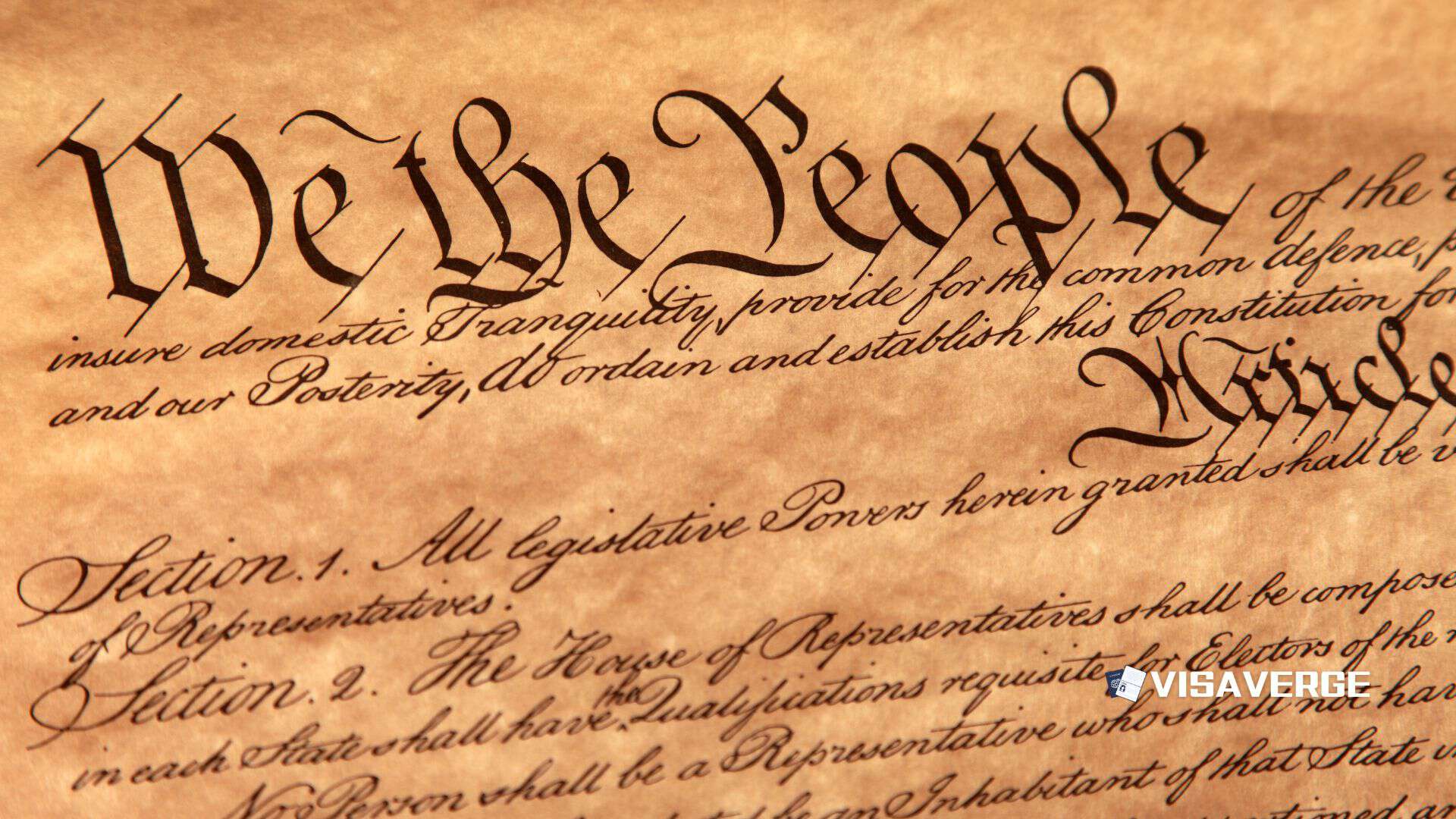
The Citizenship Clause says: “All persons born or naturalized in the United States, and subject to the jurisdiction thereof, are citizens of the United States and of the State wherein they reside.” That text, ratified on July 9, 1868, came after the Civil War and was written to secure citizenship for formerly enslaved people and their descendants.
The modern legal foundation came from United States v. Wong Kim Ark in 1898. The Supreme Court held that a child born in the United States to Chinese immigrant parents was a citizen. The ruling locked in jus soli, or citizenship by place of birth, for most children born in the country.
The exceptions remain narrow. They cover children of foreign diplomats, invading enemy forces, and some Native American groups under older historical rules. For everyone else, birth on U.S. soil has carried citizenship for more than 150 years.
That rule affects real families every day. Census-based estimates say about 4.5 million U.S.-born children have at least one undocumented parent. Their citizenship protects access to school, healthcare, and a stable legal identity.
Why changing birthright citizenship is so hard
Any real change faces two routes, and both are steep. Congress cannot erase the Citizenship Clause with a statute. A president cannot do it with an executive order. Only a constitutional amendment or a dramatic Supreme Court reversal would change the rule.
Article V sets a high bar for amendment. Congress must approve a proposal by two-thirds in both chambers, which means 290 votes in the House and 67 in the Senate. Or two-thirds of state legislatures, 34 states, can call a convention. Then 38 states must ratify the change.
That process has worked only 27 times since 1789. The last amendment, ratified in 1992, dealt with congressional pay. Public resistance also remains strong. A 2025 Pew Research survey found 60-70% of Americans oppose ending birthright citizenship.
The Supreme Court path is also narrow. Any court willing to restrict the Citizenship Clause would need to confront Wong Kim Ark and the doctrine of stare decisis, which means respect for precedent. The current Court has not directly taken up a case that would overturn that rule.
VisaVerge.com reports that this legal wall is the main reason every modern attempt has stalled before reaching implementation.
The 2025-2026 executive push and the court response
President Trump’s order sought to deny passports, Social Security numbers, and citizenship documents to some U.S.-born children. The administration argued that “subject to the jurisdiction thereof” excludes children of undocumented immigrants and some temporary visa holders.
The challenge began fast. On January 22, 2025, the ACLU and 22 states sued in federal court. By March 2025, nationwide injunctions had already blocked enforcement. In June 2025, the Supreme Court, in a 5-4 decision, upheld those injunctions and cited Wong Kim Ark and executive overreach.
Later stages kept failing for the administration. In September 2025, the Justice Department appealed again, but lower courts ruled the order unconstitutional. In December 2025, federal appeals judges kept the blocks in place. In February 2026, an en banc rehearing was denied. In March 2026, a Texas ruling stopped related agency guidance, and more than 50 lawsuits were still active.
No nationwide policy took effect. A separate March 2026 order on voter citizenship checks faced its own lawsuits, showing how limited executive power remains when it runs into constitutional text.
What families, employers, and lawyers are watching
For immigrant parents, the legal fight is unsettling, but the current rule still protects children born in the United States. That matters for school enrollment, healthcare access, and later family petitions. A U.S.-born child can sponsor a parent for a green card at age 21.
That pathway has long shaped family life. It also helps explain why attempts to narrow birthright citizenship raise fears of statelessness and prolonged legal uncertainty. Analysts have warned that ending the rule could swell the undocumented population over time and trigger a flood of court challenges over identity records.
The wider immigration climate in 2025 and 2026 has not changed that core rule. Travel bans, visa pauses, asylum limits, and tougher vetting have tightened other parts of the system. They do not touch citizenship for children born in the country.
Families should still keep birth records and government documents in order. When agencies misread policy shifts, courts have already reversed thousands of denials tied to the failed order. That record matters for future disputes.
For the official constitutional text, readers can review the 14th Amendment on Congress.gov, which remains the governing language behind birthright citizenship.
The broader political fight around the Citizenship Clause
Political pressure to narrow the Citizenship Clause will likely continue. Republicans have pushed restrictions for years, while Democrats and many moderates defend the current rule as part of American identity. That divide has made constitutional change nearly impossible.
Public opinion also cuts against repeal. A 2026 Gallup poll found 65% support keeping birthright citizenship. Many respondents said the rule reflects fairness and helps children grow into stable members of society.
Economic arguments also stay in the debate. Supporters of the current rule say U.S.-born children of immigrants later become workers, taxpayers, and consumers. Critics focus on border policy and so-called birth tourism. Even so, the constitutional language still governs, and the courts have not moved it.
Countries such as Australia and the United Kingdom use parental descent rules instead. The United States and Canada remain the main large democracies that still practice unrestricted birthright citizenship in broad form. That makes the U.S. debate especially intense.
For now, the legal position is simple. Birthright citizenship still stands, the 14th Amendment still controls, and the Citizenship Clause still protects nearly every child born in the United States.