- The Telangana High Court said passport renewal needs a trial court NOC when criminal cases are pending.
- The court said applicants must first seek permission from the trial court before passport authorities process renewal or reissuance.
- If no term is fixed, renewal may be limited to one year, and travel abroad still needs separate approval.
(TELANGANA, INDIA) The Telangana High Court on March 30, 2026, held that passport reissuance and renewal require a no-objection certificate from the trial court when criminal cases are pending, applying Section 6(2)(f) of the Passports Act, 1967. The ruling in Dr. Raghavender Siva Vijaya Chivukula v. Union of India & Ors. gives passport officials a clear rule: no NOC, no renewal decision in the ordinary course.
It also matters for applicants whose work, family, or study plans depend on a Passport being current.
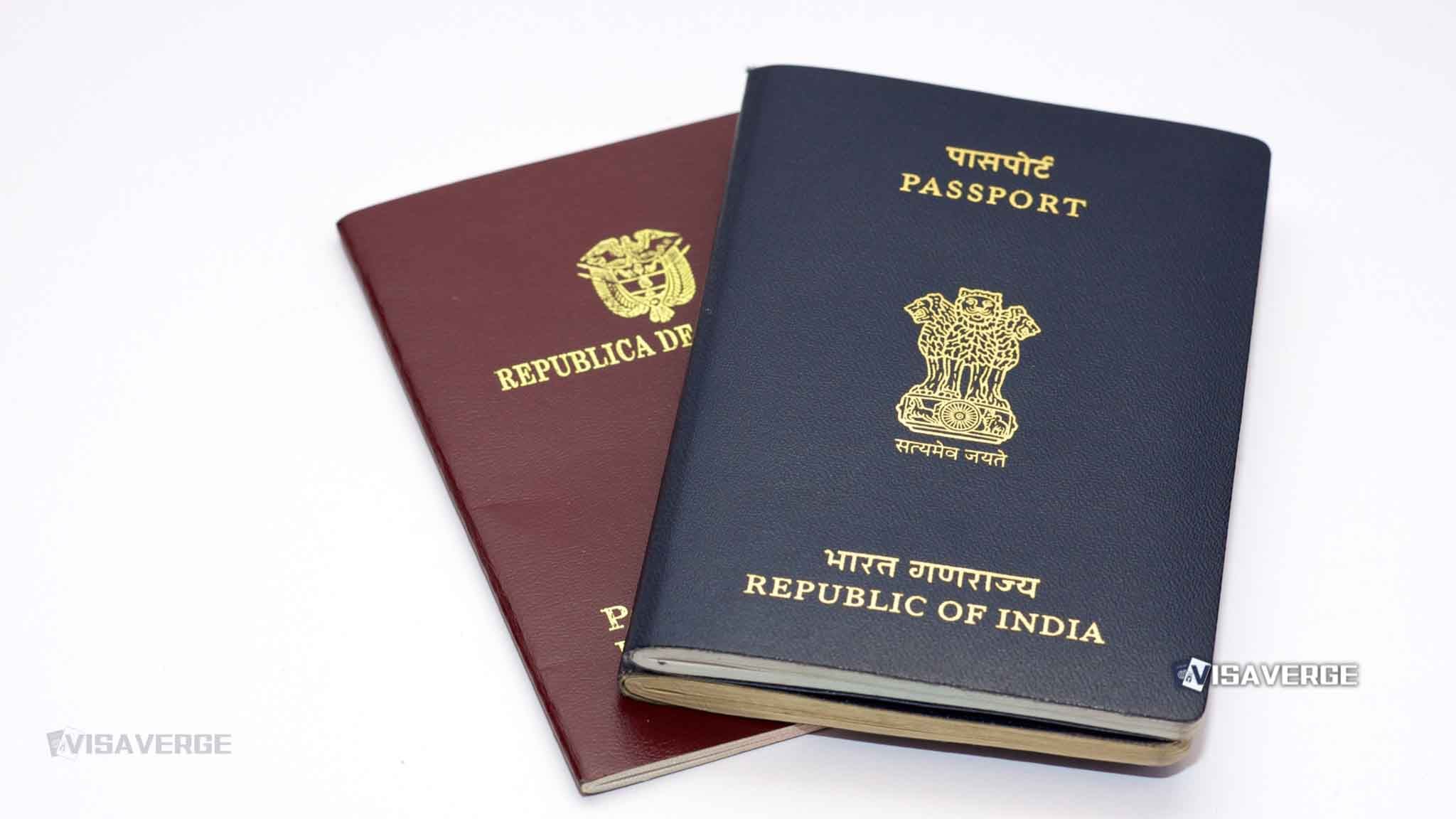
Court’s reading of Section 6(2)(f)
Justice Nagesh Bheemapaka upheld the NOC requirement after looking at the passport law and the criminal court process together. The court accepted the Union of India’s position that pending criminal cases trigger the refusal rule unless the trial court first grants permission through an NOC.
That makes the trial court the first stop for anyone facing renewal while a case is active.
The order also drew on a Division Bench judgment in W.A. No. 194 of 2026. That bench referred to Mahesh Kumar Agarwal and Nidhi Agarwal and said the applicant should first seek an NOC from the concerned trial court where criminal cases are pending.
Only after that step can the person ask passport authorities to process reissuance or renewal.
The court also noted that if no period is mentioned, renewal may be for a shorter period, ordinarily one year, in appropriate cases. That detail matters because many applicants expect a full long-term renewal.
The ruling shows that the court can tailor the passport period to the case before it.
How the NOC process now works
The sequence is direct. First, the applicant files an NOC request before the trial court handling the criminal cases. Next, the applicant presents that NOC to the passport authorities. Then the Passport office can move ahead with reissuance or renewal, subject to the court’s terms.
The High Court made another point that applicants often miss. An NOC for passport reissuance does not itself authorize travel abroad. Separate travel permission must still be sought, and the court must examine that request on its own merits.
In other words, the NOC clears the passport file, but it does not open the border gate.
The writ petition ended without costs. The court also gave the petitioner liberty to approach the trial court for relief. It asked that the NOC request be considered expeditiously, preferably on the same day, especially because the petitioner pointed to employment needs and gave an undertaking to cooperate with the trial.
For official passport information, applicants commonly rely on the Government of India’s passport portal at Passport Seva. The case itself sits within the framework of that system and the Passports Act, 1967.
Earlier Telangana rulings and the shifting line
The March 30 order fits into a line of Telangana decisions that have not always spoken with one voice. Earlier High Court rulings, including one by Justice Surepalli Nanda, held that the mere pendency of a criminal case could not always justify refusing passport renewal.
In that line of reasoning, courts directed 10-year renewals under Rule 12 of the Passport Rules, 1980.
Those earlier rulings also relied on Vangala Kasturi Rangacharyulu v. CBI (2021 SCC OnLine SC 3549). A Division Bench in Union of India, W.P. 11674 of 2022 read the 1993 Gazette Notification, GSR No. 570(E), to permit 10-year renewals even when criminal cases were pending, so long as no court time limit was fixed.
The same approach appeared again in Venkata Padmaja Polisetti v. Union of India, W.P. 17965 of 2023.
The 2026 Division Bench orders, including one involving Sri Balvinder Singh, move the law back toward a firmer NOC prerequisite before renewal applications can proceed. That shift matters because applicants now face a more court-centered process when their Passport is about to expire.
Why the ruling matters for travel and work
For many people, Passport renewal is not a routine file update. It is tied to a job offer, a family emergency, or an overseas assignment. The High Court recognized that pressure, but it still kept the criminal court in control where criminal cases are pending.
That means planning must start earlier. If a Passport is due for renewal and a criminal case is on record, the applicant cannot assume the passport office will act first. The trial court must speak first.
After that, the passport office can process the application in line with the NOC and any time limit the court sets.
The possibility of a one-year renewal also changes planning. A shorter validity period can still help with urgent travel documentation or employment needs, but it leaves the person back in the same queue sooner.
That is why the court’s mention of an undertaking to cooperate with the trial matters. It signals that courts may balance urgency with the need to keep the criminal process moving.
Passport office duties and court responsibilities
The ruling assigns clear roles. Passport authorities, acting through the Union of India, must follow the NOC route when criminal cases are pending. They do not have room to ignore the trial court’s position.
Their task is administrative, but it is bound to the court’s decision.
Trial courts carry the heavier burden. They must deal with NOC applications promptly, because delay in the criminal court can block passport renewal and stall travel plans.
The High Court’s preference for same-day consideration shows how seriously it views time-sensitive applications. That instruction is especially important in employment cases, where a missed deadline can cost a person a job abroad.
The practical pathway is now simple to state, even if it is hard to live through:
- File an NOC application with the trial court where the criminal cases are pending.
- Present the NOC to the passport authorities for reissuance or renewal.
- Seek separate permission for foreign travel if travel abroad is required.
- Expect the passport period to be shorter, often one year, if the court does not fix another period.
Broader effect on applicants with pending cases
The ruling narrows one common argument: that a pending case alone should never stop renewal. That view still appears in earlier Telangana orders, but the March 30, 2026, judgment says the court hearing the case must first be asked for permission.
For applicants, that means criminal cases now sit at the center of the Passport process, not at the edge of it.
This also places a new emphasis on timing. A person who waits until the Passport has already expired may face avoidable pressure. A person who applies early can still be delayed, but the trial court has a clearer basis to decide the NOC request quickly.
The case also shows why applicants should keep the distinction between reissuance and travel permission clear in their own records. An NOC may help with the Passport file. It does not replace judicial approval for travel abroad, and it does not erase the underlying criminal case.
According to analysis by VisaVerge.com, the order reflects a sharper move toward court-supervised passport renewals when criminal cases are pending, even as earlier rulings had allowed broader renewals in some situations. The tension between those approaches will shape how passport offices, trial courts, and applicants handle future renewal requests across Telangana.