- Thailand plans to halve visa-free entry from 60 days to 30 days for 93 countries.
- Nordic travelers can still access 60 days total by paying for a 30-day extension.
- Stricter enforcement aims to target illegal work patterns and frequent visa runs during 2026.
Thailand visa-free entry (and why the rules may tighten for Nordic travellers in 2026)
Thailand’s visa-free stay has been one of the easiest ways for Nordic travellers to base themselves in Southeast Asia—especially if you want warm weather, strong coworking scenes, and quick regional flights.

The reported change: Thailand is planning to reduce visa-free entry from 60 days to 30 days for citizens of 93 countries, including Denmark, Sweden, Norway, Finland, and Iceland. The key planning detail is that a 30-day extension would still be available, meaning many trips could remain 30 + 30 = 60 days—but you would need an immigration-office visit and a bit more paperwork discipline.
This guide is for Nordic passport holders using visa-free entry for tourism or short business (meetings, conferences, scouting a base). It also matters to remote workers who “quietly” work online, because enforcement trends can change how easy repeated stays feel in real life.
What this guide does not cover: visa-free entry is not work authorization in Thailand. If you need a status designed for longer stays as a remote worker, look at the Destination Thailand Visa (DTV) and other long-stay options later in this article.
🌍 Visa Highlight: Even if the default drops to 30 days, the proposed structure still points to 60 days total via a 30-day extension. The difference is planning and enforcement risk, not just days on paper.
Thailand country profile (remote-work reality check)
| Aspect | Details |
|---|---|
| Visa Name | Visa-free entry (tourism/short business) for eligible passports (including Nordics). Longer-stay alternatives: Destination Thailand Visa (DTV) and Long-Term Resident (LTR). |
| Duration | Current practice (early 2026): 60 days visa-free + one 30-day extension (up to 90 days). Proposed: 30 days + one 30-day extension (up to 60 days). |
| Income Requirement | Visa-free entry: No formal income threshold, but you may be asked for funds. DTV/LTR: program-based, higher documentation burden. |
| Proof of Income | Border practice: sufficient funds evidence may be requested (10,000 THB/person or 20,000 THB/family). DTV/LTR: typically bank statements and supporting documents. |
| Health Insurance | Visa-free entry: not always required, but smart to carry travel medical coverage. DTV/LTR may require specific insurance rules depending on sub-category. |
| Processing Time | Visa-free entry: granted at arrival. Extension: same-day at immigration in many offices. DTV/LTR: can take weeks to months. |
| Application Fee | Visa-free entry: 0 THB. Extension: 1,900 THB (~$55 USD). DTV/LTR: higher fees (varies). |
| Tax Status | Not automatic. Longer stays can trigger Thai tax residency analysis. See tax section below. |
| Path to Residency | Visa-free entry: No. LTR: potential long-term base but not a simple “tourist upgrade.” |
| Internet Speed | Major hubs (Bangkok, Chiang Mai): commonly 100+ Mbps in condos/coworking. Islands vary; fiber is common in Phuket and Koh Samui town areas. |
| Time Zone | UTC+7 |
| Cost of Living | Comfortable solo nomad: $1,300–$2,400/month depending on Bangkok vs Chiang Mai vs islands. |
Current policy status (as of early 2026): what Nordics can do today
As of early 2026, Nordic passport holders remain eligible for 60-day visa-free entry for tourism and short-term business. This is the rule most nomads have been using since the 60-day policy expansion introduced in mid-2024.
A few important practical notes:
- Visa-free is not a work permit. Remote work is common in Thailand, but the legal line is different from what people do day-to-day.
- You can extend once at an immigration office for 30 days, bringing your total stay to up to 90 days under current practice.
- The extension fee is 1,900 THB, which is about $55 USD.
- Entry officers can ask for standard evidence even if they do not always check.
Typical entry conditions you should be ready to show:
- Passport validity of 6+ months
- Proof of onward travel (a ticket out of Thailand)
- Accommodation details (first nights are usually enough)
- Sufficient funds: 10,000 THB per person or 20,000 THB per family
If you are arriving from the Schengen area after a long winter, the big shift is that Thailand’s flexibility can feel easier than Europe’s 90/180 Schengen rule. That contrast is exactly why tighter Thai enforcement gets attention.
Step-by-step: how to use visa-free entry (and how to extend)
1) Before you fly
- Check the latest entry rules on the official Thai Ministry of Foreign Affairs website (mfa.go.th) and your local Thai embassy or consulate page.
- Book an onward ticket that clearly exits Thailand within the allowed period.
- Keep a hotel booking or an address handy for arrival forms.
2) At airline check-in
Airlines often act as the first gatekeeper. If your onward ticket is missing, check-in staff may block boarding. This happens regularly on one-way bookings.
3) On arrival in Thailand
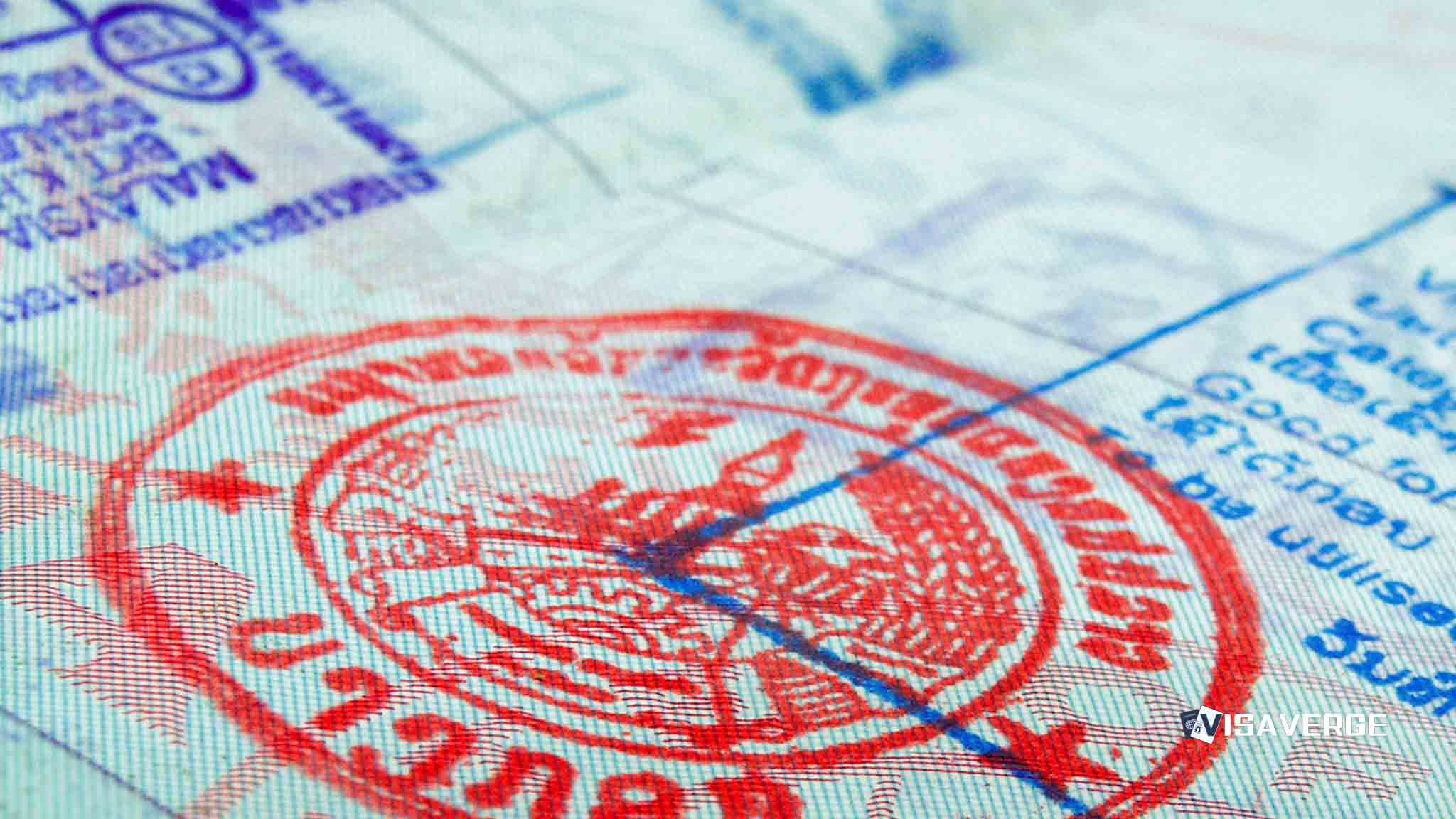
You receive a permission-to-stay stamp under visa-free entry. Save a photo of the stamp page. It avoids mistakes later.
4) If you want more time: extend once at immigration
Plan an immigration visit before your permitted stay ends.
- Passport
- Arrival record details
- A passport photo (some offices take photos on-site)
- Address in Thailand
- The 1,900 THB fee
In Bangkok, Chiang Mai, and Phuket, queues can swing wildly by season. Schedule a weekday morning if possible.
📋 Pro Tip: Treat extensions like a “mini appointment.” Print your onward proof, keep 2–3 passport photos, and carry cash for the fee. It saves hours.
Proposed changes and timeline: what’s being discussed, and how to plan without guessing
What’s being reported in Thai media and the travel industry is a policy rollback:
- New baseline: 30-day visa-free stay for citizens of 93 countries
- Extension remains: one 30-day extension, bringing total stay to up to 60 days
Context matters. The 60-day scheme helped tourism after it was introduced in mid-2024. Earlier indications pointed to possible implementation in late 2025, but the current framing in early 2026 is that it is still being signaled rather than universally treated as enacted at every checkpoint.
How to interpret this as a Nordic traveler:
- If you previously planned 60 days upfront, you may need to plan 30 days + an extension visit.
- Add the extension day into your itinerary. Budget for transport, copies, and the 1,900 THB (~$55) fee.
- Keep your documentation tighter, especially if you have repeated entries.
This is less about losing Thailand as a base and more about removing the “set-and-forget” feel of a 60-day stamp.
Broader enforcement context: why rules on paper and border reality can differ
Thailand has increased attention on visa runs and patterns that look like long-term living on tourist status. The 2025–2026 enforcement tone has also included scrutiny where authorities suspect links to illegal work or cybercrime activity.
For normal remote workers and winter escapees, the practical effects can include:
- More questions at entry about length of stay and plans
- More frequent requests for proof of funds or onward tickets
- Less tolerance for repeated “back-to-back” stays that look like residency
Even without a formal rule change, tighter enforcement can change outcomes. You might be granted fewer days, questioned more heavily, or refused entry if your profile raises flags.
If you’re comparing bases: this is where Thailand starts to feel less “easy mode” and more like countries with stricter visitor patterns. It can still be straightforward, but the margin for sloppy planning shrinks.
Alternatives for longer stays (better than stacking visa-free entries)
If you need continuity for client work, schooling, or a stable apartment lease, it’s smarter to match your status to your real plan.
1) Destination Thailand Visa (DTV)
Thailand’s DTV is typically aimed at people who want a longer-stay framework than visa-free entry. It’s the option many digital nomads are now watching most closely.
What it’s good for:
- Staying longer with fewer border “reset” games
- Having a clearer story at entry and when renting long-term
What to expect:
- More documentation than visa-free entry
- You still need to respect what the visa allows, especially around work activity
If you’re deciding between regions, it’s worth comparing Thailand’s direction with other popular programs, like the Dubai remote work visa or a European base with Portugal’s D7 visa.
2) Long-Term Resident (LTR) visa
The LTR is a higher-threshold path aimed at specific profiles. Think experienced professionals, higher income, or people with strong financial footing. It is not a simple tourism alternative.
What it’s good for:
- A serious long-term base in Thailand
- More stability for housing, banking, and planning
Trade-off:
- Higher requirements and more scrutiny
- More effort upfront, but less churn later
3) Use a “two-base” strategy
A common pattern for Nordic travellers is pairing Thailand with a second hub that fits the other half of the year:
- Schengen summer (family, work travel, long days)
- Thailand winter
- Some mix in Dubai as a flight hub and tax-friendly base, or New Zealand for a seasonal reset when Asia gets too hot
If Thailand tightens visa-free stays, the two-base approach becomes even more useful.
Cost of living in Thailand (monthly, solo nomad)
Costs vary heavily between Bangkok, Chiang Mai, and islands like Phuket or Koh Samui. These ranges assume you’re renting monthly, working from cafes/coworking, and living comfortably.
| Expense | Budget | Comfortable | Premium |
|---|---|---|---|
| Rent (1BR) | $350 | $750 | $1,600 |
| Coworking | $60 | $150 | $300 |
| Food | $250 | $450 | $800 |
| Transport | $40 | $120 | $300 |
| Health Insurance | $60 | $150 | $350 |
| Entertainment | $80 | $200 | $500 |
| Total | $840 | $1,820 | $3,850 |
Bangkok usually costs more for rent and nightlife. Chiang Mai is still the best value for routine, cafes, and coworking density. Islands can be premium-priced, especially in peak season.
📶 Internet Note: Thailand is generally reliable for video calls in major cities. On islands, choose buildings with fiber and test speeds before signing a longer lease.
Tax implications (read before you plan a 6–12 month stay)
⚠️ Tax Disclaimer: Tax obligations for digital nomads are complex and depend on your citizenship, tax residency, and the countries involved. This article provides general information only. Consult a qualified international tax professional before making decisions that affect your tax status.
Thailand is not automatically “tax-free” because you entered visa-free or because you call yourself a tourist. Taxes depend on facts: days present, where your work is performed, and your residency ties.
Key points for Nordic travellers:
- Staying longer can trigger tax residency analysis in Thailand.
- Your home country may also keep taxing you, depending on its rules and your ties.
- A visa type does not automatically settle your tax position.
⚠️ Tax Warning: Working remotely from another country creates complex tax obligations. A digital nomad visa does NOT automatically exempt you from taxes in your home country or host country. U.S. citizens are taxed on worldwide income regardless of where they live. Consult an international tax professional before relocating.
If you want a base for most of the year, treat tax planning as part of the visa choice. That’s especially true if you are comparing Thailand with Spain’s digital nomad visa, Dubai, or a return to the Schengen area.
Industry and traveler guidance: how to avoid surprises at check-in and arrival
Thailand’s tourism operators generally want easy entry, but they also want rules that are enforceable. That’s why you can see support for visa-free access alongside support for tighter controls.
A practical pre-flight routine that works:
- Verify the current visa-free length close to departure
- Confirm extension rules and the 1,900 THB fee
- Carry onward travel proof, accommodation details, and evidence of funds
- Check airline requirements, since check-in decisions can be stricter than arrivals
For updates, start with mfa.go.th and official Thai embassy or consular pages. Many travelers also reference thaiembassy.org, but treat it as secondary and confirm against official government channels.
Build flexibility into your trip:
- Keep one weekday free for an extension visit if needed
- Favor refundable or changeable bookings when you are near the edge of allowed stays
- Don’t rely on rumors in forums for last-minute entry decisions
Next steps (do this 2–6 weeks before your Thailand trip)
- 14–42 days before departure: Check mfa.go.th and your Thai embassy page for the latest on the 30 vs 60-day visa-free rule. Screenshot the current guidance for your records.
- 7–21 days before departure: Book or reserve onward travel, and prepare a simple folder (digital + paper) with your accommodation, funds proof, and passport scan.
- If you may stay beyond 30 days: Identify your nearest immigration office in Bangkok, Chiang Mai, Phuket, or Samui, and budget 1,900 THB (~$55) plus half a day for the extension.
- If you want a longer base (2–12 months): Compare Thailand’s DTV with alternatives like Dubai and Schengen options, then collect documents early (bank statements, contracts, insurance).
- Community intel: Join local Thailand nomad groups for your city (Bangkok, Chiang Mai, Phuket). Watch for real-time reports on queue times and entry questioning trends.