Private companies in North Carolina are earning real money from Border Patrol and ICE contracts tied to enforcement activity, and you can track those contracts and protect your family or workplace before a raid affects you. In fiscal years 2025–2026, total awards tied to CBP (Customs and Border Protection) and ICE enforcement support exceeded $341 million, including contracts connected to Border Patrol’s Operation Catahoula Crunch and other Southern U.S. operations.
This guide shows you how to (1) identify which contractors and services are involved, (2) spot where enforcement activity can affect you in North Carolina, and (3) take practical steps to reduce risk if you or someone you love could be questioned, detained, or pressured to sign paperwork.
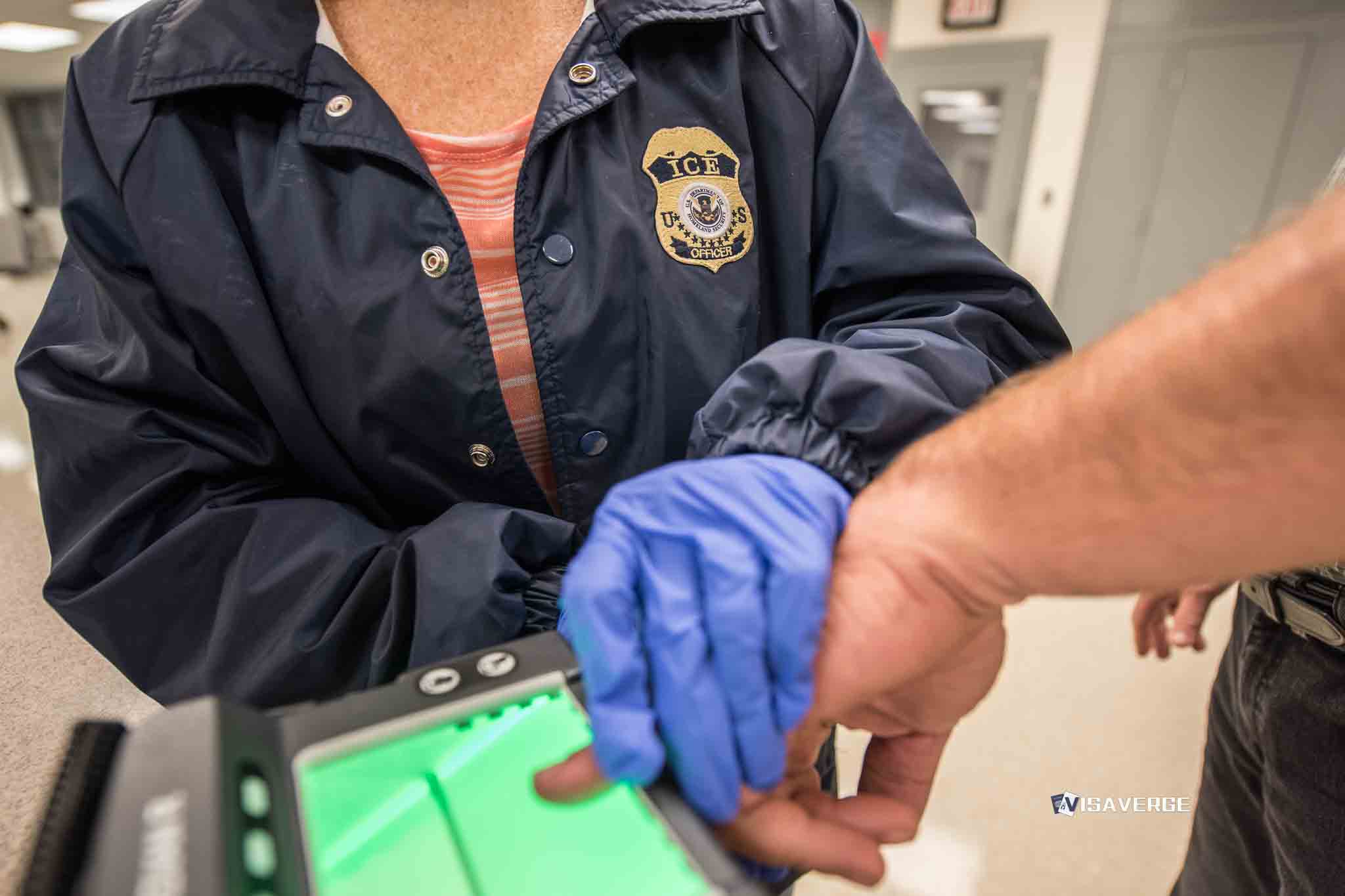
Why these contracts matter in North Carolina right now
Enforcement operations rely on vendors that supply equipment, detention-related services, technology, and logistics. That can change what you see on the ground in North Carolina.
- More equipment and supplies reaching field teams.
- More screening and lab services tied to detention centers.
- More technology and data systems used for travel vetting and monitoring.
- More private detention expansion outside North Carolina that still affects transfers and placement.
In North Carolina, 38 companies held contracts with a current value of $61.7 million and a potential value of $77.9 million supporting CBP and ICE work in fiscal years 2025–2026.
Who should use this guide (and what you need first)
Use this guide if any of these describe you:
- You are undocumented, out of status, or in removal (deportation) proceedings.
- You have a pending immigration case and worry about an arrest at work or during a traffic stop.
- You are a U.S. citizen or lawful resident in a mixed-status family.
- You employ or manage workers in industries that have seen enforcement actions.
- You support immigrants through a community group, church, or mutual aid network.
Before you start, gather two basics:
- A safe way to store records (paper folder plus a secure digital copy).
- A trusted emergency contact who can act fast if you are detained.
⚠️ Important: Never sign documents you do not understand, especially under pressure. Ask for time to review and speak to a lawyer.
What you can learn from the North Carolina contractor list
Examples of North Carolina companies earning money from CBP and ICE contracts tied to enforcement support:
| Company (Location) | Contract purpose | Noted award/ceiling |
|---|---|---|
| Quantico Tactical (Aberdeen, N.C.) | Firearms, less-lethal munitions, restraints, communications gear, supplies | Over 50 contracts up to $19.3 million |
| Laboratory Corporation of America (Labcorp) (Burlington, N.C.) | Lab services at ICE detention centers | Contracts up to $21.4 million |
| TMC-TELESOLV (Battleboro, N.C.) | CBP’s Trusted Traveler Program support | Contract up to $14.8 million |
| Duncan-Parnell, Inc. (Charlotte, N.C.) | Drones for CBP | $5 million CBP contract |
| MacGyver Solutions, Inc. | Polaris and Yamaha vehicles/ATVs | Contracts up to $2.2 million |
These contract types show what enforcement agencies are buying and where capacity may be growing.
Step-by-step: How to track enforcement support and protect yourself (4 steps)
1) Identify which agency activity is most likely to touch your life
Sort your risk into one bucket:
- Border-related activity (CBP/Border Patrol): includes Border Patrol operations and support tied to sectors outside North Carolina; it can still affect transfers and detention placement.
- Interior enforcement (ICE): includes worksite actions, home arrests, courthouse arrests, and detention and removal logistics.
In North Carolina, ICE activity is usually the most direct day-to-day risk. CBP contracting still matters because it increases staffing, equipment, and detention throughput.
2) Track the contract signals that point to real-world enforcement changes
Look for contracts in categories that often indicate scaling:
- Detention services and construction
- Recruiting and staffing campaigns
- Equipment and restraint supplies
- Surveillance tools (including drones)
- Travel vetting systems (Trusted Traveler Program support)
Enforcement operations named in public reporting have included Border Patrol’s Operation Catahoula Crunch in Louisiana and raids in Southern California under Operation Midway Blitz. Even if those specific actions are not in North Carolina, the contracts behind them can expand capacity that affects transfers, detention space, and removals nationwide.
For basic agency context, use CBP’s official website to understand what CBP does and how its parts differ (CBP vs Border Patrol).
3) Prepare a “detention-ready” plan for your household and your workplace
Create two plans: one for home, one for work.
Home plan:
– Pick one person who will call a lawyer or legal aid if you are detained.
– Decide who will pick up children from school and who has permission.
– Store copies of important papers where your emergency contact can get them.
Work plan (if you run a business or manage a site):
– Decide who speaks to officers if they arrive.
– Train supervisors not to guess at answers or hand over records without review.
– Keep I-9 and personnel files organized so you do not scramble under stress.
💡 Pro Tip: Write your emergency contact’s number on paper and keep it in your wallet. Do not rely on a phone that can be lost or seized.
4) Document what happens during an encounter and get legal help fast
If you or someone close to you has an encounter:
- Write down the time, location, and which agency it appeared to be.
- Record badge numbers and vehicle info if you can do so safely.
- Save any papers you were given, even if you refused to sign.
- Get legal advice before you take the next step.
This matters because recent raids described in public reporting involved actions on December 17–18, 2025, with 19–25 detainees in Southern California, plus “self-deportation” letters left behind. Pressure tactics like letters and surprise checks are designed to move fast. Your response has to be faster.
Documents you should gather now (checklist)
Keep copies in a safe place. If possible, keep one set with a trusted person.
Identity and immigration papers
- Passport biographic page
- U.S. visa page (if any)
- I-94 record printout (if you have one)
- Work permit card (EAD), green card, or other status documents (if any)
- Any ICE or immigration court paperwork you have received
- Any prior removal order paperwork (if it exists)
Proof of residence and family ties
- Lease, mortgage statement, or utility bill
- Child’s birth certificate and school contact list
- Marriage certificate (if relevant)
- Custody order (if relevant)
Financial and work records
- Recent pay stubs
- Recent tax return (first two pages are often enough for quick proof)
- Employer letters that confirm role and dates (if available)
Emergency planning documents
- A written child pickup plan (names, phone numbers, school instructions)
- Medical info for children or dependents
- A short list of phone numbers (lawyer, family, trusted friend)
Fees and timeline: What you can actually pin down
You can anchor expectations to these public time markers and contract windows:
- The contract totals discussed here are tied to fiscal years 2025–2026, with total awards exceeding $341 million.
- Named enforcement actions in public reporting included arrests on December 17–18, 2025.
If you are trying to time legal help, do not wait for “proof” that raids are coming. Once a local surge starts, it is already late.
What to watch out for: Common mistakes that raise risk
Believing “it’s only the border”
Border Patrol activity and CBP contracting still affects detention space, transfer patterns, and removal logistics that can touch North Carolina residents.
Treating “contracting” as abstract
Contracts show what agencies are buying: restraints, drones, detention services, and lab work. In North Carolina, companies like Quantico Tactical, Labcorp, TMC-TELESOLV, Duncan-Parnell, and MacGyver Solutions are part of that supply chain.
Handing over documents too quickly at work
A calm “Let me contact our counsel” protects everyone and reduces panic-driven mistakes.
Not planning for detention transfers
Major detention construction contracts in Louisiana include LaSalle Corrections (up to $125 million) and Lemoine Disaster Recovery, LLC (up to $83.8 million). Those two detention contracts alone exceed $208 million. Expanded detention capacity outside North Carolina can still affect where people detained in the Southeast end up.
Ignoring the business side of detention and monitoring
National firms are positioned to profit from detention and monitoring. For example, GEO Group Inc. received a $1 billion ICE contract for Newark’s Delaney Hall, with plans for $38 million in renovations and $16 million for GPS tracking devices. GEO also expects $250 million revenue tied to monitoring 300,000+ people on non-detained dockets under Laken Riley Act requirements.
This is not trivia. It tells you what enforcement capacity is being built.
Next steps you can take today in North Carolina
- Build your emergency packet tonight. Use the checklist above and store copies in two places.
- Choose your “first call” person. Make sure they know exactly what to do if you are detained.
- If you run a business, set a one-page enforcement response protocol. Decide who speaks, where records are kept, and who calls counsel.
- Learn the agency roles. Start with CBP’s official website so you can tell CBP/Border Patrol activity from ICE activity.
- Keep learning from reliable guides. For more immigration how-tos, you can visit VisaVerge.com.
Key takeaway: Contracts reveal where enforcement capacity is expanding. Preparing now—documents, contacts, and simple protocols—reduces confusion and helps protect families, workers, and communities if enforcement activity reaches your area.
North Carolina private contractors have secured over $341 million in federal funding for immigration enforcement and detention support through 2026. This guide helps individuals identify local risk factors by tracking vendor contracts for equipment and lab services. It emphasizes proactive preparation, including organizing a detention-ready plan, securing essential identity documents, and establishing clear emergency protocols for families and workplaces to protect against sudden enforcement actions.