Key Takeaways
• Washington State leads a legal challenge against Trump’s Birthright Citizenship Order, currently on hold pending a Supreme Court review.
• The case centers on the 14th Amendment’s citizenship clause and questions presidential authority to redefine citizenship by executive order.
• If enforced, the order would deny automatic citizenship to babies born in the U.S. unless a parent is a citizen or legal resident.
The battle over birthright citizenship in the United States 🇺🇸 has moved into the national spotlight, putting the Washington State Attorney General at the center of a major court fight. Attorney General Nick Brown is leading the charge against Trump’s Birthright Citizenship Order, which is now being looked at by the Supreme Court. The case is about more than just a single presidential order—it’s about the meaning of citizenship, the limits of presidential power, and what the Constitution promises to everyone born on American soil.
Strong Opposition from Washington State Attorney General
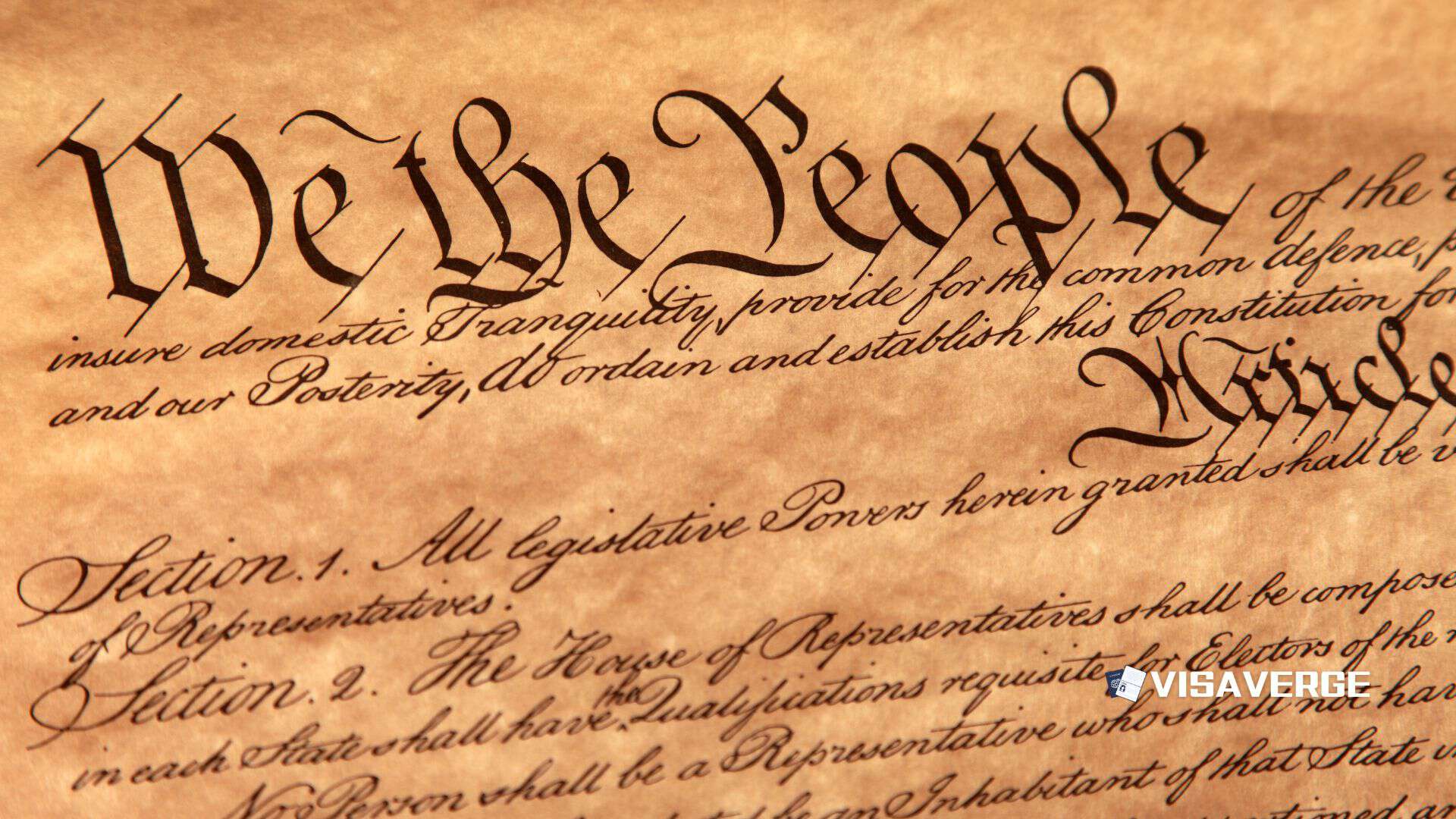
Attorney General Brown is not alone, but Washington State is playing a leading role. His office, together with other states, argues that Trump’s executive order went too far by trying to change who gets citizenship at birth. Trump’s Birthright Citizenship Order says that a baby born in the United States 🇺🇸 will not automatically be a citizen unless at least one parent is already a U.S. citizen or a legal permanent resident. Supporters of the order say it would stop so-called “anchor babies,” but opponents, like Brown, warn it would rip away rights from thousands and directly conflicts with both the Constitution and federal laws.
Constitutional Guarantees: The 14th Amendment
At the heart of the case is the Fourteenth Amendment. It’s one of the clearest and longest-standing rules in the Constitution. It says: “All persons born or naturalized in the United States, and subject to the jurisdiction thereof, are citizens of the United States.” That may sound simple, and in many ways, it has been—at least since the Supreme Court’s ruling in United States v. Wong Kim Ark (1898).
In that landmark case, the Supreme Court said nearly everyone born in the country is automatically a citizen, unless they are the child of a foreign diplomat or a few other limited cases. This is not a new debate. The country has discussed and confirmed birthright citizenship for more than a hundred years.
AG Brown points out that Trump’s move cuts against over a century of these established rules. He says, “birthright citizenship is enshrined in the U.S. Constitution…The president may not care about the Constitution or rule of law but we do.” His message is clear: The rules for citizenship are not up for the president to change on his own.
Federal Law Matches the Constitution
Washington State’s lawsuit says Trump’s Birthright Citizenship Order also violates federal law. The law is written in the U.S. Code—specifically Section 1401 of Title 8. This section repeats what the Constitution says: Anyone born in the United States 🇺🇸 and “subject to its jurisdiction” is a citizen.
The Attorney General argues that this order is not just bad policy; it completely contradicts the basic laws that Congress made long ago. Brown claims no president—of any party—can simply decide to ignore Congress and rewrite citizenship rules with the stroke of a pen.
Presidential Power: Where Does It Stop?
The lawsuit from Washington State brings up a big question: What can the president actually do alone? Attorney General Brown says Trump’s action is executive overreach. That means a president is taking more power than the Constitution or laws allow. Defining who is a citizen at birth is a job for Congress and the courts, not for a president acting without Congress.
By putting this executive order in place, Brown argues, Trump tried to reach beyond his limits. The Constitution gives the president many powers, but it does not give the power to change the meaning of citizenship.
Wide-Ranging Consequences for People—and States
If Trump’s order became real law, it would not just be words on a page. The effects would spread far and wide, especially for children born in the United States 🇺🇸 to parents without citizenship or full legal status. The Washington State Attorney General stresses that thousands of newborns every year could lose or miss out on U.S. citizenship.
And it goes beyond simple paperwork. Becoming a citizen at birth comes with important rights and everyday benefits, including:
- The right to vote in elections when older
- The freedom to travel with a U.S. passport
- Eligibility for federal healthcare and social programs
- The chance to apply for jobs that require citizenship
- The right to serve on a jury or run for public office
Brown also warns that public services in states like Washington could change if many people lose access to federal help. If fewer children are recognized as citizens, there may be less federal money for healthcare, schools, and other important benefits. Federal funding often depends on how many citizens live in each state.
What’s Happening at the Supreme Court?
While a lot of attention is on the bigger question—can the president change birthright citizenship by order?—the Supreme Court is currently looking at something a bit more technical. The main question right now is whether lower courts had the power to put Trump’s order on hold all across the country (called a “nationwide injunction”) while the court case works its way through the system.
A federal judge had already blocked Trump’s Birthright Citizenship Order from going into effect after Washington State and other parties sued. That pause remains in place as the legal battle continues. The Supreme Court’s decision on this point could affect how presidential orders are challenged or blocked while lawsuits are still ongoing, not just for birthright citizenship but for many other issues too.
Even if the Court’s current ruling is about procedure, briefs filed by Washington State make it very clear: they believe Trump’s policy is not just unlawful, but deeply wrong.
What the Court Has Said Before: Wong Kim Ark
To understand why this case matters so much, it helps to look back at the Supreme Court’s earlier decisions. United States v. Wong Kim Ark was decided back in 1898. Wong Kim Ark was born in San Francisco to Chinese parents who were not U.S. citizens. When he was denied re-entry to the U.S., he sued. The Supreme Court ruled in his favor, saying that being born in the United States 🇺🇸 made him a citizen, regardless of his parents’ citizenship.
That decision set the standard for more than 100 years—if you’re born on U.S. soil and your parents are not diplomats, you’re a citizen. The Washington State Attorney General argues Trump’s Birthright Citizenship Order tries to erase this settled rule and roll back rights many now take for granted.
The Washington State Attorney General and the Broad Coalition
While Attorney General Nick Brown leads Washington’s legal effort, many other states have signed on or filed their own challenges alongside. They see the same risks and have teamed up to use their legal power to protect what they see as a foundational promise of American law.
For Brown, the fight is about standing up for families in Washington and across the country who could suddenly find their children shut out of full membership in American society. “We are not just defending children who are born to noncitizen parents,” Brown says, “we are also defending the basic principles that make our country unique.”
What’s at Stake: Citizenship, Community, and Rights
If the Trump Birthright Citizenship Order takes effect, the Attorney General and others say it could create a new group of people born in the United States 🇺🇸 with no country to call their own—sometimes called “statelessness.” Children could be born in hospitals in cities like Seattle, but not have the right to live, work, vote, or get care as Americans.
That kind of outcome, according to Washington State and VisaVerge.com, would shake more than just families; it could change communities and neighborhoods all across the country. School districts, towns, and cities would need to figure out how to handle children and adults who suddenly lack legal status but have no other home.
Explaining ‘Nationwide Injunctions’ for Readers
It’s worth pausing to explain the legal term “nationwide injunction.” That is when a judge says a new law or policy cannot be carried out anywhere in the country while a lawsuit is heard. It’s a tool that states and groups use to prevent laws they believe are unlawful from causing harm before the courts finish with the case. The Supreme Court is not deciding right now if Trump’s Birthright Citizenship Order is legal or not—they are deciding if courts can keep it from being enforced during lawsuits.
Arguments from Both Sides
Not everyone agrees with the Washington State Attorney General. Supporters of Trump’s order say that birthright citizenship should not apply to the children of people who are in the country without permission or only as visitors. They say the rules were written long ago and do not fit today’s situations, arguing that the Constitution was never meant for birthright citizenship to apply so widely.
But opponents like Attorney General Brown say that both the Constitution and the laws passed by Congress are clear—and courts have agreed for more than a hundred years.
Looking Ahead: Potential Outcomes
The Supreme Court could decide that nationwide injunctions are not allowed, meaning Trump’s order might be enforced in some places but not others while the lawsuit goes on. Or, the Court could keep the pause in place everywhere until there’s a final ruling. Later on, the Supreme Court might take up the bigger question—can the president change the rule for who is a citizen at birth?
Whatever happens, the outcome will shape how laws are put on hold across the country and how the president and courts interact on big legal questions.
Why This Case Matters for Immigrants, States, and the Entire Country
For families of immigrants in the United States 🇺🇸, the current rule means their children born here can be sure of citizenship and the safety that comes with legal status. Changing that could leave many children with an unclear future and could force more families to live in fear or uncertainty.
For states, especially those like Washington with large immigrant communities, the financial and social impacts could be huge. Less federal funding, more complex paperwork, and new legal challenges could all arise if the rules for who is a citizen change.
For everyone, the bigger question is about how much power the president has to change the meaning of citizenship, or if that is something only Congress, with its law-making power, can decide.
The Importance of Legal Clarity and Authority
Attorney General Brown calls the Constitution and federal laws on birthright citizenship “simple and true.” He stresses that citizenship should not depend on the changing views of each president, but on stable rules that everyone understands.
His office, as well as others involved in the legal challenge, points readers to the U.S. Citizenship and Immigration Services website for the official policies on who qualifies for U.S. citizenship at birth. This resource provides clear, direct information for parents, children, and others affected by these rules.
Summing Up: What’s Next
The legal fight led by the Washington State Attorney General against Trump’s Birthright Citizenship Order is about much more than politics. It is about the meaning of citizenship itself, the promise of equal treatment under the law, and the balance of power between the president and Congress. The Supreme Court has the facts before it, and its decisions—on both the nationwide injunction question now and the bigger citizenship question in the future—will echo for years to come.
As this story develops, states, families, and the whole country will be watching closely, waiting to see if birthright citizenship stays as it has been for generations—or if big changes are ahead. For now, the words of AG Brown ring out: “The president may not care about the Constitution or rule of law but we do.” The next steps in the Supreme Court will show just how those words are put to the test.
Learn Today
Birthright Citizenship → A legal principle granting automatic citizenship to anyone born within a country’s territory, regardless of parental status.
14th Amendment → Part of the U.S. Constitution guaranteeing equal protection and citizenship to people born or naturalized in the United States.
Executive Order → A directive issued by the U.S. president to federal agencies, carrying the force of law without needing Congress’s approval.
Nationwide Injunction → A court order preventing the enforcement of a law or policy across the entire country while litigation is ongoing.
United States v. Wong Kim Ark → An 1898 Supreme Court case affirming citizenship at birth for most people born on U.S. soil, regardless of parent status.
This Article in a Nutshell
The Supreme Court is reviewing Washington State’s challenge to Trump’s Birthright Citizenship Order. The lawsuit argues the order violates the 14th Amendment and federal law, threatening citizenship for U.S.-born children of noncitizens. The outcome could reshape birthright citizenship, presidential powers, and federal-state relations nationwide for years to come.
— By VisaVerge.com
Read more:
• Supreme Court Targets Birthright Citizenship in Bombshell Case
• Trump Supreme Court Challenge Targets Birthright Citizenship
• Ending birthright citizenship could grow US unauthorized population, MPI says
• Supreme Court case on birthright citizenship heightens fears for pregnant mothers
• Supreme Court to Review Executive Order on Birthright Citizenship