- The FAA extended commercial flight restrictions to Port-au-Prince due to ongoing gang violence and security risks.
- Armed groups now control 90% of the capital, utilizing small arms and drones to threaten low-altitude aviation.
- Travelers are forced to use alternate routes through Cap-Haïtien, complicating humanitarian aid and diaspora family travel.
(PORT-AU-PRINCE, HAITI) — The US Federal Aviation Administration extended restrictions on commercial flights into Port-au-Prince, keeping in place limits that have cut off routine passenger service to Haiti’s capital amid escalating gang violence.
The FAA action means most travelers and airlines will continue to treat Port-au-Prince as effectively off-limits for normal commercial operations, even as certain higher-altitude transits over Haitian airspace remain permitted under the updated notice.

For Haitian diaspora communities, the extension adds another hurdle to family travel and emergency trips, pushing more passengers toward indirect routings, longer ground transfers, or private options that can cost thousands of dollars.
The FAA published the formal extension on March 2, 2026, prolonging the measure beyond the prior end date as the security environment in the capital worsened.
In its notice, the FAA said it acted because of “safety-of-flight risks associated with ongoing instability. Haitian [foreign terrorist organizations] maintain access to small arms and unmanned aircraft systems capable of reaching low-altitude phases of flight.”
Airlines typically respond to such restrictions by suspending service, limiting operations to approved routings, or rerouting aircraft to reduce exposure to ground fire and drone threats, decisions that can also reflect insurer requirements and internal risk assessments.
The updated FAA framework draws a practical line between overflight and operations that require aircraft to descend and maneuver near the capital, where takeoffs and landings expose planes to threats from the ground.
Those lower-altitude phases are central to passenger service into Toussaint Louverture International Airport, making routine commercial schedules hard to sustain even when transit at cruising levels remains possible.
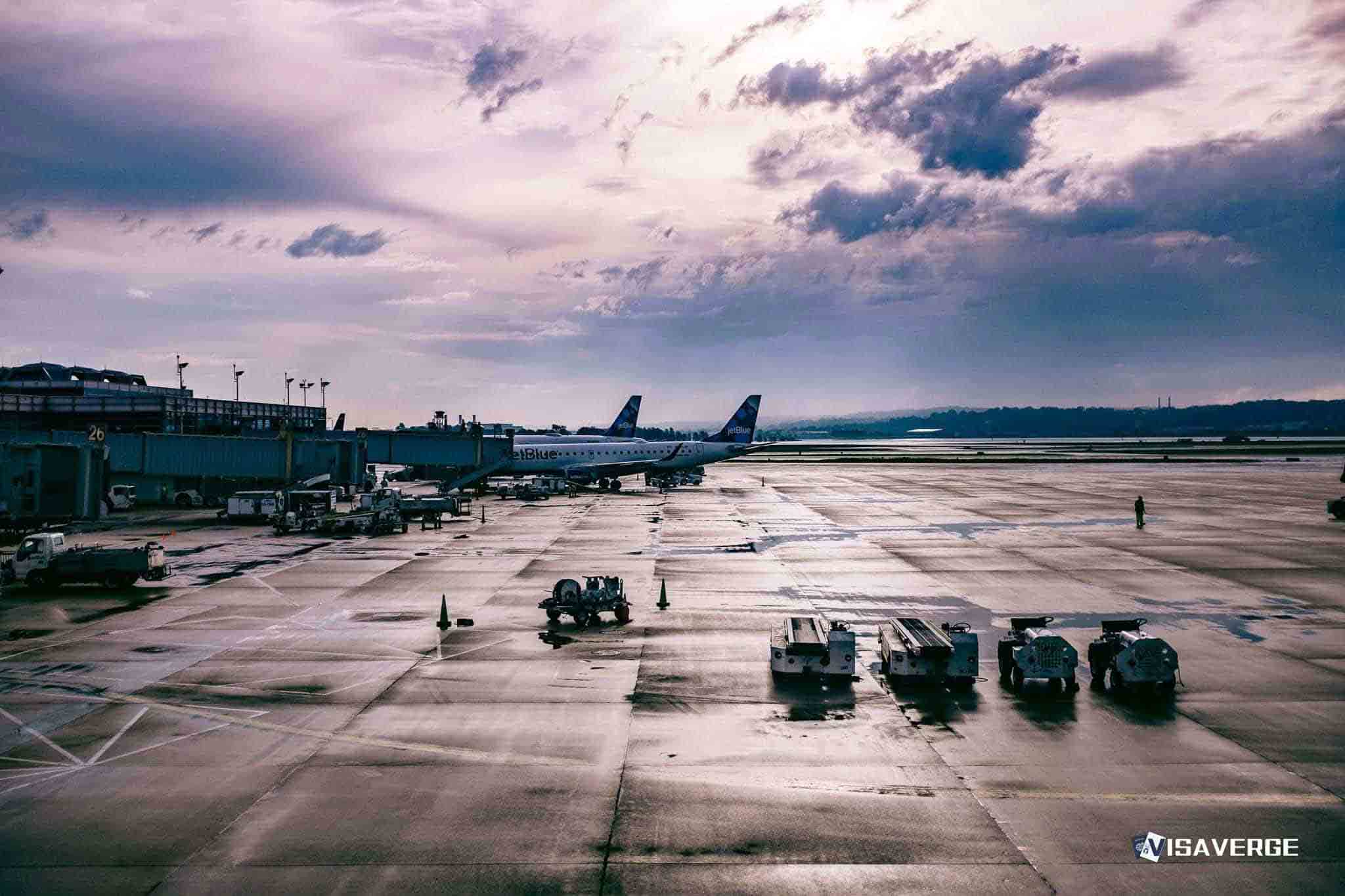
The FAA move follows earlier aviation-related incidents in and around Port-au-Prince. The ban originated in November 2024 after three US-registered aircraft operated by Spirit, JetBlue, and American Airlines were struck by gunfire while attempting to land at Toussaint Louverture International Airport (PAP).
U.S. authorities have tied the risk picture to the growing power of armed groups in the capital. The FAA and State Department report that the gang coalition known as Viv Ansanm, designated as a Foreign Terrorist Organization by the US in May 2025, now controls approximately 90% of Port-au-Prince, including strategic routes and border areas.
With carriers steering clear of Port-au-Prince, alternate routes have taken on greater importance. Limited flights continue to operate out of Cap-Haïtien (CAP) in northern Haiti, which U.S. authorities currently deem lower risk.
For many travelers, that shift means landing outside the capital and then facing difficult ground transfers, including travel along routes that authorities say gangs control. The extension also complicates the movement of commercial goods and humanitarian aid by air into Port-au-Prince.
The flight restrictions coincide with major shifts in US immigration policy affecting Haitian nationals, a combination that can complicate travel for people with pending cases or time-sensitive documentation needs.
In late 2025, DHS Secretary Kristi Noem determined Haiti no longer met the conditions for Temporary Protected Status (TPS). On February 2, 2026, the U.S. District Court for the District of Columbia issued a stay in Miot et al. v. Trump et al., effectively blocking the termination.
USCIS has also adopted a tighter operational posture for certain cases involving “high-risk” countries, including Haiti. Since December 2, 2025, USCIS has implemented a “temporary pause” on the adjudication of certain immigration benefits, including green cards and asylum applications, for nationals of those countries.
USCIS addressed work authorization tied to TPS after the court action. “On February 2, 2026, the U.S. District Court for the District of Columbia issued an order staying the TPS Haiti termination. The validity of Employment Authorization Documents (EADs) issued under the TPS designation of Haiti. is extended per court order.”
The combined pressures have left some families weighing indirect travel through Cap-Haïtien or other routes while trying to preserve lawful status and workplace eligibility in the US, where employers often rely on uninterrupted EAD validity for staffing.
Official information on the flight restriction and any updates appears on the FAA’s portal for FAA NOTAMs/SFARs. Haitians and employers tracking TPS developments can consult the USCIS Haiti TPS page, while broader safety guidance remains on the State Department’s Haiti travel advisory.