- The UN Human Rights Committee ruled that South Korea violated an asylum seeker’s rights at Incheon Airport.
- The decision condemned prolonged detention without due process and lack of access to legal asylum procedures.
- The ruling aligns with domestic court findings against indefinite confinement and poor conditions for migrants.
(INCHEON, SOUTH KOREA) — The United Nations Human Rights Committee ruled that the Republic of Korea violated the rights of an asylum seeker detained in limbo at Incheon International Airport.
The finding, announced in an official OHCHR press release on April 2, 2026, said South Korea breached international human rights obligations by holding the individual without due process, access to asylum procedures, or adequate conditions during prolonged detention at the airport.
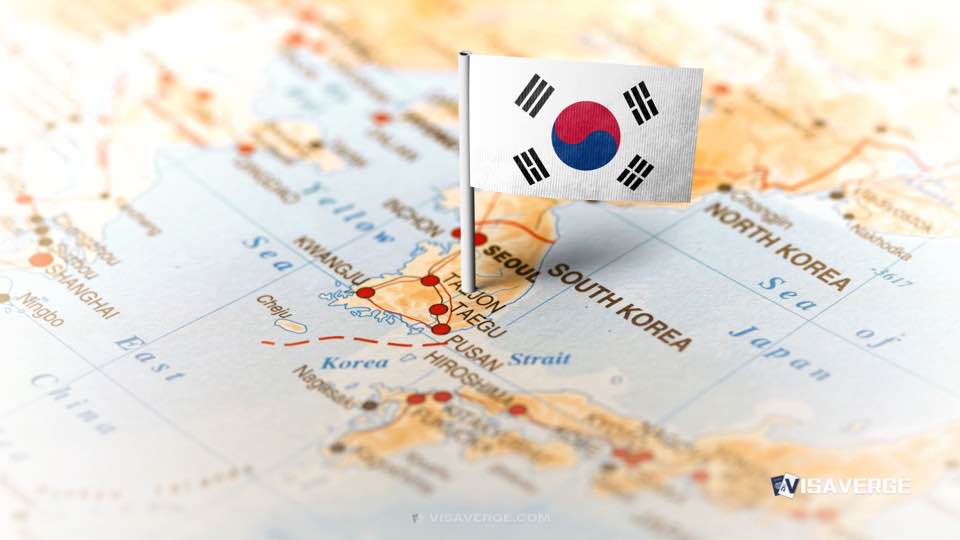
The decision put fresh attention on how South Korea handles asylum claims at its main international gateway, where prolonged confinement in transit areas has drawn legal challenges and scrutiny from lawyers and rights groups.
South Korea ratified the 1951 Refugee Convention in 1992. Its Refugee Act, effective July 2013, governs eligibility screening at ports of entry and sets the framework for how authorities should handle people who seek protection on arrival.
Court precedents in South Korea have emphasized that denying entry to asylum seekers must be exceptional because of the risk of refoulement. That legal context has shaped a series of airport asylum disputes centered on Incheon.
One of the clearest precedents came from the Incheon District Court, which ruled that denying entry to 28 Syrian asylum seekers was unlawful. The group had been detained for nearly eight months in a cramped waiting room at the airport.
The conditions described in that case were stark. The Syrians were held in a windowless room designed for 30 people and were served non-halal meals such as chicken burgers.
The Ministry of Justice had rejected their claims on the ground that they had passed through “safe countries” including China, Russia, and Turkey. The court rejected that rationale.
That earlier ruling reinforced a principle now echoed by the United Nations Human Rights Committee: airport confinement does not place asylum seekers outside basic legal protections. The committee’s April 2 decision found that the asylum seeker in the latest case was denied due process, shut out of asylum procedures and kept in inadequate conditions during prolonged detention.
Those findings also fit with another line of South Korean case law. The Constitutional Court has deemed indefinite detention of migrants and asylum seekers without due process unconstitutional.
In that decision, the Constitutional Court cited “prison-like” conditions and abusive treatment in facilities. Its ruling raised constitutional concerns about holding people for extended periods without a clear legal path to challenge their confinement.
South Korean law allows limited detention in some circumstances. Under the Refugee Act, authorities may detain a person for up to 10 days for identity verification or 7 days at ports pending referral.
Beyond those limits, prolonged holds lack clear legal basis. Habeas corpus remedies also remain limited, leaving detainees with narrow routes to challenge confinement that stretches far beyond the periods written into the law.
The United Nations Human Rights Committee ruling lands against a broader record of low refugee recognition rates in South Korea. From 1994 to April 2022, the country received 74,610 asylum claims.
Those claims resulted in 1,194 refugees and 2,424 humanitarian statuses. Applications peaked at over 15,000 in 2018-2019 before dropping due to COVID-19.
That record has fueled debate over whether the country’s legal commitments under the 1951 Refugee Convention have been matched by practice at the border. The latest ruling from the United Nations Human Rights Committee adds an international human rights finding to concerns already raised in South Korean courts.
UNHCR has urged South Korea to revise “non-referral” grounds under Article 5 of the Refugee Act Enforcement Decree. It has also called for alternatives to detention and labor access for applicants.
Those recommendations go to the center of the legal disputes around airport cases. If authorities can refuse referral to the asylum process too broadly, people arriving at ports of entry can remain stuck in transit zones without full access to refugee screening.
The airport setting has been especially contentious because it blurs the line between entry control and detention. In practice, asylum seekers who are not admitted can remain confined for long periods even though South Korean courts have questioned whether that confinement rests on firm legal footing.
The Incheon District Court’s Syrian case captured that tension in concrete terms. The asylum seekers were not simply waiting for routine processing but were held for nearly eight months in a space described as a waiting room, a period and setting that tested the limits of what officials could lawfully impose.
The court’s rejection of the “safe countries” argument was also notable because it narrowed the government’s room to deny access to refugee procedures based on transit alone. China, Russia, and Turkey were named in that case, but the court concluded the denials were unlawful.
That approach tracks the concern, central to refugee law, that summary denials can expose people to refoulement. South Korean courts have stressed that entry refusals in asylum cases must remain exceptional.
The Constitutional Court’s intervention addressed a related problem from another angle. Even where the state claims authority to hold migrants and asylum seekers, due process cannot disappear, and detention cannot become indefinite by administrative practice.
Its description of “prison-like” conditions and abusive treatment gave judicial weight to complaints that confinement in immigration settings can function like incarceration without the safeguards that normally accompany a loss of liberty. The United Nations Human Rights Committee now has added an international ruling on similar questions of process and conditions.
Pressure on the system remains visible at Incheon. More than 100 individuals remain detained at the airport following the Syrian ruling.
Local lawyers and NGOs continue to support detainees there. Their presence indicates that litigation and advocacy around airport asylum cases did not end with the earlier court victory.
The continuing detentions also suggest that the legal questions raised by the United Nations Human Rights Committee are not confined to one person’s case. The committee ruled on an individual complaint, but the issues it identified — due process, access to asylum procedures and conditions during prolonged detention — overlap with patterns already examined by domestic courts.
That overlap may sharpen attention on whether the current framework at Incheon complies with South Korea’s obligations under both domestic law and international agreements. The legal architecture already exists: the Refugee Act lays out screening rules, the Constitutional Court has barred indefinite detention without due process, and lower courts have warned that denial of entry must remain exceptional.
Yet the numbers show a system under continuing strain. South Korea received 74,610 asylum claims from 1994 to April 2022, but recognized 1,194 refugees and granted 2,424 humanitarian statuses.
The rise in applications to over 15,000 in 2018-2019, followed by a drop due to COVID-19, formed part of the policy backdrop to tighter scrutiny of border procedures. That period also intensified debate over detention, referral and access to work for people waiting on decisions.
UNHCR’s proposals address each of those points. Revising “non-referral” grounds under Article 5 of the Refugee Act Enforcement Decree could narrow the grounds for keeping applicants out of the asylum process, while alternatives to detention could reduce reliance on confinement in airport facilities.
Allowing labor access for applicants would address another pressure point for people left in prolonged uncertainty. The recommendation links procedural reform with day-to-day conditions for asylum seekers whose cases remain unresolved.
For now, the United Nations Human Rights Committee ruling stands as the latest formal finding against South Korea’s handling of an airport asylum case. It centers on one asylum seeker at Incheon International Airport, but it arrives after South Korean courts already condemned prolonged airport confinement, rejected denials based on transit through “safe countries” and found indefinite detention without due process unconstitutional.
More than 100 people remain detained at Incheon, with local lawyers and NGOs still working on their behalf, a sign that the legal and human questions raised at the airport are still far from settled.