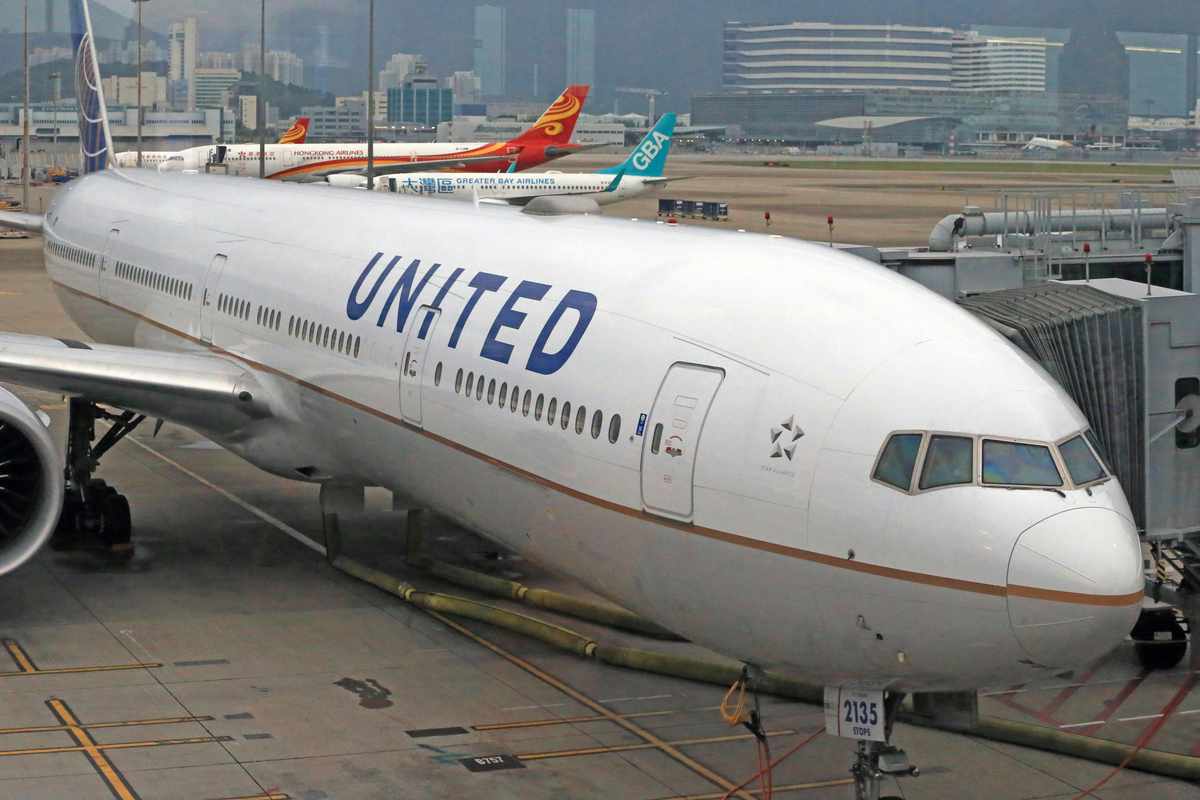
(DULLES, VIRGINIA) United Airlines has quietly reshaped long‑haul travel to and from the United States this summer, grounding its entire fleet of Boeing 777-200 aircraft fitted with Pratt & Whitney engines after a string of scares, including an engine overheating incident shortly after takeoff from Washington Dulles on June 21, 2025.
The decision covers all 52 PW4000-powered jets in United’s fleet — the largest group of this engine‑aircraft combination in the country — and has triggered schedule changes that reach deep into the lives of visa holders, refugees, students, and workers who rely on United’s wide‑body network for transatlantic and transpacific journeys.
The June incident and regulatory response
Regulators moved quickly once the overheating event involving aircraft N798UA was reported. The 27‑year‑old jet returned to Dulles shortly after departure and has remained grounded for detailed inspections.
Both the Federal Aviation Administration (FAA) and the National Transportation Safety Board (NTSB) opened investigations into possible metal fatigue and other safety risks in the engine. United’s voluntary decision to sideline every similar jet, though disruptive, signaled the carrier’s willingness to put safety ahead of capacity.
The airline’s move affected international terminals as families arriving with immigrant visas, temporary work permits, or study plans faced immediate disruption.
Preexisting scrutiny and maintenance concerns
Scrutiny of United’s wide‑body operations had been building before the June incident. United faces a proposed $1.1 million FAA fine over alleged maintenance lapses on Boeing 777 aircraft between 2018 and 2021, when required fire‑system warning checks were reportedly removed from some procedures.
Recent operational irregularities have included diversions and emergency stops for reasons such as:
– airframe vibrations,
– faulty brake temperature sensors,
– a diversion to London Heathrow on September 28, 2025, and
– an emergency stop in Edinburgh involving 777‑200ER N74007.
Each event has added to public unease and raised questions about fleet monitoring and oversight.
Immediate ripple effects on travelers and immigration timelines
For thousands whose immigration journey runs through United’s hub network, the ripple effects are immediate.
United has had to:
– swap smaller aircraft onto routes once served by the Boeing 777-200,
– trim flight frequencies, and
– in some cases rely on partner airlines.
These adjustments mean fewer seats for travelers who have strict deadlines, such as those needing to activate immigrant visas, students with fixed orientation dates, or workers with set employment start dates. Immigration lawyers report clients stuck abroad after missed connections, worried that delayed arrivals could complicate:
– work start dates,
– school reporting deadlines, or
– asylum interviews scheduled months in advance amid slow consular backlogs.
Who is most affected?
Airports such as Dulles, Newark, and San Francisco — where United relied heavily on the Boeing 777-200 — are juggling equipment swaps daily. Airline staff describe a constant puzzle of matching passengers, visas, and deadlines to available seats.
Among those most affected are:
– families using one‑time immigrant visas tied to strict entry deadlines;
– students starting programs who must report by a specific date on their documents;
– refugees and parolees routed through United hubs under government travel programs;
– workers whose H‑1B or L‑1 approvals begin on fixed dates, leaving little room for multi‑day travel delays.
Analysis of uneven impacts
According to analysis by VisaVerge.com, disruptions like the current United grounding can hit certain groups harder.
Examples:
– Diversity visa winners must enter before the end of the fiscal year and have less flexibility if flights are cancelled or rerouted.
– Family‑based visa arrivals (spouses, children) may have reunions delayed after years of separation.
– Business travelers with L‑1 or H‑1B approvals can face rescheduled fingerprinting, onboarding delays, and extra legal and housing costs.
Regulatory context and inspections
Regulators say the sudden absence of PW4000-powered jets is part of a safety system working as intended.
- The FAA has issued multiple airworthiness directives over the years covering Pratt & Whitney engines and Boeing 777 structures.
- Officials emphasize these directives remain central as inspectors review data from the June overheating event and other incidents.
Detailed information on these directives is available on the FAA’s official Airworthiness Directives page, which outlines how airlines must inspect and repair aircraft when potential hazards are found and how fleets can return to service after strict conditions apply.
Investigations and what’s being examined
For the PW4000‑powered fleet, FAA and NTSB investigators are focusing on:
1. whether metal fatigue or undetected wear played a role in the overheating event and other technical problems;
2. what inspections must change before these aircraft can return to service on long‑haul routes; and
3. whether redesigned parts or additional maintenance procedures are required.
United’s response and internal changes
United has publicly confirmed that the affected aircraft remain grounded while checks continue. Internally, the airline has pledged to improve pilot and maintenance training after a recent FAA safety review, though regulators reported no “significant safety issues” overall.
Broader symbolism and traveler sentiment
The grounding has symbolic weight beyond operational disruption. Many immigrants recall earlier high‑profile engine incidents that scattered debris or forced dramatic returns shortly after departure, amplifying anxiety even as officials stress that flying remains very safe.
For newcomers who spent years navigating embassy queues, background checks, medical exams, and strict documentation rules, a sudden cancellation tied to an aircraft type can feel like an additional test of patience and resilience just as borders finally reopen.
Important takeaway: Travelers and advocates are watching two clocks — the technical timetable for returning PW4000‑powered jets to service, and the legal deadlines printed on thousands of visas and travel documents.
Possible outcomes and timelines
Two primary scenarios exist:
1. If FAA and NTSB investigators require new inspections or redesigned parts, the grounding could extend well beyond the busy summer and autumn travel seasons.
2. If investigators instead clear the Boeing 777‑200 fleet after targeted maintenance, the aircraft may quietly return to long‑haul service.
Either outcome highlights how tightly aviation safety and immigration timelines are linked in the global system of families, students, refugees, and workers worldwide.
United Airlines grounded 52 Boeing 777-200 jets with PW4000 engines after a June 21 overheating event at Dulles. FAA and NTSB investigations examine possible metal fatigue and maintenance lapses. The grounding forced equipment swaps, fewer flights, and partner reliance, disrupting immigrants, students, refugees, and workers with fixed visa or start dates. United pledged training improvements while regulators review inspections and potential part redesigns. The fleet’s return depends on inspection outcomes, potentially extending through summer and autumn travel seasons.