(CANADA) — The Ukrainian Canadian Congress called on October 16, 2025 for Canada to create a dedicated pathway to permanent residency for Ukrainians displaced by the war, saying many face uncertainty as their temporary documents expire.
UCC National President Alexandra Chyczij said:
“Many CUAET visa holders report that in addition to not knowing if and when the war in Ukraine will end, the inability to work in Canada uninterrupted and into the foreseeable future, has been a major source of psychological stress and uncertainty for this group.”
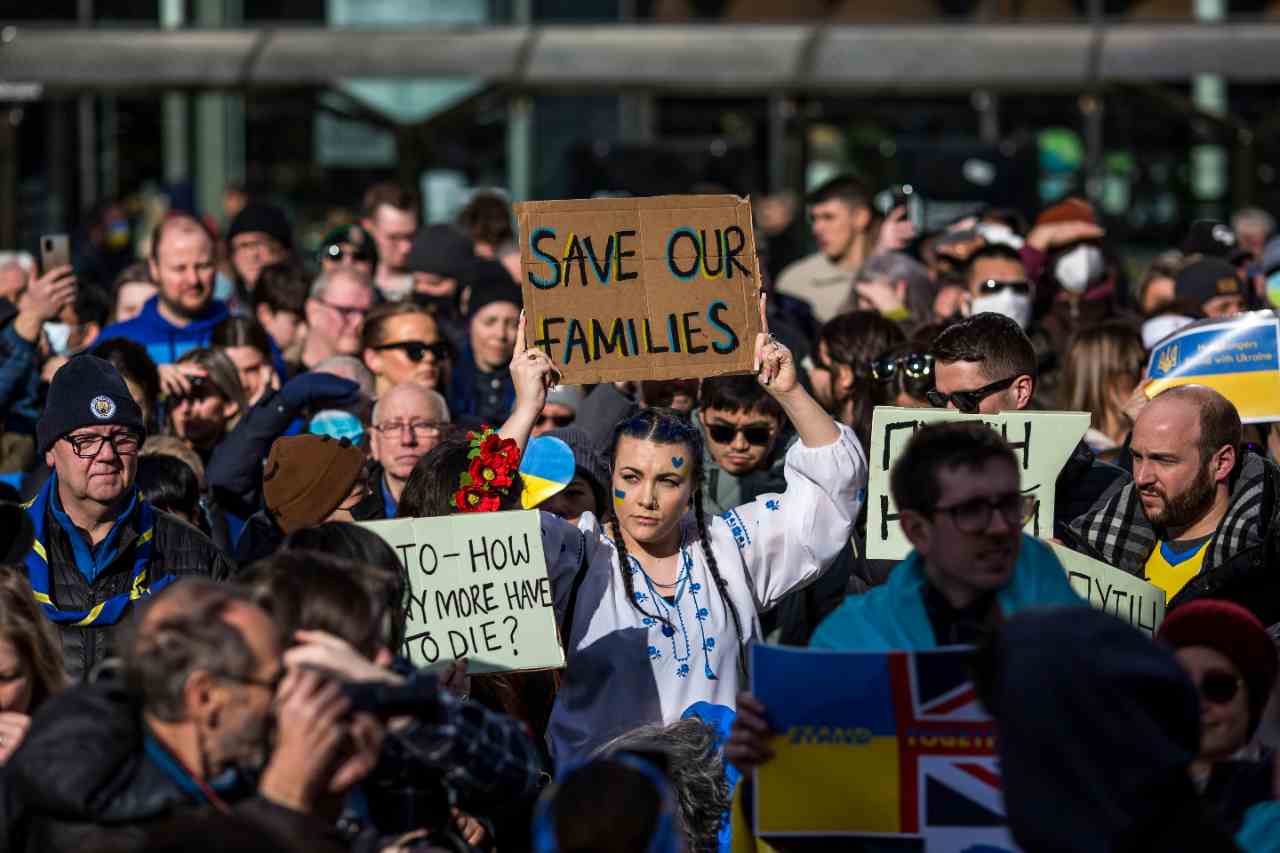
No such Ukraine-specific permanent residency program has been established by the Government of Canada as of late 2025, leaving Ukrainians in Canada under the Canada-Ukraine Authorization for Emergency Travel program, known as CUAET, to rely on standard immigration streams.
The UCC’s appeal was directed to Immigration Minister Lena Metlege Diab and urged the creation of a Temporary Public Policy pathway under section 25 of the Immigration and Refugee Protection Act for eligible CUAET holders.
Under the proposal, applicants would need to hold a valid CUAET visa and a Ukrainian passport, or proof that a renewal application was delayed by the war. The UCC also called for applicants to be physically present in Canada when applying and to intend to live in Canada.
Language testing would be required at level 4 in all four skills under CLB or NCLC in English or French, the UCC said, alongside a work requirement of at least 12 months full-time work in Canada at 30 hours a week, or 1,560 total hours.
As an alternative, the UCC proposed an equivalent income proof option drawn from the prior 3 years. The UCC also recommended that open work permits be issued during processing if a person held a prior work permit within 3 years.
The organization urged the reinstatement of IRCC-funded Language Instruction for Newcomers to Canada, known as LINC, for 3 years. It also called for increased Provincial Nominee Program allocations.
The UCC cited a survey commissioned from Abacus Data that found 69% of Canadians support more permanent residency pathways for displaced Ukrainians, with 81% favoring long-term stays.
The call comes after a previous special measure ended. A family reunification permanent residence pathway for Ukrainians with immediate family in Canada closed on October 22, 2024, though applications received by that date are still being processed.
That reunification program applied to Ukrainians whose immediate family members in Canada were Canadian citizens or permanent residents, including spouses, common-law partners, dependent children, parents, grandparents, siblings, or grandchildren. Applicants also needed valid temporary status and documentation such as birth or marriage certificates.
Fees for the family reunification pathway were listed as $550–$1,050 CAD. With the program closed, Ukrainians who do not already have an application in the queue must seek permanent residency through general programs while maintaining valid temporary status.
As of December 2025, those routes include Express Entry programs such as the Federal Skilled Worker Program, the Federal Skilled Trades Program, and the Canadian Experience Class. Express Entry requires at least 1 year of skilled work experience under NOC TEER 0-3, along with language tests such as IELTS or CELPIP.
Applicants also need an Educational Credential Assessment and may need proof of funds unless they hold a job offer. The Express Entry system uses a 67/100 points threshold based on factors including age and education.
Fees for Express Entry start at $1,365 CAD per principal applicant. Processing is about 6 months after an Invitation to Apply.
Another route is the Provincial Nominee Programs, which vary by province and target local labour needs. Fees vary, and processing times were listed as 3–18 months.
People can also apply on humanitarian and compassionate grounds, which are assessed for strong ties to Canada and hardship. Processing times for those applications were listed as 12–36 months.
Other permanent residency routes include the Rural and Northern Immigration Pilot and the Atlantic Immigration Program. In Quebec, applicants require a Certificat de Sélection du Québec through the Arrima portal.
Ukrainians under the CUAET program can also seek temporary extensions, with open work and study permits available until March 31, 2026 for those who arrived by March 31, 2024. Standard fees apply for those permits, while later arrivals must use the regular process.
Do not let your visa expire without a plan; if processing times stretch or extensions are unclear, you may lose eligibility for new temporary-public-policy routes or open-work permits.
Free settlement services, including language supports and job help, were set to end March 31, 2025. The UCC’s request to reinstate LINC for 3 years would restore a language option it sees as central to longer-term integration.
In pressing for a Temporary Public Policy, the UCC argued that expiring visas and uncertainty about future work authorization have added pressure for Ukrainians trying to rebuild their lives in Canada. Its proposal would pair language and employment requirements with a structured route to permanent residency.
Applications for immigration programs are submitted through the IRCC portal and can be tracked online. Processing for special measures permanent residence has been listed as 6–12 months.
As of late 2025, no updates indicated government adoption of the UCC proposal, keeping the focus on whether Ottawa will create a dedicated pathway beyond the programs already open to all applicants.
The Ukrainian Canadian Congress is lobbying the Canadian government to create a specific permanent residency stream for Ukrainians fleeing the war. Currently, the CUAET program only offers temporary status, causing significant stress for holders as visas expire. The UCC suggests a policy based on work experience and language skills, supported by high public approval, though no official changes have been made yet by late 2025.