- The UK government suspended student and work visas for several nations under a 12-month emergency brake.
- Foreign office officials issued urgent travel warnings for 21 countries following regional escalations and Iran-linked tensions.
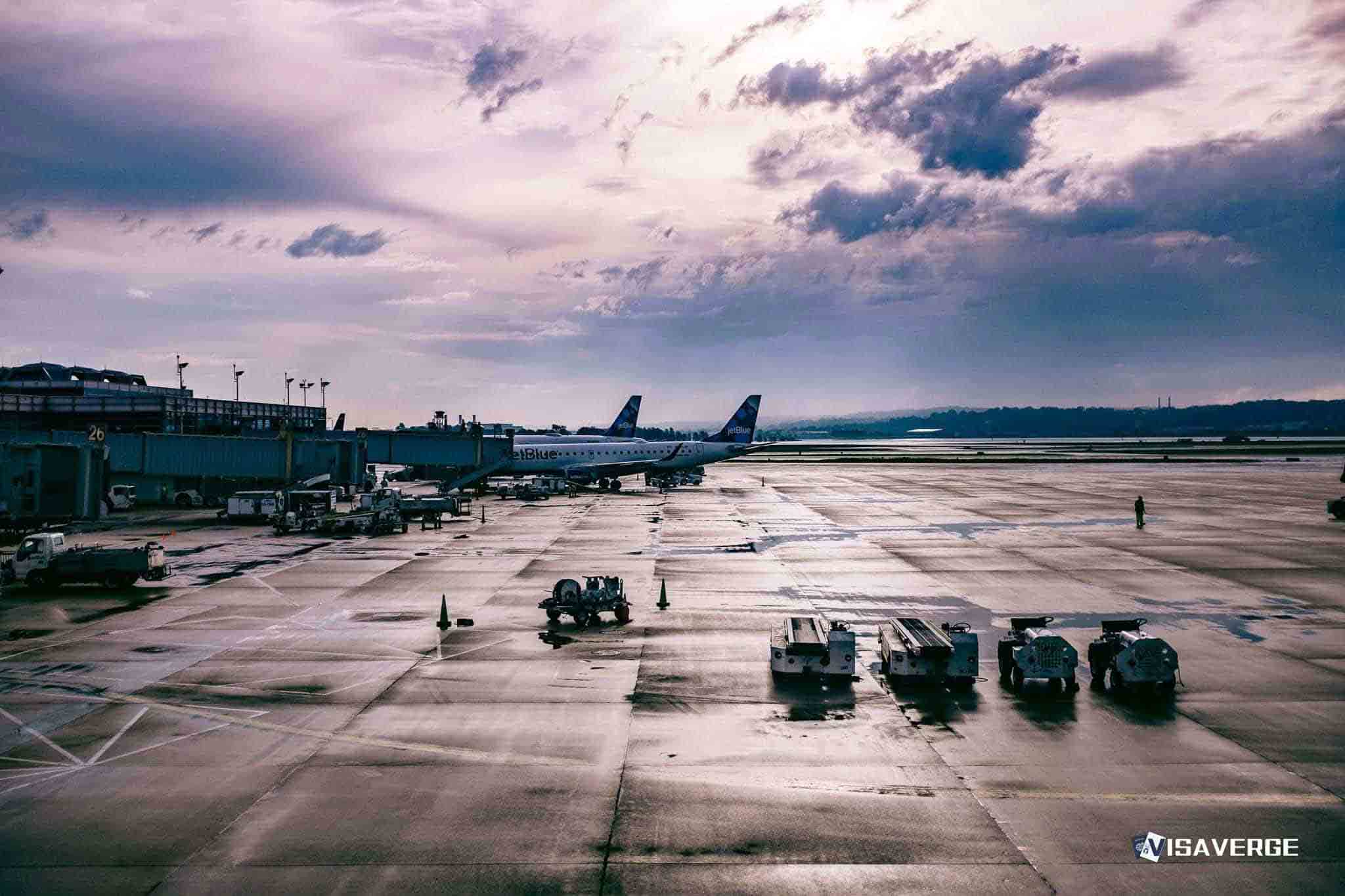
- Major airlines canceled flights and rerouted paths to avoid high-risk airspace in the Middle East and Gulf.
(UNITED KINGDOM) — UK Home Secretary Shabana Mahmood activated an emergency brake under the Immigration Act, suspending student visa applications from Cameroon, Myanmar, and Sudan and both student and work visas from Afghanistan for up to 12 months.
The move, described as a first-time use, immediately blocks new applications in the affected routes and countries for the duration of the suspension.
Mahmood linked the step to concerns about nationals using legal migration as a “back door” to asylum, while keeping protections in place for people fleeing war and persecution.
The announcement landed as the UK also tightened its travel posture across the Middle East, issuing FCDO travel warnings for 21 countries amid Iran-linked tensions and conflict-related disruption.
Britain’s Foreign, Commonwealth & Development Office warned against all travel to Iran, Israel and Palestine, and circulated shelter and security messaging for parts of the Gulf.
The two strands — visa restrictions and escalated travel warnings — have widened uncertainty for prospective students, employers, families and carriers as governments respond to rapidly shifting regional risk.
The emergency brake targets student visa applications from Cameroon, Myanmar and Sudan, and both student and work visa routes for Afghanistan.
By design, the suspension lasts for up to 12 months, creating a defined window in which new applications are not accepted in the specified categories.
Universities and training providers now face limits on intakes from the suspended student routes, while employers recruiting from Afghanistan through the affected work routes face an immediate pause in those pathways.
Mahmood’s rationale focused on the integrity of legal migration channels, framing the measure as a response to patterns of asylum claims tied to people who arrived through authorised routes.
The Home Office position, as described, also stresses that Britain continues to offer refuge for people escaping war and persecution.
Alongside those immigration restrictions, the FCDO issued urgent travel warnings that expanded in breadth as regional tensions rose.
The advisory posture covers 21 countries, with the sharpest language applied to Iran, Israel and Palestine, where the department warned against all travel.
On February 28, 2026, after US and Israeli strikes on Iran, the FCDO told British nationals in Israel and Palestine to “remain indoors in a secure location, avoid all travel and follow instructions from local authorities”.
Similar “shelter in place” messaging applied to Bahrain, UAE, Qatar and Kuwait, reflecting concern about spillover effects and fast-moving security conditions.
The warnings also included the possibility of travel disruption, including potential border closures, as officials flagged uncertainty about how quickly conditions could deteriorate.
Britain’s diplomatic footprint in Iran also shifted as the British Embassy in Tehran temporarily closed, operating remotely with staff withdrawn.
The FCDO updated its advice on Iran on March 1, 2026, citing risks of arrest for British and dual nationals, the risk of regional escalation, protests with violence, and potential border closures.
The updated advice captured a broad set of risks rather than a single trigger, tying the warnings to developments and instability linked to Iran and the wider region.
The evolving travel guidance, in turn, has affected how airlines and travellers plan routes, even when flights and services remain technically available.
US policy has added another layer of strain for people trying to move legally across borders, particularly for those seeking to reunite families or start jobs through immigrant visa pathways.
On January 14, 2026, the US State Department paused immigrant visa issuances indefinitely from January 21 for nationals of 75 countries, including Afghanistan, Cameroon, Iran, Myanmar (Burma), Sudan, Iraq, Syria and Yemen, under INA § 212(f) due to public charge risks.
The action affects both family-based and employment-based immigrant visas.
While the pause blocks issuances in those immigrant categories, it does not formally halt nonimmigrant visas such as tourist, student, or work types, as described.
Applicants can still apply and interview, but visas in the affected immigrant categories will not issue, leaving families and employers facing open-ended waits even after completing steps in the process.
For families, the practical effect is that cases can proceed through parts of the pipeline, but the final document needed to travel and settle on an immigrant basis remains out of reach.
For employers, the pause can disrupt start dates and planning for workers whose entry depends on immigrant visa issuance, even if recruitment and paperwork continue.
The State Department action also intersects with the UK’s emergency brake for certain nationalities, compounding delays for applicants who might otherwise have considered study or work in Britain as an alternative.
Airlines began adjusting operations as the security picture shifted, treating the warnings and regional escalation as factors in immediate route and schedule decisions.
Virgin Atlantic avoided Iraqi airspace and canceled London Heathrow-Dubai flights, reflecting a change in flight planning tied to perceived risk and airspace considerations.
Wizz Air halted services to and from Israel, Dubai, Abu Dhabi and Amman until March 7, 2026.
Such carrier decisions can leave passengers dealing with rebooking or refunds, and in some cases longer journey times if routings change to avoid certain airspace.
The knock-on effects can reach far beyond leisure travel, affecting people trying to make time-sensitive trips for work, study, or immigration appointments that depend on being able to reach specific cities on specific days.
When flights get cancelled or rerouted, connections can break, and travellers may need to reorganise plans across multiple carriers and jurisdictions, especially in hub-heavy routes through the Gulf.
For diaspora communities and families already separated, those disruptions arrive on top of visa uncertainty, raising the risk that planned reunions or relocations will slip further.
British political and security coordination has also moved into sharper focus, with government leaders seeking to manage domestic reassurance while tracking risks abroad.
UK Prime Minister Sir Keir Starmer planned a Cobra committee meeting, as the government emphasised no UK involvement in strikes and said it prioritised British nationals’ safety.
The messaging aimed to pair crisis monitoring with public assurances about Britain’s role, while preparing for contingencies affecting nationals and diplomatic operations.
US officials also signalled heightened posture in the region, with Secretary of State Marco Rubio and Ambassador to Israel Mike Huckabee authorizing departures and discussing regional priorities.
The authorizations and consultations reflect efforts to reduce exposure for staff and eligible personnel as security conditions and protest risks fluctuate.
Across these overlapping measures, the common theme has been operational control: limiting certain visa channels, warning citizens away from high-risk zones, and adjusting airline operations to avoid perceived danger.
Yet governments have offered limited public detail on specific triggers beyond references to instability and Iran-linked tensions, leaving people and institutions to interpret what a shifting risk picture means for day-to-day plans.
Critics have focused on the consequences for students, businesses and families, arguing that sudden suspensions and pauses can punish ordinary applicants while providing few answers about what evidence drove the decisions.
For students, the UK emergency brake means some prospective applicants will have no access to the suspended routes for up to 12 months, affecting decisions about courses, funding, accommodation and timing.
Universities that rely on international recruitment face a narrower pool in the suspended corridors, while applicants from countries not covered by the emergency brake still must weigh shifting travel warnings when planning routes.
Employers, particularly those recruiting internationally, face uncertainty in both the UK and US contexts, with the UK suspending a defined set of work routes for Afghanistan and the US pausing immigrant visa issuances for nationals of 75 countries.
Families trying to reunite face a layered set of barriers, including the US issuance pause for family-based immigrant visas and the practical obstacles created by flight cancellations and route changes.
Even when a traveller qualifies for a nonimmigrant visa category not formally halted in the US action, the wider disruption can still interfere with the timing and logistics of travel.
The travel advisories also carry a distinct burden for people already in the affected areas, who must factor official guidance into everyday movement and the basic question of whether travel remains feasible.
In Israel and Palestine, the FCDO’s instruction to “remain indoors in a secure location, avoid all travel and follow instructions from local authorities” set a high bar for caution after the strikes on Iran.
In parts of the Gulf, the shelter-in-place warnings underscored the risk of rapid escalation even in countries not directly involved in the strikes, reflecting concern about spillover across borders and air routes.
Diplomatic changes add another practical constraint, with the British Embassy in Tehran closed temporarily and operating remotely, and staff withdrawn.
The combination of travel warnings, airline schedule changes and visa pauses creates a situation in which people can complete some steps of legal migration or travel preparation but still be unable to move as planned.
The UK’s emergency brake, in the government’s framing, aims to block specific pathways viewed as vulnerable to misuse, without ending Britain’s protection for people fleeing war and persecution.
The FCDO warnings aim to deter travel and reduce exposure to arrest risks, protests with violence, and potential border closures, while signalling that conditions can change quickly.
The US visa pause aims to stop issuances in certain immigrant categories for nationals of 75 countries, while leaving applicants able to apply and interview even as they face an indefinite wait for issuance.
For airlines, operational decisions such as avoiding Iraqi airspace and canceling Heathrow–Dubai flights show how route planning can change rapidly in response to risk signals.
Wizz Air’s pause, set to run until March 7, 2026, illustrates how carriers sometimes put time limits on suspensions even when broader uncertainty remains.
Across all of these steps, the immediate effect has been to pull an emergency brake on mobility for certain groups — by nationality, by route, and by geography — while leaving large parts of the system formally in place but harder to use in practice.
FCDO travel warnings remained current as of March 4, 2026, keeping official guidance and risk messaging at a heightened level as governments and carriers continued to respond to Iran-linked tensions.