- The U.S. State Department revoked the visas of two unnamed Haitian Transitional Presidential Council members.
- Officials cite alleged ties to violent gangs and the obstruction of critical anti-terrorism efforts.
- Secretary Marco Rubio demanded the council be dissolved by February 7 to ensure stable governance.
(HAITI) — The United States revoked the visas of two members of Haiti’s Transitional Presidential Council on Saturday, citing alleged ties to violent gangs and obstruction of anti-terrorism efforts.
The State Department imposed visa restrictions on the unnamed TPC members and their immediate families, marking an escalation in Washington’s pressure on Haiti’s interim leadership ahead of elections scheduled for later this year.
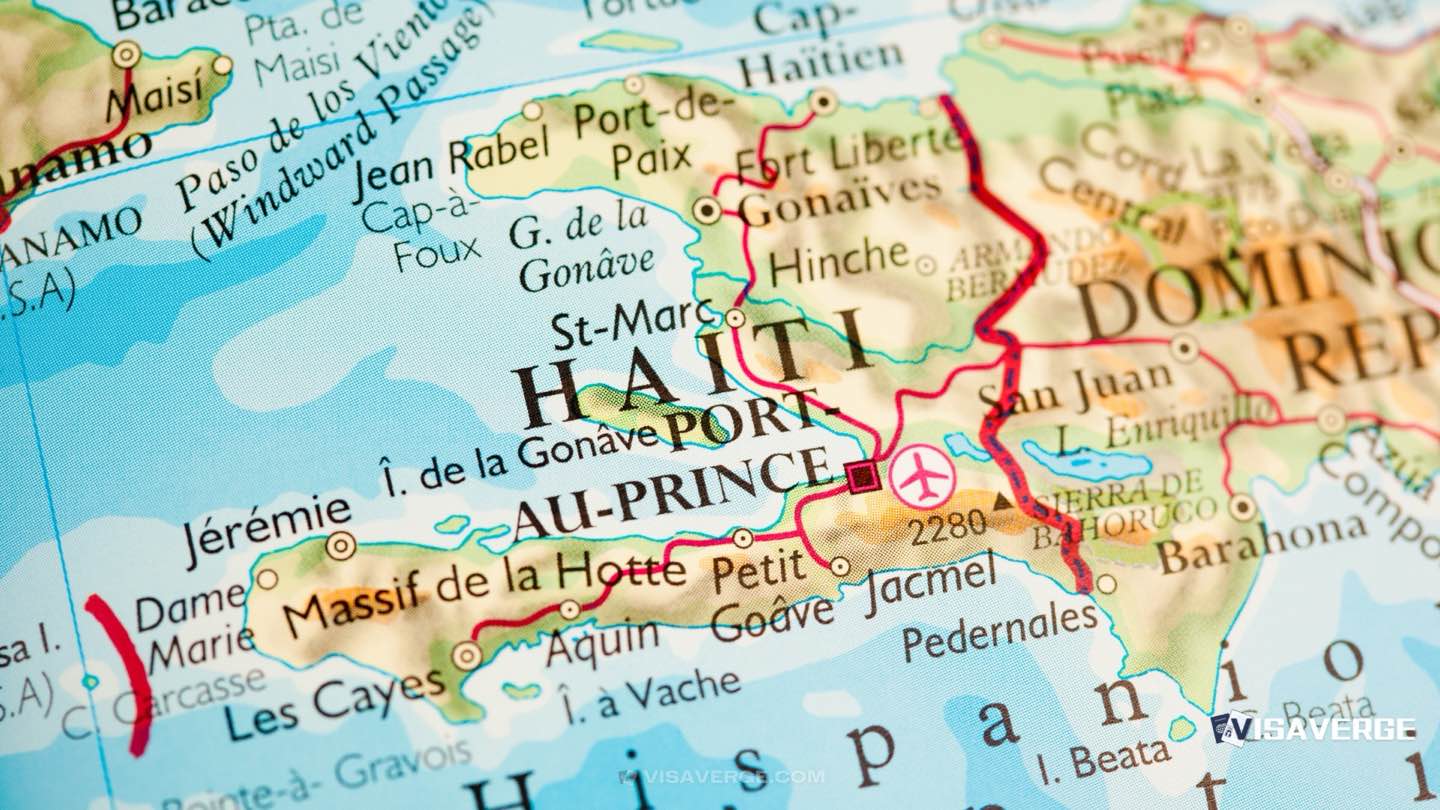
“We are taking action against individuals who have demonstrated support for gangs and interference with efforts to combat groups designated as Foreign Terrorist Organizations,” a State Department official said in the January 25 announcement.
“We are taking action against individuals who have demonstrated support for gangs and interference with efforts to combat groups designated as Foreign Terrorist Organizations,” a State Department official said in the January 25 announcement.
The move comes as Haiti grapples with a deepening security crisis. Gangs now control more than 90% of Port-au-Prince and hold significant territory across the country’s central region, according to United Nations assessments. These armed groups engage in systematic extortion, kidnapping for ransom, drug trafficking, and sexual violence.
At least 8,100 people were killed in gang-related violence from January through November 2025, U.N. officials reported. The actual toll is likely higher, as many deaths in gang-controlled zones go unreported.
Two major gang coalitions dominate Haiti’s criminal landscape. The G9 alliance, led by former police officer Jimmy “Barbecue” Chérizier, operates primarily in Port-au-Prince. The GPèp coalition, under Gabriel Jean Pierre, known as “Ti Gabriel,” controls other strategic areas.
Investigators have documented longstanding connections between gang leaders, political figures, police officials, and business elites. These relationships historically allowed gangs to function as armed enforcers for political factions before evolving into more autonomous forces equipped with military-grade weapons.
The State Department did not disclose the names of the two TPC members targeted. Officials typically withhold such details when imposing visa restrictions based on derogatory information or national security determinations, leaving gaps in public accountability even as the diplomatic consequences take effect.
The action follows a similar move in November 2025 against Fritz Alphonse Jean, another TPC member who previously served as Haiti’s central bank governor and briefly held the council’s rotating presidency. The U.S. accused Jean of supporting gangs and obstructing anti-gang initiatives.
Jean rejected the allegations. “We stand firm on combating corruption, state capture by few individuals, and operators involved in drugs trafficking, weapons and ammunition’s proliferation,” he said at the time.
“We stand firm on combating corruption, state capture by few individuals, and operators involved in drugs trafficking, weapons and ammunition’s proliferation,” he said at the time.
U.S. Secretary of State Marco Rubio discussed Haiti’s political transition in a recent conversation with Haitian Prime Minister Fils-Aimé, according to State Department readouts. Rubio emphasized Washington’s support for stability and free elections while delivering a stark warning about the TPC’s future.
The council “must be dissolved by February 7 without corrupt actors seeking to interfere in Haiti’s path to elected governance for their own gain,” Rubio said. He added that politicians supporting “vicious gangs” would face consequences.
“The council “must be dissolved by February 7 without corrupt actors seeking to interfere in Haiti’s path to elected governance for their own gain,” Rubio said. He added that politicians supporting “vicious gangs” would face consequences.”
The February 7 deadline carries significant weight for Haiti’s political trajectory. The nine-member TPC formed in early 2024 after Prime Minister Ariel Henry resigned amid coordinated gang attacks that paralyzed the capital. The council was designed as a temporary governing body to oversee the transition to elections.
Recent internal disputes have added to the instability. TPC members voted to remove the prime minister in a move that deepened administrative chaos even as gangs tightened their grip on Port-au-Prince neighborhoods and key transportation routes.
The approaching dissolution date intensifies debates over electoral legitimacy and whether Haiti can organize credible voting amid widespread insecurity. U.S. officials have made clear that they view removing allegedly corrupt actors from the transitional process as essential to any successful election.
The visa revocations represent the latest use of a diplomatic tool Washington has deployed repeatedly against Haitian officials. The U.S. has imposed sanctions and travel restrictions on multiple political figures and business leaders accused of facilitating corruption or collaborating with criminal networks.
Haiti has operated in a power vacuum since the July 2021 assassination of President Jovenel Moïse. In the years since, gangs have transformed from politically connected armed groups into largely independent forces that answer to no government authority.
The evolution reflects a breakdown in the patronage networks that once tied gang leaders to political parties including the Haitian Tèt Kale Party (PHTK) and Fanmi Lavalas. Where gangs once served as enforcers during elections or street protests, many now pursue their own territorial and economic agendas.
Chérizier, the former officer who now leads G9, has publicly claimed his coalition fights for the poor and against foreign interference. Security analysts say such rhetoric masks criminal operations that generate revenue through kidnapping, port control, and fuel distribution networks.
The State Department’s decision to act against TPC members signals that U.S. officials believe some members of Haiti’s transitional government maintain relationships with these armed groups despite international pressure to sever such ties.
What remains unclear is whether visa restrictions alone can compel behavioral changes or whether more severe measures—including asset freezes or criminal referrals—might follow. The lack of publicly named targets makes it difficult for Haitian civil society groups to demand accountability or for journalists to investigate the specific allegations.
Observers will be watching for several developments in coming weeks. Additional visa actions could target other TPC members or officials in Haiti’s security apparatus. Continued U.S. diplomatic engagement around the election timeline may include direct negotiations over who can participate in post-TPC governance.
For the two unnamed council members and their families, the immediate impact is concrete: their ability to travel to the United States has been revoked, potentially limiting their diplomatic mobility and signaling their isolation from international partners as Haiti moves toward its February 7 political deadline.