President Trump’s recent boat strikes in the Caribbean have forged a rare alliance between regime change advocates and immigration hardliners, pulling two usually separate camps behind a push for wider U.S. action in Latin America as of October 2025. The operations, aimed at vessels the administration says were tied to drug trafficking and terrorist-listed groups, have left dozens dead, including civilians, and triggered loud diplomatic protests.
Colombia’s President Gustavo Petro accused the United States 🇺🇸 of murder after a fisherman was killed in Colombian waters; local officials say he had no links to the drug trade. The White House defends the strikes as part of a broader “war on cartels,” saying the actions are needed for national security and to stop narcotics reaching U.S. shores.
Polarized responses and the unexpected alliance
The split-screen response is stark.
- Foreign policy hawks who argue for regime change in Venezuela and increased pressure on Colombia see the boat strikes as a tool to weaken leaders the Trump administration labels complicit with cartels and terrorism.
- Immigration hardliners cheer the operations as a way to squeeze human smuggling networks and, by extension, slow maritime migration toward U.S. territory.
Some experts say several targeted vessels may have carried migrants rather than drugs. That point ties the strikes directly to immigration policy and the safety of people moving by sea.
The fallout widened after President Trump announced a halt to all U.S. subsidies and payments to Colombia, a step that has deepened the diplomatic rift.
| India | China | ROW | |
|---|---|---|---|
| EB-1 | Apr 01, 2023 ▲31d | Apr 01, 2023 ▲31d | Current |
| EB-2 | Jul 15, 2014 ▲303d | Sep 01, 2021 | Current |
| EB-3 | Nov 15, 2013 | Jun 15, 2021 ▲45d | Jun 01, 2024 ▲244d |
| F-1 | May 01, 2017 ▲174d | May 01, 2017 ▲174d | May 01, 2017 ▲174d |
| F-2A | Feb 01, 2024 | Feb 01, 2024 | Feb 01, 2024 |
- Lawmakers and international observers have questioned the legality of the operations, pointing to limited public evidence and the risk of extrajudicial killings.
- Survivors from some incidents have been sent back to Colombia and Ecuador for prosecution, keeping court fights away from U.S. judges while raising humanitarian worries about due process for people who may have been migrants or asylum seekers.
Policy drivers and the coalition behind the strikes
In Trump’s second term, the administration has expanded the use of terrorist designations and military force across the region, intensifying pressure on leftist governments and doubling down on the narcotics fight.
Key policy moves:
- Authorized CIA operations in Venezuela
- Public warnings of action against leaders described as “illegal drug leaders”
- Framing interdictions and strikes as part of a broader strategy to destabilize governments seen as partners of organized crime
For regime change advocates, every interdiction and strike is part of a strategy to isolate and weaken target governments. Their aim is to erode state capacity and shape political outcomes, even at the cost of diplomatic backlash.
For immigration hardliners, the same boat strikes are framed as border policy by another means: hit maritime networks to reduce both drug routes and people-smuggling channels. Their arguments:
- Aggressive interdictions will deter departures
- Cut profits for smugglers
- Reduce flows that strain U.S. asylum systems
This alignment—foreign policy hawks and border hawks—has given the White House a sturdy base of support, despite domestic protests and warnings about civilian deaths at sea.
Legal questions, humanitarian risks, and diplomatic strain
The legal debate is intensifying.
- International law experts highlight questions of jurisdiction, consent, and evidence standards on the high seas.
- Lawmakers demand proof linking each targeted vessel to a listed terrorist group or cartel.
- Human rights monitors seek transparency on targeting protocols, rescue operations, and the treatment of survivors.
The administration insists the operations are lawful and necessary to disrupt deadly criminal networks.
On the human side, the consequences are immediate and severe:
- Families in Colombia and Ecuador are mourning and searching for missing relatives.
- Community leaders fear smugglers will reroute migrants into even more dangerous passages to avoid military action.
- Returning survivors offshore for prosecution raises concerns—especially when some may have been seeking protection or traveling on mixed boats carrying both migrants and contraband.
Practical implications for migrants considering sea routes:
- Greater maritime enforcement increases the risk of interdiction, injury, or death during encounters.
- Possible misidentification could expose non-criminal passengers to force, detention, or rapid repatriation.
- Limited access to U.S. screening at sea could reduce chances to request protection, especially if cases are shifted to third-country courts.
How policy and politics are merging
According to analysis by VisaVerge.com, this moment marks an unusual merging of domestic border politics with regional power plays. Backers of regime change and border restriction find shared cause in the boat strikes, which blend counter-narcotics, counter-terrorism, and migration control into a single security agenda.
Advocates for due process and safe migration warn:
- Broad maritime action without transparent standards risks harming asylum seekers who never planned to traffic drugs or collaborate with criminal groups.
- There should be clearer rules on evidence, notice to coastal states, and a mechanism for screening fear-based claims after interdiction.
Opponents also caution that cutting U.S. aid to Colombia during a crisis can backfire, weakening local institutions needed to police cartels and protect civilians.
Supporters of the administration counter that the status quo has failed. Their stance:
- Criminal networks often blend smuggling of drugs and people.
- Only forceful strikes will break the cycle.
- Unilateral action is sometimes necessary when state actors in the region appear to turn a blind eye.
Guidance and official procedures
For people at risk of maritime interdiction, it’s important to know how U.S. agencies say they handle sea encounters.
- The U.S. Coast Guard outlines its migrant interdiction mission and processes on its official site, including policies on safety and repatriation procedures.
- Readers can review that guidance here: U.S. Coast Guard Migrant Interdiction.
While this does not resolve the legal disputes surrounding recent strikes, it provides a baseline on federal interdiction and post-rescue actions.
“The Caribbean is being framed by the White House as a front line where narcotics, terrorism designations, and migration pressure meet.”
— summary of the administration’s public narrative
Domestic backlash and diplomatic consequences
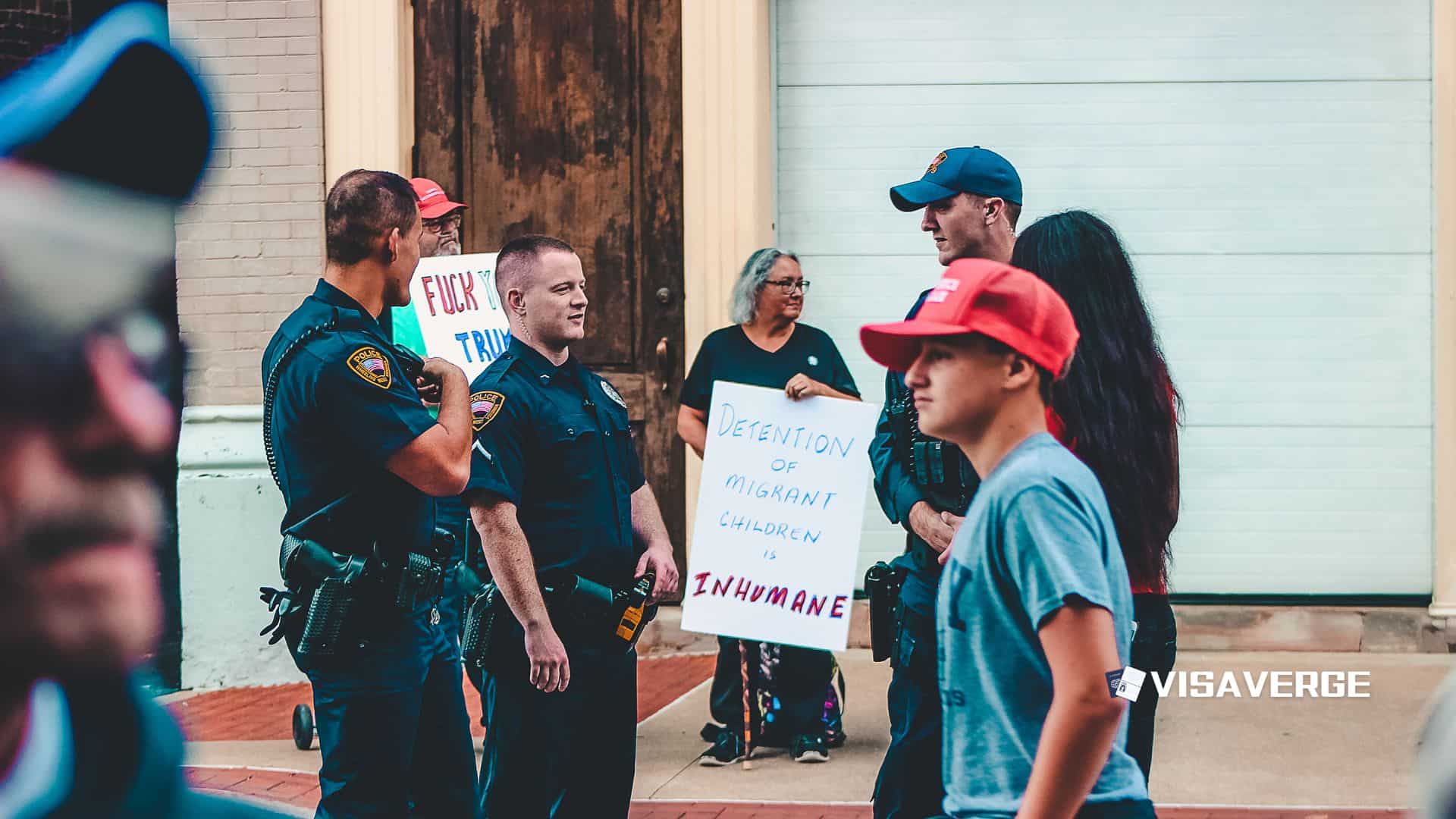
Back in Washington, mass protests and heated hearings underscore the domestic cost of this approach.
- Millions have rallied against the strikes.
- Supporters press for further actions against cartels and aligned regimes.
- The White House has leaned on a national security narrative while signaling diplomacy will likely take a back seat—especially after the aid cutoff to Colombia.
The question ahead is whether the alliance of regime change proponents and immigration hardliners holds if civilian deaths continue, or if regional partners retaliate with legal or trade measures. For now, the coalition remains intact, and the boat strikes have become the clearest symbol of a security-first turn in U.S.-Latin America policy under President Trump.
Families across Colombia and Venezuela weigh impossible choices. Smugglers search for new routes. Coastal towns tally the costs. The region braces for the next wave—whether on the water, in courtrooms, or at tense diplomatic tables—while Washington tests how far this strategy can go without breaking vital ties it may later need to rebuild.
This Article in a Nutshell
In October 2025, President Trump authorized boat strikes in the Caribbean aimed at vessels accused of links to drug traffickers and terrorist-listed groups. The operations killed dozens, including civilians, and provoked diplomatic protests—most notably from Colombia after a fisherman was killed in Colombian waters. The White House framed the actions as part of a broader “war on cartels,” while also cutting subsidies to Colombia, exacerbating tensions. The strikes forged an unusual alliance between regime-change advocates and immigration hardliners, who see maritime interdictions as both foreign policy leverage and border control. Legal experts and human rights monitors have raised concerns about jurisdiction, evidence standards, and the potential misidentification of migrants, calling for transparency, safeguards for asylum seekers, and clearer protocols for post-interdiction screening and rescue operations.