Key Takeaways
- On March 4, 2025, Trump announced halting all federal funding to institutions allowing “illegal” protests, targeting participants significantly.
- Non-citizen protesters face deportation or imprisonment, while U.S. student participants risk expulsion or arrest; masks are banned during protests.
- Federal probes into five universities examine anti-Semitism complaints amid protests; Columbia faces $50M funding scrutiny since March 3, 2025.
On March 4, 2025, President Donald Trump declared his administration’s intent to cut federal funding to educational institutions that permit what he described as “illegal” protests. Announced via Trump’s Truth Social platform, the statement outlined strict consequences, including financial penalties for schools and severe repercussions for protest participants. This move has ignited a broader debate about the balance between free expression, campus safety, and the scope of federal authority in American education.
Key Aspects of Trump’s Announcement
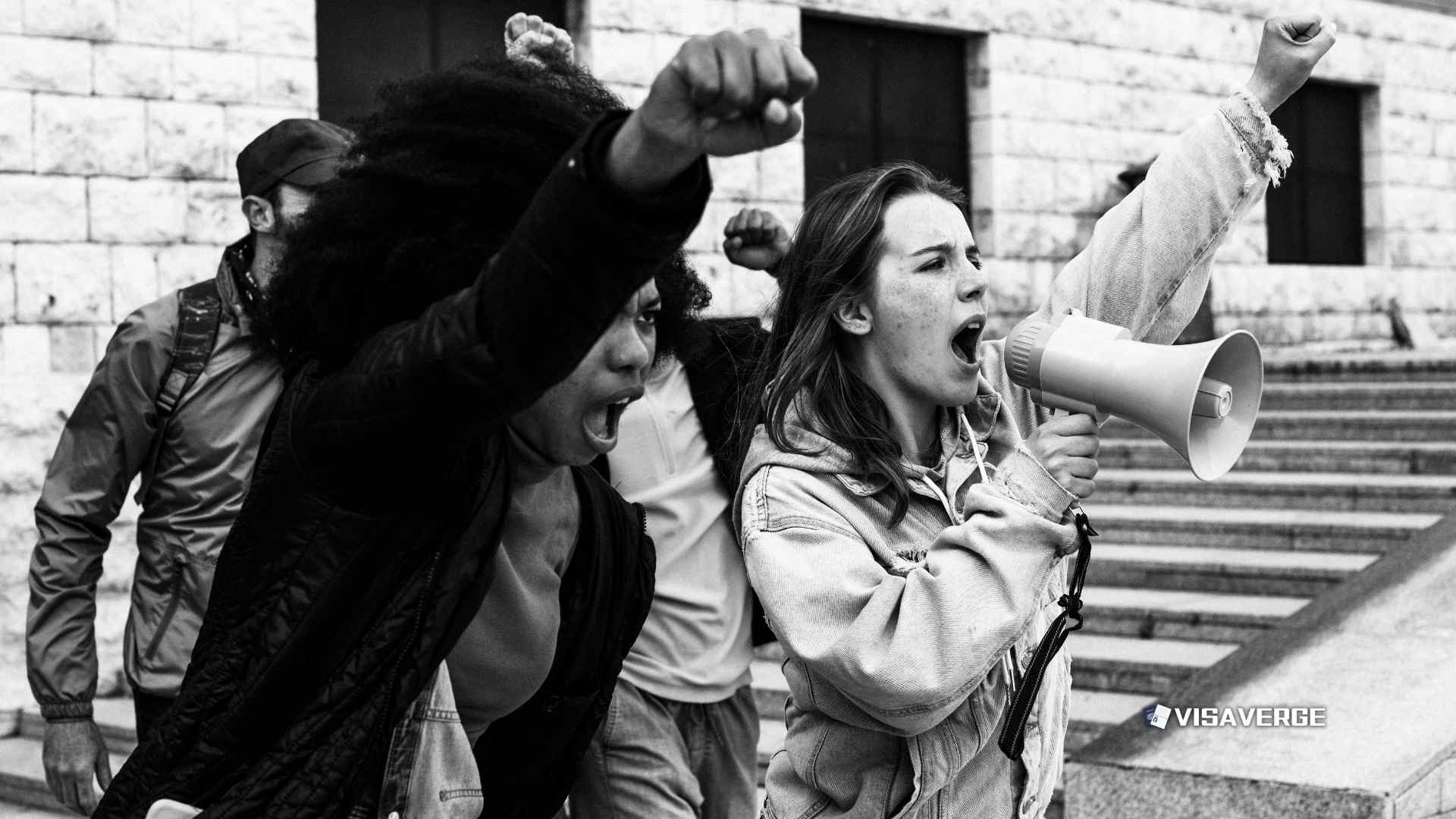
President Trump’s announcement was explicit in its proposed punitive measures. He declared that “ALL Federal Funding will STOP” for any college, school, or university allowing such prohibited activities. In addition to cutting funding, Trump also set forth new rules targeting individuals involved in protests:
- Non-Citizens: Any foreign student or resident alien participating in so-called illegal protests would face deportation or imprisonment.
- American Students: U.S. citizens participating in these events could risk expulsion from their institutions. More severe cases could lead to arrests.
- Mask Prohibition: Trump underscored that masks would not be permitted during such events, reducing anonymity for participants.
These sweeping measures follow ongoing unrest on campuses nationwide, particularly protests surrounding Israel’s actions in Gaza. Trump’s announcement comes after months of escalating campus tensions, making these developments both timely and divisive.
Background and Context
American campuses have seen an increase in protest activities tied to global events, most recently concerning Israel’s military operations in Gaza. Student-led demonstrations often grapple with controversial issues, creating a flashpoint where free speech rights intersect with the need to maintain orderly educational environments. Recent protests have included significant criticism of perceived anti-Semitism, further complicating the dynamic.
One example is Columbia University, which recently became the target of heightened federal scrutiny. On March 3, just one day prior to Trump’s announcement, the federal government began reviewing over $50 million in funding tied to Columbia. Officials have expressed concerns that the university failed to sufficiently protect Jewish students amid these demonstrations. Trump previously ordered a review of federal funding in response to these concerns, reinforcing his administration’s stance against anti-Semitism.
In February of this year, President Trump set up the Task Force to Combat Anti-Semitism, a federal body focused primarily on addressing issues of anti-Semitism on American campuses. This group, which involves Education Secretary Linda McMahon, has made anti-Semitism a focal point while reevaluating grants and balancing federal regulations.
Executive Actions and Federal Oversight
President Trump’s administration has taken several additional steps to address concerns about anti-Semitism and protest activity:
- Executive Order: Trump signed an order requiring immediate and robust actions against criminal or disruptive campus protests. This includes:
- Punishments such as the deportation of international students identified as participants.
- Empowering the Justice Department to actively prosecute instances of vandalism, intimidation, or associated charges.
- Revocation of student visas for participants with alleged ties to Hamas or similar organizations.
- Stop Work Orders: Federal contracts worth $51.4 million tied to Columbia University are under renewed scrutiny, with authorities determining whether continued funding aligns with federal rules designed to protect students and foster non-hostile environments.
- Federal Investigations: The Department of Education recently launched probes into five universities. This includes Columbia University, Northwestern University, Portland State University, the University of California at Berkeley, and the University of Michigan (Twin Cities). These institutions are being scrutinized for complaints involving rising anti-Semitism during protest activities.
Together, these initiatives mark a significant escalation in the federal government’s response to campus unrest.
Broader Policy Context
President Trump’s latest declaration echoes themes already present within his administration’s education agenda. Trump has routinely proposed policies aimed at curbing what he sees as negative influences on educational institutions. In previous years, Trump spoke against diversity programs, criticized policies for transgender athletes in school sports, and opposed COVID-19 vaccine mandates. His broader goal involves returning educational oversight to state-level authorities, including an idea to abolish the Department of Education entirely.
These policies collectively reflect the administration’s emphasis on priorities such as traditional values, national security, and targeted action against what Trump describes as radical elements in the education system.
Impacts on Educational Institutions
By threatening federal funding—an essential source of revenue for most U.S. educational entities—President Trump is placing universities, colleges, and schools in a precarious position. Institutions rely heavily on these funds to operate, often using them for scholarships, facilities, and other academic programs. Potential loss of federal support could have numerous consequences:
- Financial Strain: Schools forced to comply with such sweeping mandates may face logistical and financial hurdles, with some possibly even shutting down critical programs. Smaller institutions dependent on federal grants are particularly vulnerable.
-
Free Speech Challenges: The declaration has raised major questions about how to balance First Amendment protections with campus safety. Free speech advocates warn that labeling protests as “illegal” without clear guidelines risks justifying censorship.
-
International Enrollment Declines: By directly targeting international students, the announcement may dampen global interest in U.S. universities. Long-term, schools that rely heavily on tuition from international enrollees could suffer.
-
Administrative Burdens: Colleges and universities will likely need to overhaul policies governing protests, expending additional resources on compliance and enforcement.
Beyond these logistical concerns, more significant issues remain linked to civil liberties and fairness. Trump’s policies will almost certainly draw legal challenges. Critics have already questioned the administration’s authority to declare certain protests “illegal” and penalize protesters en masse without violating constitutional protections.
Public Reactions
Public reaction to these developments has been mixed. As could be expected, the measures have both strong advocates and vocal opponents:
- Civil Rights Organizations: Groups focused on individual rights, including organizations like the Foundation for Individual Rights and Expression (FIRE), have expressed concerns about broad federal penalties. They argue that expanding the definition of “illegal protests” threatens basic liberties.
-
Universities’ Stance: Educational officials at institutions like Columbia have reiterated commitments to addressing anti-Semitism while maintaining students’ rights to lawful self-expression.
-
Political Responses: Opinions across party lines further highlight division. Advocates supporting Trump view this step as necessary for restoring order, promoting national values, and ensuring safety for targeted groups like Jewish students. Opponents, however, describe Trump’s action as federal overreach with dangerous implications for academic freedom.
Legal responses are also emerging. Experts anticipate forthcoming lawsuits arguing overinterpreted federal control of public life through funding threats. Observers will need to consider how the courts reconcile such interpretative gray areas with current precedents.
The Free Speech Debate: Broader Context
Disputes around demonstrations on campus are hardly new, experiencing cycles of legislative and political attention over decades. Free speech has been protected under landmark cases like Tinker v. Des Moines Independent Community School District (1969), establishing student rights unless protests cause substantial disruption. Critics argue Trump’s policy acts in direct contradiction to these protections, though prioritization of anti-Semitism policies could potentially redefine debates.
Moreover, international observers may interpret the U.S. handling of free speech or deportation-driven frameworks differently. Some nations consider Trump’s restrictions as aimed at isolating political dissent.
Forward Outlook and Next Steps
As litigation, administrative reactions, and political maneuvering around this policy unfold, the situation remains fluid. Key questions ahead include how existing colleges might qualify incidents as officially disruptive without violating law on their ends. However contentious Trump’s proposals may appear, they highlight underlying systemic challenges and debates echoing heavily around modern education-focused dialogues long after March 2025’s immediate period today set stage future high-decibel conversation ahead nationwide confronted apart rest years progress unfolds likewise subjects institutions remain focal adjust brace likely scrutiny hurdles next directives intertwined broadly shifts ahead timeline holds consequences rooted far-reaching judicial opinions societal tendencies growing increasingly polarized environment perspectives persist unsure toward path станет
Learn Today
Federal Funding → Government-provided financial support for institutions, often tied to compliance with specific regulations or policies.
Resident Alien → A non-citizen legally residing in the U.S., typically holding permanent residency or a long-term visa.
Anti-Semitism → Prejudice, discrimination, or hostility directed against Jewish people based on their religion or ethnicity.
Executive Order → A directive issued by the U.S. President that has the force of law without requiring Congressional approval.
First Amendment → A constitutional guarantee protecting freedoms such as speech, press, religion, assembly, and petition against government infringement.
This Article in a Nutshell
On March 4, 2025, President Donald Trump announced plans to cut federal funding to educational institutions permitting “illegal” protests, sparking intense debate on free speech and federal authority. Critics warn of eroded First Amendment rights, while supporters applaud strengthened campus safety measures. This policy shift underscores the ongoing clash between expression and regulation.
— By VisaVerge.com
Read more:
• Illegal Immigrant Mansuri Manuchekhri Accused of Funding ISIS, Gun Crimes, and Sham Marriage Scheme: Who Blew the Whistle?
• DOJ Halts Legal Aid Funding, Leaving Immigrants Without Representation
• US Catholic Bishops Sue Trump Admin Over Refugee Aid Funding Cuts
• Can USCIS Funding Be Halted? A Look at Its Fee-Driven Structure
• Iowa Refugees Impacted by White House Funding Suspension