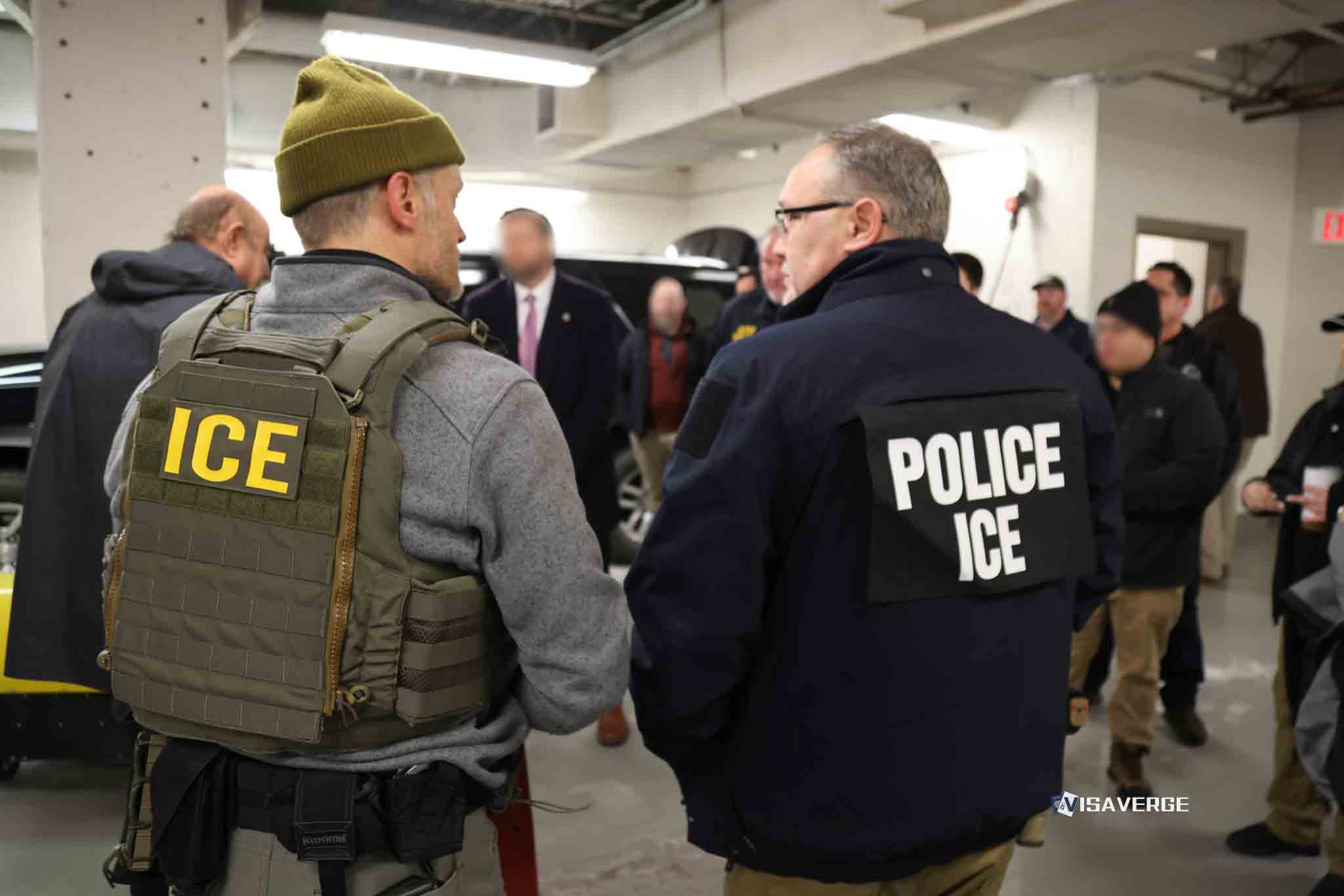
(WASHINGTON, D.C.) — Reps. Eric Swalwell (D-Calif.) and Daniel Goldman (D-N.Y.) have introduced legislation that would fundamentally change how Immigration and Customs Enforcement officers can be held accountable for alleged misconduct. The bill, formally designated as H.R. 4944 and titled the “Ending Qualified Immunity for ICE Agents Act,” would strip ICE civil enforcement officers of qualified immunity protections.
The legislation comes amid heightened scrutiny of immigration enforcement practices and represents one of the most significant attempts to reform accountability mechanisms for federal immigration officers in recent years. Swalwell, a Democrat from California, and Goldman, a former federal prosecutor from New York, have framed the measure as essential for ensuring justice for victims of enforcement abuses.
What the Bill Would Change
Under current law, qualified immunity serves as a powerful legal shield for government officials, including ICE agents. This doctrine, established through decades of Supreme Court precedent, generally prevents individuals from suing government officials for constitutional violations unless the official violated “clearly established” law—a standard that courts have interpreted very narrowly in practice.
“The lawmakers said their bill is intended to ‘make it easier for victims of their abuses to sue them or pursue criminal charges against them in court.'”
The proposed legislation would eliminate this defense specifically for ICE civil enforcement officers. This means that individuals who believe their constitutional rights were violated during an ICE enforcement action could pursue civil lawsuits without facing the often insurmountable hurdle of proving that the agent violated “clearly established” law.
The Catalyst: The Killing of Renee Good
The legislation is described as a direct response to a controversial incident in Minneapolis that resulted in the death of Renee Good, who was killed by an ICE officer. The case has generated significant public attention and raised questions about accountability for federal immigration enforcement officers.
Minneapolis, part of the Hennepin County jurisdiction in Minnesota, has been at the center of several high-profile law enforcement accountability debates in recent years. The Good case adds immigration enforcement to this ongoing conversation about police reform and accountability.
How Qualified Immunity Currently Protects ICE Officers
To understand the significance of this legislation, it’s important to understand how qualified immunity currently operates. When someone attempts to sue a federal officer—including an ICE agent—for alleged constitutional violations, the officer can invoke qualified immunity as a defense.
The defense typically succeeds unless the plaintiff can point to a prior court decision with substantially similar facts where a court held that the same conduct violated the Constitution. This creates what critics call a “Catch-22”: without a prior ruling, officers are immune, but if officers are always immune, no rulings are ever made establishing the law.
Bill Details: H.R. 4944
The legislation is officially listed on Congress.gov as the “Ending Qualified Immunity for ICE Agents Act,” designated as H.R. 4944 in the 119th Congress (2025-2026).
The bill specifically targets ICE civil enforcement officers, rather than applying broadly to all federal law enforcement. This narrow focus may be strategic, as broader qualified immunity reform efforts have faced significant political opposition.
The Broader Qualified Immunity Debate
This legislation enters a broader national conversation about qualified immunity reform. Following high-profile incidents involving police misconduct, advocates across the political spectrum have debated whether qualified immunity provides necessary protection for officers making split-second decisions or whether it creates an unfair barrier to accountability.
At the federal level, previous attempts to end or limit qualified immunity have struggled to gain bipartisan support. The George Floyd Justice in Policing Act, which would have ended qualified immunity for state and local police, passed the House multiple times but failed to advance in the Senate.
What This Means for Immigrants and Their Families
For individuals and families who interact with ICE enforcement, this legislation could have significant practical implications if enacted. Currently, pursuing legal action against ICE officers for alleged misconduct can be extremely difficult due to qualified immunity protections.
The bill would not change what conduct is considered unconstitutional—it would only change the ability to seek accountability for violations. Immigrants and their advocates would still need to demonstrate that their constitutional rights were violated, but they would no longer face the additional hurdle of proving the violation was “clearly established.”
Legislative Prospects and Political Context
The Washington Times reported on the effort as an initiative by two House Democrats, writing: “Two House Democrats are drafting legislation that would end qualified immunity for federal Immigration and Customs Enforcement agents,” identifying them as Reps. Eric Swalwell and Dan Goldman.
The bill’s prospects in the current Congress remain uncertain. Immigration enforcement policy has been a deeply partisan issue, and proposals that could be seen as limiting ICE’s operational effectiveness typically face strong opposition from Republicans and some moderate Democrats.
However, the specific focus on accountability for abuses—rather than limiting enforcement authority itself—may appeal to some lawmakers who support strong immigration enforcement but believe officers should be held accountable for misconduct. The connection to the specific incident involving the removal of qualified immunity protections from ICE agents provides a concrete case that advocates can point to.
Key Definitions
What Happens Next
For the bill to become law, it would need to pass both the House and Senate and be signed by the President. Given current political dynamics, passage in the near term appears unlikely. However, the introduction of the bill keeps the issue in the public conversation and provides a vehicle for advocacy.
Advocates for immigration enforcement reform may use the bill as a starting point for negotiations or as part of broader criminal justice reform efforts. The bill could also influence how courts interpret qualified immunity in immigration enforcement cases, even if it does not become law.
Representatives Eric Swalwell (D-Calif.) and Daniel Goldman (D-N.Y.) have introduced H.R. 4944, the Ending Qualified Immunity for ICE Agents Act, in the 119th Congress. The bill would remove qualified immunity protections from ICE civil enforcement officers, making it easier for individuals to sue for alleged constitutional violations. Prompted by the fatal shooting of Renee Good in Minneapolis, the legislation aims to increase accountability. While facing an uncertain path in Congress, it represents a significant reform effort.