- The Supreme Court upheld a deferential standard for reviewing Board of Immigration Appeals asylum decisions.
- Appeals courts must now use substantial-evidence review rather than re-examining facts de novo.
- The ruling narrows the path for reversing asylum denials based on past or future persecution.
(BOSTON, MASSACHUSETTS) — The U.S. Residency Appeals“>Supreme Court ruled on March 4, 2026, that federal appeals courts must use the substantial-evidence standard when they review the Board of Immigration Appeals Mass Detention Policy”>Immigration Appeals’ decisions on past persecution and a well-founded fear of future persecution in asylum cases.
In Urias-Orellana v. Bondi, No. 24-777, the court held that judges may not redo those determinations under a de novo approach, a change that narrows the room for circuit courts to reverse agency denials in fact-driven asylum disputes.
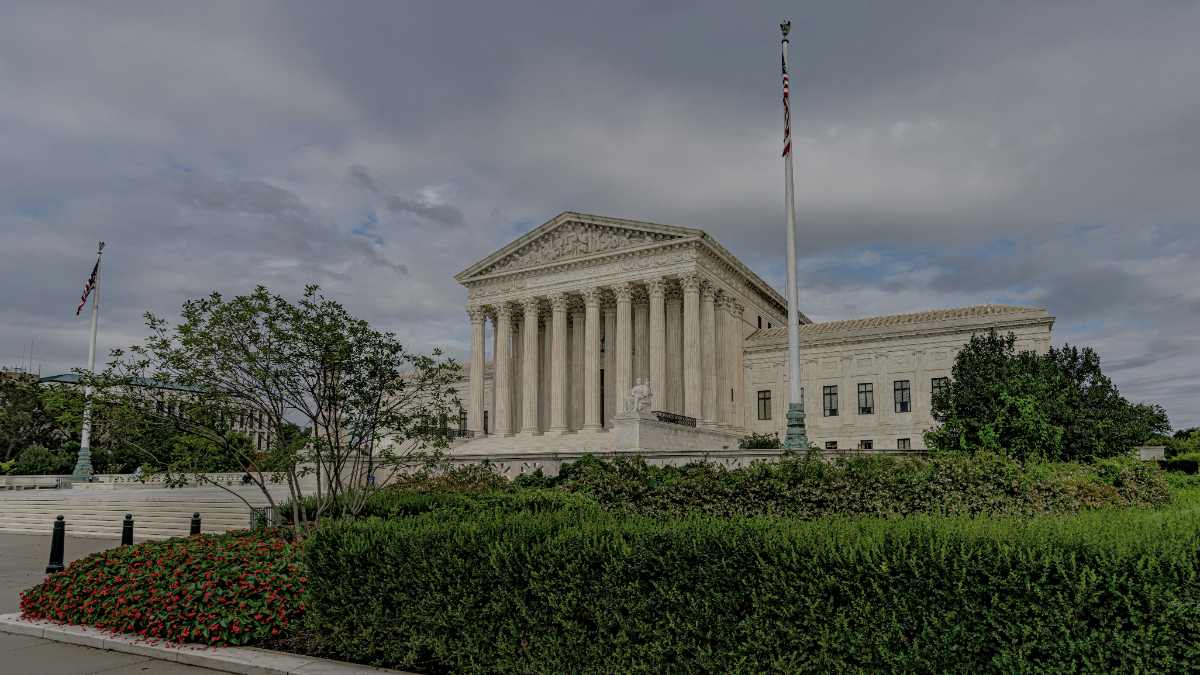
The decision resolves a split among federal circuits over how much weight to give BIA determinations that sit at the intersection of law and facts, including whether a person’s experiences meet the Immigration and Nationality Act’s persecution framework.
By directing courts toward a more deferential posture, the ruling shifts more of the decisive work to immigration judges and the Board of Immigration Appeals, where the asylum record is built and where disputes over evidence, credibility, and inferences are decided first.
Douglas Humberto Urias-Orellana and his family sought asylum after facing threats from a hitman in El Salvador, the case record shows.
They conceded removability in Boston immigration court but applied for asylum under INA § 208.
An immigration judge denied asylum, finding no past persecution and no well-founded fear of future persecution, and ordered removal.
The Board of Immigration Appeals affirmed, and the U.S. Court of Appeals for the First Circuit upheld the BIA’s decision under substantial-evidence review.
The family then asked the Supreme Court to decide whether persecution determinations should receive fresh review in the courts of appeals, or whether they should be treated as agency factfinding that is difficult to undo on appeal.
Nicholas Rosellini, who represented the petitioners, argued that courts should review the persecution determination de novo as a legal question, pointing to inconsistent practices among circuits and a need for consistent precedent.
Assistant to the Solicitor General Joshua Dos Santos countered for the government that persecution findings are primarily factual, requiring evidence weighing, inferences, and credibility judgments that Congress assigned to immigration adjudicators.
At the center of the Supreme Court’s decision is the substantial-evidence standard, a familiar form of review in administrative law that requires appellate judges to respect agency factfinding unless the record leaves no genuine room for disagreement.
substantial-evidence review does not ask what a federal judge would decide in the first instance.
Instead, it asks whether the record forces a different answer than the one the agency reached, with reversal reserved for the rare case where the evidence points only one way.
The Supreme Court anchored its holding in 8 U.S.C. § 1252(b)(4)(B), which makes BIA findings “conclusive unless “any reasonable adjudicator would be compelled to conclude to the contrary,”” a standard that sets a high bar for petitioners seeking to undo an asylum denial in circuit court.
Applying that framework, the court said substantial-evidence review governs BIA determinations on whether an asylum applicant established past persecution or a well-founded fear of future persecution under the INA.
The ruling covers underlying factual findings and the agency’s application of the INA to those facts for persecution and fear determinations.
That scope matters because some circuits treated the question whether particular harms amount to “persecution” as a legal judgment calling for close judicial scrutiny, while others treated it as part of a fact-bound determination entitled to deference.
The Supreme Court’s resolution pushes those disputes into a single national rule that discourages appellate courts from reweighing the record when the core argument is over what happened, why it happened, and what it means for future risk.
Uniformity also has practical consequences in immigration adjudication, where asylum law operates nationwide and where the Board of Immigration Appeals serves as the central administrative appellate body.
A single approach to reviewing BIA persecution and fear determinations reduces the incentives for litigants to seek out particular circuits with more favorable review standards.
It also places more emphasis on the proceedings before the immigration judge and the BIA, where testimony is taken, documents are submitted, and credibility findings are made.
Even under this more deferential approach, the Supreme Court did not remove judicial review entirely from asylum cases.
The court’s holding addressed how circuit courts review persecution and well-founded fear determinations, but the INA still preserves review of legal and constitutional questions under 8 U.S.C. § 1252(a)(2)(D).
That provision matters in the many cases where a petitioner argues that the agency applied the wrong legal standard, misunderstood the governing statute, or committed a constitutional error, rather than simply weighing the evidence differently.
The March 4 decision also fits within the INA’s broader scheme for channeling and limiting judicial review of immigration decisions.
Section 1252(b)(4)(B) operates as a direct constraint on appellate review of fact-bound determinations, telling courts what it takes to set aside agency findings.
At the same time, § 1252(a)(2)(D) operates as a safety valve, preserving review for legal and constitutional issues even where Congress constrained fact review.
The Supreme Court’s reasoning also builds on Patel v. Garland (2022), a decision the court cited as a precedent that constrained judicial review of factual findings in the immigration context.
In Patel, the court barred judicial review of factual findings in discretionary relief denials under 8 U.S.C. § 1252(a)(2)(B)(i).
Dissenters in Patel—Justices Gorsuch, Breyer, Sotomayor, and Kagan—warned of unchecked agency errors leading to removal.
Against that backdrop, Urias-Orellana reinforces the direction of travel in the court’s immigration docket, emphasizing statutory limits on what courts of appeals may second-guess when Congress instructed deference to agency factfinding.
For asylum seekers and their lawyers, the immediate consequence is a narrower path to win in circuit court when the dispute turns on the weight of evidence.
Under substantial-evidence review, a petitioner cannot prevail simply by showing that a different factfinder could have drawn different inferences from the same record.
A challenge succeeds only when the record compels the opposite conclusion, which places a premium on building the strongest possible record before the immigration judge and the Board of Immigration Appeals.
That pressure begins early, because the administrative process is where the record is created and where many critical determinations become difficult to revisit later.
If an immigration judge finds that threats do not rise to persecution, or finds that future fear is not objectively well-founded, the BIA’s affirmance will now receive substantial-evidence deference from the circuit courts on those points.
The ruling also clarifies litigation posture in cases where lawyers previously framed persecution as a legal question in order to obtain de novo review.
After March 4, arguments that ask courts to reweigh testimony, revisit credibility assessments, or give different weight to country conditions evidence face the substantial-evidence standard.
At the same time, the decision does not eliminate claims that the agency committed legal error, including arguments that the BIA applied the wrong legal test for persecution or misapplied the INA in a way that qualifies as a legal question.
Asylum claims can also reach the same appellate chokepoints through different entry paths.
Some people pursue asylum through an affirmative application with USCIS under INA § 1158(a), while others raise asylum defensively in removal proceedings under INA § 1229a(c)(4).
Despite those different starting points, cases that reach the Board of Immigration Appeals and then the courts of appeals tend to converge around the same record-based questions about persecution and future fear.
That convergence makes the Supreme Court’s rule especially consequential because it governs the stage where many litigants seek their last meaningful chance to overturn an agency denial.
In the Urias-Orellana case, the procedural path illustrates how those stages interact.
The family conceded removability in Boston immigration court, lost before the immigration judge, and then lost again at the BIA.
The First Circuit upheld the BIA under substantial-evidence review, a posture that the Supreme Court’s March 4 decision now requires other circuits to follow for persecution and well-founded fear determinations.
The Supreme Court’s decision also carries institutional implications for the BIA, whose legal interpretations remain subject to judicial review, but whose fact-bound determinations now receive a clarified shield in this core area of asylum eligibility.
That deference can place more weight on how the BIA frames the issue as fact, law, or application of law to fact, because that framing often influences the standard of review.
The court’s decision answers that framing question for persecution and fear determinations by treating them as governed by substantial-evidence review, including the application of the INA to the facts found.
For lawyers advising asylum applicants, the message is that record-building and issue preservation at the immigration judge and BIA stages become more consequential when later review becomes more constrained.
Documentary corroboration, consistent testimony, and targeted arguments to the BIA matter because they shape what a circuit court can evaluate under the substantial-evidence standard.
The Supreme Court’s rule also affects how attorneys craft appeals, drawing a clearer line between disputes over what the evidence shows and claims that the agency applied the wrong legal standard.
Even with Urias-Orellana decided, the Supreme Court’s immigration docket will continue to shape the boundaries of asylum access and adjudication.
A separate case, Noem v. Al Otro Lado, will be argued on March 24, 2026.
That case addresses whether presenting at the border satisfies the INA’s “arrives in the United States” requirement for asylum, a question with operational stakes for how asylum processes function at and near the border.