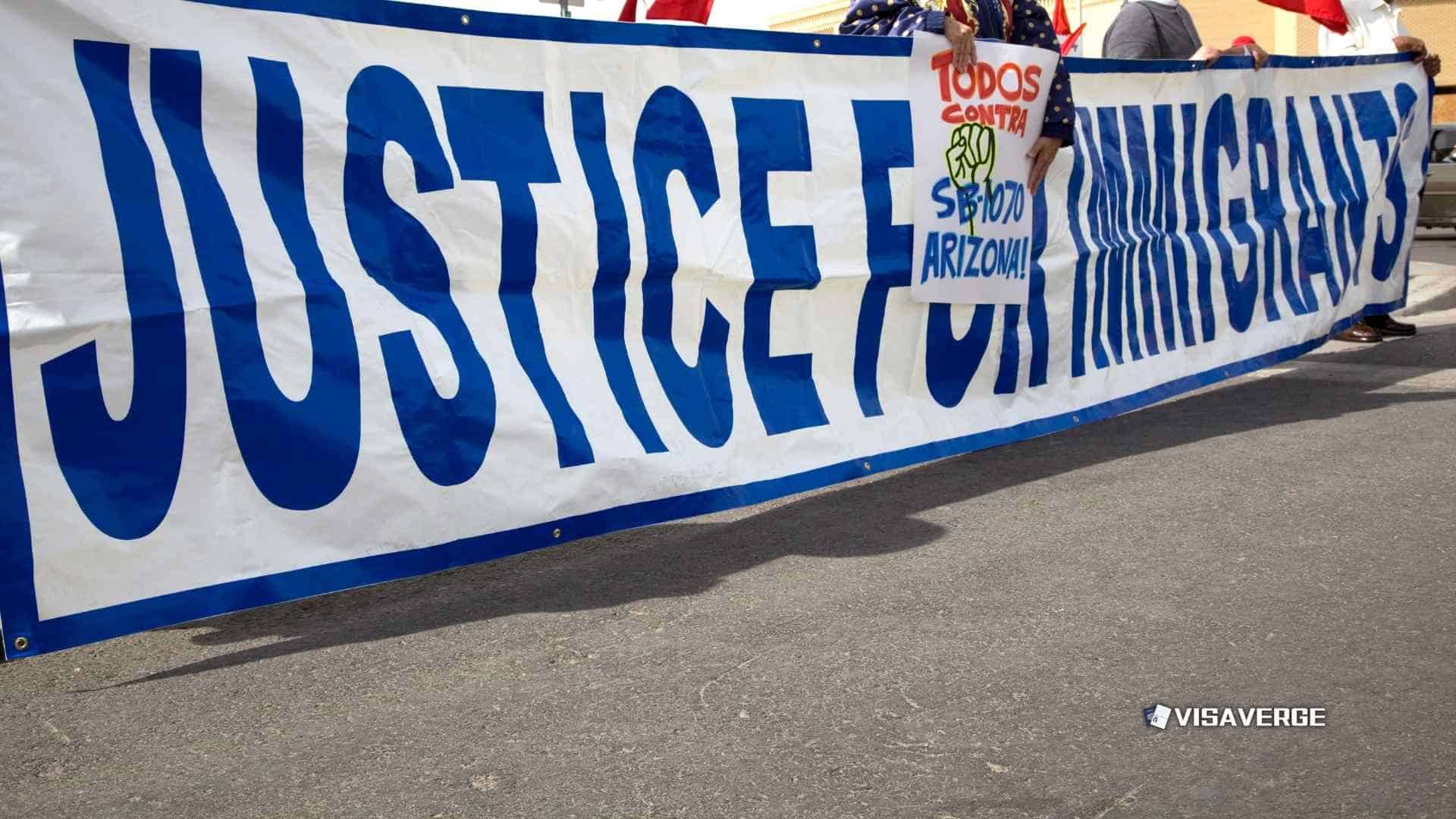
(UNITED STATES) The U.S. Supreme Court agreed on December 5, 2025 to take up a direct test of President Trump’s attempt to narrow birthright citizenship, setting up a high-stakes ruling in the 2025–26 term on whether Executive Order 14160 can stand alongside the Fourteenth Amendment. The order, signed on January 20, 2025 as a “Day One” action, tells federal agencies to deny citizenship documentation to some babies born on U.S. soil, a move that has already triggered fast-moving lawsuits, split federal judges, and left families and hospitals unsure what documents will count as proof of citizenship in places where the policy might be allowed to take effect.
Core legal question
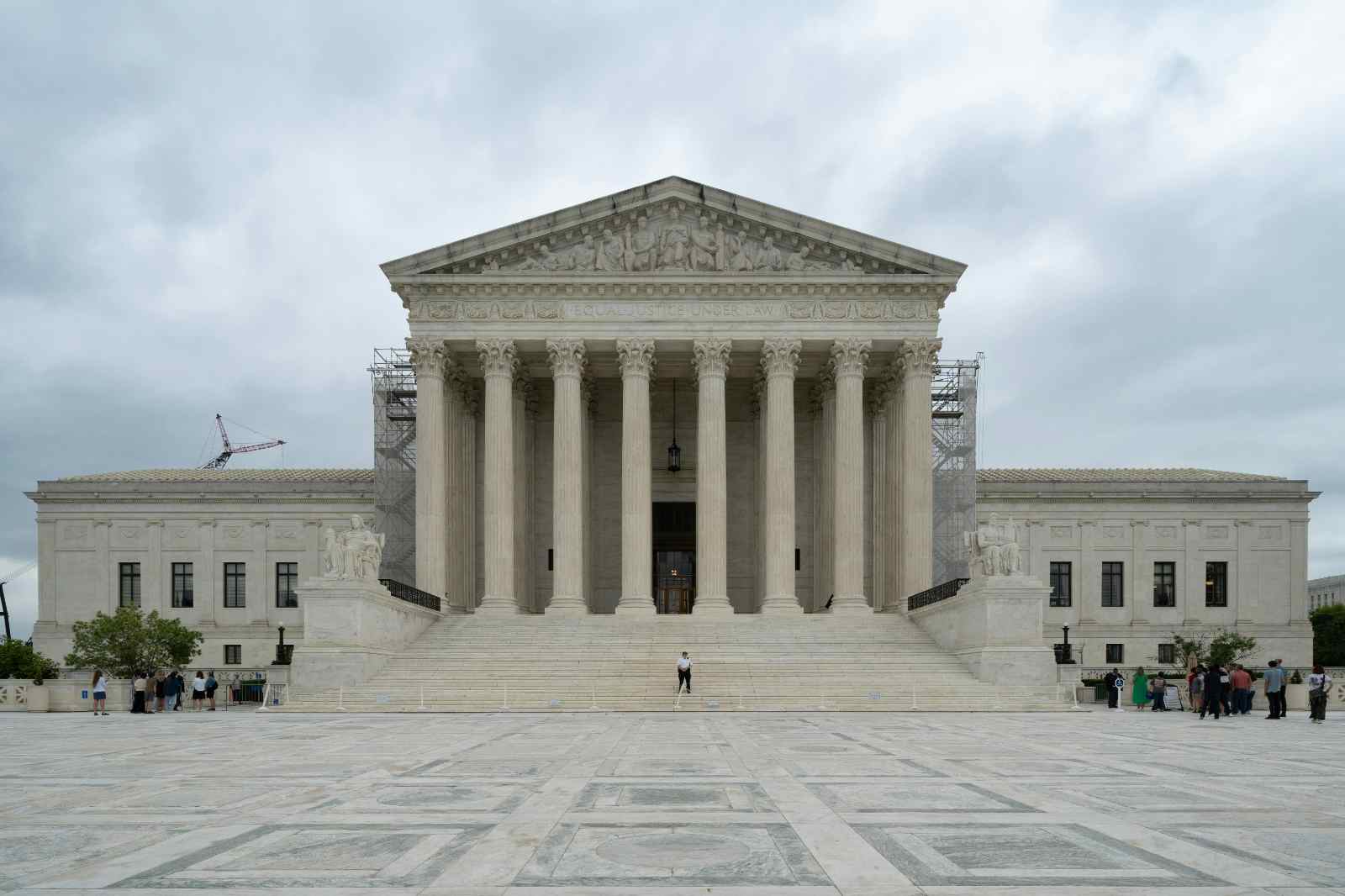
At the center of the dispute is a short but powerful line in the Fourteenth Amendment’s Citizenship Clause:
“All persons born or naturalized in the United States, and subject to the jurisdiction thereof, are citizens.”
For more than a century this sentence has been widely read to mean that most children born in the United States 🇺🇸 are citizens at birth, no matter their parents’ immigration status. Executive Order 14160 directly challenges that settled practice by instructing agencies to treat certain U.S.-born children as not entitled to citizenship papers, depending on the parents’ status at the time of birth.
What the order does (key provisions and practical effect)
- The order applies prospectively and was set to take effect 30 days after it was signed.
- A crucial implementation date in the order is February 19, 2025.
- Under its terms, agencies would deny citizenship documentation for children born on or after that date if:
- the mother was either unlawfully present or lawfully present only on a temporary basis (for example, on student or work visas), and
- the father was neither a U.S. citizen nor a lawful permanent resident.
In practical terms the order attempts to replace a simple birthplace-based test with a parental-status test, forcing a check of at least one parent’s immigration category before a child can get federal proof of U.S. citizenship.
Legal challenges and early litigation
The order sparked immediate court fights.
- On January 21, 2025, multiple lawsuits were filed, including:
- CASA v. Trump in Maryland (filed by ASAP members).
- A New Hampshire case described as the “Barbara” case, backed by a coalition led by the Asian Law Caucus, ACLU affiliates, and the NAACP Legal Defense Fund.
The plaintiffs argue that a president cannot, by executive order alone, rewrite the meaning of the Citizenship Clause. They also warn that treating birth certificates as insufficient could force parents to produce additional paperwork at the moment they are securing care, insurance, passports, and other necessities for newborns.
Early lower-court actions
- February 5, 2025: A U.S. District Judge in Maryland issued a preliminary injunction blocking enforcement.
- Other courts, including in Washington State, also found the order likely unconstitutional and entered injunctions.
Those rulings slowed the government’s plans and sent the dispute toward the Supreme Court. From March 13 to May 15, 2025, the government appealed, and oral arguments advanced rapidly through emergency and appellate pathways.
Supreme Court procedural decision
- June 27, 2025: In Trump v. CASA, Inc. (Docket 24A884), the Supreme Court ruled 6–3 to limit nationwide injunctions.
- This was a procedural decision and did not decide the constitutionality of Executive Order 14160.
- The ruling meant lower judges would have less power to block a federal policy nationwide, producing the possibility that the order could be enforced in states not challenging it while remaining blocked in others.
- The result: a patchwork enforcement risk — families in some states might face new hurdles while those just across a border might not.
Even after that decision, the source material notes that enforcement remained halted nationally through ongoing preliminary relief, while also acknowledging that the order “could apply in non-challenging states.” That uncertainty has major real-world effects because hospitals, county record offices, and parents typically work on tight timelines after a birth.
Human impact and administrative concerns
- A late change in how agencies treat citizenship proof can lead to delays affecting:
- health coverage
- travel plans
- parents’ ability to return to work
- access to passports or social benefits
- Advocates warn the order could set the stage for broader checks that sweep in U.S.-citizen parents, since clerks cannot easily determine citizenship without asking for documents. They say this could lead to discriminatory and arbitrary burdens, and even racial profiling.
-
Analysis by VisaVerge.com highlights operational strain: agencies were built around birthplace-based rules, not performing on-the-spot immigration screening of new parents.
Arguments for and against the order
Supporters’ position:
– They argue the Citizenship Clause has been read too broadly.
– The phrase “subject to the jurisdiction thereof” can be read to exclude children of some non-citizens.
– Tennessee Attorney General Jonathan Skrmetti, joined by Iowa’s attorney general and 23 states in an amicus brief, urged that view.
– Skrmetti stated: “Not every child is entitled to American citizenship.”
– Backers emphasize post–Civil War context, arguing citizenship was tied to a fuller legal allegiance than mere physical presence, especially for parents unlawfully present or temporarily present on visas.
Opponents’ position:
– They point to precedent: United States v. Wong Kim Ark (1898) affirmed birthright citizenship for a child born in the United States to non-citizen parents.
– Aarti Kohli, executive director of Asian Law Caucus, called Executive Order 14160 a clear break from settled law and warned of “administrative chaos.”
– Plaintiffs maintain the order would make a birth certificate alone insufficient for citizenship proof, and would invite discriminatory probing of parental status.
Timeline — key dates
Executive Order 14160 signed
Multiple lawsuits filed (e.g., CASA v. Trump; ‘Barbara’ case)
U.S. District Judge in Maryland issues preliminary injunction blocking enforcement
Order’s effective reference date (applies to births on or after this date)
Government appeals and emergency appellate steps
Supreme Court rules 6–3 to limit nationwide injunctions in Trump v. CASA, Inc. (procedural decision)
Supreme Court grants certiorari to review Executive Order 14160 during the 2025–26 term
Final Supreme Court ruling anticipated
| Date | Action |
|---|---|
| January 20, 2025 | Executive Order 14160 signed |
| February 19, 2025 | Order’s effective reference date (apply to births on/after this date) |
| January 21, 2025 | Multiple lawsuits filed (e.g., CASA v. Trump; “Barbara” case) |
| February 5, 2025 | Maryland District Judge issues preliminary injunction |
| March 13–May 15, 2025 | Government appeals and emergency appellate steps |
| June 27, 2025 | Supreme Court limits nationwide injunctions (Trump v. CASA, Inc.) |
| December 5, 2025 | Supreme Court grants certiorari for full review |
| June/July 2026 (expected) | Final Supreme Court ruling anticipated |
Stakes and numbers
- The source cites estimated annual figures of ~300,000–400,000 U.S.-born children of non-citizen or non–lawful permanent resident parents (pre-2025 estimates; no 2025 numbers cited).
- The Supreme Court’s ruling will determine whether those children continue to have a straightforward path to citizenship papers based solely on birthplace, or face a new regime tying their status to their parents’ immigration paperwork.
- The outcome will likely set the terms for how the United States 🇺🇸 interprets the Citizenship Clause for a generation.
Important: The Supreme Court’s grant of certiorari on December 5, 2025 schedules a full review during the 2025–26 term, with a decision expected in June/July 2026. This deadline frames the period in which administrative uncertainty and litigation strategy will play out.
Further reading and historical context
For readers who want the original text and historical context of the provision at issue, see the National Archives’ page on the 14th Amendment, which lays out the amendment and its place in U.S. constitutional history.
The Supreme Court will review Executive Order 14160, which instructs agencies to deny citizenship documents to certain U.S.-born children based on parents’ immigration status for births on or after Feb. 19, 2025. Lower courts issued injunctions, and the Court’s earlier ruling limiting nationwide injunctions created patchwork enforcement. The case raises a core Fourteenth Amendment question and could affect hundreds of thousands of children, hospital operations, and the proof required for citizenship.