- South Africa extended its visa-overstay amnesty until June 30, 2027, to manage a 62,000-case backlog.
- Foreign nationals with pending long-term visa applications can travel and work without being declared undesirable.
- The concession requires applicants to have submitted through VFS Global before their original visas expired.
(SOUTH AFRICA) — South Africa’s Department of Home Affairs issued Immigration Directive No. 7 of 2026 on March 30, 2026, extending a visa-overstay amnesty until June 30, 2027 for foreign nationals with pending applications as the country works through backlogs estimated at 62,000 cases.
The extension took effect on April 1, 2026 and covers people who filed renewal, waiver, appeal, or long-term visa applications before their original visas expired, using online or in-person channels through VFS Global and holding a submission receipt.
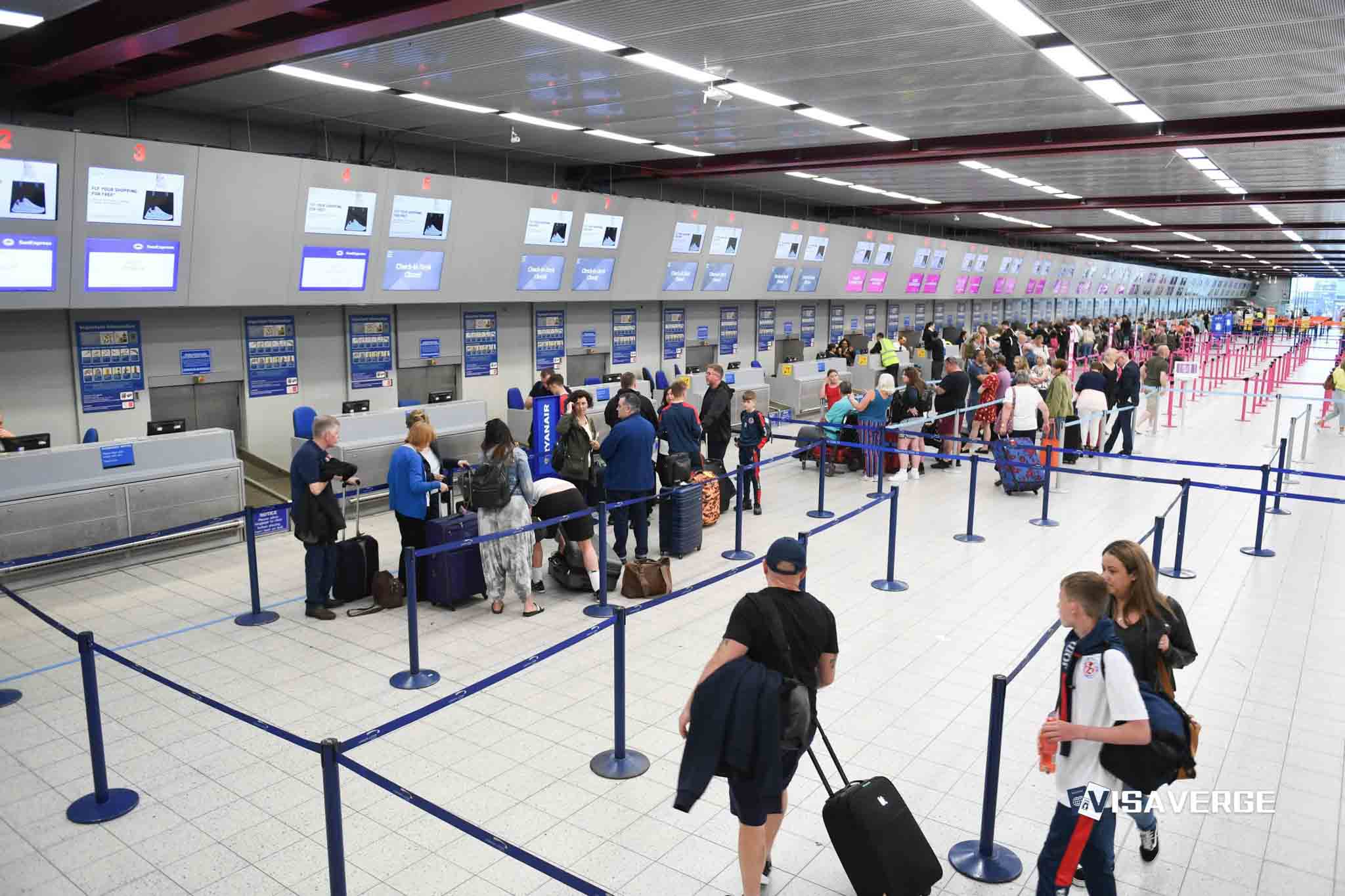
Under the concession, affected travelers may remain in South Africa, depart and re-enter without being declared “undesirable” until the deadline, provided they carry proof of application. That designation can carry bans of up to 5 years.
The move gives a longer window to foreign nationals whose cases remain unresolved while Home Affairs tries to reduce a large pending caseload. Authorities said they aim to clear the backlog within 18 months by adding adjudicators and launching a pilot e-visa portal for corporates in early 2027.
The extension also fits into a broader push to support tourism and business travel, especially from China. Arrivals from China reached 89% of pre-pandemic levels in 2025, helped by new direct flights from Shenzhen/Guangzhou and China’s reciprocal 30-day visa waiver for South Africans.
Tour operators said the extended concession gives more certainty for pre-planned itineraries. Brett Hoppe, CEO of Sun City Group, said his business was preparing for a “big influx” of Chinese tourists, with staff trained in Chinese culture.
Immigration Directive No. 7 of 2026 applies to several groups whose status depends on pending outcomes. That includes people awaiting decisions on waivers, those seeking long-term visas, and people who lodged appeals tied to visa outcomes.
Waiver applicants whose cases were pending as of March 30, 2026 received a temporary extension through June 30, 2027. They may leave and re-enter South Africa during that period, or abandon their applications, without penalty.
Long-term visa applicants also received travel protection up to June 30, 2027 while they await outcomes. For travelers from countries that are not visa-exempt, re-entry requires a port-of-entry visa.
Appeal applicants received an extension of their current status and may travel if they carry proof, including a rejection letter and a receipt. Their activities remain limited to those allowed under the original visa.
Home Affairs limited the concession to people who followed the formal application route before their visas expired. The directive covers submissions made through VFS Global, whether online or in person, and requires applicants to hold a submission receipt.
That means the amnesty does not cover every pending immigration matter. It excludes short-term visa applications, permanent residence permit applicants, who must maintain valid temporary status, and people who were not legally admitted or did not submit through VFS.
The scope matters for employers as well as travelers. The directive explicitly includes intra-company transfers and work-permit conversions, categories widely used by businesses moving staff between countries or regularizing work status inside South Africa.
For companies waiting on those outcomes, the extension removes the need for repeated short-term fixes while cases remain pending. Chinese multinationals in mining/renewables stand to benefit by avoiding 90-day repatriations for engineers.
The latest step builds on concessions that have been in place since 2022. Before this directive, authorities had extended the relief in 6-month increments.
By shifting from shorter renewals to a deadline of June 30, 2027, Home Affairs has given applicants, employers and travel operators a longer period to plan around unresolved cases. The department paired that longer runway with a compliance deadline: all pending matters must be finalized by June 30, 2027, or overstay penalties will apply.
That finalization requirement places the burden on applicants to ensure their cases are resolved before the concession ends. Once the deadline passes, the protection against overstay consequences falls away.
The concession is especially relevant for people already inside South Africa whose applications are tied to work, family or longer stays. Visitor, business and long-term visa holders form much of the affected group.
For those travelers, the directive changes what could happen at departure and re-entry. Instead of facing an “undesirable” finding while waiting for an application result, qualifying applicants may travel with proof that they filed in time and through the required channel.
The VFS Global requirement sits at the center of that protection. Applicants must show that they submitted before expiry and that the filing moved through the recognized online or in-person process.
That paper trail is also built into the travel rules for appeals. Appeal applicants must carry a rejection letter and receipt, and they may continue only the activities attached to the original visa while they wait.
For non-visa-exempt nationals in the long-term category, the port-of-entry visa requirement adds another step before return travel. Even with the concession in place, re-entry is not automatic without that visa.
Home Affairs tied the extension to operational changes meant to speed decisions. Authorities plan to add adjudicators and open a pilot e-visa portal for corporates in early 2027.
Those measures follow other travel and visa changes aimed at drawing visitors and making entry processing faster. The Trusted Tour Operator Scheme expanded to 110 operators by August 2025, and an e-visa system has offered 24-hour processing since November 2025.
Recent steps have already helped drive double-digit growth in Chinese arrivals. China has become a focus market as travel links recover and direct air connections expand.
The return of demand from that market has been reinforced by new direct flights from Shenzhen/Guangzhou. China’s reciprocal 30-day visa waiver for South Africans added another policy shift that tourism businesses see as helpful to two-way travel.
For tourism operators, immigration certainty matters beyond border formalities. Pre-planned itineraries, group tours and corporate travel often depend on passengers knowing they can enter and leave the country without later being blocked by an unresolved immigration record.
That is one reason the amnesty extension reaches beyond individual applicants. It affects hotels, tour companies, airlines and firms that move staff into South Africa on temporary assignments.
The same holds for sectors using specialized foreign workers. In mining and renewables, where Chinese multinationals rely on engineers moving across projects, the concession cuts the disruption tied to sending staff out of the country every 90 days while paperwork remains pending.
Home Affairs has not opened the relief to permanent residence permit applicants in the same way. People in that group must maintain valid temporary status rather than rely on the concession.
Short-term visa applicants also remain outside the measure. So do people who were not legally admitted or did not file through VFS Global, conditions that narrow the population protected by the extension.
Still, for those who qualify, the directive offers a clearer bridge between application and decision than the shorter concessions that came before. Applicants who filed before expiry now have a single deadline stretching to June 30, 2027 rather than another 6-month rollover.
That longer horizon could prove useful as Home Affairs tries to work through 62,000 cases in 18 months. Success will depend on whether more adjudicators and the planned pilot e-visa portal for corporates speed decisions fast enough to close the gap before the amnesty runs out.
For now, the department has given foreign nationals with eligible pending applications more time to stay compliant and keep moving. After June 30, 2027, that protection ends, and overstay penalties return for cases that are still not finalized.