(DOHA) — Qatar Airways temporarily suspended all flights to and from Doha after Qatari airspace closed following US and Israeli strikes on Iran, halting operations until at least February 28, 2026.
The suspension cuts through Qatar Airways’ hub-and-spoke network at Doha’s Hamad International Airport, where large waves of arrivals and departures normally feed connections across long-haul and regional routes. When airspace closes, aircraft cannot fly planned routings into the hub, and flights already en route must divert, return, or hold, triggering missed onward connections for passengers who expected to transfer in Doha. The airline warned that diversions remained ongoing as the closure rippled across its schedule.
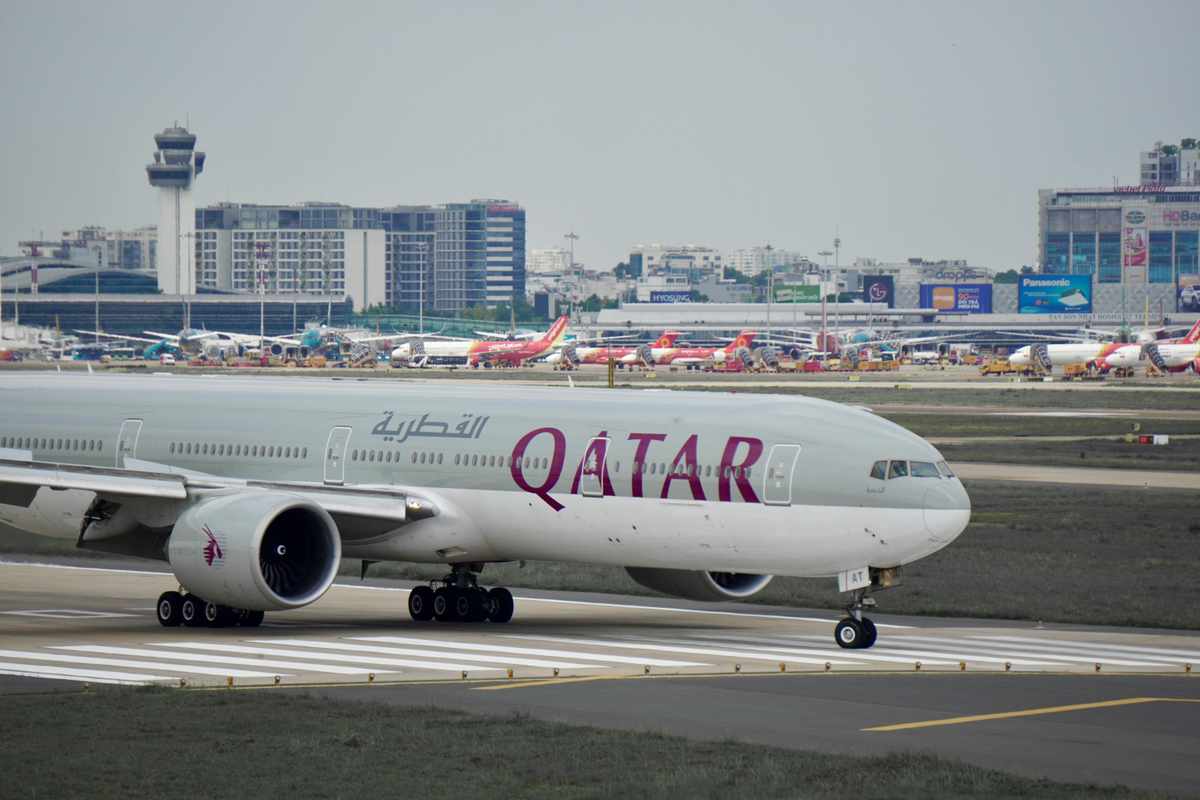
Passengers immediately began seeing flights rerouted to alternate airports or turned back to where they started, with knock-on effects across UK, European, Asian and US itineraries tied to Doha. Qatar Airways listed examples of flights from Birmingham, Edinburgh, Manchester, Dublin and Heathrow affected by the disruption, alongside services linked to Colombo and Dhaka, and routes involving Chicago and Boston. Diversions included aircraft sent to Muscat, Cairo and Athens, as well as flights returning to origin airports, the airline said.
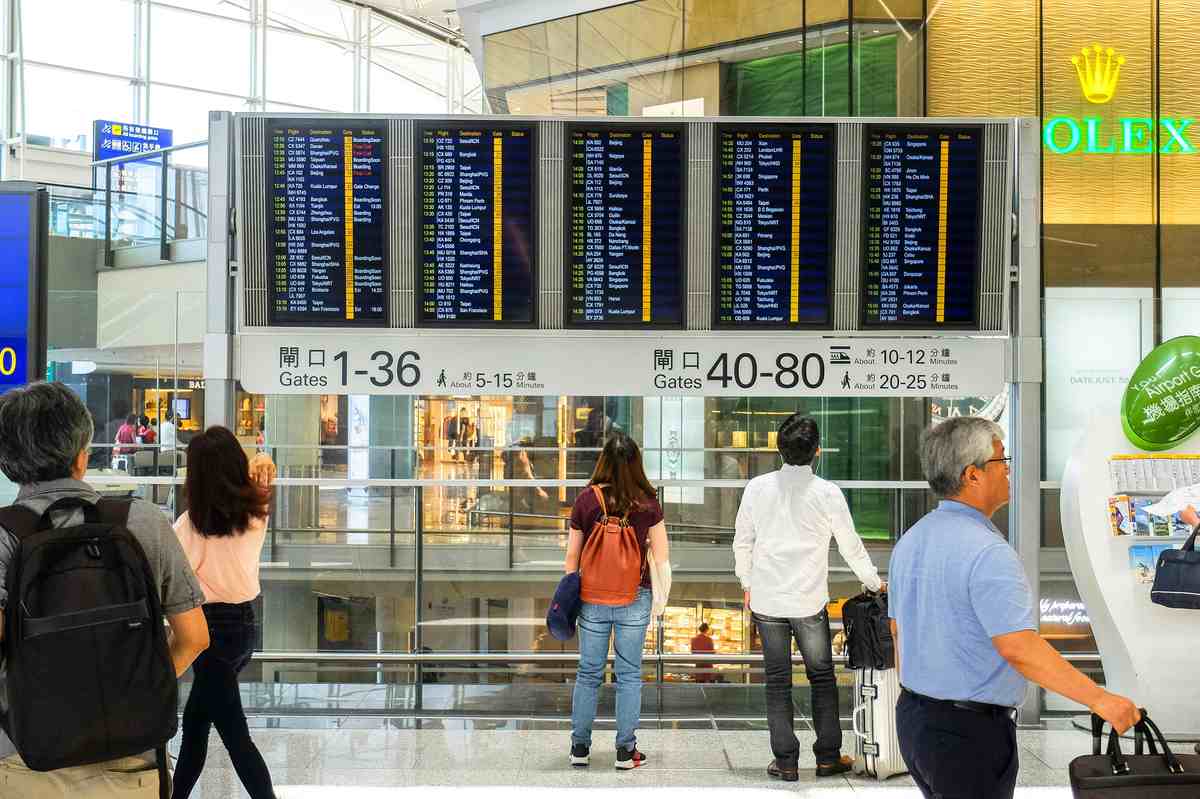
Ground operations also shifted into disruption mode at Hamad International Airport as crowds built around rebooking and connections that could not be made. Qatar Airways deployed extra ground staff at Hamad International Airport and key hubs to assist passengers on site. Even where travelers never entered Qatar, the hub’s outage can trap baggage and split itineraries, because checked luggage and onward boarding passes often depend on a smooth transfer in Doha.
For passengers caught mid-journey, the most visible impacts include long re-accommodation lines, delayed baggage reunification, and uncertainty around onward segments that were supposed to depart within tight connection windows. Diversions to nearby airports can also strand travelers far from their intended destination, forcing waits for new flight plans once airspace restrictions ease. As aircraft rotate out of sequence, later departures can inherit delays even if they never planned to fly over the closed airspace.
Qatar Airways said affected travelers should check flight status on the Qatar Airways app as operations remain fluid. In periods of widespread disruption, flight-by-flight updates can change quickly as crews hit duty-time limits and aircraft availability tightens, leaving some services cancelled and others retimed. The airline directed passengers to its official X account for real-time information, while warning that delays are expected once flights resume.
On ticket flexibility, Qatar Airways said full refunds or rebookings are available for tickets within the next 7 days, with no fees applying. The airline advised passengers to request refunds or changes through its digital channels or by contacting customer service for individualized assistance. With call centers typically strained during network-wide suspensions, the airline signaled that self-service through the website or app may move faster for straightforward changes than waiting for an agent.
Travelers seeking refunds or rebookings often need a clear paper trail once schedules begin shifting repeatedly, particularly when a trip involves multiple legs, hotels, or ground transfers. Qatar Airways’ guidance pointed passengers back to the airline’s own notifications and booking tools, which can provide a record of itinerary changes as they happen. Passengers can also keep booking confirmations and disruption notifications for later reference if a reroute or reimbursement question arises.
The duration of the outage remained tied to the airspace closure, which Qatar Airways said followed regional military actions. The carrier described the suspension as temporary, while emphasizing that restart conditions depend on when the airspace reopens and how quickly the airline can rebuild its global schedule. Even after flights restart, airlines typically face a backlog as aircraft and crews sit in the wrong places, forcing a staged return that can keep delays and misconnects moving through the system.
Once Qatar Airways restarts service, operational constraints at Hamad International Airport can slow the recovery as flights arrive in uneven waves instead of the tightly timed “banks” designed to maximize connections. Aircraft that diverted to Muscat, Cairo, Athens or returned to origin airports may need repositioning flights, and crews may require rest before they can operate again, cutting into immediate capacity. As the carrier works to restore UK, European, Asian and US routes, some passengers may see multiple itinerary changes as the airline re-times departures to match available slots and crew schedules.
For travelers with Doha in their itinerary over the next several days, Qatar Airways urged close monitoring of the airline’s own channels, including the Qatar Airways app and its official X account, because schedules can shift quickly during recovery. Passengers with tight connections may need to contact the airline early to protect onward travel, especially when a missed Doha transfer would break an entire itinerary. Qatar Airways also advised customers to prioritize safety given that the airspace closure stemmed from regional military actions, as travelers weigh whether to wait, reroute, or postpone trips while the airline works through the disruption.
Qatar Airways Suspends Doha Flights at Hamad International Airport
Qatar Airways has suspended all flights through February 28, 2026, following the closure of Qatari airspace due to regional military actions. This has caused massive disruption at Hamad International Airport, forcing diversions to cities like Athens and Muscat. The airline is facilitating full refunds and rebookings while warns of ongoing logistical challenges as crews and aircraft are repositioned once operations eventually resume.