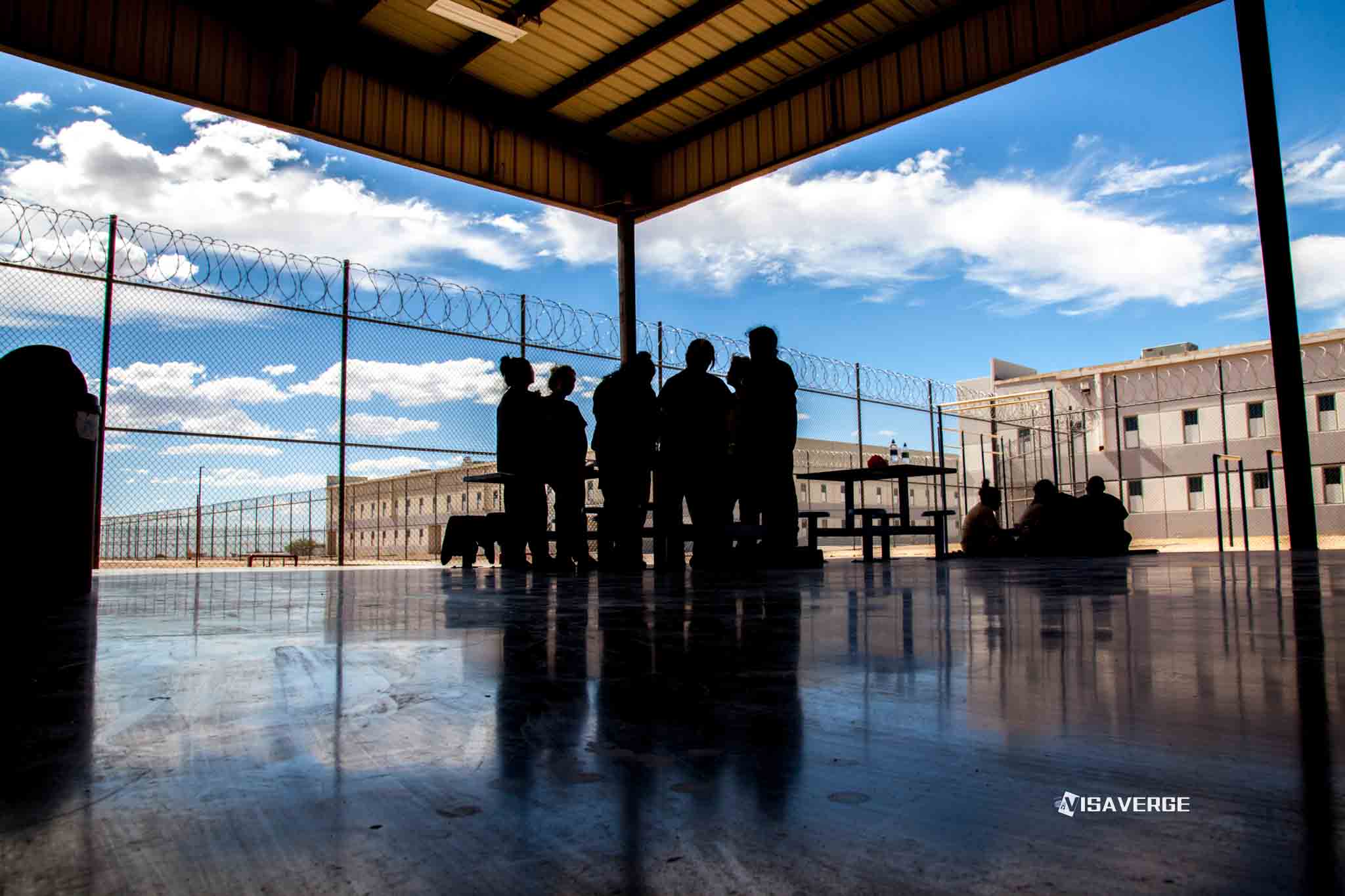
- Otero County commissioners renewed their ICE contract for five years during an emergency meeting on March 13.
- The renewal attempts to preempt New Mexico’s HB 9, which bans civil immigration detention starting May 20.
- Officials cite fiscal stability and debt-service requirements for the $21.5 million facility bond as primary motivations.
(OTERO COUNTY, NEW MEXICO) — Otero County commissioners approved a five-year renewal of the county’s contract with U.S. Immigration and Customs Enforcement on March 13, 2026, moving to keep the Otero County Processing Center running as New Mexico’s Immigrant Safety Act, HB 9, approaches its May effective date.
The vote renewed the agreement that underpins immigration detention operations at the Otero County Processing Center, known as OCPC, and set up a clash over whether the county can keep the facility operating once the state law takes effect. The contract term runs from March 16, 2026 to March 15, 2031, and the Immigrant Safety Act takes effect on May 20, 2026.

County leaders framed the renewal as a time-sensitive step to protect revenue tied to the facility and to avoid immediate financial fallout. State leaders framed the new law as a clear end to New Mexico’s participation in civil immigration detention.
OCPC is an immigration detention facility in Otero County that holds people in civil immigration custody for ICE. The contract renewal keeps the facility available for ICE detention and extends the county’s role in that system beyond the date when HB 9 begins restricting such agreements.
County Attorney R.B. Nichols told commissioners the agreement was the “lynchpin of the county’s fiscal stability.” Nichols said the facility’s revenues are the “sole pledged revenue source” for the Series 2007 Jail Project Revenue Bonds.
Without the contract, Nichols warned, the county would be unable to meet a $4,986,825 debt-service payment due on April 1, 2026. County documents also describe the facility as producing approximately $2 million monthly in revenue for the county.
Governor Michelle Lujan Grisham signed the Immigrant Safety Act on February 5, 2026, and connected the new law to national tensions over immigration enforcement and detention. “It’s complicated. There isn’t anyone in this room. and in America troubled, concerned, and quite frankly afraid at what they are seeing on national news,” Lujan Grisham said upon signing the bill.
The governor also said New Mexico is “no longer in this business practice” of civil immigration detention. HB 9 bars public bodies from entering into, renewing, or maintaining agreements for civil immigration detention, setting up a direct conflict with Otero County’s effort to lock in a multi-year contract term before the law’s effective date.
The renewed ICE agreement carries Contract No. 70CDCR26DIG000010. County documents show federal authorities transmitted the final contract to the county on March 12, 2026, three days before the prior agreement expired.
Otero County officials described the timing as essential, and county documents characterize the renewal as occurring during a “window” before the new law takes effect. Commissioners used that timing as a strategy to “preempt” the state ban.
The financial pressure behind the vote extends beyond monthly revenue. Otero County carries roughly $21.5 million in outstanding bond debt for the facility’s construction, and the debt matures in April 2028.
That debt timeline, paired with the upcoming April 1 debt-service payment, shaped county arguments that the contract was required to sustain county finances and meet existing obligations. The renewal also preserved a revenue stream county officials tie to services and debt servicing.
Commissioners approved the contract during an emergency meeting that altered standard notice procedures. The board adopted Resolution No. 03-13-26/114-62 under a formal Declaration of Emergency, citing NMSA 1978 § 10-15-1(F).
The emergency mechanism bypassed the standard 72-hour notice for public meetings. By using an emergency declaration, the county changed the usual timing expectations for public awareness and participation around a high-stakes vote that affects the facility’s future and the county’s financial position.
Questions about transparency and procedure sit alongside the larger legal fight brewing around HB 9’s “renewing” and “maintaining” language. The county’s strategy depends on whether a contract executed before May 20 can still be considered prohibited “maintenance” once the law takes effect, and how state enforcement efforts would apply to a contract term already in place.
Supporters of continued detention operations argue federal authority limits how far a state can go in restricting cooperation with federal immigration detention. Proponents of the facility, including State Senator Jim Townsend, argue the state ban violates the Supremacy Clause and the doctrine of intergovernmental immunity.
Townsend and other proponents cite a July 2025 Third Circuit ruling, CoreCivic, Inc. v. Governor of New Jersey, as a comparator in the debate over state limits and federal detention contracting. The case has become a reference point for those arguing that similar state-level bans collide with federal authority, even as New Mexico’s law and enforcement posture set up a distinct dispute.
The contract renewal also sharpened the risk of litigation for counties, facility operators, and state enforcement under statutes aimed at limiting civil immigration detention agreements. The conflict touches on how states regulate contracts and facilities within their borders while the federal government carries out immigration detention.
Beyond legal theory and bond math, the contract affects people held at OCPC and the local workforce tied to the facility. Advocacy groups including the ACLU of New Mexico and Innovation Law Lab have documented what they describe as long-standing issues at OCPC, including medical neglect, retaliatory solitary confinement, and “torture-like” conditions.
The renewal means the facility can continue holding up to 1,089 individuals at a time under the ICE agreement. Capacity, in practical terms, determines the scale of detention operations and the number of people who can be held in the facility at once under federal civil immigration authority.
OCPC is operated by the private firm Management & Training Corporation, or MTC. The county also ties the facility to jobs and local economic dependence, arguing that OCPC supports 284 local jobs and generates gross receipts tax revenues that fund county services.
County documents and officials have cast the renewal as immediate job protection for the facility’s workforce. The renewal provides job security for approximately 300 employees at the facility, reflecting the workforce footprint tied to continued ICE operations under the county’s agreement.
The competing claims — financial necessity and jobs on one side, and a state policy decision to end civil immigration detention agreements on the other — now converge on the weeks before May 20. With HB 9’s effective date approaching, Otero County’s decision keeps the detention contract in place while setting the stage for disputes over whether the state can force an end to the agreement after the law takes effect.
Readers can review the HB 9 bill text through the New Mexico Legislature’s website at nmlegis.gov. ICE posts detention facility information for OCPC on its site at ICE’s Otero County Processing Center page, and Otero County publishes agendas, minutes, and meeting materials through its Board of County Commissioners page.