- A Bombardier CRJ900 collided with a fire truck at LaGuardia Airport, resulting in two pilot fatalities.
- The NTSB is investigating air traffic control staffing and the sequence of contradictory radio instructions given.
- While 72 passengers survived, 41 people were hospitalized following the high-speed impact on Runway 4.
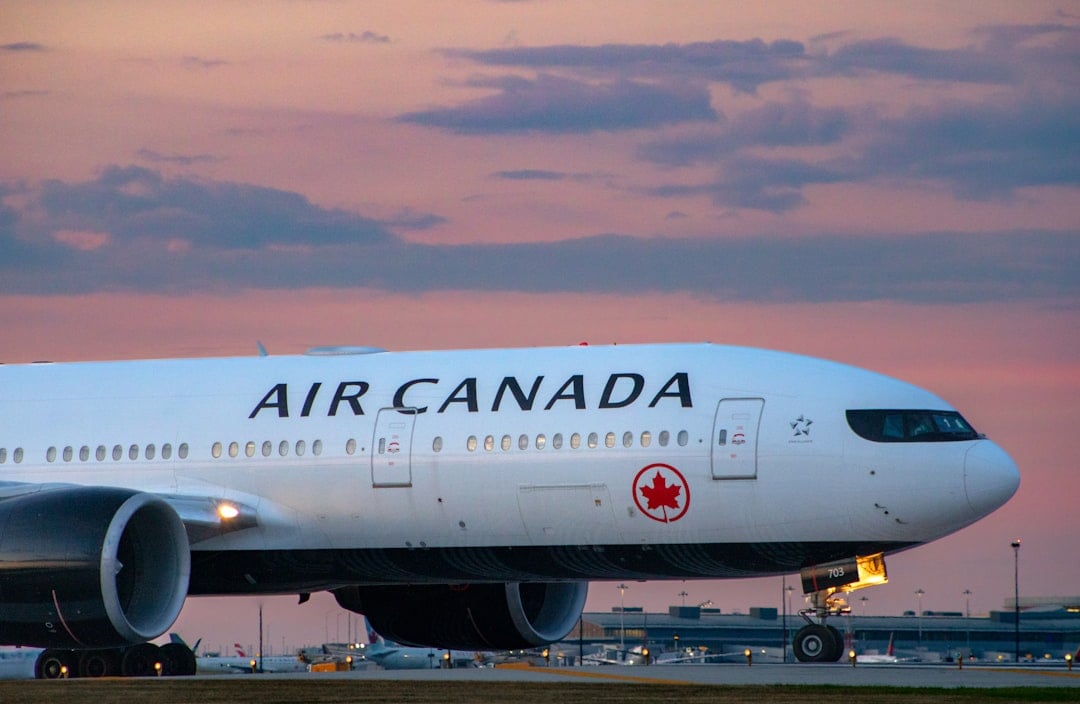
(NEW YORK, UNITED STATES) — Federal investigators said Air Canada Express Flight 8646 collided with a Port Authority Police fire truck late on March 22, 2026, on Runway 4 near the Delta area at LaGuardia Airport, killing the two pilots, injuring dozens of others and prompting scrutiny of air traffic control operations at one of the country’s busiest airports.
The crash involved a Bombardier CRJ900 carrying 72 passengers and 4 crew. LaGuardia shut down briefly after the collision and later partially reopened, as investigators began collecting tower recordings, runway data and other evidence tied to the late-night accident.
NTSB Chair Jennifer Homendy said on March 23, 2026, that investigators had gathered information about staffing in the LaGuardia tower but would not release details until they verified them.
“We deal in facts. We don’t speculate. We don’t take one person at their word,”
Homendy’s comments placed tower staffing questions at the center of the early inquiry, alongside the death toll, survivor injuries and the sequence of instructions given on the airfield before impact. The NTSB is also examining how the airport responded in the minutes after the collision and how quickly operations could resume safely.
Flight 8646 struck the fire truck while the emergency vehicle was responding to a suspicious odor on a United jet, according to the information released by investigators and federal officials. The collision happened around 11:37-11:40 p.m., after the aircraft had landed and while it was moving at 93-105 mph seconds after touchdown.
“Truck 1 and Company, cross four, Delta,”
Audio captured the ground controller clearing the truck to cross the runway with the instruction, then urgently reversing that clearance with, “Stop, Truck 1, stop stop.” Investigators have not assigned blame and have said the inquiry remains in its early stages.
All 72 passengers survived, though some suffered serious injuries. Both flight attendants also survived, including one who was reported to have tumbled from the wreckage while still strapped in.
The two officers on the fire truck survived as well. In all, 41 people were hospitalized, and 7 remained admitted as of the afternoon of March 23.
Those casualty figures made clear the scale of the human toll beyond the deaths in the cockpit. Emergency teams moved survivors from the damaged aircraft and truck as the airport’s overnight operation gave way to a widening federal investigation.
Homendy said the NTSB had collected information on staffing in the LaGuardia tower, but she declined to answer detailed questions before investigators could verify the facts. Among the questions left unresolved were how many controllers were in the tower, what positions they were assigned, the details of their shifts, their experience levels, and whether one controller was handling both ground and tower duties.
She said the shift under review was preliminarily a mid-shift possibly from 10-10:30 p.m. to 6 a.m. But Homendy stressed that investigators would not treat early information as established fact before checking it against records and interviews.
Her comments also clarified one point that had drawn immediate attention after the crash: more than one air traffic controller was in the tower at the time. Even so, the NTSB did not release staffing specifics on March 23.
Investigators plan to interview the air traffic controller involved, along with others who may have relevant information about what happened on the field and in the tower. Homendy said that controller was “typically. removed from duty,” while directing questions about the person’s current status to the Federal Aviation Administration.
She added that investigators also intend to speak with “others that were in the tower or maybe not even in the tower,” suggesting the witness pool could extend beyond the controller who handled the movement of the aircraft and the truck. That approach reflects the NTSB’s effort to reconstruct not only the radio exchanges but also who observed the event in real time.
The investigation reaches well beyond tower staffing. NTSB teams are examining air traffic control operations as part of the broader crash inquiry, along with the cockpit voice recorder, the flight data recorder, airport surface detection alerts, surveillance video, tower communications and training records.
Investigators recovered the cockpit voice recorder and confirmed that it was undamaged. They scheduled flight data recorder analysis to begin on March 24.
Roughly 25 specialists were expected on site as the agency built out the investigation. Some logistics were affected by TSA lines nationwide, which Homendy said had delayed parts of the response.
That evidence-gathering effort is designed to answer several questions at once: what instructions were issued, what each crew understood, what airport systems showed and how the aircraft and truck moved on the runway in the seconds before impact. The NTSB has not released any final finding on cause.
Transportation Secretary Sean Duffy deferred any judgment about air traffic control decisions to the NTSB. His stance matched the broader message from federal officials, who have emphasized that investigators must verify the staffing picture, radio calls and movement data before drawing conclusions.
Federal officials described the LaGuardia tower as “very well staffed,” though they did not provide exact staffing numbers. That left a gap between the broad official characterization and the detailed facts investigators said they were still checking.
Airport operations were heavily disrupted through the night and into the following day. LaGuardia closed briefly after the collision, and the shutdown halted runway activity while emergency responders secured the scene and investigators began their work.
The airport later partially reopened by 2:00 p.m. March 23. That partial reopening allowed some operations to resume, but the accident still left a visible effect on schedules and runway use as crews preserved evidence and officials managed the transition from emergency response to formal investigation.
The sequence of events mattered not only for travelers but for investigators trying to understand the operating environment. The collision occurred in a narrow late-night window when visibility, controller workload, runway occupancy and emergency vehicle movements can all become central facts in a runway incursion inquiry.
A retired air traffic controller identified as Harvey said there could be “other witnesses in the tower.” He also said runway incursions are a known FAA issue, though rare because controllers and vehicle operators use specific phraseology and procedures intended to prevent misunderstandings on active runways.
That perspective did not come from investigators, and federal officials have not adopted it as a finding. Still, it highlighted why the NTSB is examining who was present in the tower, what they were doing and what they may have seen or heard when the aircraft and truck converged on Runway 4.
Runway incursions have long been an area of concern for aviation regulators because they can involve aircraft, service vehicles or emergency units operating in close proximity on the airfield. Standard phraseology and operating procedures exist to reduce those risks, especially during crossings and handoffs between ground and local control.
In this case, the radio audio released so far has made the controller’s instructions an early focus. But the NTSB has said the radio exchange alone will not determine what happened without support from recorders, alert systems, video and interviews.
Homendy’s emphasis on verification reflected that broader approach. Her refusal to release incomplete staffing details also signaled that investigators want documented answers on controller assignments and duties before addressing the growing public attention on the LaGuardia tower.
Air Canada said it was fully cooperating with investigators. The airline’s chief executive made clear that the carrier would support the federal inquiry as authorities worked through the evidence from the cockpit, the tower and the airfield.
The FAA, not the NTSB, is expected to address questions about controller employment status or personnel guidance. That division of responsibility has shaped the public messaging around the crash, with the NTSB focused on evidence collection and the FAA handling workforce matters.
For now, the unanswered questions remain tightly defined: who was assigned where in the tower, how instructions were issued and understood, what the airport’s alert systems detected, and how the aircraft and fire truck came to occupy the same runway space. What is already established is the toll left behind — two pilots dead, dozens injured, survivors pulled from the wreckage, and an investigation that Homendy said will proceed on one standard alone:
“We deal in facts. We don’t speculate. We don’t take one person at their word.”