(INDIA) India’s Ministry of External Affairs (MEA) has told the Rajya Sabha that 8,96,843 people gave up citizenship between 2020 and 2024. The year-wise totals in the MEA’s written reply show the scale clearly: 85,256 (2020), 1,63,370 (2021), 2,25,620 (2022), 2,16,219 (2023), and 2,06,378 (2024).
For many families tied to the United States 🇺🇸 through U.S. visas, green cards, and later naturalization, these numbers are not abstract. They match real-life moments when a long immigration journey turns into a citizenship decision, followed by new rules for passports, India travel, and taxes.
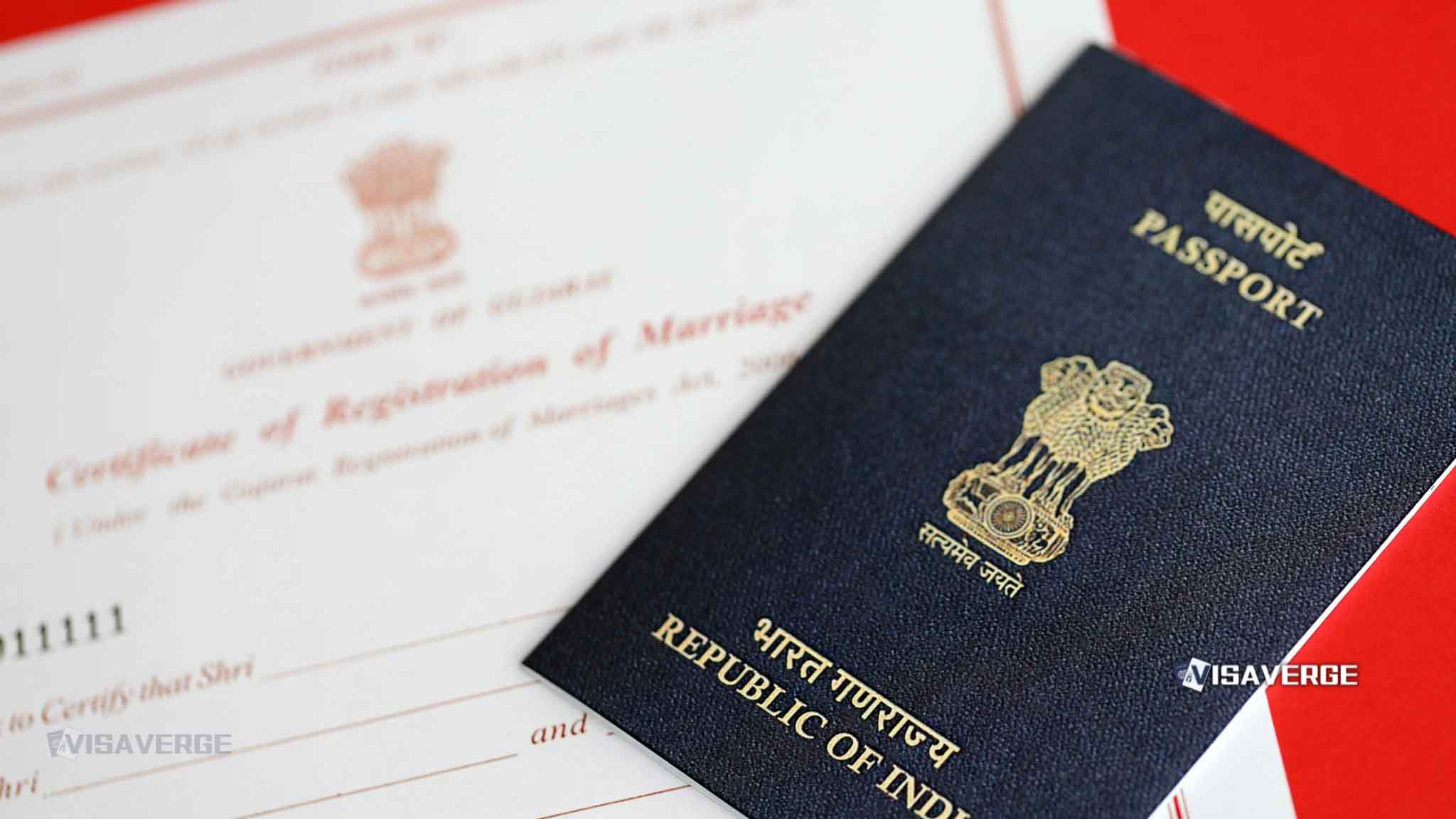
The most common reason is structural: India does not allow dual citizenship. So when an Indian citizen voluntarily becomes a citizen of another country, Indian law treats that as an end to Indian citizenship.
In the U.S. context, this usually happens at the final step—U.S. naturalization—not earlier in the visa or green card process. VisaVerge.com reports that confusion often starts when people assume a green card forces a change in nationality; it doesn’t.
What follows is a practical, step-by-step guide to what many Indians experience on the U.S. path, what to do when naturalization happens, and how to stay compliant with India’s passport and travel rules.
The typical U.S. journey: where citizenship fits in (and where it doesn’t)
A common immigration arc for Indians in the United States 🇺🇸 looks like this:
- F-1 student visa (study)
- OPT (Optional Practical Training; work permission linked to F-1)
- H-1B (specialty occupation work visa)
- Employment-based green card (lawful permanent residence)
- U.S. naturalization (becoming a U.S. citizen)
The key point: you do not need to give up Indian citizenship to get U.S. visas or a green card. Many people keep traveling on an Indian passport for years while they study, work, and even after they become permanent residents.
The fork in the road usually comes only when someone chooses to naturalize as a U.S. citizen. U.S. government guidance says U.S. law does not force a citizen to hold only one nationality, even though the naturalization oath includes renunciation language. Whether a person actually loses their prior citizenship depends on the other country’s rules—India’s being strict on this point under its citizenship law.
Stage-by-stage process: from “planning to naturalize” to “after the oath”
This process focuses on actions you control and what authorities often ask for. Steps can overlap, but the order below reduces delays.
Step 1: Before you file for U.S. naturalization, map your India-side paperwork
- List your current and past Indian passports (especially the most recent one).
- Document your U.S. immigration timeline (F-1/OPT/H-1B/green card).
- Note your expected travel needs to India after naturalization (family visits, property matters, emergencies).
This is also a good time to talk to a cross-border tax professional, because U.S. tax residency rules often start affecting families before citizenship (more on taxes below).
Step 2: File for U.S. naturalization (and keep proof of each milestone)
Most applicants file Form N-400 to apply for naturalization with U.S. Citizenship and Immigration Services (USCIS). Use the official form page so you get the current edition and instructions: Form N-400, Application for Naturalization.
Keep copies of your:
- Filing receipt
- Interview notice
- Oath ceremony notice
Even if Indian consular processing does not always demand every U.S. document, strong records help when timelines get tight (for example, if you need to fly to India soon after becoming a U.S. citizen).
Step 3: The day you become a U.S. citizen: stop using your Indian passport
Once you naturalize, treat your Indian passport as a document you should no longer use for travel. Indian mission guidance warns that holding or using an Indian passport after acquiring foreign citizenship can lead to penalties and delays in consular services.
The source material notes that possession by foreign nationals is treated seriously under Section 12(1A) of the Passports Act (a “cognizable offense” in the language used in consular guidance). In plain terms: don’t take chances here. If you’ve naturalized, do not book travel on the Indian passport.
Step 4: Surrender/renounce the Indian passport through the Indian mission process
Because India does not allow dual citizenship, former citizens typically complete a passport surrender/renunciation workflow through the nearest Indian mission or its service partner (often VFS Global, depending on the country and city).
Operational points many applicants face:
- Surrender first (mandatory), then OCI in many workflows.
- Indian passports are typically stamped “cancelled due to acquiring foreign nationality.”
- Some people follow simplified rules if they naturalized before June 1, 2010, as referenced in consular guidance.
- A commonly cited processing window is 8–12 weeks (this can vary by consulate and season).
- Fees vary by jurisdiction; examples seen in some places include INR 7,000–8,000 plus separate surrender-related charges. Always confirm the current fee list with your specific mission because fee tables change.
For India’s official citizenship services portal used in many processes, see: Indian Citizenship Online.
Step 5: Choose your India travel permission after naturalization: OCI or visa
After you’ve given up Indian citizenship due to foreign naturalization, you generally travel to India on your foreign passport with either:
- OCI (Overseas Citizen of India), or
- An Indian visa, depending on eligibility and urgency
Key OCI features (it is not dual citizenship):
- Multiple-entry, multi-purpose, life-long visa to visit India.
- Exemption from FRRO/FRO registration for any length of stay.
- Broad parity with NRIs in many areas, with listed exclusions such as voting or government jobs.
Important operational detail: Indian consular systems commonly require proof of passport surrender/renunciation before they will process OCI and certain visa services. In practice, time your surrender filing so you are not left with an urgent trip and no valid India travel document.
Step 6: Plan for timing gaps so you’re not stuck without travel documents
Many applicants hit a stressful window right after U.S. naturalization:
- You may need to apply for a U.S. passport.
- You must surrender your Indian passport.
- You may want OCI, but OCI itself takes processing time.
To reduce risk, build a buffer. If you have a predictable trip (a wedding, medical care for a parent, school schedule), avoid placing it immediately after your oath ceremony if you can.
Step 7: Taxes often change earlier than citizenship—don’t wait for the passport switch
The source material stresses that the bigger impact often starts before citizenship, and sometimes even before a green card, depending on U.S. tax residency rules.
The IRS states that U.S. citizens and resident aliens are generally taxed on worldwide income, and that U.S. “resident” status can be triggered through the green card test or the substantial presence test. The official IRS overview is here: IRS: Alien residency—green card test and substantial presence test.
This is why families with income, property, or accounts in both India and the United States 🇺🇸 often coordinate immigration steps with tax planning. Immigration milestones can affect reporting duties even when your citizenship hasn’t changed yet.
What Indian government data does—and does not—say about this trend
The MEA’s Rajya Sabha reply gives reliable totals and the year-wise breakdown, but it has limits.
A question asked for the income and occupation profile of those giving up citizenship. The MEA response said no such data is available with the ministry. In Parliament responses referenced in the source material, Minister of State Kirti Vardhan Singh is cited in connection with these disclosures.
So the dataset is strong on “how many” and “when,” but it cannot, by itself, explain job categories, pay ranges, or which states people came from. Readers should be careful about broad claims that go beyond the count and trend.
Key takeaway: The numbers show scale and trend, but not who these people were economically or geographically.
A simple compliance checklist after you naturalize in the United States 🇺🇸
If you’ve just become a U.S. citizen and previously held Indian citizenship, these steps reduce avoidable problems:
- Stop using the Indian passport immediately after naturalization.
- File the passport surrender/renunciation process with your Indian mission promptly.
- Don’t assume OCI is instant; expect processing and build time.
- Travel to India only with the correct permission route (OCI or visa) on your foreign passport.
- If you have cross-border finances, consult a qualified professional about U.S. worldwide income reporting rules and how your status (green card or presence days) affects you.
If you need, I can convert this into a printable checklist or a timeline planner keyed to common oath schedules and travel events.
India’s MEA reported 8,96,843 citizens renounced Indian citizenship from 2020–2024, with the largest annual count in 2022. Indians who naturalize in the U.S. must stop using Indian passports and follow a surrender/renunciation process through Indian missions before applying for OCI or visas. Key steps include documenting passports and U.S. immigration history, filing Form N-400, timing travel around processing windows, and coordinating cross-border tax planning.