- Nepali authorities charged 32 individuals in a $19.69 million insurance fraud scheme involving Everest rescue operations.
- Guides allegedly used baking soda to poison tourists and mimic altitude sickness for unnecessary helicopter evacuations.
- The organized network included hospitals, helicopter firms, and agencies that falsified medical records for insurance payouts.
(NEPAL) — Nepali authorities charged 32 individuals in a $19.69 million insurance fraud scheme on Mount Everest routes, accusing trekking guides, agency owners, helicopter operators, hospital administrators and medical staff of poisoning tourists to trigger helicopter rescues and inflate travel insurance claims.
The case centers on allegations that guides tampered with trekkers’ food or medicines with substances such as baking soda or powder to induce symptoms that looked like altitude sickness, including vomiting, nausea and weakness. Investigators said the scam led to unnecessary evacuations by helicopter, with each rescue costing $4,000 to $12,000.
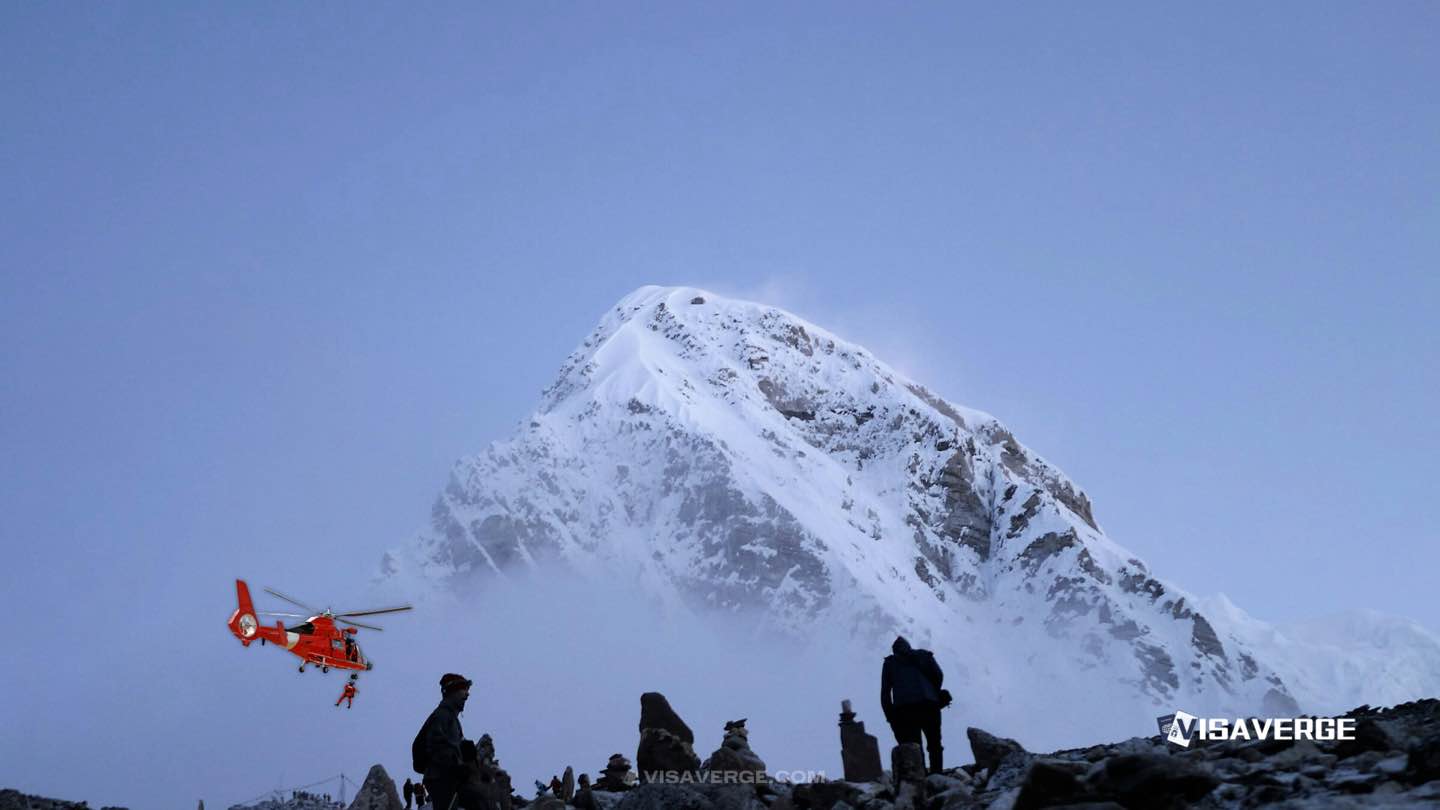
Police filed 33 cases in total under organized crime and fraud laws. A police official described the operation as “organised and systematic,” saying it stretched across Nepal’s tourism ecosystem.
The allegations add a new layer of scrutiny to the business built around Mount Everest, where genuine medical emergencies can unfold quickly and where helicopter rescues often become urgent decisions. That urgency, investigators found, created openings for false claims because insurers had limited time to verify whether an evacuation was medically necessary.
Authorities said the racket surfaced in 2018 and worsened over time. In response, Nepal introduced stricter rules requiring all rescues to be reported to the tourism department and tourist police.
Investigators said the fraud persisted despite those changes. They confirmed over 300 fake rescues from 2022 to 2025, with payouts supported by forged flight records, invoices and hospital documents.
Under the alleged scheme, guides first made trekkers sick and then pushed them toward evacuation. Once tourists showed symptoms, they were pressured into leaving the trail by helicopter even when the rescue was not needed, according to the allegations.
The flights took patients to partner hospitals in Kathmandu, including Swacon International Hospital, Era Health Centre, CIWEC Hospital, Vayodha Hospital, Grande Hospital and Norvic International Hospital. Authorities allege those facilities exaggerated diagnoses, fabricated treatments and falsified medical reports so insurers would pay.
Investigators also focused on the billing practices of helicopter companies. They said firms including Heli Everest, Manang Air and Air Dynasty Heli Services charged for fake or inflated rescues and in some cases listed multiple trekkers per flight individually.
Money from the claims was then split among agencies, pilots, brokers, guides and medical facilities, authorities said. That structure, investigators contend, turned isolated fraud into an organized business model tied to high-risk tourism.
The accusations cut across several layers of the trekking and rescue trade. Authorities said six hospitals and three helicopter companies are under probe, while others are also being scrutinized.
The investigation portrays a system in which each stage of a medical evacuation could be manipulated. A tourist became ill, a guide pressed for extraction, a helicopter flew, a hospital documented the case, and insurers received records that authorities now say were forged or inflated.
Because the scheme allegedly relied on medical symptoms that can resemble real altitude illness, it exploited one of the hardest parts of mountain travel to challenge in real time. Vomiting, nausea and weakness can all prompt immediate concern at high altitude, where delays in treatment can carry serious risks.
That pressure left insurers with little room to question the rescue before paying, according to the findings. By the time companies reviewed a claim, the helicopter flight had already taken place and the patient was already in a hospital.
The alleged use of substances such as baking soda or powder sharpened the criminal accusations. Authorities said guides used those materials to make trekkers appear sick enough to justify evacuation.
The scale of the case stands out in a country where trekking and climbing draw visitors from around the world. Mount Everest and nearby routes depend heavily on trust between foreign tourists and the local guides, aviation firms and hospitals that support them in remote terrain.
Travel insurers had already raised alarms before the charges were filed. In January 2026, Traveller Assist, an Ireland-based underwriter, urged Nepal’s tourism ministry to prosecute firms it said were linked to false rescue claims.
Danny Kaine, Head of Assistance at Traveller Assist, said, “the fraud is still happening in Nepal and the fact that not a single charge has been laid against those already found responsible means that these fraudulent companies think they are untouchable.”
His statement reflected concern that enforcement had not kept pace with repeated complaints from insurers. The January 2026 intervention came after years of warnings that false helicopter rescues were driving up costs and eroding confidence in claims from Nepal’s trekking corridors.
Phil Sylvester, head of communications at World Nomads, described the pressure insurers faced once a trekker had already been removed from the mountainside and placed in care. Operators often present insurers with a “fait accompli,” he said.
Sylvester said patients could be held in hospitals with passports kept as “ransom” before payment demands were made. His account pointed to the leverage that clinics and rescue operators can gain once a traveler is off the trail and waiting for discharge.
Those concerns help explain why helicopter rescues sit at the center of the alleged fraud. In a genuine emergency, insurers, families and tour operators usually want fast action, not a prolonged dispute over whether a rescue is necessary.
That same speed can make oversight harder. A flight launched from a high-altitude route, followed by hospital paperwork and insurance billing, creates a chain of claims that can be difficult to test while the patient is in distress.
Authorities said forged flight records, invoices and hospital documents helped hold that chain together. Investigators tied those documents to over 300 fake rescues from 2022 to 2025.
The amounts involved also help explain the breadth of the investigation. At $4,000 to $12,000 per rescue, even a modest number of false evacuations could generate large insurance payouts, especially when the billing included inflated medical treatment and separate charges tied to the same flight.
By alleging that some operators listed multiple trekkers per flight individually, investigators suggested companies could turn one helicopter journey into several reimbursable claims. That would magnify the value of each evacuation for every business linked to it.
The hospitals named in the case occupy an essential place in Nepal’s rescue pipeline because trekkers flown out of mountain regions often need immediate assessment after landing. Authorities now say some facilities turned that role into part of the fraud by creating documentation that justified payments.
The case also places renewed attention on the relationship between tourism growth and regulation in Nepal. Adventure travel depends on rescue systems that can move quickly in dangerous terrain, but the same systems can become vulnerable when insurers must rely on operators, hospitals and paperwork generated by businesses that stand to profit from a claim.
For travelers, the allegations raise questions about how much they can rely on local advice when symptoms appear on the trail. A guide’s recommendation to evacuate can be hard to challenge, particularly on Mount Everest routes where altitude sickness is a known threat and delay can be dangerous.
For insurers, the investigation highlights a problem that extends beyond one false invoice or one unnecessary flight. Authorities described a network that stretched across tourism services, medical care and aviation, with each participant allegedly reinforcing the others’ claims.
Nepal’s stricter rescue reporting rules were meant to curb that pattern by forcing operators to notify the tourism department and tourist police. The charges suggest authorities now believe the fraud was entrenched enough to survive those controls for years.
The outcome could matter well beyond the current defendants. Repeated false claims can push up the cost of covering treks and climbs, particularly in destinations where helicopter rescues are common and difficult to verify before payment.
That could affect both insurers deciding whether to write policies for high-risk travel and tourists weighing the cost of coverage before a trip. In markets built around extreme terrain, trust in rescue and medical claims plays a direct role in what travelers pay and what insurers will cover.
The case now puts that trust under pressure at one of the world’s most famous adventure destinations. Kaine’s warning captured the concern for companies that insure those journeys: “the fraud is still happening in Nepal and the fact that not a single charge has been laid against those already found responsible means that these fraudulent companies think they are untouchable.”