Spanish
Official VisaVerge Logo Official VisaVerge Logo
  • Home
  • Airlines
  • H1B
  • Immigration
    • Knowledge
    • Questions
    • Documentation
  • News
  • Visa
    • Canada
    • F1Visa
    • Passport
    • Green Card
    • H1B
    • OPT
    • PERM
    • Travel
    • Travel Requirements
    • Visa Requirements
  • USCIS
  • Questions
    • Australia Immigration
    • Green Card
    • H1B
    • Immigration
    • Passport
    • PERM
    • UK Immigration
    • USCIS
    • Legal
    • India
    • NRI
  • Guides
    • Taxes
    • Legal
  • Tools
    • H-1B Maxout Calculator Online
    • REAL ID Requirements Checker tool
    • ROTH IRA Calculator Online
    • TSA Acceptable ID Checker Online Tool
    • H-1B Registration Checklist
    • Schengen Short-Stay Visa Calculator
    • H-1B Cost Calculator Online
    • USA Merit Based Points Calculator – Proposed
    • Canada Express Entry Points Calculator
    • New Zealand’s Skilled Migrant Points Calculator
    • Resources Hub
    • Visa Photo Requirements Checker Online
    • I-94 Expiration Calculator Online
    • CSPA Age-Out Calculator Online
    • OPT Timeline Calculator Online
    • B1/B2 Tourist Visa Stay Calculator online
  • Schengen
VisaVergeVisaVerge
Search
Follow US
  • Home
  • Airlines
  • H1B
  • Immigration
  • News
  • Visa
  • USCIS
  • Questions
  • Guides
  • Tools
  • Schengen
© 2025 VisaVerge Network. All Rights Reserved.
News

Judge Bars Federal Arrests and Pepper Spray on Peaceful Minneapolis Protesters

A federal judge has issued an injunction protecting peaceful protesters in the Twin Cities from federal arrests and crowd-control weapons. The ruling limits the tactics of ICE and Border Patrol agents unless they can prove reasonable suspicion of a crime. This decision arrives amid heightened tensions following a fatal shooting and a historic surge of federal law enforcement agents in the Minneapolis metropolitan area.

Last updated: January 17, 2026 7:35 am
SHARE
Key Takeaways
→A federal judge barred crowd-control munitions against peaceful protesters and observers in Minneapolis and St. Paul.
→The injunction restricts vehicle stops unless agents possess reasonable suspicion of interference or a specific crime.
→Legal protections follow a massive federal enforcement surge and the controversial fatal shooting of Renee Good.

MINNEAPOLIS — U.S. District Judge Kate Menendez barred federal agents in Minneapolis from arresting, detaining, or using pepper spray, tear gas, or other crowd-control munitions against peaceful protesters and observers, unless there is reasonable suspicion of interference or crime.

Menendez issued the 83-page injunction on Friday (local time) in response to a lawsuit filed on December 17 against the Department of Homeland Security (DHS) and other agencies by six protesters and observers.
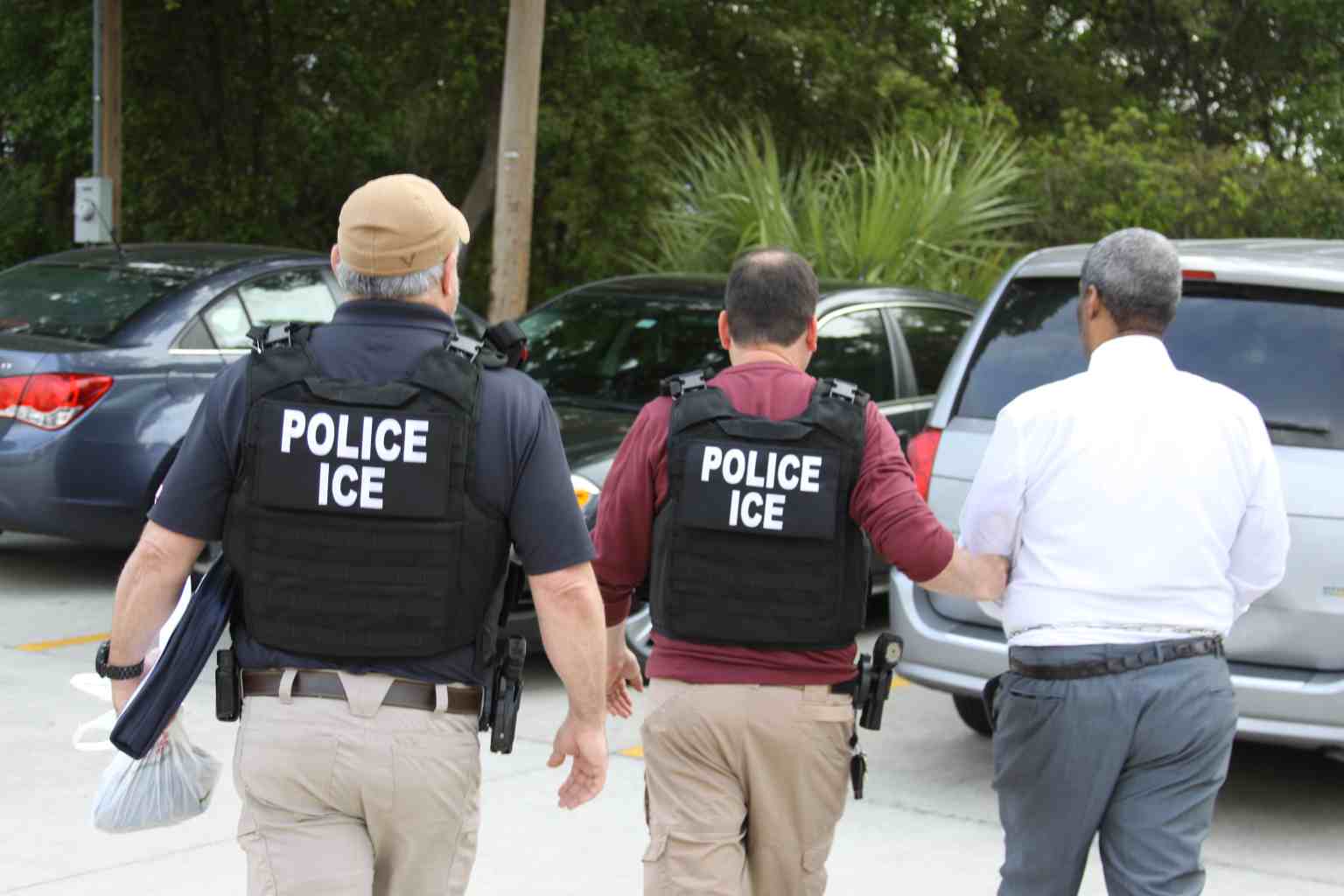
Judge Bars Federal Arrests and Pepper Spray on Peaceful Minneapolis Protesters

The order also restricts vehicle stops, prohibiting federal agents from stopping or detaining drivers and passengers in vehicles without evidence of obstruction.

The injunction sets rules for how federal agents, primarily from ICE and Border Patrol, can respond to protest activity tied to monitoring ICE operations in Minneapolis, while preserving authority to act when agents can show a legally recognized basis.

Menendez’s order prohibits arrests, detentions, and force against those engaged in “non-violent, unobstructive protest activity” and those who are merely observing or recording operations.

→ Analyst Note
If you attend or document protests, write down badge numbers, agency names, and vehicle plate numbers when safe. Save unedited photos/videos with timestamps, and ask a trusted person to back up files immediately in case your phone is seized or damaged.

It does not impose a blanket prohibition on federal law enforcement activity, and the protections described by the court do not extend to unlawful conduct or interference.

“The government failed to explain why it is necessary for them to arrest and use force against peaceful observers.”

On vehicle stops, Menendez added: “There may be ample suspicion to stop cars. but that does not justify stops of cars not breaking the law.”

Primary sources referenced in the ruling and reporting
  • 01
    U.S. District Judge Kate Menendez injunction/order (issued Friday) restricting certain federal actions toward peaceful protesters/observers in Minneapolis
  • 02
    Civil lawsuit/complaint filed December 17 seeking limits on federal crowd-control and detention practices during protests
  • 03
    Department of Homeland Security statement emphasizing First Amendment protections and differentiating peaceful assembly from riot
  • 04
    Justice Department grand jury subpoenas to Gov. Tim Walz and Mayor Jacob Frey referencing alleged obstruction under 18 U.S.C. § 372
→ Source note
Items above reflect primary documents and official statements referenced in the ruling and related reporting.

The injunction is limited geographically to the Twin Cities metropolitan area, covering Minneapolis and St. Paul rather than applying statewide.

→ Note
If you’re contacted by federal investigators or served with a subpoena, don’t ignore it. Ask for a copy, note deadlines, and consult an attorney before providing statements or documents—especially if your immigration status or prior encounters with law enforcement could be affected.

That boundary matters for both protesters and federal agencies, because the order turns on whether individuals are peaceful and unobstructive, and on whether agents can articulate reasonable suspicion of a crime or interference.

The ruling follows a lawsuit filed as federal enforcement activity expanded in Minneapolis, drawing more people into street-level monitoring and protest, including legal monitors and journalists referenced in the order’s protections for observers.

The dispute intensified after the fatal shooting of Renee Good, 37, a mother of three, on January 7 during a neighborhood patrol monitoring ICE activities.

Video shows Good driving away from officers, according to the account in the case.

Homeland Security Secretary Kristi Noem called Good’s actions “stalking and impeding” ICE agents and an act of “domestic terrorism” by trying to run over officers.

Minneapolis Mayor Jacob Frey and Minnesota Governor Tim Walz disputed that claim, saying she posed no threat and demanding agent withdrawal.

The injunction arrives as Minneapolis faces a federal enforcement surge that local leaders said dwarfed the size of local police forces.

The Trump administration deployed nearly 3,000 heavily armed ICE and Border Patrol agents to Minneapolis, described by DHS as its “largest such operation in history.”

DHS has said the operation targeted alleged fraud in the Somali community, and officials indicated the operations continue to ramp up.

Against that backdrop, Menendez’s order drew a legal line between peaceful protest and conduct that crosses into obstruction or interference, in language aimed at restraining tactics used against peaceful protesters while leaving room for enforcement when agents can show reasonable suspicion.

The ruling’s practical effect is to limit arrests or detentions based on non-violent, unobstructive protest activity itself, and to bar the use of crowd-control munitions against people who are peacefully observing or recording.

For many street interactions, the decision turns on how agents justify their actions at the moment they take them, including whether there is reasonable suspicion that a person is interfering with officers or committing a crime.

Menendez’s vehicle-stop language sets a similar threshold, restricting traffic stops that are not tied to a reason to believe occupants are “forcibly obstructing or interfering” with agents.

The restrictions mirror broader national fights over the use of force by immigration-linked enforcement during public demonstrations, including litigation over riot control weapons.

The Twin Cities limits also mean the injunction does not automatically reach actions elsewhere in Minnesota, even as the case’s factual record and allegations may be watched beyond Minneapolis and St. Paul.

The legal protections described by Menendez explicitly focus on peaceful individuals and observers, including those recording operations, while making clear that the court is not conferring immunity for conduct that interferes with enforcement.

The case also unfolded alongside other Minnesota legal disputes over enforcement tools and oversight, including debate over how courts evaluate policing and enforcement practices after racial profiling rulings.

DHS, for its part, has framed the conflict as one involving constitutional rights on one hand and public disorder on the other, with a public warning about interference with law enforcement.

“The First Amendment protects speech and peaceful assembly — not rioting. obstructing law enforcement is a federal crime and assaulting law enforcement is a felony.”

DHS did not immediately comment on the ruling, according to the account of reactions around the decision.

The Trump administration may appeal, a step that could change how long the restrictions remain in place or whether the scope is altered by a higher court.

Any appeal would likely focus on the injunction’s limits on arrests, detentions, and use of force against peaceful protesters and observers, and on the legal standards imposed for vehicle stops.

For Minneapolis demonstrators and the federal agents operating in the Twin Cities metropolitan area, the near-term question is how quickly agencies issue guidance that reflects the court’s boundaries and how those rules play out during street encounters.

The lawsuit that prompted the injunction was filed on December 17 by six protesters and observers, naming DHS and other agencies, and the ruling describes a conflict over tactics used during protest activity connected to ICE monitoring.

Menendez’s reasoning, including her criticism that the government did not “explain why it is necessary for them to arrest and use force against peaceful observers,” signaled skepticism toward justifications offered for force and detention in circumstances involving peaceful individuals.

The order’s emphasis on “non-violent, unobstructive protest activity” also suggests that, in the court’s view, the central constitutional question is not whether the government may enforce the law, but whether the government may use certain tactics against people who are not interfering.

The federal deployment and the January 7 shooting of Good have also spurred political pushback in Minnesota, including legislative discussions over limits on ICE powers and the state’s response to federal operations, an effort tied to curbing ICE powers.

Beyond the injunction, the escalation has widened into separate legal action involving Minnesota’s top elected officials.

On Friday, the Justice Department issued grand jury subpoenas to Walz and Frey for alleged obstruction under 18 U.S.C. 372, which the government described in relation to conspiracies to impede federal officers.

Walz responded with a political attack on the move, calling it “weaponizing the justice system against your opponents,” and he noted there was no probe into Good’s shooter.

The subpoenas underscore that separate investigations and legal actions can proceed even as the injunction limits specific protest-related tactics in the Twin Cities.

They also highlight how the dispute over federal agents in Minneapolis is now unfolding on multiple fronts at once, from street enforcement and protest interactions to court supervision and political conflict.

At the center of Menendez’s injunction is a narrow but immediate constraint: peaceful protesters and peaceful observers in Minneapolis and St. Paul are shielded from certain arrest, detention, and crowd-control tactics unless agents can point to reasonable suspicion of interference or crime.

For now, the judge’s language sets the standard that will govern future confrontations in the Twin Cities metropolitan area, while Walz warned of broader consequences, saying the subpoenas amounted to “weaponizing the justice system against your opponents.”
Learn Today
Injunction
A judicial order that restrains a person or entity from beginning or continuing an action invading the legal right of another.
Reasonable Suspicion
A legal standard in United States law that is less than probable cause but more than a vague hunch, used to justify brief detentions.
Crowd-control Munitions
Non-lethal or less-lethal weapons such as tear gas and pepper spray used to disperse groups.
18 U.S.C. 372
A federal statute concerning conspiracies to impede or injure an officer of the United States.
VisaVerge.com
→ In a NutshellVisaVerge.com

Judge Bars Federal Arrests and Pepper Spray on Peaceful Minneapolis Protesters

Judge Kate Menendez has restricted federal agents in Minneapolis and St. Paul from using force or arresting peaceful protesters and observers without reasonable suspicion. Triggered by a massive DHS deployment and the death of Renee Good, the injunction also limits vehicle stops. While the government cites public safety and federal crimes like rioting, local leaders and the court have expressed skepticism regarding the necessity of force against non-violent citizens.

Share This Article
Facebook Pinterest Whatsapp Whatsapp Reddit Email Copy Link Print
What do you think?
Happy0
Sad0
Angry0
Embarrass0
Surprise0
Robert Pyne
ByRobert Pyne
Editor
Follow:
Robert Pyne, a Professional Writer at VisaVerge.com, brings a wealth of knowledge and a unique storytelling ability to the team. Specializing in long-form articles and in-depth analyses, Robert's writing offers comprehensive insights into various aspects of immigration and global travel. His work not only informs but also engages readers, providing them with a deeper understanding of the topics that matter most in the world of travel and immigration.
Subscribe
Login
Notify of
guest

guest

0 Comments
Inline Feedbacks
View all comments
H-1B Workforce Analysis Widget | VisaVerge
Data Analysis
U.S. Workforce Breakdown
0.44%
of U.S. jobs are H-1B

They're Taking Our Jobs?

Federal data reveals H-1B workers hold less than half a percent of American jobs. See the full breakdown.

164M Jobs 730K H-1B 91% Citizens
Read Analysis
US Suspends Visa Processing for 75 Countries Beginning January 21, 2026
News

US Suspends Visa Processing for 75 Countries Beginning January 21, 2026

UK Dual Citizens: After Feb 2026 You Need UK/Irish Passport or Certificate
Passport

UK Dual Citizens: After Feb 2026 You Need UK/Irish Passport or Certificate

Americans Face Dual Citizenship Ban: What the Senate Bill Means Now
Citizenship

Americans Face Dual Citizenship Ban: What the Senate Bill Means Now

Hidden City Ticketing Explained: How Skiplagging Works
Guides

Hidden City Ticketing Explained: How Skiplagging Works

UK ETA Rules Require Australian–British Dual Nationals to Use UK Passports
Passport

UK ETA Rules Require Australian–British Dual Nationals to Use UK Passports

ICE Training Explained: ERO’s 8-Week Program and HSI’s 6-Month Curriculum
Immigration

ICE Training Explained: ERO’s 8-Week Program and HSI’s 6-Month Curriculum

ICE Arrest Tactics Differ Sharply Between Red and Blue States, Data Shows
Immigration

ICE Arrest Tactics Differ Sharply Between Red and Blue States, Data Shows

Complete List of 75 Countries Affected by Trump's Immigrant Visa Suspension
News

Complete List of 75 Countries Affected by Trump’s Immigrant Visa Suspension

Year-End Financial Planning Widgets | VisaVerge
Tax Strategy Tool
Backdoor Roth IRA Calculator

High Earner? Use the Backdoor Strategy

Income too high for direct Roth contributions? Calculate your backdoor Roth IRA conversion and maximize tax-free retirement growth.

Contribute before Dec 31 for 2025 tax year
Calculate Now
Retirement Planning
Roth IRA Calculator

Plan Your Tax-Free Retirement

See how your Roth IRA contributions can grow tax-free over time and estimate your retirement savings.

  • 2025 contribution limits: $7,000 ($8,000 if 50+)
  • Tax-free qualified withdrawals
  • No required minimum distributions
Estimate Growth
For Immigrants & Expats
Global 401(k) Calculator

Compare US & International Retirement Systems

Working in the US on a visa? Compare your 401(k) savings with retirement systems in your home country.

India UK Canada Australia Germany +More
Compare Systems

You Might Also Like

Maryland mother decries deportation mistreatment; husband vows to bring her home
News

Maryland mother decries deportation mistreatment; husband vows to bring her home

By Visa Verge
DGCA Fines Air India Rs 30 Lakh for Wheelchair Non-availability
India

DGCA Fines Air India Rs 30 Lakh for Wheelchair Non-availability

By Visa Verge
New Schengen Visa Rules for Saudi Arabia, Oman, Bahrain, and India
Schengen

New Schengen Visa Rules for Saudi Arabia, Oman, Bahrain, and India

By Shashank Singh
Maine to End Transitional Housing for Asylum Seekers by September 2025
Housing

Maine to End Transitional Housing for Asylum Seekers by September 2025

By Shashank Singh
Show More
Official VisaVerge Logo Official VisaVerge Logo
Facebook Twitter Youtube Rss Instagram Android

About US


At VisaVerge, we understand that the journey of immigration and travel is more than just a process; it’s a deeply personal experience that shapes futures and fulfills dreams. Our mission is to demystify the intricacies of immigration laws, visa procedures, and travel information, making them accessible and understandable for everyone.

Trending
  • Canada
  • F1Visa
  • Guides
  • Legal
  • NRI
  • Questions
  • Situations
  • USCIS
Useful Links
  • History
  • USA 2026 Federal Holidays
  • UK Bank Holidays 2026
  • LinkInBio
  • My Saves
  • Resources Hub
  • Contact USCIS
web-app-manifest-512x512 web-app-manifest-512x512

2026 © VisaVerge. All Rights Reserved.

2026 All Rights Reserved by Marne Media LLP
  • About US
  • Community Guidelines
  • Contact US
  • Cookie Policy
  • Disclaimer
  • Ethics Statement
  • Privacy Policy
  • Terms and Conditions
wpDiscuz
Welcome Back!

Sign in to your account

Username or Email Address
Password

Lost your password?