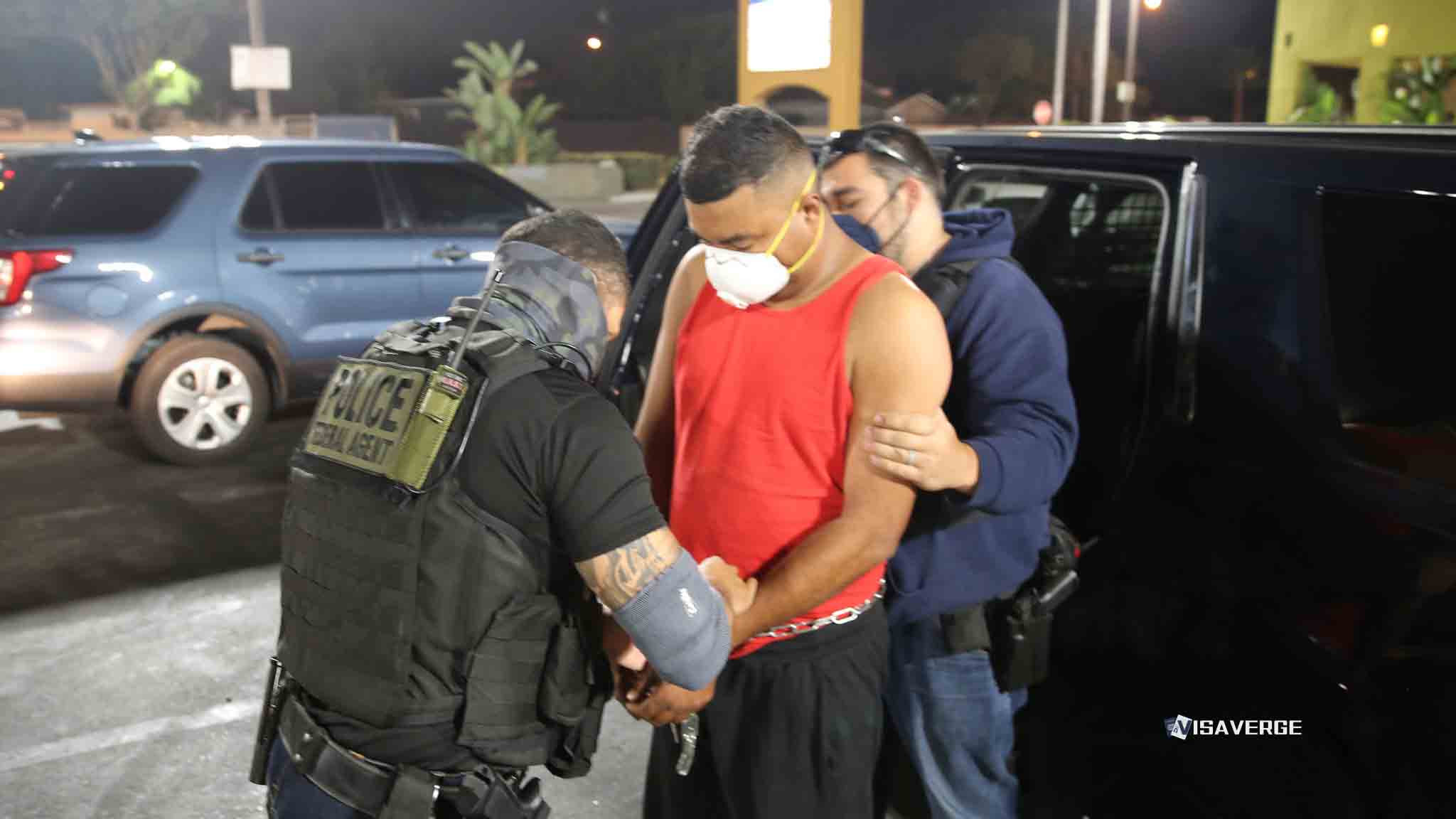
(WASHINGTON, D.C.) A sweeping round of immigration enforcement actions in early 2025 has restaurant owners in major U.S. cities racing to check their hiring records and prepare staff for sudden federal visits, after Department of Homeland Security agents carried out unannounced I‑9 audits and workplace sweeps that hit 187 businesses in the Washington, D.C. area in just two days in May.
Agents arrived without warning at restaurants across the region, from well‑known names like Pupatella, Millie’s, Chef Geoff’s, Chang Chang, Ghostburger, Officina, Jaleo, Call Your Mother, Clyde’s, Cynthia, and Santa Rosa Taqueria, demanding to see Form I‑9 employment eligibility records and telling owners to turn over full employee files within three days. Form I‑9, officially the Employment Eligibility Verification form, is required for every employee in the 🇺🇸 to show they are allowed to work.

No arrests were confirmed during the May sweep, but the surprise inspections have shaken a restaurant sector that leans heavily on immigrant labor at every level, from dishwashers and line cooks to managers and chefs. Several owners reported that workers left their jobs in the days that followed — some disappearing entirely, others asking to be taken off the schedule until they felt safer.
Immediate reactions from restaurants and staff
“This was unnerving for the entire D.C. and DMV region’s restaurant community,” said Natasha Neely, vice president of Pupatella, describing a tense mood in kitchens and dining rooms after the visits.
Staff worried that the next knock on the door could be another team of agents, and managers scrambled to answer basic questions from workers about what might happen if immigration officers returned.
- Some employees quit or stopped coming to work.
- Others requested temporary removal from the schedule until they felt secure.
- Both documented and undocumented workers reported increased anxiety.
Scale of immigrant labor in the industry
According to the National Restaurant Association, immigrants make up more than 20% of the U.S. restaurant and foodservice workforce. Dependence on foreign‑born workers is even greater earlier in the food chain:
| Area | Share of immigrant/undocumented workers |
|---|---|
| U.S. restaurant and foodservice workforce (immigrants) | > 20% |
| U.S. farmworkers (2022 USDA estimate, undocumented) | 45% |
| California farmworkers (undocumented, estimate) | ~50% |
Restaurant owners say that when immigration enforcement actions expand, the shock hits both front‑of‑house and back‑of‑house operations almost at once.
Preparations in other cities
In Chicago and other large cities, restaurant operators have begun quietly preparing for similar workplace sweeps, even if agents haven’t yet appeared at their doors. Common steps include:
- Calling immigration lawyers.
- Reviewing old hiring files.
- Checking that every worker’s I‑9 is properly completed and supported by copies of identity and work authorization documents.
Several owners described the Washington, D.C. sweep as a warning shot.
What’s different this round of enforcement
While I‑9 audits have long been part of federal worksite enforcement under both Republican and Democratic administrations, lawyers and advocacy groups say this round stands out for its lack of notice. In earlier years, companies more often received letters or scheduled inspections rather than sudden workplace sweeps by teams of DHS agents during business hours.
Abel Nuñez, executive director of the Central American Resource Center, said the method sends a clear message:
The unannounced workplace inspections … show a “clear attempt to intimidate owners.”
Workers who survived past raids say that even when no one is taken away in handcuffs, agents walking through kitchens and asking for records is enough to drive people underground or out of their jobs for months.
Political and enforcement backdrop
- Under President Trump, the administration has promoted a goal of deporting 1 million immigrants annually, increasing pressure on industries that rely on undocumented labor.
- Analysis by VisaVerge.com suggests business owners in affected sectors (restaurants, construction, agriculture, hospitality) expect tighter worksite checks to play a bigger role in that drive.
Restaurant operators feel caught between:
- The legal duty to complete I‑9 forms for every worker,
- The practical need to keep enough staff to stay open,
- The human reality that many loyal employees have complex immigration histories.
Some owners say they did not fully grasp the risks until federal agents showed up with a three‑day deadline.
Legal advice being given to restaurants
Immigration attorneys advising restaurants after the May sweep urge owners to take immediate steps if they receive a DHS notice:
- Contact legal counsel immediately when an officer appears or a letter arrives.
- Gather and review all Form I‑9 files and related records before handing them over.
- Check for missing signatures, expired documents, or obvious errors.
- Correct honest mistakes where allowed, and prepare written explanations.
- Employers cannot backdate or falsify forms, but they can and should correct errors per legal guidance.
Industry support and guidance
Professional groups are responding to the information gap:
- The National Restaurant Association and the Restaurant Law Center are hosting webinars and sending detailed guidance on:
- I‑9 audits,
- Workplace sweeps,
- Employer rights during immigration enforcement.
These sessions cover what agents are allowed to inspect, typical response timelines, and potential penalties for deficient hiring records.
Federal authority to inspect employment verification forms comes from the Immigration Reform and Control Act. DHS guidance on I‑9 inspections, posted by U.S. Immigration and Customs Enforcement, explains how agents review forms, provide notice, and assess fines for errors or missing records. For small restaurants with thin margins, even a moderate fine can threaten survival.
Effects on workers beyond paperwork
Workers report psychological impacts that extend beyond those with questionable papers:
- Lawful permanent residents and U.S. citizens say they feel on edge when agents are present.
- Some employees began carrying proof of status at all times, though employers are the ones required to keep I‑9 files.
- The most acute fear is among undocumented workers and those in mixed‑status families.
A D.C. area line cook (who requested anonymity) said he skipped two shifts after the May inspections, worried his presence could draw attention.
“We hear ‘enforcement’ and ‘workplace sweeps’ and we think, ‘that’s it, they’re coming for us,’” he said.
Advocates warn that stepped‑up enforcement may push workers into off‑the‑books jobs, where they are less likely to receive minimum wage, overtime, or safety protections. When interaction with official paperwork could trigger an I‑9 audit, workers may choose employers who pay cash and keep no records — increasing vulnerability to exploitation.
Operational challenges and responsibility
The focus on paperwork has exposed confusion about who is responsible for I‑9 compliance:
- In small, family‑run restaurants, the owner often completes the forms, sometimes with little training.
- In larger groups, responsibility may fall to managers, HR teams, or third‑party payroll firms — each with varying immigration knowledge.
- When agents arrive, they inspect the official employer’s records, not outside advisors who may have made past mistakes.
Industry experts emphasize one clear message from the May sweep: every restaurant, from a single food truck to a multi‑location chain, faces greater risk if employment files are messy or incomplete.
Practical recommendations for owners
Lawyers urge owners to:
- Keep all I‑9s in one secure, central place, separate from general personnel files.
- Ensure quick access so they can respond promptly if agents demand records within days.
- Train the staff responsible for hiring and recordkeeping on proper I‑9 procedures.
- Consider consulting immigration counsel proactively to audit and correct files.
Outlook
As restaurants across the 🇺🇸 brace for what many see as a more unpredictable enforcement era, owners and workers alike are adapting to a system in which a surprise knock can upend a workday, a paycheck, or an entire business. Whether the next round brings more I‑9 audits, high‑profile workplace sweeps, or quiet paperwork checks, the sense of uncertainty spreading through kitchens and dining rooms shows no sign of easing.
In May 2025, DHS conducted unannounced I‑9 audits at 187 Washington, D.C. area restaurants, demanding employee files within three days. No arrests were confirmed, but the sweeps caused workers to quit or avoid shifts and prompted restaurants nationwide to review hiring records. Legal advisers and industry groups urge owners to centralize I‑9s, correct errors legally, and contact counsel immediately when contacted by agents. The actions highlight tensions between compliance duties and staffing vulnerabilities.