(Illinois, United States) Illinois has approved a sweeping new state law in 2025 that aims to shield immigrants from federal raids linked to former President Trump’s enforcement campaign known as “Operation Midway Blitz.” Signed by Governor J.B. Pritzker, the measure sharply limits where civil immigration arrests can occur, gives residents new power to sue federal agents, and tightens rules on how public institutions handle personal information that could expose someone’s immigration status.
Courthouse and buffer-zone protections
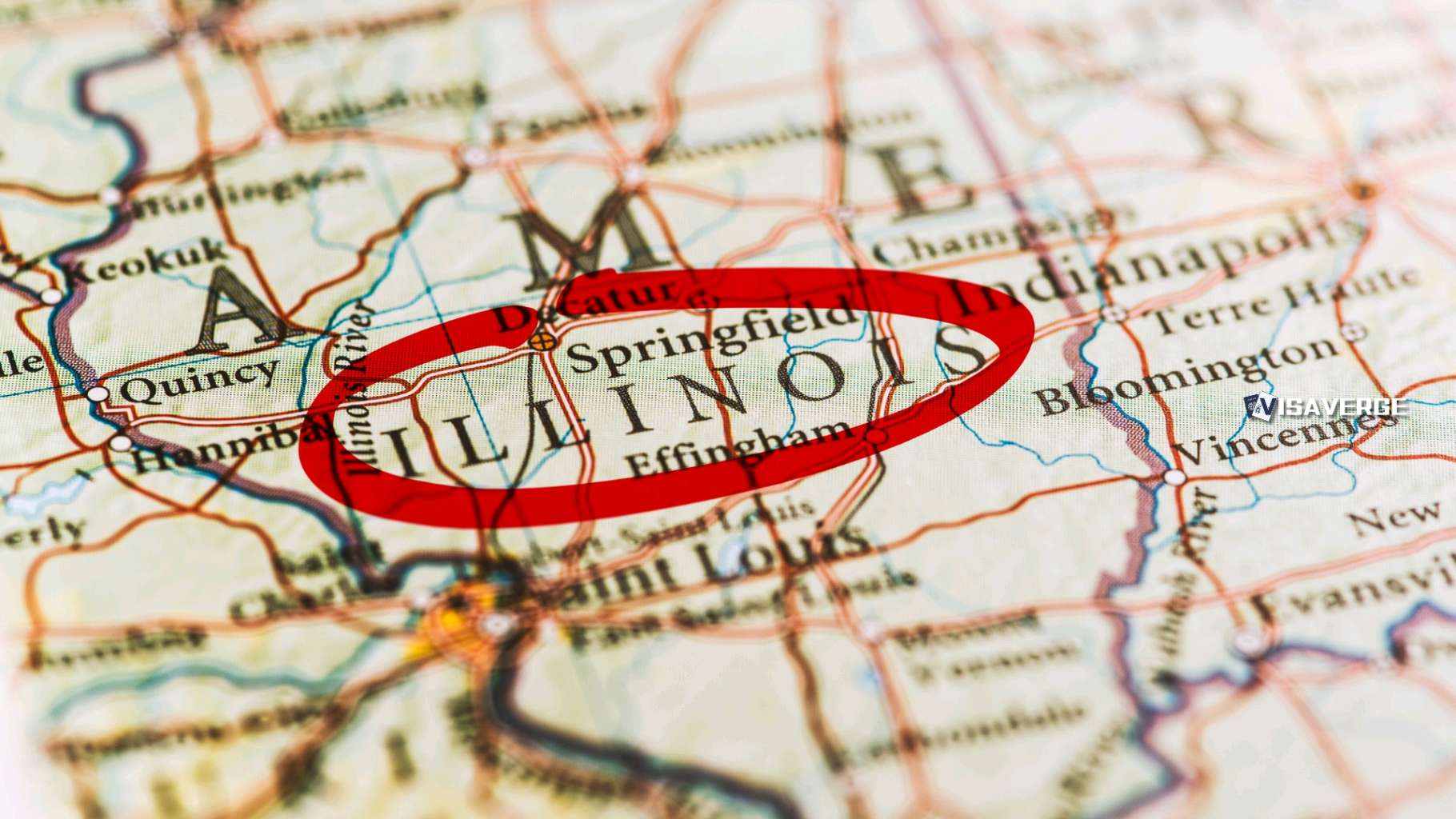
At the heart of the law is a ban on civil immigration arrests inside any state courthouse and within a 1,000-foot buffer zone around courthouse buildings.
Lawmakers say the buffer is meant to stop immigration agents from waiting at courthouse doors, hallways, or nearby sidewalks to detain people who are:
- showing up for hearings
- paying fines
- seeking protective orders
- serving as witnesses
Supporters argue that fear of being picked up near a courthouse keeps immigrants from using the justice system, making it harder for crime victims and witnesses to come forward and for families to resolve basic legal issues.
Right to sue and enhanced damages
The law creates a new right for Illinois residents to sue immigration agents in state court if those agents violate constitutional rights, including due process and protection against unreasonable searches and seizures.
Key features:
| India | China | ROW | |
|---|---|---|---|
| EB-1 | Apr 01, 2023 ▲31d | Apr 01, 2023 ▲31d | Current |
| EB-2 | Jul 15, 2014 ▲303d | Sep 01, 2021 | Current |
| EB-3 | Nov 15, 2013 | Jun 15, 2021 ▲45d | Jun 01, 2024 ▲244d |
| F-1 | May 01, 2017 ▲174d | May 01, 2017 ▲174d | May 01, 2017 ▲174d |
| F-2A | Feb 01, 2024 | Feb 01, 2024 | Feb 01, 2024 |
- Residents can seek punitive damages (extra money intended to punish especially bad conduct).
- Damages can increase if agents:
- conceal their identities with masks,
- fail to wear body cameras,
- use vehicles with obscured or out-of-state license plates that hinder tracing the operation later.
Immigrant advocates say the lawsuit provision could be one of the most powerful tools in the statute, giving families a path to challenge abuses in state courts rather than relying solely on federal complaints.
Duties for public institutions
The law places new duties on public colleges and universities, hospitals, and child care facilities across Illinois. These institutions must:
- adopt clear, written policies for staff response when immigration agents show up or request records/access to non-public areas,
- generally refrain from sharing information about a person’s immigration status unless a specific law requires it or a valid court order demands it.
State officials say these protections are intended to reduce fears that routine visits — for example, to a campus counselor or hospital — could become indirect immigration checkpoints.
Context and rationale
This statute follows years of tension between Illinois and federal immigration authorities under Trump-era crackdowns. “Operation Midway Blitz” became a symbol of high-profile raids that advocates say created deep fear across immigrant neighborhoods.
Governor Pritzker called the statute a “nation-leading” response to federal immigration raids and said it sends a clear message against what he described as “divisiveness and brutality” aimed at immigrant communities. His office emphasized that the goal is to keep courthouses, hospitals, and schools as safe spaces where people can seek help without worrying about deportation.
Supporters note that the federal government recognizes some places as “sensitive locations,” and agencies under the U.S. Department of Homeland Security have issued guidance discouraging certain enforcement actions at schools and medical facilities. But those are policies, not binding laws, and can change between administrations. Illinois leaders say putting these rules into state law makes them harder to undo.
For readers who want to see the broader federal framework that Illinois is reacting to, the Department of Homeland Security outlines civil immigration enforcement priorities and policies on its official site at dhs.gov.
Political and legal opposition
Republican lawmakers in Illinois have sharply criticized the measure, arguing it may create confusion for local police and sheriffs who work closely with federal agencies on many cases. Their main concerns:
- Potential clash with the Supremacy Clause of the U.S. Constitution (federal law takes priority over conflicting state rules).
- Prediction that the Trump team will challenge the statute in court, alleging Illinois is interfering with federal immigration enforcement and punishing federal officers.
- Claim that the 1,000-foot courthouse buffer might let some noncitizens avoid removal even after serious criminal convictions — a claim supporters dispute.
Democrats and immigrant rights groups counter that Illinois is not blocking federal criminal enforcement or valid warrants. Instead, they say the state is distinguishing between criminal enforcement and civil immigration enforcement: agents retain broad authority to arrest people tied to serious crimes, but should not be detaining people who are seeking routine services or participating in civil legal processes.
How this builds on prior Illinois laws
This 2025 statute builds on earlier sanctuary-style policies in Illinois, especially the Illinois TRUST Act of 2017, which:
- limited how far local law enforcement can help federal immigration officers,
- restricted police departments and sheriffs from holding people on civil immigration detainers or sharing information with immigration authorities unless a law or warrant requires it.
State officials describe the new law as the next step: continue cooperating with federal partners on genuine criminal threats while refusing to act as an extension of civil immigration enforcement that can separate families.
What’s likely next — legal challenges and implications
Legal scholars expect the measure to face court tests, especially provisions that:
- invite lawsuits against federal agents in state court, and
- ban arrests in and around courthouses.
Any challenge will likely hinge on how judges balance the federal government’s broad power over immigration with a state’s authority to set rules for its own institutions and protect residents’ rights.
Illinois leaders say they are prepared to defend the statute, arguing that protecting immigrants who enter courthouses, campuses, hospitals, and child care centers from the reach of operations like Operation Midway Blitz is both a legal choice and a moral one.
Summary table — Key provisions at a glance
| Provision | What it does |
|---|---|
| Courthouse ban & 1,000-foot buffer | Prohibits civil immigration arrests inside courthouses and within 1,000 feet |
| Right to sue in state court | Allows residents to sue agents for constitutional violations, seek punitive damages |
| Enhanced damages | Increased damages when agents conceal identity, lack body cams, or use obscured vehicles |
| Institutional duties | Requires written policies at colleges, hospitals, child care centers; limits info-sharing |
| Builds on | Extends principles of the Illinois TRUST Act of 2017 |
If you’d like, I can produce a one-page legal brief summarizing the statute’s main elements and likely litigation risks, or extract direct quotes and key passages for use in a press release. Which would be most helpful?
In 2025 Illinois enacted a law prohibiting civil immigration arrests inside courthouses and within a 1,000-foot buffer, authorizing residents to sue federal agents in state court for constitutional violations, and imposing higher damages when agents conceal identity or lack body cameras. The statute requires public colleges, hospitals, and child care centers to adopt policies limiting disclosure of immigration status. Supporters call it a national model; opponents foresee federal court challenges on supremacy and enforcement coordination.