- Florida is leading the nation in ICE arrests during 2026, averaging 120 daily arrests in Miami.
- State laws like SB 1718 have mandated local cooperation with federal immigration enforcement across the state.
- Overcrowding in local jails like Orange County has created capacity limits for detention despite rising arrest rates.
(FLORIDA) — Florida has led the nation in ICE arrests in 2026, with the Miami Field Office averaging about 120 arrests per day and totaling nearly 9,900 as of March 10.
That pace has outstripped other regions, including Dallas at roughly 80 daily arrests and St. Paul at 5,530 total during the same period. The Miami Field Office has emerged as the center of the early-year increase.
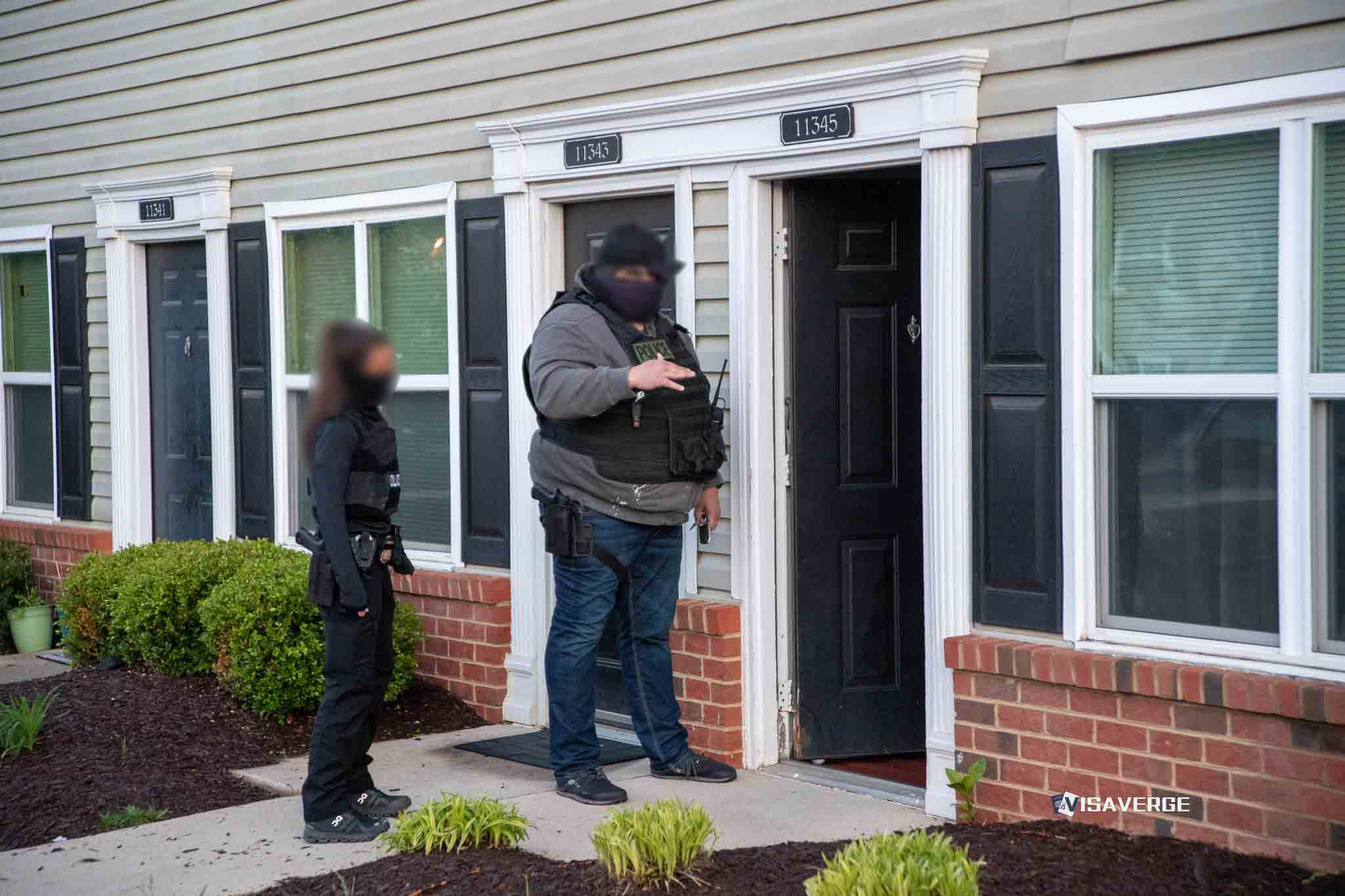
The numbers point to a fast-moving enforcement drive in Florida, where statewide arrests and local operations have intensified across several metro areas. Activity in South Florida, Central Florida, Tampa Bay and Jacksonville has given the state an enforcement footprint that now stands above every other region.
The buildup follows a sharp acceleration in 2025. From January 20 to October 15, 2025, Florida recorded 20,629 ICE arrests, representing about 10% of national totals and placing it second only to Texas.
Arrests tripled from an average of 20 per day in 2024 to nearly 77 per day in 2025. Of those arrested, 24% had no criminal record beyond immigration offenses.
Tampa Bay data offered a closer view of who was caught up in the increase. About 2,922 arrests occurred in that region, including 140 minors aged under 18 and people from over 120 countries aged 1 to 89.
That 2025 expansion set the stage for the higher arrest pace now seen in 2026. In Florida, the rise in ICE arrests has been tied closely to the reach of the Miami Field Office, which oversees Florida, Puerto Rico, and the U.S. Virgin Islands.
Daily arrest activity in that office rose from 70 to 120 since January 2025. Its footprint stretches well beyond Miami, covering urban neighborhoods, highways, agricultural sites and jail partnerships that feed people into detention.
In Miami-Dade, community reports have described ICE vans patrolling residential streets and shopping centers in Little Havana and Hialeah. In the Orlando I-4 corridor, enforcement has focused on mixed-status neighborhoods.
Across Tampa Bay, activity has centered on corridors such as Nebraska Avenue and agricultural sites in Plant City and Wimauma. On Jacksonville’s Westside, joint operations with the Jacksonville Sheriff’s Office have helped concentrate arrests in specific communities.
Those local patterns help explain why Florida has moved ahead of other areas so quickly in 2026. Rather than a single sweep, the increase appears spread across repeated operations in neighborhoods and transit corridors where officers can draw on both federal reach and local cooperation.
Florida’s legal framework has also helped shape that environment. SB 168, enacted in 2019, mandates cooperation with ICE detainers.
SB 1718, enacted in 2023, requires E-Verify for larger employers and criminalizes transporting undocumented individuals. Together, those laws have added state-backed pressure to federal enforcement.
Governor Ron DeSantis went further by requiring all law enforcement agencies to join ICE programs. He also launched Operation Tidal Wave, which yielded over 10,000 arrests in eight months and 1,120 in one week.
Authorities said 63% of those arrested in that one-week period had prior criminal arrests or convictions. The operation has been presented as a broad enforcement push, and it has become part of the policy structure behind Florida’s arrest totals.
The surge has also sharpened debate over who is being arrested. Paul Chavez, immigration attorney with Americans for Immigrant Justice, said, “What we’ve seen is a pretty big increase in arrests of folks that would have not have been arrested under previous administrations.”
That concern has surfaced alongside remarks from officials who support tougher enforcement. Polk County Sheriff Grady Judd, chair of the State Immigration Enforcement Council, said of non-criminal detainees, “These are the folks we need in this country,” urging a legal pathway.
DeSantis rejected that approach. “This idea that unless you’re an axe murderer you should be able to stay — that is not consistent with our laws,” he said.
Behind the statewide totals, individual cases have shown how detention and removal actions can unfold in day-to-day life. Some began with routine check-ins or traffic stops and ended with detention far from home, deportation, or removal to another country.
Heidy Sánchez, a Cuban mother married to a U.S. citizen, was separated from her 1-year-old daughter at a Tampa ICE check-in on April 22, 2025. Authorities deported her to Cuba despite a pending green card.
Her case became one of the clearest examples of family separation tied to Florida enforcement. The facts of her case placed a pending immigration benefit alongside a removal that moved ahead anyway.
Maria Martinez, 21, from Sarasota, was arrested for driving without a license and detained in Texas. Her case showed how a local traffic-related arrest in Florida could quickly turn into transfer to detention in another state.
Another Sarasota case involved a 22-year-old who self-deported to Mexico after a traffic stop under a 287(g) agreement. That arrangement, which allows local officers to work with federal immigration authorities, added another path from routine policing to departure.
A Venezuelan asylum seeker from Tampa was accused of gang ties, imprisoned in El Salvador’s maximum security facility, then released to Venezuela. The case stood apart from the others in destination and allegations, but it also reflected how enforcement actions in Florida can reach far beyond the state.
Those cases have unfolded against a backdrop of widening operational cooperation. Joint work between ICE and local agencies, reinforced by state policy, has helped push arrests into traffic enforcement, neighborhood patrols and jail intake systems.
That has made the Miami Field Office more than a South Florida hub. Its role now spans a broader enforcement grid linking federal officers, local departments and detention space across multiple regions.
Capacity limits, however, have begun to show. Orange County Jail limited immigration-only holds to 66 men and 64 women due to overcrowding.
The change cut daily averages there from 142 in January to 26 recently. That drop offered one measure of the strain detention systems face when arrests rise faster than beds.
The jail figures also added a practical check on enforcement pace. Even with Florida leading the nation, arrest totals do not translate automatically into unlimited detention capacity.
National estimates provide another measure of the scale involved. ICE estimates 7 million deportable immigrants nationwide, with about 1 million in Florida.
Those figures place Florida at the center of a broader federal effort while also showing the limits of enforcement by arrest totals alone. A state with about 1 million in the estimated deportable population can produce high daily numbers and still leave a large population beyond immediate reach.
For now, Florida remains the state setting the pace. With the Miami Field Office averaging about 120 arrests per day, neighborhood operations stretching from Little Havana to Jacksonville’s Westside, and state-backed cooperation embedded in law, the arrest surge has turned Florida into the clearest measure of how far ICE arrests can climb when federal enforcement, local partnerships and state policy move in the same direction.