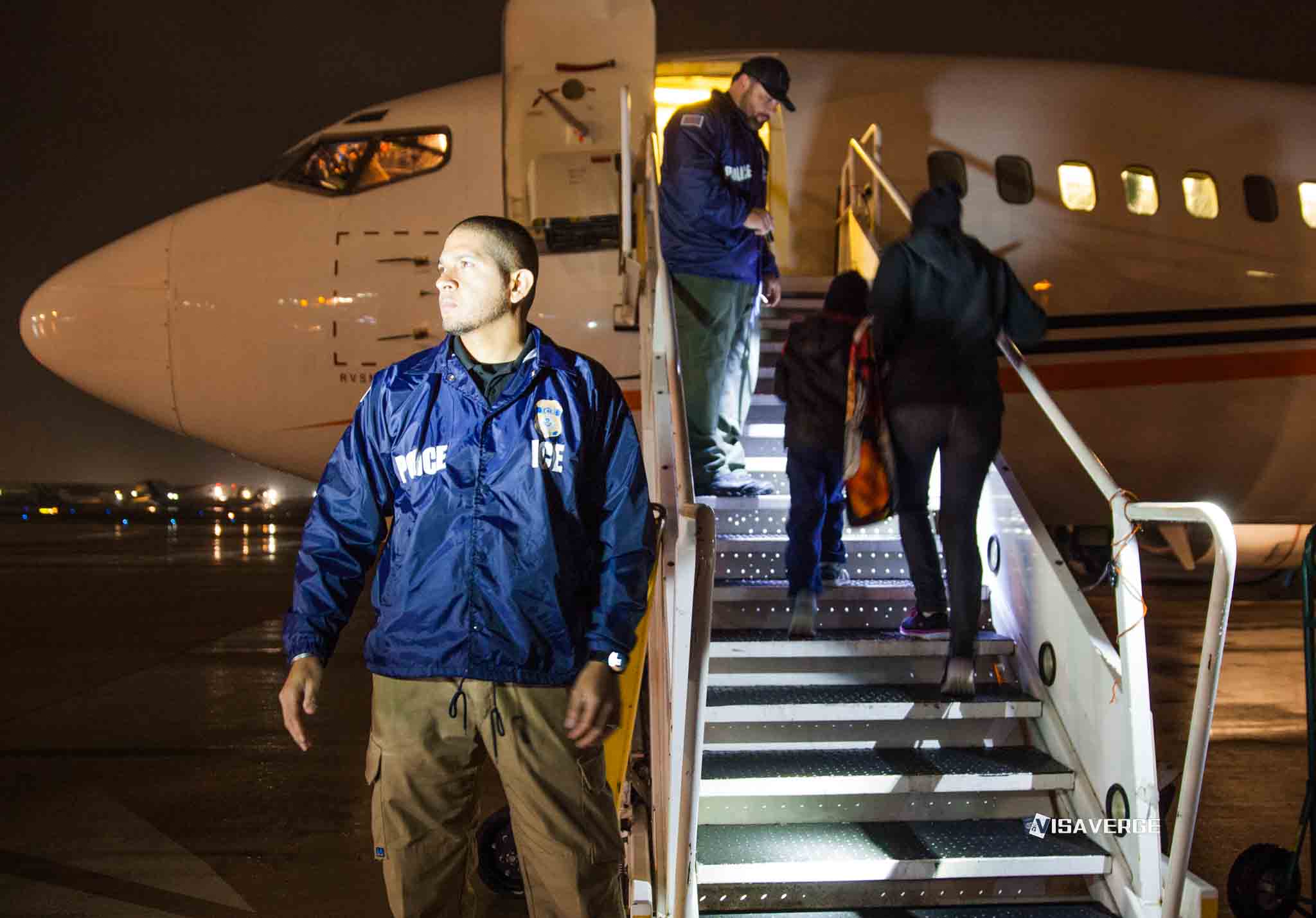
- U.S. ICE is increasingly transferring asylum seekers to third countries where they lack citizenship ties.
- Removal flights surged by 46% with new agreements established across Africa, the Caribbean, and Latin America.
- Human rights groups warn of due process violations and risks of arbitrary detention in receiving nations.
(UNITED STATES) — U.S. Immigration and Customs Enforcement has carried out forced third-country transfers that sent African asylum seekers and other noncitizens to countries where they are not citizens, broadening a deportation practice that has drawn legal and humanitarian scrutiny under the Trump administration.
The transfers involve people removed to places where they may have no citizenship ties, including African countries such as Cameroon, Equatorial Guinea, Ghana, and South Sudan. The practice has attracted attention because it reaches beyond returning people to their home countries and instead relies on third-country destinations arranged through government agreements or other operational partnerships.
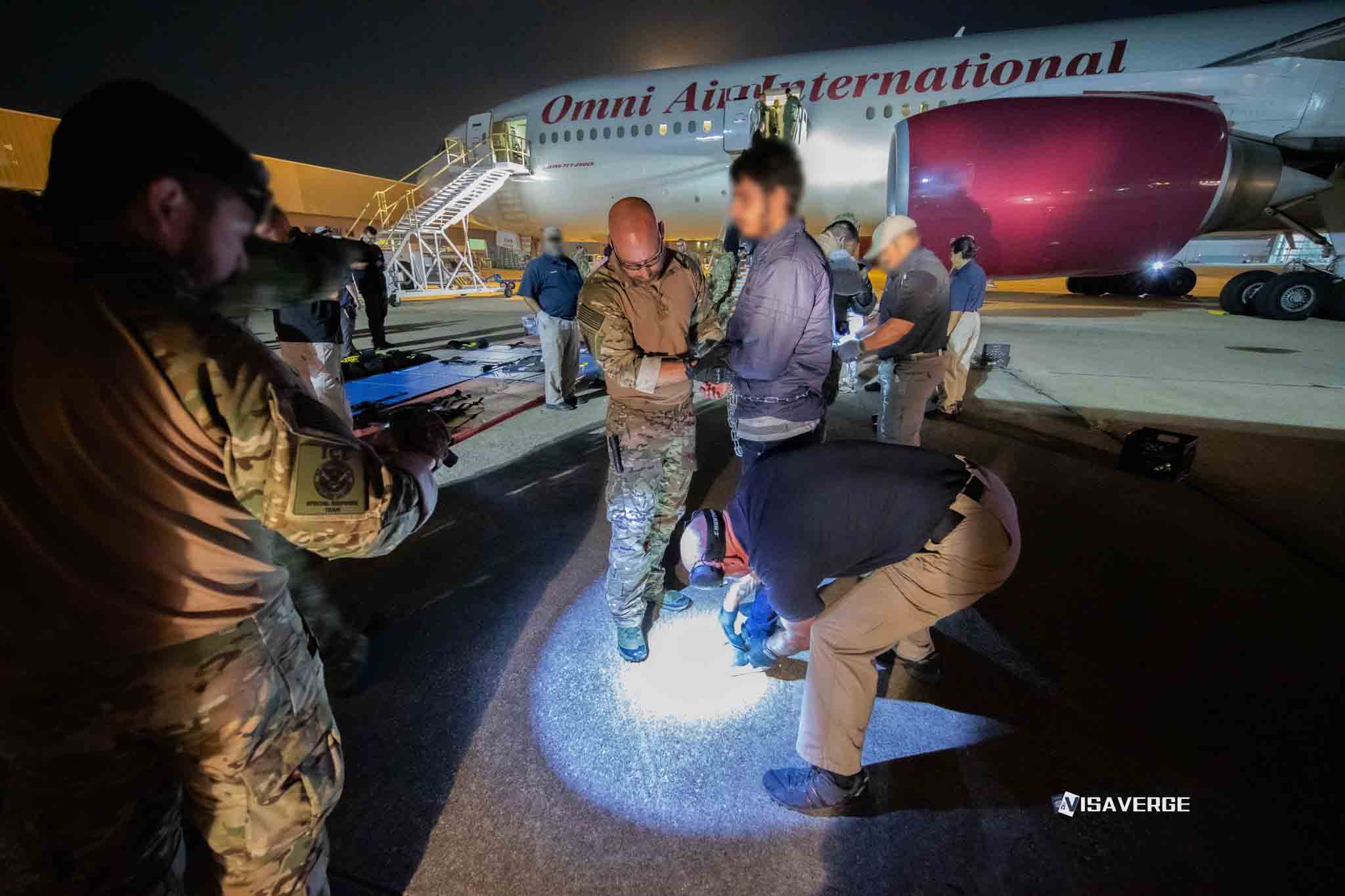
ICE Air has driven that expansion. By January 20, 2026, it had conducted 2,253 removal flights to 79 countries, a 46% increase from the prior year, with first-time flights to 25 countries and surges to Sub-Saharan Africa.
That growth has turned what had been a less visible enforcement tool into a broader deportation network. Flights now span multiple regions, and the use of third-country destinations has become a central part of a faster-moving removal operation.
Several episodes in early 2026 show how the practice worked. In January 2026, ICE carried out the first flight of non-Cameroonians to Cameroon and the second to Equatorial Guinea.
A second flight of non-Cameroonians to Cameroon followed on February 15, 2026, under what was described as an opaque U.S.-Cameroon agreement. Those flights pointed to repeated use of Cameroon as a destination for people who were not its nationals.
Washington also reached January 2026 agreements with Antigua and Barbuda and Dominica for third-country deportations. Those arrangements added Caribbean destinations to a widening map of countries used for removals of people with no citizenship connection to the receiving state.
The use of formal agreements matters because it shows the transfers are not isolated cases. They are part of a system that depends on negotiated acceptance by other governments rather than the traditional practice of sending people to countries of nationality.
Cases involving African asylum seekers show the human impact. Rabbiatu Kuyateh, who had been granted withholding of removal from Sierra Leone, was deported to Ghana instead.
Ghana then returned her to Sierra Leone, and she fled again. Her case illustrates how a transfer to one country can quickly become a route back to the very place from which a person had protection in U.S. proceedings.
Other reports describe a broader group affected by the policy. Hundreds of asylum seekers from Afghanistan, Russia, China, Iran, Cameroon, and other African, Middle Eastern, Asian, and European countries were sent to Rwanda, South Sudan, Eswatini, and other third countries with no connections.
Those cases have sharpened concerns about access to U.S. asylum protection once a transfer or removal is underway. They also raised questions about what procedural safeguards remain available after a person enters the deportation pipeline.
The list of destinations extends well beyond the countries that have drawn the most attention. Additional reported third-country destinations for noncitizens include Costa Rica, Panama, Poland, and Uzbekistan.
At least 14 third-country destinations have reportedly been used since January 2025. That breadth suggests a removal structure built on a patchwork of arrangements, operational deals, and receiving-country cooperation.
Critics have focused not only on the fact of transfer but also on the conditions people may face after arrival. The concerns include arbitrary detention, torture risk, and other human rights implications in some receiving countries.
Those risks have been cited in connection with destinations used under the expanding deportation effort, including countries that are not the deportees’ own and where they may lack community ties, legal status, or any established path to protection. For people already in removal proceedings, the shift can place them into a system where the destination bears little relation to their original asylum claims.
February 2026 data from Human Rights First offered another measure of the pace. The group reported 183 removal flights to 31 countries that month.
Human Rights First also reported transfers of non-nationals to Ecuador, Honduras, and Guatemala under Asylum Cooperative Agreements or similar arrangements. That showed the practice stretching across Latin America as well as Africa and adding to the range of countries involved.
The criticism has been direct. The Lemkin Institute and Human Rights Watch have described the transfers as lacking due process and exposing deportees, particularly Black and Brown individuals, to severe violations.
Their objections center on both process and outcome. On one side is the question of whether people had a fair chance to contest transfer to countries with which they have no citizenship link. On the other is the question of what can happen when they arrive in places where detention conditions, security concerns, or local protections may be weak.
That combination has made forced third-country transfers one of the sharper points of dispute in immigration enforcement since January 20, 2025. The Trump administration’s broader deportation push gave the flights scale, while the use of non-home-country destinations gave them a different legal and moral dimension.
The issue is also marked by limited public guidance from the immigration adjudication system. No EOIR, USCIS, or BIA decisions directly addressing these specific transfers have emerged in the available record cited here, leaving the practice shaped largely by executive action and DHS and ICE operations.
That has intensified oversight concerns because the transfer system appears to be moving faster than any public body of adjudicative rules tailored to it. Without direct decisions laying out standards for these removals, much of the policy has developed through enforcement action itself.
The lack of clear precedent matters for people facing removal because third-country deportation can present a different set of risks than return to a country of nationality. A person may face detention in a state with no prior connection, may not know the local system, and may have little opportunity to reassert a protection claim once moved.
For African asylum seekers, the attention has been especially sharp because multiple reported flights involved African destinations and non-African nationalities as well as African nationals. Cameroon, Equatorial Guinea, Ghana, South Sudan, Rwanda, and Eswatini have each featured in reported transfers, showing how the continent has become a focal point in the expanding network.
Sub-Saharan Africa saw a notable surge in activity during the broader increase in removal flights. That pattern, set against the larger jump in destinations and total operations, has made the region central to debates over how far the United States can go in arranging deportations to countries other than a person’s own.
The policy’s reach has also become clearer as examples accumulated. A transfer to Ghana that led to return to Sierra Leone, repeated use of Cameroon for non-Cameroonians, and flights to Equatorial Guinea and South Sudan all point to a practice that now operates across multiple countries and legal categories rather than through isolated removals.
The agreements with Antigua and Barbuda and Dominica added another layer. They suggested that receiving-country participation may be expanding through diplomacy as well as transport logistics, creating more options for removals that do not depend on citizenship ties.
That combination of flights, destination agreements, and regional expansion has created pressure from advocates seeking court review. One active challenge comes from HIAS, which is contesting related refugee detention policies issued February 18, 2026, by DHS lawyers.
That litigation could affect detention practices, transparency, or transfer procedures tied to the broader removal system. Court intervention, disclosure requirements, or further executive action may shape how much of the system becomes visible and whether additional limits are placed on it.
For now, forced third-country transfers remain an active part of U.S. immigration enforcement. As ICE Air continues to move people across a widening set of destinations, the dispute over legality, due process, and safety is moving with it.