- Homeland Security suspended TSA PreCheck and Global Entry starting Sunday, February 22, due to a partial government shutdown.
- Over 20 million members must now use standard security lines and customs queues despite having paid membership fees.
- The suspension aims to redirect limited staffing resources toward general traveler screening during the ongoing funding impasse.
(UNITED STATES) — Homeland Security suspended TSA PreCheck and Global Entry beginning Sunday, February 22 at 6 a.m. Eastern, halting expedited airport screening and faster customs entry during a partial Department of Homeland Security shutdown.
Millions of travelers who paid membership fees for faster processing now must use standard airport security lines, and international arrivals with Global Entry have lost expedited customs clearance access.
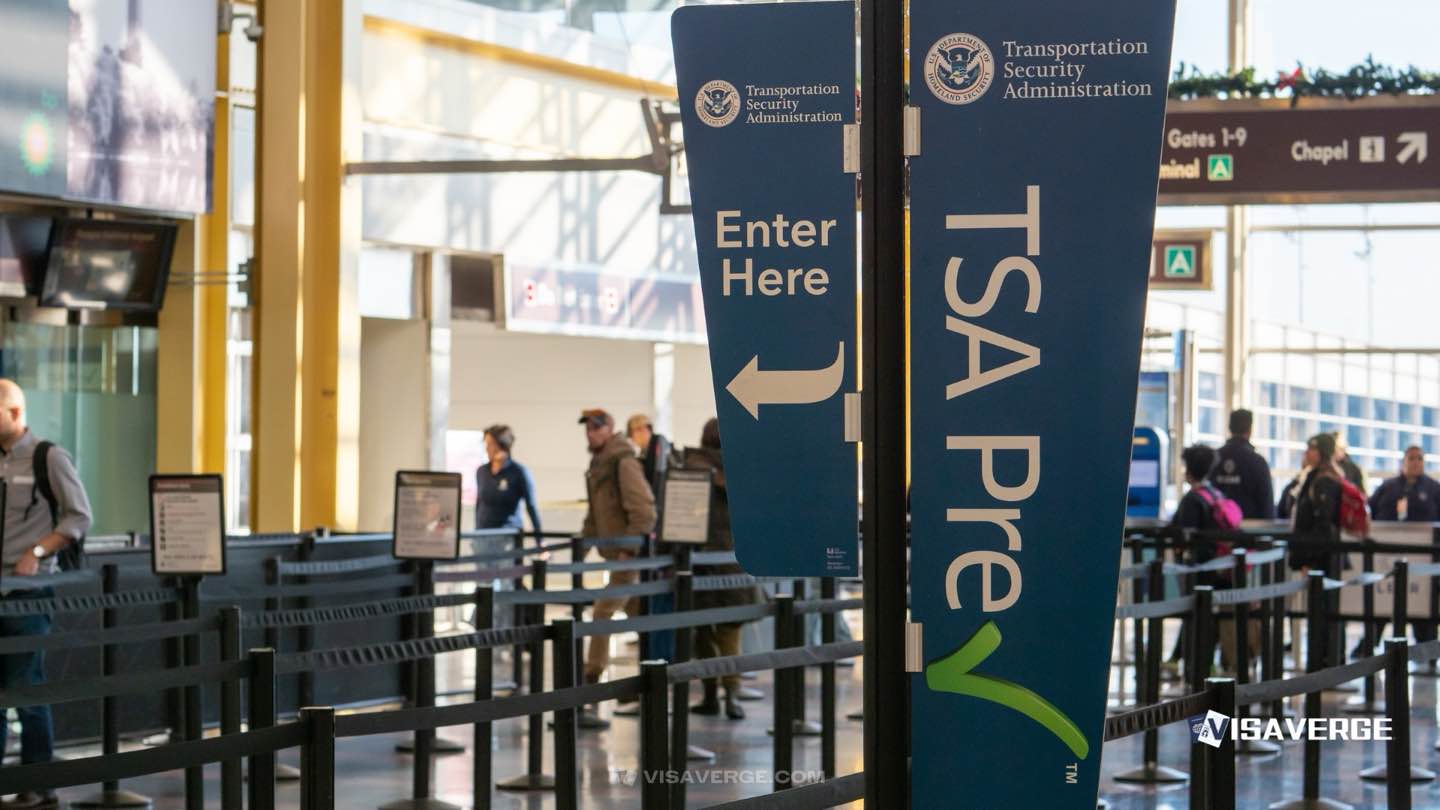
Airport operators and airlines braced for more congestion at checkpoints and at ports of entry as the pause took hold nationwide, with enrollment and benefits tied to the programs both affected during the shutdown.
Congress triggered the partial shutdown after it failed to pass a funding measure before the agency’s budget expired on February 14, leaving Homeland Security to manage limited staffing and resources across core travel-security operations.
Homeland Security Secretary Kristi Noem framed the move as a triage decision that shifted attention away from special handling during a period of constrained capacity. TSA and U.S. Customs and Border Protection are “prioritizing the general traveling population at our airports and ports of entry and suspending courtesy and special privilege escorts,” Noem said.
Noem also called the suspension a “tough but necessary” step aimed at redirecting limited staffing and resources toward standard airport security screening as the shutdown continued.
The nationwide halt stands out because it appears to be the first time the expedited lanes themselves have been turned off across the country during a government shutdown. In previous shutdowns, enrollment operations were disrupted and staffing shortages occurred, but the expedited lanes remained open.
For travelers, the change is immediate and practical. Passengers who normally rely on TSA PreCheck to move through a dedicated lane must now queue in standard screening lines even if they already paid for a membership.
Global Entry members face a similar shift on arrival from abroad, losing the faster processing they typically expect at U.S. customs as the nationwide benefits are suspended.
The programs carry fees and five-year membership terms that travelers often purchase for predictability and time savings, and the installed base is large enough that the effects could ripple across many airports. TSA PreCheck members paid between $76.75 and $85 for five-year memberships, while Global Entry members paid $120 for five-year memberships.
As of 2024, more than 20 million Americans held TSA PreCheck memberships, a scale that aviation and travel groups said could translate into visible changes at checkpoints as travelers are redirected into standard lines.
Homeland Security linked the pause directly to staffing and resource limits under the shutdown rather than any change in the underlying eligibility rules for the trusted-traveler programs. The department did not outline airport-by-airport conditions, and the impacts will depend on how each location absorbs a sudden shift in passenger flow.
The shutdown itself stems from a funding standoff over immigration enforcement, turning a budget deadline into a broader dispute that reached into Homeland Security’s day-to-day operations.
White House Border Czar Tom Homan rejected Democratic demands for changes to the agency following deadly shootings of Renee Good and Alex Pretti in Minneapolis by federal immigration agents last month, while Senate Minority Leader Chuck Schumer urged DHS to follow standard law enforcement rules.
The funding impasse matters for Homeland Security’s operational capacity because the department oversees TSA and Customs and Border Protection, which sit at the center of airport screening and border entry processing even as other parts of government grind to a halt.
Industry groups and lawmakers criticized the decision and its timing, arguing the suspension creates disruption for travelers with little warning and risks compounding pressures on frontline staff.
The U.S. Travel Association called the move “extremely disappointing,” adding, “Travelers should be prioritized, not leveraged.”
Airlines for America CEO Chris Sununu said he was “deeply concerned” about the announcement and criticized the “extremely short notice to travelers.”
Democratic Representative Eric Johnson cast the suspension as a political choice that falls on the public, calling it “purposely punishing the American people.” Johnson argued the expedited programs reduce airport lines and ease the burden on DHS staff working without pay.
The Department of Homeland Security, which includes TSA and Customs and Border Protection, has long promoted trusted-traveler programs as a way to focus screening resources while offering frequent flyers and other vetted travelers a faster experience. The shutdown has now put that model on hold nationwide, at least temporarily.
Travelers who built trips around expedited screening and entry now face a less predictable journey, with standard lines replacing what many considered a paid benefit tied to their membership terms.
The suspension also lands during a period when many travelers use multiple vetted programs at once, pairing TSA PreCheck for airport screening with Global Entry for international arrivals. With both benefits suspended, some travelers could see a slower experience on both departure and return.
Public attention extended beyond airports and Capitol Hill to prediction markets tracking when Congress might restore funding. Betting markets showed over $1.6 million wagered on when funding would resume.
Most predictions expected restoration before March 20, 2026, though the resumption of TSA PreCheck and Global Entry benefits depends on a funding resolution rather than market sentiment.
For now, the shutdown has put one of the most visible, consumer-facing pieces of Homeland Security’s travel apparatus on pause, turning a familiar fast-lane perk into another pressure point in a Washington standoff. “Travelers should be prioritized, not leveraged,” the U.S. Travel Association said.