- International students and immigrants are recalculating their plans for the U.S. due to a hardening social climate.
- Visa issuance for students fell more than 30% in early 2025 as enforcement and scrutiny increased.
- Economic data shows a loss of $1.1 billion and 23,000 jobs linked to declining international enrollment.
Students, immigrants and universities are recalculating their plans for the United States in 2026 as a harder social climate adds new risk beyond formal visa rules.
That shift reaches well past paperwork. Families now weigh whether the country feels predictable, welcoming and institutionally stable enough to justify the cost of crossing borders, while campuses and employers confront a more defensive mood around legal migration.
The change is showing up in decisions about where to study, whether to travel, how to plan a career and whether to build a future in America at all. For many people, immigration policy is no longer the whole story.
The United States still hosts about 1.18 million international students, including 363,019 from India. Those students contributed $42.9 billion to the U.S. economy and supported 355,736 jobs in the 2024–25 academic year.
Yet those numbers now sit beside a more uneasy picture. Lower legal visa issuance, more aggressive immigration enforcement, stronger institutional pressure on campuses and a rising sense that even lawful migrants must plan more carefully are shaping behavior before a visa interview even begins.
That makes the Hardening U.S. Social Climate a practical issue, not a rhetorical one. It affects demand for visas, campus choice, employer confidence, family planning and the willingness of students and skilled workers to stay for the long term.
Families comparing the U.S. with Canada, the UK, Australia, Germany or Japan are not looking only at tuition, rankings or salaries. They are also comparing social risk and institutional steadiness.
A student may still win admission to a top American university. But if the country appears harder to enter, more punitive in tone or less calm institutionally, the return-on-investment calculation changes.
Visa issuance data has already reinforced that concern. The U.S. issued roughly 250,000 fewer legal visas in the first eight months of 2025 than in the same period of 2024, with student, temporary worker and family-based categories all affected.
Student visas fell more than 30%. India and China were among the hardest-hit countries.
Those declines matter beyond consular waiting rooms. Once families begin to see America as harder to enter and more stressful to remain in, universities and employers inherit that reputation.
International Students often feel the shift first because their status depends on continuous compliance. F-1 students must maintain a full course of study, make normal academic progress and protect their status carefully.
That structure has long been strict. In a harder climate, however, the margin for error shrinks, travel feels less routine and ordinary campus life becomes more politicized.
Universities have already begun responding to that pressure. Foreign students have received guidance on deportation-related risks, including warnings in some cases not to leave the country because reentry had become less predictable.
Students also challenged moves to terminate the legal status of thousands of student visa holders before some statuses were later restored while policy was reworked. For those on campus, the result is a different study-abroad experience.
The question is no longer limited to admission. It extends to whether a student can live normally once enrolled, move through an airport without added anxiety and trust that routine compliance will be enough.
That pressure also changes how Universities operate. In the current environment, they are not only classrooms and laboratories but also visa sponsors, SEVIS managers, housing systems and research employers.
Federal scrutiny has pushed them deeper into the immigration story. On March 23, the Trump administration launched additional probes into Harvard over admissions and campus climate.
Three days later, the administration opened investigations into admissions practices at several medical schools, seeking years of applicant data and internal communications. On March 24, a federal judge gave public universities in 17 states more time to comply with the administration’s race-data demands.
For foreign students and scholars, those disputes matter because the university is often the first institution they rely on when immigration risk rises. A campus under political pressure can grow more compliance-heavy, more cautious and less confident in the support it can promise.
That does not mean every school will fail its international population. It does mean the institutional environment around global education has become more fragile.
The effects stretch far beyond students. Immigrants and mixed-status families face a different kind of pressure as enforcement rises and ordinary administrative contact can carry more weight.
Bond hearings in immigration court plunged after a stricter DHS interpretation expanded mandatory detention in some circumstances. Trump’s immigration agenda also fueled a sharp increase in court cases, including detainee lawsuits.
That creates a climate in which fear becomes administrative rather than theatrical. A missed notice, a data mismatch, a detention transfer or a weaker chance of release while a case proceeds can shape family behavior as much as any public raid.
Work decisions, housing choices, travel plans and routine interaction with public institutions all become more cautious. The stress is not always dramatic, but it is persistent.
That broader atmosphere feeds back into the skilled labor pipeline. Today’s student can become tomorrow’s OPT worker, H-1B candidate, researcher, startup founder or green-card applicant.
If the student stage looks less stable, some of that future workforce chooses another country earlier in the process. That is why a decline in student visas matters beyond higher education.
Employer sponsorship alone may not settle the issue. A company can offer a path, but a candidate may still decide against building a life in a place that appears more combative toward outsiders.
In that sense, social climate acts like an invisible barrier. It does not always stop entry by law, but it can still reduce demand.
The economic effects are already measurable. NAFSA said international students contributed $42.9 billion and supported 355,736 jobs in 2024–25.
NAFSA also said fall 2025 enrollment weakness was associated with a loss of more than $1.1 billion and nearly 23,000 jobs. Those losses tie campus sentiment to local economies, payrolls and surrounding businesses.
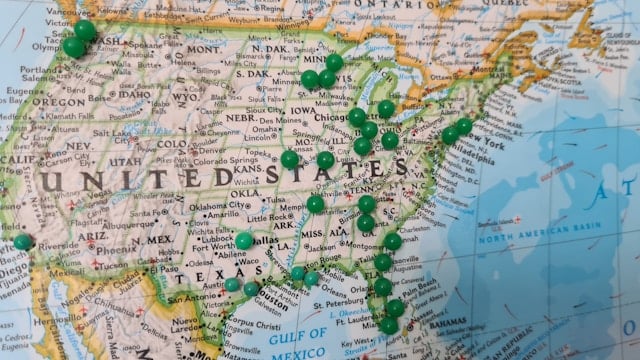
The change is also visible in regional migration patterns. Fewer immigrants are moving into major U.S. metropolitan areas, with large drops in cities such as New York, Los Angeles and Chicago.
That matters for labor supply and growth as much as for campus budgets. When migrants and students feel less secure, cities lose population momentum and employers lose part of the global talent pool they seek.
India sits at the center of that picture. It is the largest source country for U.S. international students, with over 363,000 enrolled in 2024–25.
Any deterioration in the American climate therefore lands directly on one of the world’s largest study-abroad corridors. For many Indian families, the pathway is not simply a degree abroad.
It is a chain: F-1, OPT, maybe STEM OPT, then H-1B, then perhaps an employment-based green card strategy. When the atmosphere around the first link grows more anxious and more politically volatile, the entire sequence appears less secure.
That helps explain why International Students from India and elsewhere are treating social climate as part of immigration planning. The question is no longer simply whether entry is possible, but whether staying will still feel worthwhile.
Universities now face that calculation from applicants in real time. Students increasingly evaluate a school not only on academic standing but also on how it communicates during crises, how it advises on travel and status issues and whether it shows steadiness under pressure.
Institutional resilience has become part of recruitment. A top ranking may matter less if a campus appears vague or reactive when policy conditions tighten.
Families are also widening their due diligence. Tuition and job outcomes remain important, but so do visa reliability, social stability and the confidence with which institutions stand behind foreign students.
That is why the Hardening U.S. Social Climate has become a competitive issue for the country’s education sector. The United States still offers unmatched strengths in research, higher education and employment, but those advantages are no longer judged in isolation.
Students and families are weighing the full environment. Predictability, tone and institutional support now sit alongside rankings, scholarships and salary prospects.
For immigrants already in the country, the same logic applies in everyday life. The harder climate can shape whether someone travels abroad, changes jobs, signs a lease, approaches a public agency or pursues a longer-term application.
For employers, uncertainty at the student stage can narrow the future supply of workers before recruiting even begins. For cities, fewer arrivals can weaken population growth and local demand.
For universities, the pressure is especially direct because they sit at the intersection of federal oversight, campus politics and international enrollment. They must function as educators and risk managers at the same time.
That leaves the United States with a broader test in 2026. It still attracts global talent, but it is asking students and immigrants to accept more uncertainty for the same promise of opportunity.
The result is a new kind of mobility calculation. Students feel more exposed, immigrants act more cautiously and universities operate under heavier political strain.
In that environment, the immigration story is no longer only about rules on paper. It is also about whether the broader American setting still feels worth the risk.