- The administration broadened the H-2A visa program to address critical agricultural labor shortages across the country.
- New policies lower minimum wage requirements by shifting data sources and allowing housing to count as compensation.
- Officials are prioritizing managed labor flows over aggressive immigration raids to stabilize the national food supply.
(UNITED STATES) — The administration has broadened the H-2A visa program while signaling a less raid-driven enforcement posture, recasting farm labor policy after immigration raids left growers short of workers and raised concerns about food supply.
The shift pairs expanded access to temporary agricultural workers with changes that can lower wages, count employer housing as part of compensation and speed approvals. Together, the moves mark a turn from a strategy centered on immigration enforcement to one that leans more heavily on managed labor flows for U.S. farms.

Senior officials have presented the changes as a practical response to labor shortages rather than a retreat on immigration. Agriculture Secretary Brooke Rollins, speaking in Louisiana on March 16, 2026, said the recent H-2A reforms were meant “to basically open up the market so that [labor shortages] can be resolved.”
Labor Secretary Lori Chavez-DeRemer used similar language in March 2026 when defending the faster processing and lower costs. “It’s not an amnesty program. And it’s not even a new program. It’s just going to be better, faster and more affordable,” she said.
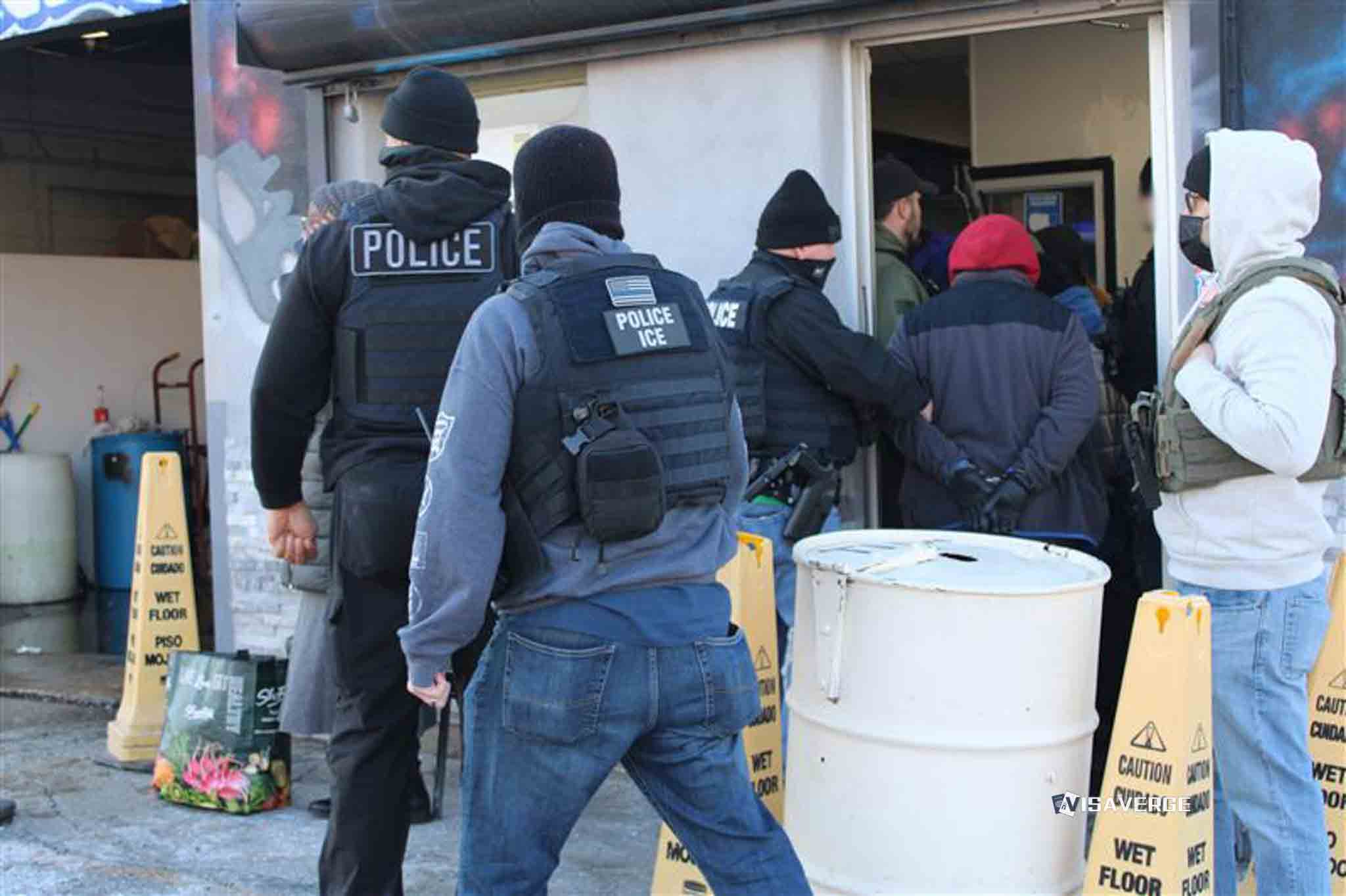
At a Senate confirmation hearing on March 18, 2026, DHS nominee Markwayne Mullin also pointed to a more measured enforcement approach. He testified that officers would focus on “a warrant signed by a judge to forcibly enter homes to make arrests” after backlash over aggressive tactics that had “spooked” foreign employees in industries like farming.
| India | China | ROW | |
|---|---|---|---|
| EB-1 | Apr 01, 2023 ▲31d | Apr 01, 2023 ▲31d | Current |
| EB-2 | Jul 15, 2014 ▲303d | Sep 01, 2021 | Current |
| EB-3 | Nov 15, 2013 | Jun 15, 2021 ▲45d | Jun 01, 2024 ▲244d |
| F-1 | May 01, 2017 ▲174d | May 01, 2017 ▲174d | May 01, 2017 ▲174d |
| F-2A | Feb 01, 2024 | Feb 01, 2024 | Feb 01, 2024 |
Taken together, the comments show how the administration is trying to reposition the debate. The emphasis has moved away from mass workplace crackdowns and toward a labor system that officials say is faster, cheaper and more controlled.
That change in tone comes with a set of rule changes that affect how growers hire and pay workers through the H-2A visa program. Emergency rules that took effect on January 1, 2026 allow U.S. farms to hire a significantly higher volume of H-2A workers, expanding the program’s capacity at a moment when employers have said they cannot find enough labor.
Another part of the overhaul changes how the government sets the Adverse Effect Wage Rate, or AEWR. The Department of Labor replaced the USDA’s Farm Labor Survey with Bureau of Labor Statistics data, a shift that can reduce the hourly wage employers must pay in some markets.
In some regions, the change has produced wage decreases of up to $7.00 per hour. One example cited by officials shows a rate dropping from $17.35 to $13.38.
Farm owners may now also count employer-provided housing as part of a worker’s total compensation. That change can further offset hourly pay requirements and reduce labor costs for employers who already provide housing as part of seasonal work arrangements.
Processing rules changed as well. As of October 2, 2025, DHS implemented a final rule tied to Form I-129H2A that allows concurrent processing between U.S. Citizenship and Immigration Services and the Department of Labor, shortening the time it takes to move workers into the fields.
The rollout did not happen through a single announcement or one effective date. It emerged through a sequence of regulatory changes, agency actions and public statements that together reshaped the program’s wage structure, compensation rules and filing process.
Pressure from enforcement helped drive that shift. A survey by the California Farm Bureau found that over 14% of farms across the state lost workers specifically because of increased immigration enforcement and raids over the past year.
That finding gave fresh weight to a problem growers had raised for months: farm labor can disappear quickly when workers fear arrest, even if they are not the direct targets of an operation. In agriculture, where planting and harvest windows are short, the loss of workers can hit production almost immediately.
The administration had once promised a “100% American workforce,” but the new approach reflects a different calculation. Officials now appear to accept that the agricultural sector cannot function without migrant labor and that legal temporary worker channels will have to carry more of that load.
The Federal Register laid out the economic rationale in October 2025 when it said the halt in labor inflows created a “sufficient risk of supply shock-induced food shortages.” That language linked labor policy directly to the broader food supply and gave the government a basis for immediate action.
In that sense, the changes amount to more than a technical rewrite of visa rules. They are a labor policy response to enforcement pressure that disrupted the workforce farms depend on, and they show how concerns about supply shocks can alter immigration priorities.
Employers have welcomed that turn. For growers facing losses from unpicked crops, a larger H-2A labor pool, lower required wages and quicker processing can mean the difference between bringing in a harvest and leaving produce in the field.
Faster approvals matter because farm work is tied to seasons, weather and narrow production timelines. A delay of weeks can leave employers without crews when they are needed most, so concurrent agency processing has drawn support from producers who say the old system was too slow.
Lower labor costs also matter. In labor-intensive operations, wage floors and housing obligations shape whether a farm can profit, especially when growers say they are already dealing with labor shortages linked to enforcement.
Labor groups see the same changes very differently. The United Farm Workers has filed a lawsuit against the new rules, arguing that the wage cuts built into the revised AEWR system will depress pay for farm workers on a broad scale.
The union says the reductions amount to a $24 billion pay cut for farmworkers over 10 years. That claim goes to the center of the dispute over the overhaul: whether it stabilizes farm labor or shifts more of the cost of that stability onto workers.
Critics of the changes also warn that the system may deepen a two-tier labor structure. Under that arrangement, employers gain more flexibility while workers, many of them migrants with fewer options, face lower wages in exchange for legal access to jobs in the United States.
Even with lower pay, the program may still attract workers from Latin America because the income gap with home countries remains wide. That dynamic helps explain why employers believe supply will remain strong even if the revised terms make some H-2A jobs less attractive than before.
For migrant workers, the overhaul creates a legal path into agricultural work but also ties that path more tightly to cost controls. For domestic labor advocates, it raises the question of whether the government is easing farm labor shortages by lowering compensation rather than improving conditions.
For the administration, the political balance is different. Officials have tried to draw a line between immigration enforcement and labor management, arguing that the government can maintain control while reducing the disruptions that broad crackdowns caused in farm country.
Mullin’s comments about using “a warrant signed by a judge to forcibly enter homes to make arrests” reflected that effort to present a steadier approach. His testimony came after aggressive enforcement tactics had drawn criticism for rattling workers in industries that rely heavily on foreign labor, including agriculture.
Rollins framed the issue more directly as a market problem. Her March 16, 2026 remarks tied the H-2A expansion to shortages in the farm workforce, casting the changes as a response to labor demand rather than a concession on border policy.
Chavez-DeRemer, for her part, tried to distance the changes from any suggestion of legalization. “It’s not an amnesty program. And it’s not even a new program. It’s just going to be better, faster and more affordable,” she said.
The official record for the rollout stretches across several agencies. USCIS announced the streamlining rule on September 30, 2025, laying out the filing changes that would let employers move more quickly through the process for certain agricultural workers.
The wage changes were formally anchored in the Federal Register on October 2, 2025, when the AEWR interim final rule set out the new methodology that replaced the USDA survey with Bureau of Labor Statistics data. That document provided the legal text behind the lower wage calculations that now sit at the center of the dispute.
DHS press materials and the March 2026 comments from top officials supplied the political message around those rules. Together, the agency documents and public statements show both how the overhaul was built and how the administration wants it understood.
For farms, workers and regulators, the result is a new governing approach in which immigration raids no longer stand alone as the defining tool. The government is now relying more openly on the H-2A visa program to keep labor flowing into the fields, even as the fight over who benefits most from that choice moves into court and onto the farms themselves.